

Matson: Have you ever cued up a recording to listen to and thought: "I can't fix this?"
Gray: Without mentioning any names, when I get stuff that is supercompressed, it's a challenge to cut that. You are basically trying to put squarewaves on the record, because everything is wave-top clipped. There are programs that smooth the edges a little bit, but that's the stuff that I really hate. The old '60s stuff that was loud and EQ'd for radio: You can massage that and get it sounding pretty good. I never complain about those records.
Matson: The dark days of early digital, the early '80s. What can you do with those recordings to make them sound better?
Gray: I have a proprietary EQ I use. I pull out a little bit of midrange and a little bit of the top at two particular frequencies, and I add a little bit of bass. That really makes a world of difference. I actually had that built into my system at home until they came out with better D/A converters.
Matson: Is this something you noticed at the time with early digital?
Gray: I thought it was so bad at first, I didn't think it was going to catch on! [Laughs.] I had a friend bring me a Sony CDP-101, one of the first early CD players. I had a bunch of Columbia titles, and I put them on and thought, "Nobody's going to buy this. A cassette sounds better than this." Then things improved a bit. Philips improved it from the European side. But digital didn't start sounding decent to me until around 1992, when we bought a Wadia 4000 A/D converter for the recording side. The difference was night and day. I can't say enough good things about that device for the time. When I played a comparison for Steve Hoffman, he said, "We've got to start all over again."
 Matson: Your take on the sonic quality of digital now, in 2022?
Gray: Digital now is pretty good. 24/96 is pretty darn good with good converters. Not all converters are created alike. And if that's on the A/D side, you are fighting that when you are playing it back on your D/A, when yours is better than what was used to record. We are just now getting to the point where a computer can keep up with 176.4kHz or 192kHz sample rates. There were problems with home computers that were basically introducing noise. I think we may be kind of past that now, too.
Matson: What do you say to the people who claim that mastering for LP from 24/96 files can't possibly sound better than digital playback? You've done this for me, Kevin, and I think it sounds good!
Gray: I think a lot of what people like about a phonograph record are artifacts. Audiophiles don't want to hear that, but it's just a fact. I deal with digital and analog all day long, and I know what happens in the transfer to analog. And I know, with my system, how close I can get to the source. But there's always just a little extra added sauce going to vinyl, cutting it into a record groove. Maybe it's just the stylus tracking a physical analog groove. And it's the same thing with analog tape. Is it as accurate as digital? Probably not, but I love the sound of analog tape.
Matson: Your take on the sonic quality of digital now, in 2022?
Gray: Digital now is pretty good. 24/96 is pretty darn good with good converters. Not all converters are created alike. And if that's on the A/D side, you are fighting that when you are playing it back on your D/A, when yours is better than what was used to record. We are just now getting to the point where a computer can keep up with 176.4kHz or 192kHz sample rates. There were problems with home computers that were basically introducing noise. I think we may be kind of past that now, too.
Matson: What do you say to the people who claim that mastering for LP from 24/96 files can't possibly sound better than digital playback? You've done this for me, Kevin, and I think it sounds good!
Gray: I think a lot of what people like about a phonograph record are artifacts. Audiophiles don't want to hear that, but it's just a fact. I deal with digital and analog all day long, and I know what happens in the transfer to analog. And I know, with my system, how close I can get to the source. But there's always just a little extra added sauce going to vinyl, cutting it into a record groove. Maybe it's just the stylus tracking a physical analog groove. And it's the same thing with analog tape. Is it as accurate as digital? Probably not, but I love the sound of analog tape.
 Gray: You have to listen and decide that stuff for each project. There are times when the analog is an unwanted artifact, a buffer that's causing some rolloff, and there can be bumps in the bottom end. There's always third-harmonic distortion added by tape. It's part of the process. Same thing with phonograph records, though that is more second harmonic. Some things get augmented beautifully, other things not so much.
 Matson: Are most of the Blue Note tapes in pretty good shape?
Gray: Yes. They have been so well archived and cared for. I can only think of one or two tapes that we've had to reject because there were problems. That's unlike a lot of other companies. The condition of tapes from the '50s and '60s is fine. The older tapes are in way better shape. Around 1974, you start getting problems with sludge. Ampex tape in particular—they changed the formulation. Ampex later figured out that you could bake the tapes to help. I have a convection oven, and all those kind of tapes from that era have to go in the oven.
Matson: Sounds delicious! What do you do when you put up a tape and you realize you are dealing with something that is not a master, that is one or more generations down?
Gray: Record companies don't want that information out there. I was told as early as 2005 by the three big labels: "Do not reveal sources unless we publicize it, and then you can reiterate that." Because they don't want it to affect sales. People never know what they're getting.
Matson: What do you lose first when mastering from a copy? That high-end sense of air and presence?
Gray: Exactly. That's the first thing. And usually a little bass, too. It sort of puts a filter at both ends of the audio spectrum. Plus, more tape hiss. There's very little you can do without changing the sound too much.
Matson: What's the current supply situation worldwide for lacquers and vinyl? I keep reading about shortages and delay times for vinyl pressings.
Gray: There's no vinyl shortage that I am aware of. The lacquer thing is different. The largest lacquer plant in the world was Apollo Masters in California, and that plant burned down in 2020. I was lucky in that I was already grandfathered in with MDC in Japan. They are the only source of lacquers in the world at this time. I'm on an allotment. I get 75 lacquers a month, and that gets me through.
Matson: Are most of the Blue Note tapes in pretty good shape?
Gray: Yes. They have been so well archived and cared for. I can only think of one or two tapes that we've had to reject because there were problems. That's unlike a lot of other companies. The condition of tapes from the '50s and '60s is fine. The older tapes are in way better shape. Around 1974, you start getting problems with sludge. Ampex tape in particular—they changed the formulation. Ampex later figured out that you could bake the tapes to help. I have a convection oven, and all those kind of tapes from that era have to go in the oven.
Matson: Sounds delicious! What do you do when you put up a tape and you realize you are dealing with something that is not a master, that is one or more generations down?
Gray: Record companies don't want that information out there. I was told as early as 2005 by the three big labels: "Do not reveal sources unless we publicize it, and then you can reiterate that." Because they don't want it to affect sales. People never know what they're getting.
Matson: What do you lose first when mastering from a copy? That high-end sense of air and presence?
Gray: Exactly. That's the first thing. And usually a little bass, too. It sort of puts a filter at both ends of the audio spectrum. Plus, more tape hiss. There's very little you can do without changing the sound too much.
Matson: What's the current supply situation worldwide for lacquers and vinyl? I keep reading about shortages and delay times for vinyl pressings.
Gray: There's no vinyl shortage that I am aware of. The lacquer thing is different. The largest lacquer plant in the world was Apollo Masters in California, and that plant burned down in 2020. I was lucky in that I was already grandfathered in with MDC in Japan. They are the only source of lacquers in the world at this time. I'm on an allotment. I get 75 lacquers a month, and that gets me through.
 Matson: Describe the quality control needed from the time a lacquer is cut to when that recording is a pressed piece of vinyl.
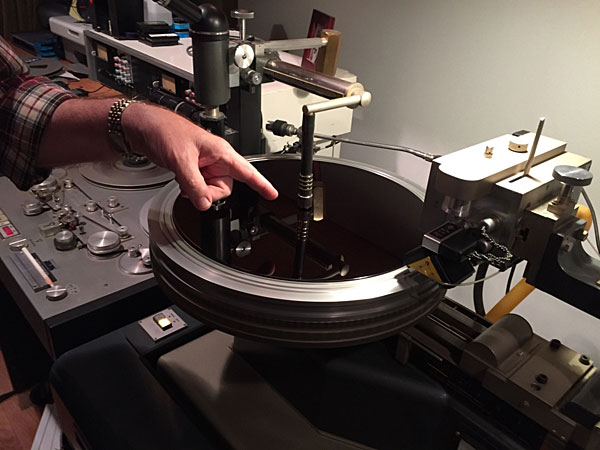
Gray: On all the Tone Poet stuff, we ship overnight. So, we finish cutting in the afternoon, and it gets to RTI (Record Technology Inc.) at 8am the next morning. Dorin Sauerbier puts it in the plating bath there right away. A lacquer could probably sit for four or five days before being processed, but it's not going to sound as good as one that's processed within 24 hours. Lacquer is an elastic material: cellulose nitrate. It wants to go back to its original shape. What you can lose is a little bit of extreme top end air, 14kHz and above. And you increase pre-echo sound bleeding from adjacent grooves. Once you have "pre-plated" it, it's locked. It's not going to change. Silver it to make it electrically conductive, and then plate it with nickel.
Matson: You recently opened a recording studio in the house right next door to your mastering room. You have worked before as a recording engineer. How do you view this new project? Joe Harley described it to me as "Hackensack West." Does that make you mad?
Gray: Not at all. We are calling it "Cohearent Recording aka Hackensack West." I got this idea in 2005. I had been knee-deep in doing reissues for over 20 years, and I thought, "Wouldn't it be neat to have a record that you could hold in your hand that has vintage sound but with modern artists?" The idea was to create an all–vacuum tube system, from microphone all the way through to the cutter head. It took me 15 years. I had no idea it was going to take that long. Right now, we are recording on tape to a Studer C37, a valve machine.
The disc-cutting system is what took the longest. I started on that in 2009. I designed it from scratch, and I do my own machining. So, I built this chain, and the plan was we were going to use an existing studio. Then I got turned on to Richard Capeless's website "RVG Legacy." He covers everything to do with Rudy Van Gelder's world, including plans of the rooms. I took a look at Van Gelder's Hackensack studio and realized it was almost exactly the size of the living room in the house next to my mastering studio.
Matson: Will you be able to do "direct-to-disc" recordings?
Gray: You betcha. We are going to do that!
Matson: Describe the quality control needed from the time a lacquer is cut to when that recording is a pressed piece of vinyl.
Gray: On all the Tone Poet stuff, we ship overnight. So, we finish cutting in the afternoon, and it gets to RTI (Record Technology Inc.) at 8am the next morning. Dorin Sauerbier puts it in the plating bath there right away. A lacquer could probably sit for four or five days before being processed, but it's not going to sound as good as one that's processed within 24 hours. Lacquer is an elastic material: cellulose nitrate. It wants to go back to its original shape. What you can lose is a little bit of extreme top end air, 14kHz and above. And you increase pre-echo sound bleeding from adjacent grooves. Once you have "pre-plated" it, it's locked. It's not going to change. Silver it to make it electrically conductive, and then plate it with nickel.
Matson: You recently opened a recording studio in the house right next door to your mastering room. You have worked before as a recording engineer. How do you view this new project? Joe Harley described it to me as "Hackensack West." Does that make you mad?
Gray: Not at all. We are calling it "Cohearent Recording aka Hackensack West." I got this idea in 2005. I had been knee-deep in doing reissues for over 20 years, and I thought, "Wouldn't it be neat to have a record that you could hold in your hand that has vintage sound but with modern artists?" The idea was to create an all–vacuum tube system, from microphone all the way through to the cutter head. It took me 15 years. I had no idea it was going to take that long. Right now, we are recording on tape to a Studer C37, a valve machine.
The disc-cutting system is what took the longest. I started on that in 2009. I designed it from scratch, and I do my own machining. So, I built this chain, and the plan was we were going to use an existing studio. Then I got turned on to Richard Capeless's website "RVG Legacy." He covers everything to do with Rudy Van Gelder's world, including plans of the rooms. I took a look at Van Gelder's Hackensack studio and realized it was almost exactly the size of the living room in the house next to my mastering studio.
Matson: Will you be able to do "direct-to-disc" recordings?
Gray: You betcha. We are going to do that!
Matson: Your take on the sonic quality of digital now, in 2022?
Gray: Digital now is pretty good. 24/96 is pretty darn good with good converters. Not all converters are created alike. And if that's on the A/D side, you are fighting that when you are playing it back on your D/A, when yours is better than what was used to record. We are just now getting to the point where a computer can keep up with 176.4kHz or 192kHz sample rates. There were problems with home computers that were basically introducing noise. I think we may be kind of past that now, too.
Sasha Matson conducts the Tight Lines orchestra (Photos: Joseph D'Alessio)
Matson: You recall the eccentric extra step I went with my Tight Lines album. We transferred the 24/96 digital to ½" tape, then brought that to you to cut the vinyl!?
Kevin Gray (left) and Joe Harley at the Tight Lines mastering session. (Photo: Sasha Matson)
Matson: You started this for the Music Matters label, working with Joe Harley. Now it's directly for Blue Note's Tone Poet series. What do you hear when you cue up a Rudy Van Gelder recording?
Gray: Individual instruments placed in a soundstage, not crazy-wide drums or pianos that don't sound like they do live. I don't have a specific preference in terms of Van Gelder's earlier Hackensack home studio versus the later Englewood Cliffs studio. I like a lot of the earlier ones, just for the music performances. Lee Morgan! Once Rudy went to multitrack, I kind of lost him. For me, up through 1967, he got a consistently great sound.
Matson: Describe the quality control needed from the time a lacquer is cut to when that recording is a pressed piece of vinyl.
Gray: On all the Tone Poet stuff, we ship overnight. So, we finish cutting in the afternoon, and it gets to RTI (Record Technology Inc.) at 8am the next morning. Dorin Sauerbier puts it in the plating bath there right away. A lacquer could probably sit for four or five days before being processed, but it's not going to sound as good as one that's processed within 24 hours. Lacquer is an elastic material: cellulose nitrate. It wants to go back to its original shape. What you can lose is a little bit of extreme top end air, 14kHz and above. And you increase pre-echo sound bleeding from adjacent grooves. Once you have "pre-plated" it, it's locked. It's not going to change. Silver it to make it electrically conductive, and then plate it with nickel.















