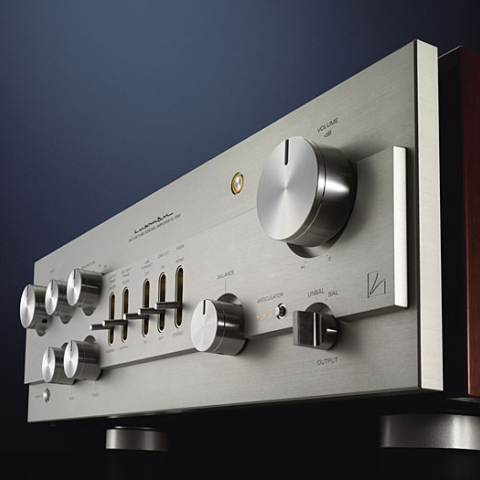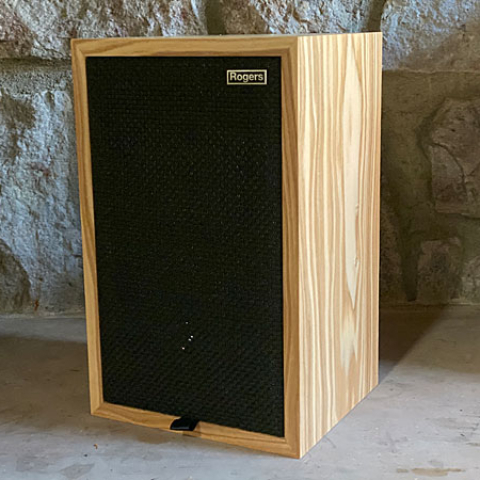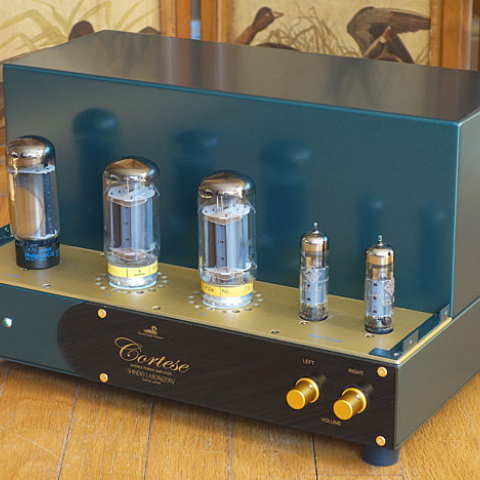
Audio journalism is an unwitting form of pornography, albeit one that debases the soul with materialism instead of carnalism. It encourages—inadvertently, of course—the objectification of its subject matter, and can lead to Chronic Disappointment Syndrome, as well as a lifelong difficulty in forging healthy relationships with technology.
Those used to be just fun things to say. But now I worry they might be true, if only because thinking, reading, and writing about domestic audio have, of late, brought with them the chalky aftertaste of guilt.
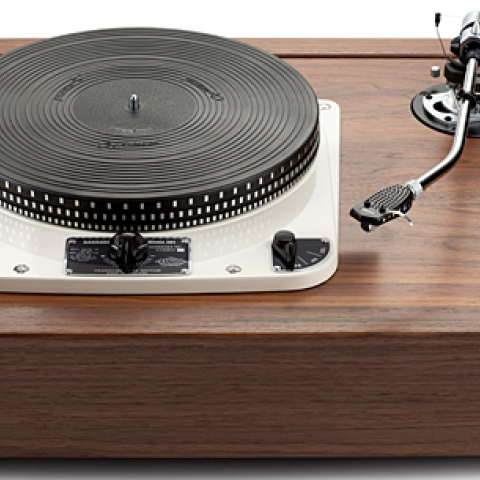
Specifically, when I consider the sound of a Marantz 9 amplifier or an EMT 930 turntable or an Altec 755-A driver or other such unobtainable vintage gear, I can't help feeling unfaithful. After all, the very idea that such long-gone things should resonate for me is taken by some as a rejection of contemporary audio, and of the ground the newest products have gained: neutrality, wide frequency range, spatial sensationalism, fuzzlessness, gritlessness, and scrapelessness.
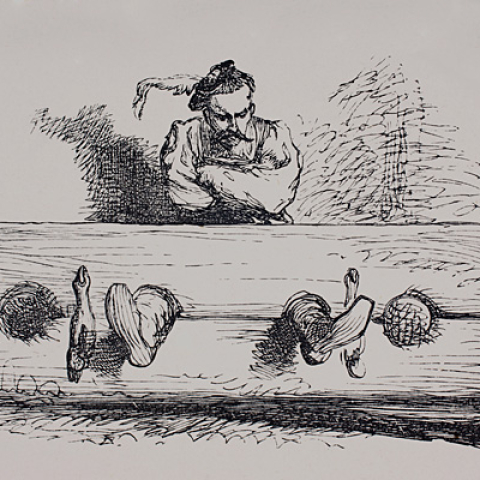
Ah, but in the little-boy world of high-end audio—embraced if not birthed by baby boomers who would have us believe we can love Mickey Mantle or Ted Williams, the Beatles or the Stones, Toscanini or Furtwängler, tubes or transistors, but never both—we're not allowed to embrace more than one approach to musical bliss. And if you've been thinking otherwise . . . well, you've been very, very naughty.
But nice
Some vintage products are superior to their newer counterparts in ways that remain important to me, ways that are legitimate preferences that you may well share. The best geezer gear persists in sounding more colorful and textured than most modern products (even though makers of the latter appear to be catching on), and old idler-wheel turntables in particular are noted for playing back music with considerably more momentum and drive than virtually any other source technology. Yet there's at least one quality in which vintage products remain not only superior but virtually unique, and that's their physicality: a meaty, human touch that endures, like the inexplicably undrained battery, in its ability to grab one below the waist. The best antiques (there: I said it) stand in contrast to their intellectually cool, wispy, wraith-like modern counterparts by being downright sexy (there: I said that, too)—in sound as in appearance as in gestalt.
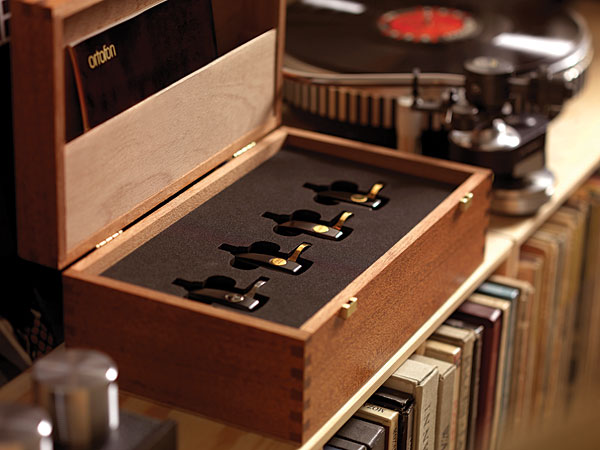
As evidence, I point to an almost uniquely new/old product: the Ortofon SPU Collector's Box, which contains four of the most historically important versions of the world's longest-lived model of phono cartridge. (See "Listening" in Stereophile's January 2011 issue.) The SPU Collector's Box went on sale last year for the not-inconsiderable sum of $13,999, with production limited to just 100 sets.
 Introduced in 1959, the Ortofon SPU was among the first two-channel phono cartridges offered for professional or domestic use (its target was primarily the former). In common with some of the monophonic moving-coil cartridges that preceded it in Ortofon's line, the SPU combined low output and low internal resistance with a low mechanical compliance that was well suited to the cartridge's highish mass—and to the chunky tonearms of the day. Yet the comparatively low mass of its spherical stylus tip helped distinguish the SPU from its competition, enabling treble response all the way to 20kHz: a pretty big deal at the time.
Still, when contemporary audiophiles hear the name SPU, the image that comes to mind is of something less than modern: a combined phono cartridge and universal headshell in which the precise position of the former relative to the latter can't be adjusted. Indeed, although Ortofon has offered a denuded version of their oldest stereo cartridge since day one, most SPUs have indeed been quaint, bulky pickup heads, in a choice of two sizes: the G-style head, in which the stylus tip can be counted on to be precisely 52mm (footnote 1) from the headshell's locking collet; or the A-style pickup head, where the stylus is 30mm from the collet.
For whatever reason, the G-style head has all but vanquished the A-style in the marketplace: Although a single A-style model remains in the Ortofon line, most SPUs have, for years, been G-styles—and so it goes with the SPU Collector's Box. In exchange for his $13,000, each high roller will receive a big cigar box containing G-style versions of Ortofon's SPU Classic, SPU Gold Reference, SPU 85, and SPU 90th Anniversary. In a bid to whip up excitement for all things SPU, the company also announced, in their last e--newspaper of 2010, that one especially lucky buyer will be selected to receive Collector's Box 001. Don't dawdle!
A winner hadn't been named as of this writing, but I know this much: Whoever buys Collector's Box 012 will get four Ortofon SPUs with which I've spent a few exceedingly cautious and gleeful hours, comparing them with one another and with my own old-style, A-style Ortofon SPU, with its low-output, spherical stylus tip and Bakelite body.
Introduced in 1959, the Ortofon SPU was among the first two-channel phono cartridges offered for professional or domestic use (its target was primarily the former). In common with some of the monophonic moving-coil cartridges that preceded it in Ortofon's line, the SPU combined low output and low internal resistance with a low mechanical compliance that was well suited to the cartridge's highish mass—and to the chunky tonearms of the day. Yet the comparatively low mass of its spherical stylus tip helped distinguish the SPU from its competition, enabling treble response all the way to 20kHz: a pretty big deal at the time.
Still, when contemporary audiophiles hear the name SPU, the image that comes to mind is of something less than modern: a combined phono cartridge and universal headshell in which the precise position of the former relative to the latter can't be adjusted. Indeed, although Ortofon has offered a denuded version of their oldest stereo cartridge since day one, most SPUs have indeed been quaint, bulky pickup heads, in a choice of two sizes: the G-style head, in which the stylus tip can be counted on to be precisely 52mm (footnote 1) from the headshell's locking collet; or the A-style pickup head, where the stylus is 30mm from the collet.
For whatever reason, the G-style head has all but vanquished the A-style in the marketplace: Although a single A-style model remains in the Ortofon line, most SPUs have, for years, been G-styles—and so it goes with the SPU Collector's Box. In exchange for his $13,000, each high roller will receive a big cigar box containing G-style versions of Ortofon's SPU Classic, SPU Gold Reference, SPU 85, and SPU 90th Anniversary. In a bid to whip up excitement for all things SPU, the company also announced, in their last e--newspaper of 2010, that one especially lucky buyer will be selected to receive Collector's Box 001. Don't dawdle!
A winner hadn't been named as of this writing, but I know this much: Whoever buys Collector's Box 012 will get four Ortofon SPUs with which I've spent a few exceedingly cautious and gleeful hours, comparing them with one another and with my own old-style, A-style Ortofon SPU, with its low-output, spherical stylus tip and Bakelite body.
Footnote 1: The accepted wisdom has long been that the collet-to-stylus dimension of a G-style pickup is 50mm and that of the A-style pickup is 32mm, figures I long accepted as fact and even passed along in this space. But last year, my experience with Keith Howard's research into cartridge alignment (see his "Arc Angles" in the March 2010 Stereophile) inspired me to fashion a jig to measure such things.
Some vintage products are superior to their newer counterparts in ways that remain important to me, ways that are legitimate preferences that you may well share. The best geezer gear persists in sounding more colorful and textured than most modern products (even though makers of the latter appear to be catching on), and old idler-wheel turntables in particular are noted for playing back music with considerably more momentum and drive than virtually any other source technology. Yet there's at least one quality in which vintage products remain not only superior but virtually unique, and that's their physicality: a meaty, human touch that endures, like the inexplicably undrained battery, in its ability to grab one below the waist. The best antiques (there: I said it) stand in contrast to their intellectually cool, wispy, wraith-like modern counterparts by being downright sexy (there: I said that, too)—in sound as in appearance as in gestalt.
Introduced in 1959, the Ortofon SPU was among the first two-channel phono cartridges offered for professional or domestic use (its target was primarily the former). In common with some of the monophonic moving-coil cartridges that preceded it in Ortofon's line, the SPU combined low output and low internal resistance with a low mechanical compliance that was well suited to the cartridge's highish mass—and to the chunky tonearms of the day. Yet the comparatively low mass of its spherical stylus tip helped distinguish the SPU from its competition, enabling treble response all the way to 20kHz: a pretty big deal at the time.
Still, when contemporary audiophiles hear the name SPU, the image that comes to mind is of something less than modern: a combined phono cartridge and universal headshell in which the precise position of the former relative to the latter can't be adjusted. Indeed, although Ortofon has offered a denuded version of their oldest stereo cartridge since day one, most SPUs have indeed been quaint, bulky pickup heads, in a choice of two sizes: the G-style head, in which the stylus tip can be counted on to be precisely 52mm (footnote 1) from the headshell's locking collet; or the A-style pickup head, where the stylus is 30mm from the collet.
Footnote 1: The accepted wisdom has long been that the collet-to-stylus dimension of a G-style pickup is 50mm and that of the A-style pickup is 32mm, figures I long accepted as fact and even passed along in this space. But last year, my experience with Keith Howard's research into cartridge alignment (see his "Arc Angles" in the March 2010 Stereophile) inspired me to fashion a jig to measure such things.