
In the streaming era, it's tempting to think we have access to all the music in the world. We don't. We do have access to more music than any of us could ever listen to, for a few bucks a month. The "Discoveries" or "New Releases" posted to our streaming accounts every Friday may list only a few tens of albums, but sources put the number of albums posted to streaming services at some 10,000–20,000 a week. Spotify has said it posts about 100,000 tracks every day. That's an important reason why physical media still matter and why trusted editorial voices have value: They—we—provide genuine, heartfelt selection from an incomprehensibly large pool.
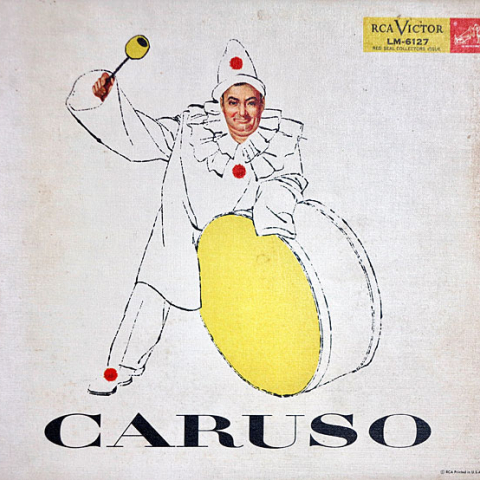
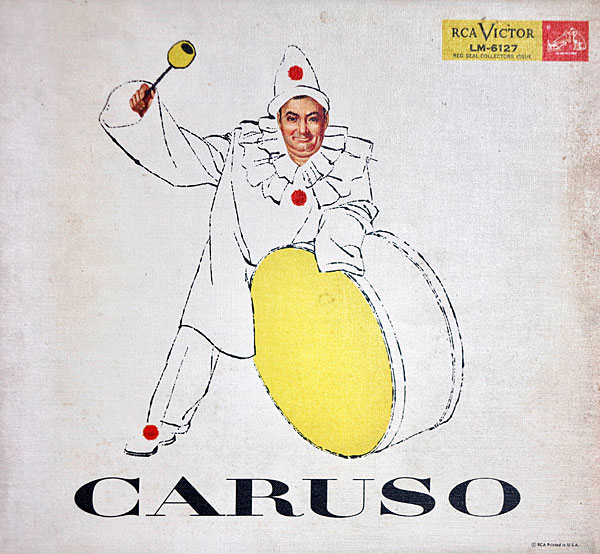
A hundred and twenty-five years ago, a single-sided shellac—I started to write 78, but speeds weren't standardized until much later—could hold a single about three minutes long. An astonishing number of those records were sold. Enrico Caruso was the first artist to sell a million copies. It was his first recording of "Vesti la giubba," from Leoncavallo's Pagliacci, recorded in 1902. (You probably know the tune, even if you don't think you do.) The US population then was 79 million.
 But here's the extraordinary thing: A single-sided 12" on Caruso's Victor Red Seal label—they came single-sided and double-sided, in 10" and 12" sizes—cost $3, equivalent to about $108 today. (Records from less-exclusive labels were much cheaper.) And they sold millions. I appreciate the low cost and convenience, but I'd love to live at a time when recorded music was valued that much.
Because he sold so many records, Caruso's catalog is mostly safe. The same cannot be said for just about everyone else's music. Every day, more music is lost, some of it decaying away in storage facilities, although occasionally a big chunk goes all at once, as in 2008, when fire swept through the backlot of Universal Studios Hollywood. Universal managed to conceal the damage it did until a 2019 New York Times Magazine article by Jody Rosen uncovered it, putting the number of tracks lost near 500,000, spanning Decca, MCA, and ABC (footnote 1). Impacted artists are said to include Louis Armstrong, Chuck Berry, Bo Diddley, Eminem, Billie Holiday, Buddy Holly, Elton John, Joni Mitchell, Nirvana, Tom Petty, and R.E.M. Original masters burned crispy. There has never been a full, transparent accounting.
In 2013, Gerald Seligman, the executive director of the National Recording Preservation Foundation, told Atlantic writer William Hochberg that "less than 18% of commercial music archives are currently available" to the public (footnote 2). That's not music that's lost; it's music that still exists somewhere—we just can't listen to it: It's out of print, undigitized, or unavailable for legal reasons. Hochberg's article tells of "underground fortifications around the country where precious recordings from Elvis and the Beach Boys share shelf space." He's talking about repositories where master tapes are stored, like Iron Mountain, which is literally a mine in a Pennsylvania mountain (or a hill at least). The article's premise is that the vast majority of our recorded musical history is locked away on vulnerable physical media in corporate archives, inaccessible and deteriorating.
"Deteriorating" is the key word there. Entropy is real. You can slow it down, but you can't stop it. Regardless of how climate-controlled those storage lockers are, it's a statistical certainty that some fraction of what's stored, hopefully small, disappears each year due to accident, degradation, disorganization, or some other cause. I've read plenty of liner notes about reissues rendered from backup tapes because the real masters were lost in a flood, or a tape was found unusable, or someone looked where the tape was supposed to be and it wasn't there.
Occasionally a recording thought to be lost is found—a fact that feeds the passions of collectors of "physical media." In Do Not Sell at Any Price: The Wild, Obsessive Hunt for the World's Rarest 78rpm Records, Amanda Petrusich, a staff writer for The New Yorker, describes learning to scuba dive so that she could explore the bottom of the Milwaukee River, near the site of the old Paramount Records factory in Grafton, Wisconsin. It was long rumored that when the factory was closed in the early 1930s, disgruntled unpaid employees dumped boxes of rare prewar master plates and test pressings—blues, mostly—into the river.
Petrusich's dives came up empty, but it was worth a try. Not infrequently, passionate collectors turn up important early records that were thought lost. And that vignette probably sold some extra books.
There are other kinds of "loss" we're experiencing today, precisely because music has become so abundant and cheap. There's the loss of value that implies: It is hard to hold dear a thing that comes so cheap. There's the loss of visibility: If tens of thousands of albums are released each week, finding by chance that one record that will prove special becomes mathematically impossible, or nearly so. You simply can't see what you don't know how to search for. There's the loss of music that musicians can't afford to make.
In earlier days of hi-rez music streaming, we could listen to any of several versions of important recordings—different mixings and masterings, or the same version in MQA or various sample rates. The metadata was always bad, so we had to do some work and some listening to figure out which version we were listening to. But we could listen and try to figure out a recording's provenance.
Over time, many of those versions have fallen away—after all, management apparently figured, why would anyone need more than one version of a favorite record? And what are the odds that they kept the right version?
It isn't all bad. When Iggy Pop remixed and remastered Raw Power in 1997, aiming to restore what he considered the album's lost ferocity, the resulting recording had a DR rating of 1. (A smaller number = more dynamically challenged.) David Bowie's 1973 mix (on CD since 1989) has a respectable DR rating of 11. Today, all the major streaming services serve up the 50th Anniversary Legacy Edition, which has both versions (though the DR rating of the Bowie mix is degraded to 9), plus one CD each of live recordings and outtakes, and Qobuz even retains an explanation of what you're listening to. Comparing the two versions is fun.
Much has been lost, but much remains.
Footnote 1: See en.wikipedia.org/wiki/2008_Universal_Studios_fire. Footnote 2: See theatlantic.com/entertainment/archive/2013/09/just-how-much-of-musical-history-has-been-lost-to-history/279948/.
But here's the extraordinary thing: A single-sided 12" on Caruso's Victor Red Seal label—they came single-sided and double-sided, in 10" and 12" sizes—cost $3, equivalent to about $108 today. (Records from less-exclusive labels were much cheaper.) And they sold millions. I appreciate the low cost and convenience, but I'd love to live at a time when recorded music was valued that much.
Footnote 1: See en.wikipedia.org/wiki/2008_Universal_Studios_fire. Footnote 2: See theatlantic.com/entertainment/archive/2013/09/just-how-much-of-musical-history-has-been-lost-to-history/279948/.