It may seem odd to end
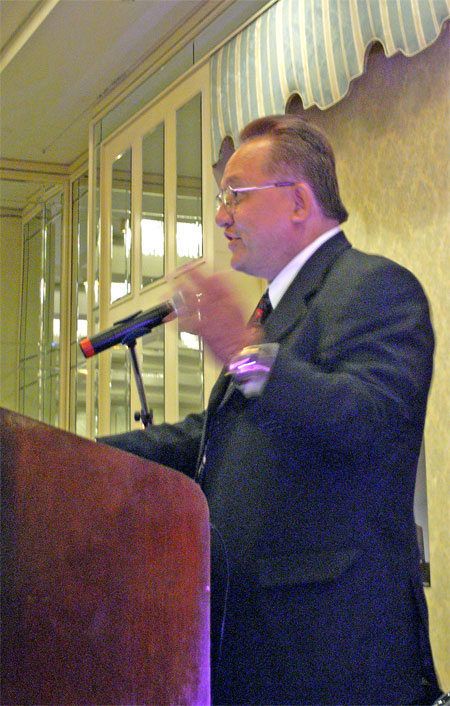
Stereophile's coverage of the 2008 FSI with a report on the opening-day keynote speech. However, Noel Lee, founder and CEO of Monster Cable, had said much that I wanted to mull over. Noel may be a ruthless businessman, but he is one of the smartest, most insightful business people I have known—I first
formally interviewed him 20 years ago for
Stereophile, but I have known him almost since the beginning of Monster Cable—and FSI getting him to give the Show's keynote speech was a large feather in Show President Michel Plante's hat.
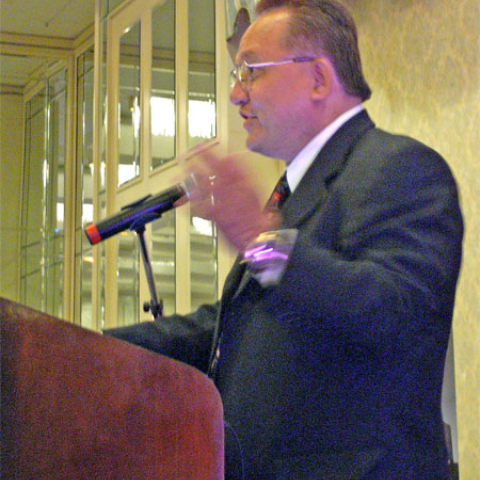
Both the subject of audiophile cables in general and Monster Cable's marketing in particular have come in for some criticism in the mainstream press in recent months, so as Noel wheeled up to the daïs on his Segue scooter, I was wondering what the thrust of his remarks would be.
Noel started by reminiscing about Monster's early days. Monster Cable is the largest speciality cable manufacturer in the US, but 30 years ago, it was a one-man show. Audiophile and drummer Noel had been fired from the rock band he had given up a secure job as a mechanical engineer at Lawrence Livermore Lab to tour with, and was wondering what to do with his life.
He had a wife and new baby to support but couldn't go back to his job at the Lab; he was over-qualified to go work at an audio store; he was looking at the skinny speaker cables that he and everyone else was using in his system and wondered about using a heavier gauge. "It couldn't hurt." And it didn't. He started supplying cables to Bay Area audiophiles, then booked a room at Chicago's Blackstone hotel to show his cables to dealers who were visiting the summer CES. Speciality cables were a hard sell, he recalled. Dealers gave away cables with the speakers they sold, and didn't see how Noel's cables, which sold for an enormous 65 cents/foot, could compete with free. Noel's answer was that the dealer had to demonstrate the difference made by the heavier-gauge Monster Cable—"customers don't care about features, they only care about end results"—and he did so, he could then make money by selling something that sounded better to replace what he used to give away. The rest is history.
But we live in different times now, warned Noel, and the audio industry has to keep adapting. "You can't serve a market that doesn't exist anymore. Audio in 2008 is too confusing for the end user," he feels. "In 2008, TVs drive the audio business, and while it's a great time to be in business, [retailers] cannot make money by selling TVs....[retailers] need to understand that the TV is the beginning of the sale, not the end."
Noel enthused about the opportunity retailers have to build on TV sales offered by the introduction of the HDMI standard. "HDMI brings the end user great 7.1-channel audio for free. You can sell the HDMI cable; you can sell an HDMI-connected A/V receiver; the customer will then want new speakers." But the problem is, he feels, that specialty retailers have forgotten how to do demonstrations, have forgotten that their business depends on revealing the passion that underlies the reproduction of music.
"We've forgotten the art of the demo; we don't dem with
music; we turn our backs on the iPod, so we can't show how the source people are most familiar with will benefit from a high-end audio system; we don't dem with videogames to show how high-quality surround improves the gamer's experience; and we don't invest in our salespeople."
Noel is excited about hi-rez audio. he produced a series of hi-rez 5.1-channel recordings for Monster Cable in order that sales people could have high-quality source material for dems. "But they didn't use it!" he laughed.
"Let's understand how to adapt to today's audience. Let's get excited again about
audio. If we don't, if sales people can't demonstrate the passion, the audio business is going to go away! Our customers will end up going to Walmart."
He pointed out that many audio stores
have gone away. The Good Guys are gone. Ultimate Audio is no more. CompUSA (who morphed into an audio/home theater store) is shuttered. Tweeter is bankrupt. Yes, Best Buy is still standing, Noel admitted, "but the specialty audio retailers are sitting on the business. [If they] learn to sell the audio, [if] they have the passion on the sales floor."
Strong stuff. But Noel's points echo what I heard management guru Tom Peters say 15 years ago: that the enemy of a specialty industry—and high-end audio is a specialty
within a specialty!—is commoditization. That if the product is reduced to a commodity where quality is irrelevant, the game is over. All that matters to the customer will be the price they pay and in that case, only the very largest corporations will survive.
Noel may have his many critics, but he is right: without the passion for what we all do, as audio manufacturers, as audio retailers, and as audio writers, we have no reason to survive. And when what we do is tied to music, perhaps the greatest of life's renewable pleasures—the others are sex and food and drink—why
have so many lost sight of audio's underlying passion?
It was a joy to spend the remaining days at FSI witnessing so many in the industry communicating their passion to audiophiles. But a Show last 4 days; your local audio retailer is open more than 300 days each and every year. Pop in. See if they have the passion. See if they can reveal the quality that resides inside the gear they sell. If they can, tell other audiophiles. No...tell
non-audiophiles. Spread the word!