

Jeff Lederer
—"How has anyone ever survived in New York as a 'free-jazz' musician?" A tenor saxophonist and clarinetist whose band Shakers n' Bakers reimagines the music of free-jazz giant Albert Ayler as if through the visions of a religious sect, Jeff Lederer returns to that fascination with Heart Love, released by Little (i) Music, on which he interprets Ayler's controversial 1968 soul-funk blowout, New Grass (Impulse!).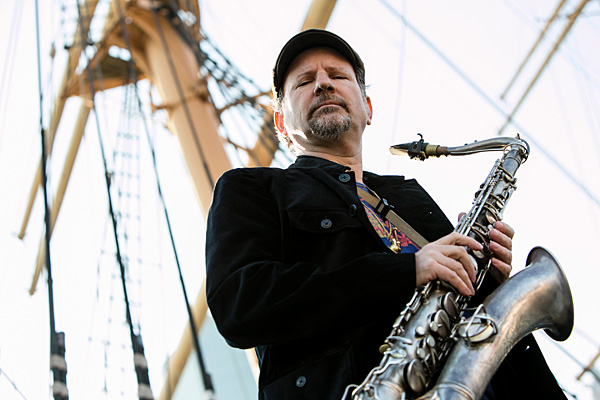 "The magic of New Grass is the freedom that Albert brings to his improvisations even in this structured setting," Lederer said. "The music is consistent with the beautiful howl that is heard on 'Ghosts' or 'Zion Hill' [from Ayler's 1967 album Love Cry], but in a context that reframes that freedom to make its power accessible to a broader audience. And why not? Albert's own personal history in the R&B bands of the Midwest is well documented, and this howl was always an essential part of his sound. New Grass is almost a homecoming for Ayler, a bringing together of his own personal past, present, and future."
As freer, more creative improvisational music seems to be claiming new ground, thanks to Kamasi Washington's fire-breathing fusillades on The Epic (2015), perhaps a rethinking of jazz's place in pop culture is in order. Can club kids and indie rockers find common ground with Albert Ayler's Spiritual Unity (1964)?
"The magic of New Grass is the freedom that Albert brings to his improvisations even in this structured setting," Lederer said. "The music is consistent with the beautiful howl that is heard on 'Ghosts' or 'Zion Hill' [from Ayler's 1967 album Love Cry], but in a context that reframes that freedom to make its power accessible to a broader audience. And why not? Albert's own personal history in the R&B bands of the Midwest is well documented, and this howl was always an essential part of his sound. New Grass is almost a homecoming for Ayler, a bringing together of his own personal past, present, and future."
As freer, more creative improvisational music seems to be claiming new ground, thanks to Kamasi Washington's fire-breathing fusillades on The Epic (2015), perhaps a rethinking of jazz's place in pop culture is in order. Can club kids and indie rockers find common ground with Albert Ayler's Spiritual Unity (1964)?
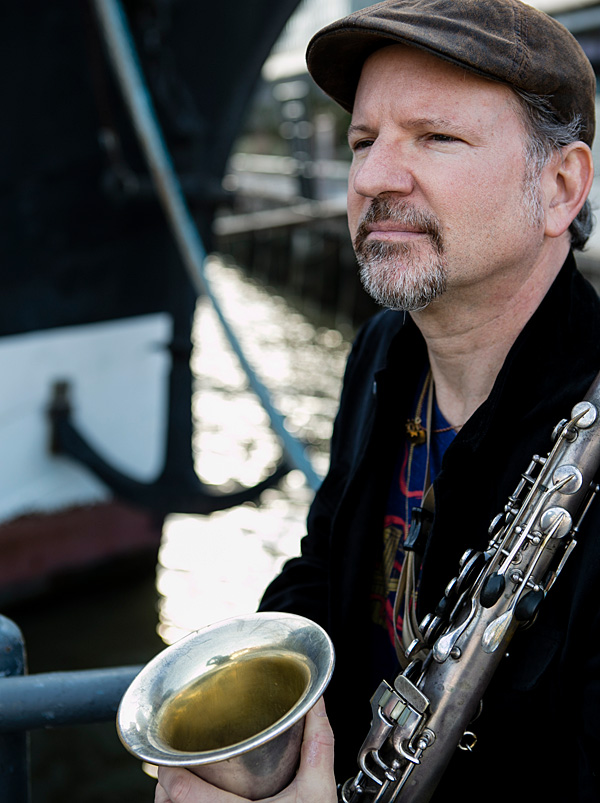 "I do feel that the 'millennial' generation is not having their musical tastes manipulated by corporate music culture as much as previous generations, thanks to the relative [egalitarianism] of the Internet and more open access to diverse music, and I am grateful for this," Lederer said.
I asked Lederer if this new awareness boded well for his own music.
"My music is not directly 'political,' and I do not believe Albert Ayler's music was either. In contrast to some of his contemporaries, like Archie Shepp, Albert's music was celestial, utopian, and essentially optimistic. I hope to bring some of these values to my own music making. In a similar way, the Shaker communities of the 19th century were not political activists, but delivered a potent message for mankind by living in a way that they felt showed a vision of Heaven on Earth. These values included social justice for [peoples] of all races, nonmaterialism, and a socialist economic basis as well as an ethos of humility, simplicity, and celibacy. I want my own music to reflect all of those values—except for the celibacy part. Putting these values into the world right now through the music is the most effective thing I can do to combat the ugly scourge of the Trump era."
Noah Preminger
"I do feel that the 'millennial' generation is not having their musical tastes manipulated by corporate music culture as much as previous generations, thanks to the relative [egalitarianism] of the Internet and more open access to diverse music, and I am grateful for this," Lederer said.
I asked Lederer if this new awareness boded well for his own music.
"My music is not directly 'political,' and I do not believe Albert Ayler's music was either. In contrast to some of his contemporaries, like Archie Shepp, Albert's music was celestial, utopian, and essentially optimistic. I hope to bring some of these values to my own music making. In a similar way, the Shaker communities of the 19th century were not political activists, but delivered a potent message for mankind by living in a way that they felt showed a vision of Heaven on Earth. These values included social justice for [peoples] of all races, nonmaterialism, and a socialist economic basis as well as an ethos of humility, simplicity, and celibacy. I want my own music to reflect all of those values—except for the celibacy part. Putting these values into the world right now through the music is the most effective thing I can do to combat the ugly scourge of the Trump era."
Noah Preminger
—"Tone is No.1." A gifted and prolific tenor saxophonist and composer, Noah Preminger plays with more than a touch of sweetness in his galvanizing horn sound—surprising, given his rebellious attitude. Preminger's is the voice of jazz eternal, always pushing, always searching, undeterred by popularity contests or the whims of style.
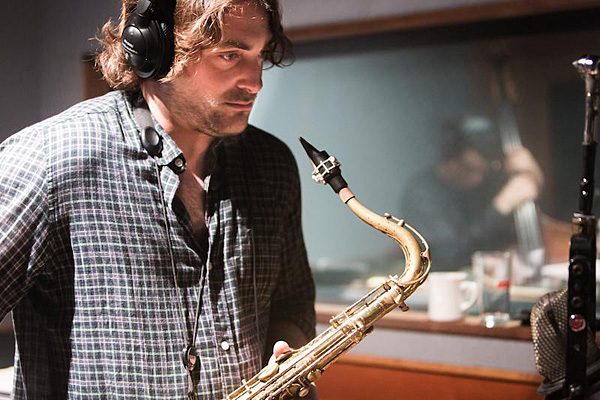 Preminger brings restless energy and endless creativity to the music he makes—from Some Other Time (2016, Newvelle) and Meditations on Freedom (2017, self-release) to Genuinity (2018, Criss Cross), Preminger and drummer Rob Garcia's The Chopin Project (self-release), and the duo recording Whispers and Cries, with pianist Frank Carlberg (2018, Red Piano). A tenor stylist with flowing technique, in conversation Preminger can be blunt to the point of brusque.
"I like to do projects that are fun," the 31-year-old told me from Boston, "but I'm not making a living playing music. Nobody is making a living just playing their instrument. They're teaching, or they come from a shitload of money, or their wives or husbands are wealthy. There are a select few jazz musicians who can make a living doing it. I don't have high expectations of being this 'famous tenor saxophone player.' I just want to do projects that I'm passionate about and make super-high-level recordings. I love to play."
That love expresses itself in Preminger's every note. Even when blowing fast and hard, as in the acetylene quartet bop of Genuinity, or exhaling thoughtful cogitations on Whispers and Cries, Preminger's tenor art is refined and graceful, built on subtle inflections and creativity that seems ready to burst. Winner of DownBeat magazine's 2017 Rising Star on Tenor Saxophone award, Preminger explained his sound with typical candor.
Preminger brings restless energy and endless creativity to the music he makes—from Some Other Time (2016, Newvelle) and Meditations on Freedom (2017, self-release) to Genuinity (2018, Criss Cross), Preminger and drummer Rob Garcia's The Chopin Project (self-release), and the duo recording Whispers and Cries, with pianist Frank Carlberg (2018, Red Piano). A tenor stylist with flowing technique, in conversation Preminger can be blunt to the point of brusque.
"I like to do projects that are fun," the 31-year-old told me from Boston, "but I'm not making a living playing music. Nobody is making a living just playing their instrument. They're teaching, or they come from a shitload of money, or their wives or husbands are wealthy. There are a select few jazz musicians who can make a living doing it. I don't have high expectations of being this 'famous tenor saxophone player.' I just want to do projects that I'm passionate about and make super-high-level recordings. I love to play."
That love expresses itself in Preminger's every note. Even when blowing fast and hard, as in the acetylene quartet bop of Genuinity, or exhaling thoughtful cogitations on Whispers and Cries, Preminger's tenor art is refined and graceful, built on subtle inflections and creativity that seems ready to burst. Winner of DownBeat magazine's 2017 Rising Star on Tenor Saxophone award, Preminger explained his sound with typical candor.
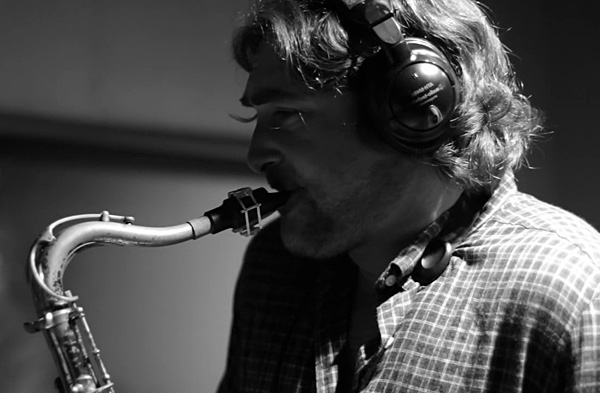 "I wanted a big sound, so I put myself in situations where I had to project. I played in a West African groove band. I play every weekend in Boston at this club, Wally's Cafe, where everybody's cranked—that gives you the capacity to blow your brains out and have a huge sound. And I'm a ballads player. Tone is No.1."
Genuinity, with trumpeter Jason Palmer, bassist Kim Cass, and drummer Dan Weiss, is one of the most hard-driving, conceptually dense, coolly swinging records of 2018. Over his own dark melodies, Preminger delivers soaring runs and complex improvisations, intense commentary to which Weiss fires off galloping rhythms. It's like Ornette Coleman on tenor and Shelly Manne on speedballs.
"I called it Genuinity because the compositions all came straight from my horn," Preminger said. "I used the improvised melodies to write tunes. It really takes ideas that are coming straight from my head."
Currently working on follow-up releases for the labels Newvelle and Criss Cross, Preminger remains unsatisfied. At heart, he combines the soul of an Impressionist painter with a gunslinger's eye, and he's making some of the finest jazz records of this still-young century.
"I've been told by older musicians that every generation has musicians that others think don't deserve the attention," Preminger said. "And every generation has people who don't get any recognition, but everyone knows they deserve it. It's happened for 90 years. You deal with it and you let go. I'm not complaining, but that's the jazz scene."
"I wanted a big sound, so I put myself in situations where I had to project. I played in a West African groove band. I play every weekend in Boston at this club, Wally's Cafe, where everybody's cranked—that gives you the capacity to blow your brains out and have a huge sound. And I'm a ballads player. Tone is No.1."
Genuinity, with trumpeter Jason Palmer, bassist Kim Cass, and drummer Dan Weiss, is one of the most hard-driving, conceptually dense, coolly swinging records of 2018. Over his own dark melodies, Preminger delivers soaring runs and complex improvisations, intense commentary to which Weiss fires off galloping rhythms. It's like Ornette Coleman on tenor and Shelly Manne on speedballs.
"I called it Genuinity because the compositions all came straight from my horn," Preminger said. "I used the improvised melodies to write tunes. It really takes ideas that are coming straight from my head."
Currently working on follow-up releases for the labels Newvelle and Criss Cross, Preminger remains unsatisfied. At heart, he combines the soul of an Impressionist painter with a gunslinger's eye, and he's making some of the finest jazz records of this still-young century.
"I've been told by older musicians that every generation has musicians that others think don't deserve the attention," Preminger said. "And every generation has people who don't get any recognition, but everyone knows they deserve it. It's happened for 90 years. You deal with it and you let go. I'm not complaining, but that's the jazz scene."
—"How has anyone ever survived in New York as a 'free-jazz' musician?" A tenor saxophonist and clarinetist whose band Shakers n' Bakers reimagines the music of free-jazz giant Albert Ayler as if through the visions of a religious sect, Jeff Lederer returns to that fascination with Heart Love, released by Little (i) Music, on which he interprets Ayler's controversial 1968 soul-funk blowout, New Grass (Impulse!).
"The magic of New Grass is the freedom that Albert brings to his improvisations even in this structured setting," Lederer said. "The music is consistent with the beautiful howl that is heard on 'Ghosts' or 'Zion Hill' [from Ayler's 1967 album Love Cry], but in a context that reframes that freedom to make its power accessible to a broader audience. And why not? Albert's own personal history in the R&B bands of the Midwest is well documented, and this howl was always an essential part of his sound. New Grass is almost a homecoming for Ayler, a bringing together of his own personal past, present, and future."
As freer, more creative improvisational music seems to be claiming new ground, thanks to Kamasi Washington's fire-breathing fusillades on The Epic (2015), perhaps a rethinking of jazz's place in pop culture is in order. Can club kids and indie rockers find common ground with Albert Ayler's Spiritual Unity (1964)?
"I do feel that the 'millennial' generation is not having their musical tastes manipulated by corporate music culture as much as previous generations, thanks to the relative [egalitarianism] of the Internet and more open access to diverse music, and I am grateful for this," Lederer said.
I asked Lederer if this new awareness boded well for his own music.
"My music is not directly 'political,' and I do not believe Albert Ayler's music was either. In contrast to some of his contemporaries, like Archie Shepp, Albert's music was celestial, utopian, and essentially optimistic. I hope to bring some of these values to my own music making. In a similar way, the Shaker communities of the 19th century were not political activists, but delivered a potent message for mankind by living in a way that they felt showed a vision of Heaven on Earth. These values included social justice for [peoples] of all races, nonmaterialism, and a socialist economic basis as well as an ethos of humility, simplicity, and celibacy. I want my own music to reflect all of those values—except for the celibacy part. Putting these values into the world right now through the music is the most effective thing I can do to combat the ugly scourge of the Trump era."
Noah Preminger—"Tone is No.1." A gifted and prolific tenor saxophonist and composer, Noah Preminger plays with more than a touch of sweetness in his galvanizing horn sound—surprising, given his rebellious attitude. Preminger's is the voice of jazz eternal, always pushing, always searching, undeterred by popularity contests or the whims of style.
Preminger brings restless energy and endless creativity to the music he makes—from Some Other Time (2016, Newvelle) and Meditations on Freedom (2017, self-release) to Genuinity (2018, Criss Cross), Preminger and drummer Rob Garcia's The Chopin Project (self-release), and the duo recording Whispers and Cries, with pianist Frank Carlberg (2018, Red Piano). A tenor stylist with flowing technique, in conversation Preminger can be blunt to the point of brusque.
"I like to do projects that are fun," the 31-year-old told me from Boston, "but I'm not making a living playing music. Nobody is making a living just playing their instrument. They're teaching, or they come from a shitload of money, or their wives or husbands are wealthy. There are a select few jazz musicians who can make a living doing it. I don't have high expectations of being this 'famous tenor saxophone player.' I just want to do projects that I'm passionate about and make super-high-level recordings. I love to play."
That love expresses itself in Preminger's every note. Even when blowing fast and hard, as in the acetylene quartet bop of Genuinity, or exhaling thoughtful cogitations on Whispers and Cries, Preminger's tenor art is refined and graceful, built on subtle inflections and creativity that seems ready to burst. Winner of DownBeat magazine's 2017 Rising Star on Tenor Saxophone award, Preminger explained his sound with typical candor.
"I wanted a big sound, so I put myself in situations where I had to project. I played in a West African groove band. I play every weekend in Boston at this club, Wally's Cafe, where everybody's cranked—that gives you the capacity to blow your brains out and have a huge sound. And I'm a ballads player. Tone is No.1."
Genuinity, with trumpeter Jason Palmer, bassist Kim Cass, and drummer Dan Weiss, is one of the most hard-driving, conceptually dense, coolly swinging records of 2018. Over his own dark melodies, Preminger delivers soaring runs and complex improvisations, intense commentary to which Weiss fires off galloping rhythms. It's like Ornette Coleman on tenor and Shelly Manne on speedballs.
"I called it Genuinity because the compositions all came straight from my horn," Preminger said. "I used the improvised melodies to write tunes. It really takes ideas that are coming straight from my head."















