Sidebar 1: Review context
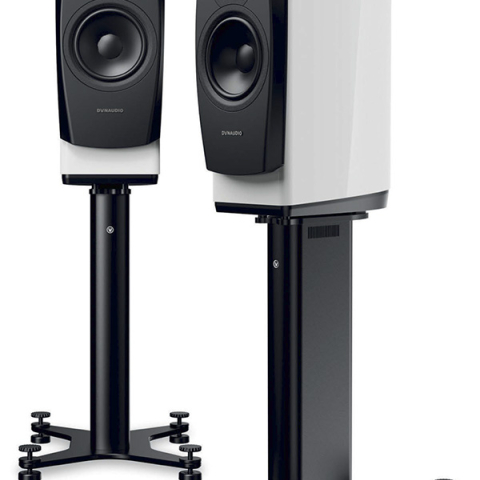
The most important consideration with speakers such as these is what stands to use. Often treated as an afterthought, a good pair of stands is fundamental to getting optimum performance from even inexpensive loudspeakers. Paradigm did supply a stand intended for use with their Control Monitor, but in order to keep the effect of the stand a constant during the listening tests, I decided to use the same stands for all three models. These were $300/pair, 18"-tall Celestion SLSi stands, their center pillars each filled with 30 lbs of lead shot, topped up with sand (footnote 1). With my listening chairs placing my ears 34–36" from the ground, the tweeters of the speakers were placed at ear height.
The stands were fitted with floor spikes, and each speaker was coupled to the stand top plate with small blobs of EZ-Tak, a not-very-reactive damping compound. Each pair of speakers was carefully positioned for the best sound, generally some 4' from the rear wall (which is faced with books and LPs) and 5.5' from the side walls (also faced with bookshelves). With the exception of the Amritas, each pair was toed-in to the listening seat. The amplification was either a Mark Levinson No.25/No.26 preamplifier combination or an Audio Research SP14 driving my 1986-vintage Krell KSA-50.
Speaker cable was 15' lengths of AudioQuest Clear Hyperlitz, doubled-up for biwiring, while interconnects were 1m lengths of AudioQuest LiveWire Lapis connecting CD player to preamp, and preamp to power amplifier (1m lengths of Magnan V—an excellent cable—also served). Six-foot lengths of Madrigal unbalanced HPC connected the No.25 to the No.26. Source components consisted of a Revox A77 to play my own and others' 15ips master tapes, a Linn Sondek LP12/Ekos/Troika setup sitting on a Sound Organisation table to play LPs, and the CAL Tempest II two-box CD player.
Only one pair of loudspeakers was in the listening room during the critical tests, something that I alone among this magazine's reviewers appear to consider important.—John Atkinson
Footnote 1: These are single-pillar designs, with steel top and bottom plates.
Footnote 1: These are single-pillar designs, with steel top and bottom plates.