Just as many inspired musicians invest their sound with a soulful glow that can grow in brilliance, the XA200.8s seemed to illuminate music from within in a way that complemented that artistic brilliance. In contrast with some tube amplification of my experience, the inner glow I heard with the XA200.8s sounded like something that arose organically from within the music. At the beginning of Mahler's Symphony 2, in the recording by Iván Fischer and the Budapest Festival Orchestra (SACD/CD, Channel Classics CCS SA 23506), the impact of the ominous march of cellos and double basses, the cries of the brass, and the merciless roll of drums were in no way sweetened, softened, or prettified by the Passes, but the beauty of the sound allowed the emotional truth behind the notes to come through in spades.
The XA200.8 didn't deliver the fattened midrange I've heard from some components —its midrange was unique in radiating color and beauty. Midrange-rich voices—eg, those of Lorraine Hunt Lieberson, Anne Sofie von Otter, Ella Fitzgerald, the mature Sarah Vaughan, Matthias Goerne, Gerald Finley, Billy Eckstein, Kurt Elling—or an instrument with a full midrange core, such as the cello, didn't sound unnaturally beefed up or altered.
Music was also reproduced with grace. In her irreplaceable recording of Sondheim's "Send in the Clowns" with Count Basie and his Orchestra, from A Little Light Music (CD, Pablo/JVC-XRCD VICJ-60246), Sarah Vaughan sings with a refinement and spirit that differentiate her from some of the great belters—eg, Bessie Smith, Ethel Merman, or the early Barbra Streisand. When soprano Elly Ameling delivers an exquisite turn of phrase topped with radiant highs, or one of soprano Elisabeth Schumann's golden highs seems to pop out of nowhere, their heart, soul, and intelligence are palpable. The XA200.8 opened a window on such points of creation and, without editorializing on them, let me hear great art in all its subtlety and splendor.
 Listening how music sounded through the XA200.8s, I thought of Glinda (Billie Burke) introducing herself to Dorothy (Judy Garland) in The Wizard of Oz: "I am a witch. I'm Glinda, the Good Witch of the North."1 The bubbling smile in Burke's voice complements her sparkling, star-tipped magic wand and jeweled crown with a special glow that defines her as a magical being of light. Similarly, the XA200.8s invested music with a special glow that let me feel its inspired essence.
This glowing sound in no way diminished the impact of music that is about things very different from goodness and happiness. The low, multilayered rumble and churning at the beginning of Alban Berg's often brutal Three Pieces for Orchestra, in the superb recording by Michael Tilson Thomas and the San Francisco Symphony (24/192 WAV, SFS Media/HDtracks), or the terror in Maria Callas's voice in the bloodcurdling Sleepwalking Scene of Verdi's Macbeth, in the 1958 stereo recording with Nicola Rescigno conducting the Philharmonia Orchestra (24/96 WAV, Warner Classics 634015/HDtracks), were enhanced by the special illumination that the XA200.8 brought to them. It was as if I were listening from a prime seat in the orchestra section where maximal color evoked maximal emotional response.
Comparisons
Listening how music sounded through the XA200.8s, I thought of Glinda (Billie Burke) introducing herself to Dorothy (Judy Garland) in The Wizard of Oz: "I am a witch. I'm Glinda, the Good Witch of the North."1 The bubbling smile in Burke's voice complements her sparkling, star-tipped magic wand and jeweled crown with a special glow that defines her as a magical being of light. Similarly, the XA200.8s invested music with a special glow that let me feel its inspired essence.
This glowing sound in no way diminished the impact of music that is about things very different from goodness and happiness. The low, multilayered rumble and churning at the beginning of Alban Berg's often brutal Three Pieces for Orchestra, in the superb recording by Michael Tilson Thomas and the San Francisco Symphony (24/192 WAV, SFS Media/HDtracks), or the terror in Maria Callas's voice in the bloodcurdling Sleepwalking Scene of Verdi's Macbeth, in the 1958 stereo recording with Nicola Rescigno conducting the Philharmonia Orchestra (24/96 WAV, Warner Classics 634015/HDtracks), were enhanced by the special illumination that the XA200.8 brought to them. It was as if I were listening from a prime seat in the orchestra section where maximal color evoked maximal emotional response.
Comparisons
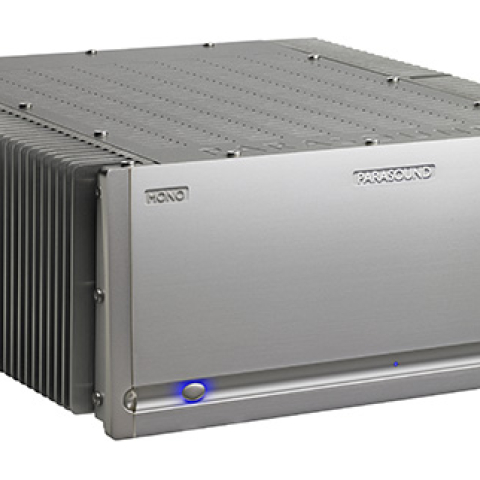
By now you may be wondering if I'm about to claim that the Pass Labs XA200.8 is the sun, moon, and stars, and better than Peter Pan or Beyoncé. Hardly. It had limitations, and one of those was in the bass. As much as the $42,000/pair XA200.8 delivered copious deep bass, it lacked the speed and slam of the Dan D'Agostino Master Audio Systems Progression Mono ($38,000/pair) and some of the other monoblocks I've reviewed—eg, the Audionet Max ($30,500/pair).
When it came to the speed and impact of the slamming bass of "Electrified II," from Yello's Toy (24/48 WAV, Polydor 4782160/HDtracks), or the stereo remix of "Lucy in the Sky with Diamonds" from the Beatles' Sgt. Pepper's Lonely Heart Club Band (24/96 WAV, Apple/Parlophone B0026524-02/HDtracks), the XA200.8s sounded a bit soft and unfocused next to the D'Agostino Progression Monos. I played through the Progressions a recording of works by J.S. Bach arranged for mandolin, cello, and double bass and performed by Chris Thile, Yo-Yo Ma, and Edgar Meyer (24/96 WAV, Nonesuch 558933/HDtracks), and couldn't help noticing how much tighter and more defined Meyer's bass sounded through the D'Agostino amps.
The Progression Mono may lack the XA200.8's special glow, but it scores major points in bass, detail, and honesty. If I wanted to hear the differences among the sounds of major orchestras, or compare the tones of Daniel Hope's and David Oistrakh's violins, I think I'd turn first to the Progression. Its sound is more straight-ahead and naked in its honesty.
The XA200.8s' reproduction of air around individual instruments was fine, but through Wilson Audio's Alexia and Alexia 2 speakers the Progression Monos topped it in the presentation of the entire acoustic spaces of recording venues. The D'Agostino also excelled in dynamic contrast—hardly a surprise, given the Progression Mono's greater power into these 4 ohm Wilson speakers: 1000W vs the XA200.8's 400W.
 Which led to another observation: The Pass Labs amp was really challenged by the original Alexia's impedance dip in the bass, which rendered its low bass flabbier than I have heard from any other XA.8-series amps of my experience. The Progression's bass, on the other hand, sounded impressively tight through the original Alexias. Through the Alexia Series 2 speakers, although both amps delivered more bass—and bass that was better integrated with the midrange and treble—the Progression Monos retained their supremacy as the tighter, faster, and more powerful bass conduit. (See my Follow-Up on the Alexia 2.)
But I can easily overlook the XA200.8's shortcomings because I would never want to be without the drop-dead gorgeousness of its sound. I'm not sure I'd be equally enthused were my daily fare jazz, rock, souped-up pop, etc. But it isn't. For the music I love, from grand opera to chamber music, listening through the Pass Laboratories XA200.8s compounded joy and beauty with more joy and beauty.
Conclusion
Which led to another observation: The Pass Labs amp was really challenged by the original Alexia's impedance dip in the bass, which rendered its low bass flabbier than I have heard from any other XA.8-series amps of my experience. The Progression's bass, on the other hand, sounded impressively tight through the original Alexias. Through the Alexia Series 2 speakers, although both amps delivered more bass—and bass that was better integrated with the midrange and treble—the Progression Monos retained their supremacy as the tighter, faster, and more powerful bass conduit. (See my Follow-Up on the Alexia 2.)
But I can easily overlook the XA200.8's shortcomings because I would never want to be without the drop-dead gorgeousness of its sound. I'm not sure I'd be equally enthused were my daily fare jazz, rock, souped-up pop, etc. But it isn't. For the music I love, from grand opera to chamber music, listening through the Pass Laboratories XA200.8s compounded joy and beauty with more joy and beauty.
Conclusion
Few power amplifiers I've heard have sounded as beautiful as Pass Laboratories' XA200.8 monoblock. Having to stick to Stereophile's policy of not commenting at length on a product's sound quality until that product has been reviewed in our pages, when all I wanted to do was wax ecstatic about the sound of these amps, has been frustrating indeed.
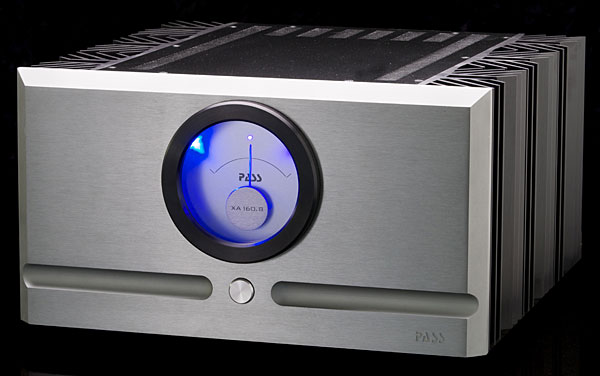
Now I can say it: I love the sound of the Pass Labs XA200.8 monoblock. It is the most beautiful-sounding, color-rich amplifier ever to grace my system, and its ability to illuminate music from within with subtlety and finesse puts it in a class all its own. It's a big beast, heavy and expensive and room-heating, and it's not the last word in bass slam, bass speed, and other things. But it sounds so gorgeous that all music lovers, regardless of financial means, owe themselves the gift of hearing it in a system that will show it to its best advantage. The XA200.8 is a masterpiece of amplifier design, and proof of Nelson Pass's genius and unfailing commitment to musical excellence.
Listening how music sounded through the XA200.8s, I thought of Glinda (Billie Burke) introducing herself to Dorothy (Judy Garland) in The Wizard of Oz: "I am a witch. I'm Glinda, the Good Witch of the North."1 The bubbling smile in Burke's voice complements her sparkling, star-tipped magic wand and jeweled crown with a special glow that defines her as a magical being of light. Similarly, the XA200.8s invested music with a special glow that let me feel its inspired essence.
This glowing sound in no way diminished the impact of music that is about things very different from goodness and happiness. The low, multilayered rumble and churning at the beginning of Alban Berg's often brutal Three Pieces for Orchestra, in the superb recording by Michael Tilson Thomas and the San Francisco Symphony (24/192 WAV, SFS Media/HDtracks), or the terror in Maria Callas's voice in the bloodcurdling Sleepwalking Scene of Verdi's Macbeth, in the 1958 stereo recording with Nicola Rescigno conducting the Philharmonia Orchestra (24/96 WAV, Warner Classics 634015/HDtracks), were enhanced by the special illumination that the XA200.8 brought to them. It was as if I were listening from a prime seat in the orchestra section where maximal color evoked maximal emotional response.
ComparisonsBy now you may be wondering if I'm about to claim that the Pass Labs XA200.8 is the sun, moon, and stars, and better than Peter Pan or Beyoncé. Hardly. It had limitations, and one of those was in the bass. As much as the $42,000/pair XA200.8 delivered copious deep bass, it lacked the speed and slam of the Dan D'Agostino Master Audio Systems Progression Mono ($38,000/pair) and some of the other monoblocks I've reviewed—eg, the Audionet Max ($30,500/pair).
Which led to another observation: The Pass Labs amp was really challenged by the original Alexia's impedance dip in the bass, which rendered its low bass flabbier than I have heard from any other XA.8-series amps of my experience. The Progression's bass, on the other hand, sounded impressively tight through the original Alexias. Through the Alexia Series 2 speakers, although both amps delivered more bass—and bass that was better integrated with the midrange and treble—the Progression Monos retained their supremacy as the tighter, faster, and more powerful bass conduit. (See my Follow-Up on the Alexia 2.)
But I can easily overlook the XA200.8's shortcomings because I would never want to be without the drop-dead gorgeousness of its sound. I'm not sure I'd be equally enthused were my daily fare jazz, rock, souped-up pop, etc. But it isn't. For the music I love, from grand opera to chamber music, listening through the Pass Laboratories XA200.8s compounded joy and beauty with more joy and beauty.
ConclusionFew power amplifiers I've heard have sounded as beautiful as Pass Laboratories' XA200.8 monoblock. Having to stick to Stereophile's policy of not commenting at length on a product's sound quality until that product has been reviewed in our pages, when all I wanted to do was wax ecstatic about the sound of these amps, has been frustrating indeed.