

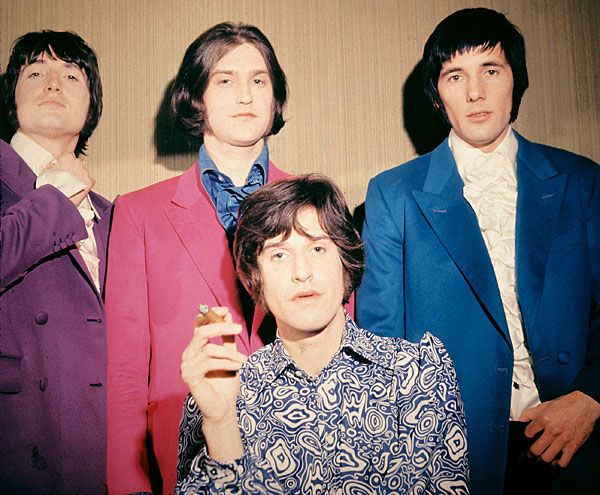
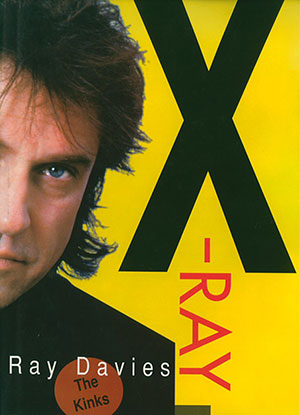
1996 was a banner year for Ray Davies—one of the most talented writers and conceptualists rock has ever produced. After more than 30 years with The Kinks, the group he has led off and on along with his younger brother Dave, Ray was enjoying a new career as a solo artist. His keen wit and storytelling ability enabled him to take his remarkable one-man play, 20th Century Man, to packed houses and critical acclaim all over the United States. The play, based loosely on his equally remarkable fictionalized autobiography, X-Ray, provided a unique insight into the forces that have shaped Ray Davies's long, prolific career as a rock songwriter.
As if that weren't enough, two of his classic songs—"Tired of Waiting" and "You Really Got Me"—were turned into soundtracks for ubiquitous television commercials for, respectively, a cold remedy and an automobile.
The best news for fans of Davies's work, however, is that he has been encouraged to reassemble The Kinks for a 1997 tour in support of the band's current two-CD live retrospective release, To the Bone.
Davies's solo success is ironic in the light of his desperate efforts to keep The Kinks going in the face of general disinterest from the record industry. Despite Davies's own well-documented talents, a track record of hit singles over more than 30 years and the continuing support of a hard core of fans who have faithfully followed The Kinks from the start, the group has been roughly treated by a series of record companies, and found itself in the mid-1990s without a major-label deal.
The fact is that The Kinks have created one of the most important album catalogs in rock history, and yet it is in shambles. None of the major labels that have released the band's albums over the years has treated this body of work with much respect. The only company that has served The Kinks well is the specialty reissue label Rhino, which has actually enhanced the part of the catalog it controls.
 Conceptually, Ray Davies has consistently been one of rock's true visionaries. The Kinks more or less accidentally invented heavy metal with the monster riff that powered the band's #1 1964 single (1965 in America), "You Really Got Me." That was the loudest, rawest piece of primal rock to ever top the charts at that point, and its echoes are still being heard in the countless generations of bands that have followed the noise:
Before George Harrison introduced sitars into the Beatles' music, The Kinks used a droning, Indian-music modality on the eerie single "See My Friends."
A year before the Beatles incorporated sound effects to help fashion a series of unrelated songs into the concept album Sgt. Pepper's Lonely Hearts Club Band, Ray Davies had applied the same techniques to the making of Face to Face, an album that has been out of print for so long it's become one of the true "lost" albums of the rock era.
Before The Who assembled the "rock opera" Tommy, Davies had written the album-length story Arthur, performed by The Kinks as part of a British television special that was never aired.
A decade before MTV debuted in 1982, Davies tried to get his record company to finance a series of multimedia rock stage plays featuring videos as an essential part of the concept. The record company rejected the idea, but Davies went ahead anyway and produced Soap Opera, Preservation, and Schoolboys in Disgrace.
The Test of Time
Conceptually, Ray Davies has consistently been one of rock's true visionaries. The Kinks more or less accidentally invented heavy metal with the monster riff that powered the band's #1 1964 single (1965 in America), "You Really Got Me." That was the loudest, rawest piece of primal rock to ever top the charts at that point, and its echoes are still being heard in the countless generations of bands that have followed the noise:
Before George Harrison introduced sitars into the Beatles' music, The Kinks used a droning, Indian-music modality on the eerie single "See My Friends."
A year before the Beatles incorporated sound effects to help fashion a series of unrelated songs into the concept album Sgt. Pepper's Lonely Hearts Club Band, Ray Davies had applied the same techniques to the making of Face to Face, an album that has been out of print for so long it's become one of the true "lost" albums of the rock era.
Before The Who assembled the "rock opera" Tommy, Davies had written the album-length story Arthur, performed by The Kinks as part of a British television special that was never aired.
A decade before MTV debuted in 1982, Davies tried to get his record company to finance a series of multimedia rock stage plays featuring videos as an essential part of the concept. The record company rejected the idea, but Davies went ahead anyway and produced Soap Opera, Preservation, and Schoolboys in Disgrace.
The Test of Time
The Kinks had the essential combination of elements necessary for a rock band to achieve greatness over an extended period of time: a songwriter of extraordinary skill and imagination, and a group sound developed and sustained by a virtuoso instrumentalist. The two elements will inevitably come into conflict over the course of a long career; the test of a truly great rock band is to transcend or even feed off that conflict in order to maintain its creative edge. The fact that these two key elements of The Kinks' identity are represented by brothers makes the initial bond and subsequent conflict all that more intense. Ray and Dave Davies can create together or war with each other, but they can never stop being brothers. That bond has been the secret weapon that has made The Kinks one of the most important bands in rock history. "Before we even had a band, me and Ray used to play together," recalled Dave. "Ray was very much the instrumentalist and I was the rhythm guitarist, but when we formed a band it changed. My playing was more aggressive, and it seemed to fit better when we had drums in the band.
"Ray and I have a very special relationship; it's been terrible at times, and yet we are still trying for something. We have the same goal but different methods of getting there. We're both fighting against each other and with each other. It's a fusion of tension that makes something real. Ray is an intellectual person, whereas I'm not, and I've gotten into a lot of emotional difficulties with people because of that. He's stimulated my intellectual part and I've stimulated his feeling part."
 Rattle and Hum
Ray's remarkable description in X-Ray of the band's early days reveals an awful lot about what makes The Kinks tick, as well as what the forces were that produced the golden age of British rockers who emerged in the 1960s. Few groups of popular musicians were as unanimous in their influences as the English rockers of the 1960s. They were all well-versed in American blues and roots music. Like the Rolling Stones, Animals, Who, Them, etc., the early Kinks were a blues band capable of delivering a fast-paced backbeat and a particularly raunchy guitar-driven sound. These bands understood the importance of distorting the guitar tone at the center of the sound. The rattle and hum of rock guitar, which set it apart from the "clean" tones used by most country and jazz guitarists, are traceable back to the secondary ambient sounds that are a central part of the African musical aesthetic. Early rock bands had to be pretty innovative to come up with the appropriate distortion techniques. Dave arrived at his distinctive instrumental voice during jam sessions with Ray in the family sitting room. Dave had a little green 10-watt Elpico amplifier whose tinny sound the brothers hated. Dave ran the Elpico amplifier's speaker output leads through a Vox AC 30 amplifier, then slashed the speaker cone of the Elpico to produce a buzzing, distorted sound. The boys christened this piece of custom equipment "the fart box."
Blues Covers
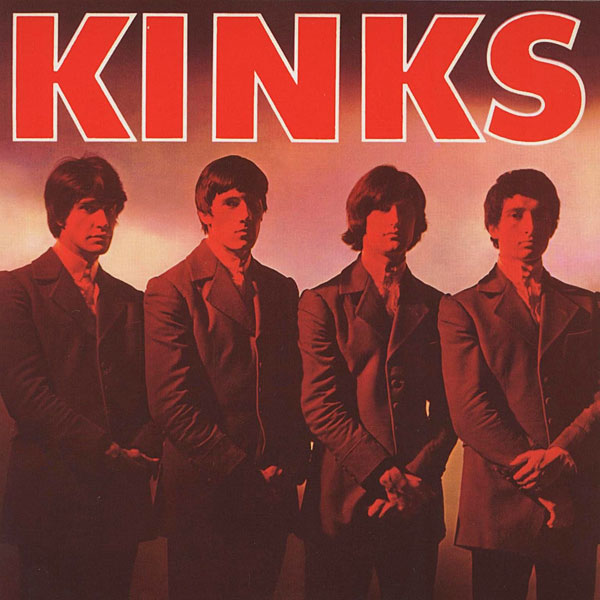
The earliest Kinks albums, made before Ray developed his unique songwriting voice, are studded with blues covers and '50s rock songs culled from a variety of black American sources, some fairly obscure: "Milk Cow Blues," "Long Tall Shorty," "I'm a Lover Not a Fighter," "Cadillac," "Long Tall Sally," "Beautiful Delilah," "Too Much Monkey Business," etc. Ray enthusiatically admits to the blues influence, tracing it back to his first glimpse of Big Bill Broonzy on a British television documentary. Ray began his professional career playing rhythm guitar and harmonica for the Dave Hunt band, whose residence at the Crawdaddy club in Richmond was later taken over by the Rolling Stones. Meanwhile, Dave had formed an instrumental band called the Ravens, with his friend Pete Quaife on bass, and the band recruited former Rolling Stones drummer Mick Avory. Ray joined in 1963. Rechristened with the attention-grabbing (they hoped) name The Kinks, the Davies brothers and friends cut their first single, a remake of Little Richard's "Long Tall Sally," for producer Shel Talmy. The session, which also yielded "I Took My Baby Home," "You Do Something to Me," and "You Still Want Me," was an uneventful start for The Kinks, but better days were ahead.
Talmy had been pressuring Ray to write some Beatles-type tunes, but during a package tour of England the band was getting its best response from another of Ray's songs, "You Really Got Me." Though he wrote it, Ray attributed its sound to the whole band, describing it as "a sort of Ventures-like instrumental track with a vocal line on top."
The band went into the studio to cut "You Really Got Me," didn't like the way it was produced, and insisted on re-cutting it with a sound closer to the live performances. Dave pulled out all the stops on the second take, even adding the doctored "fart box" to his gear for its peculiar distortion, and proceeded to record a milestone in rock history.
Meanwhile, Dave had formed an instrumental band called the Ravens, with his friend Pete Quaife on bass, and the band recruited former Rolling Stones drummer Mick Avory. Ray joined in 1963. Rechristened with the attention-grabbing (they hoped) name The Kinks, the Davies brothers and friends cut their first single, a remake of Little Richard's "Long Tall Sally," for producer Shel Talmy. The session, which also yielded "I Took My Baby Home," "You Do Something to Me," and "You Still Want Me," was an uneventful start for The Kinks, but better days were ahead.
Talmy had been pressuring Ray to write some Beatles-type tunes, but during a package tour of England the band was getting its best response from another of Ray's songs, "You Really Got Me." Though he wrote it, Ray attributed its sound to the whole band, describing it as "a sort of Ventures-like instrumental track with a vocal line on top."
The band went into the studio to cut "You Really Got Me," didn't like the way it was produced, and insisted on re-cutting it with a sound closer to the live performances. Dave pulled out all the stops on the second take, even adding the doctored "fart box" to his gear for its peculiar distortion, and proceeded to record a milestone in rock history.
 The Idea, Not the Instrument
There has been much subsequent speculation as to whether it was actually Jimmy Page who played the dexterous guitar solo on "You Really Got Me." (Page was a session guitarist at the time and was used extensively by Talmy.) Page was also rumored to have played some trademark guitar parts on the recordings of another of Talmy's famous clients, The Who. Session musicians standing in for bandmembers was common practice back then. Nicky Hopkins also did a lot of uncredited keyboard work on Talmy-produced albums—You Really Got Me, Kinks-Size, Kinda Kinks, The Live Kinks, Kinkdom, The Kink Kontroversy, Face to Face, and Something Else—as well as on various singles appearing on The Kink Kronikles.
Popular music history has since proven that the idea is more important than the instrument. The use of samples and other sonic prosthetics has become standard practice in the studio. It doesn't matter so much who actually played what on early Kinks records as much as it matters that the band came up with the ideas in the first place.
The first seven Talmy-produced albums collect a wildly inconsistent bunch of songs ranging from the sublime to the ridiculous. Ray Davies's Tin Pan Alley–level writing discipline enabled him to churn out an enormous quantity of work, some of it obviously made to order but much of it superb, while Dave sang most of the reconstituted blues tunes.
Reissues
You Really Got Me and Kinda Kinks are packaged together as a Mobile Fidelity Sound Lab gold disc; Kinks-Size and Kinkdom are collected as a Rhino twofer. The best way to approach the early material, however, is to head for the collections—the Rhino Greatest Hits disc, or the quirky, lovable Kink Kronikles.
 The Rhino collection is without question the best-value Kinks release on the market: 18 tracks of hits and essentials. The set starts off with the rip-roaring noise of the early singles, including "You Really Got Me," "All Day and All of the Night," "Set Me Free," "Who'll Be the Next in Line," "Come On Now," "Everybody's Gonna Be Happy," "I Need You," and "Till the End of the Day."
But as early as "Tired of Waiting for You," it was obvious that Ray was not simply going to churn out a series of soundalike songs. The complexity of his vision as a songwriter and the torrent of influences he was drinking in led him to write a series of more thoughtful singles for The Kinks in a quieter, folk-rock style—closer to what Bob Dylan was doing than the metal crunch of "You Really Got Me." The Rhino Hits package backs up the folk-rock singles "Tired of Waiting for You" and "A Well Respected Man" with the little-known "You Do Something to Me" and "You Still Want Me."
"Stop Your Sobbing," originally written in response to Talmy's request for Beatles-style material and one of the earliest manifestations of the emotional delicacy Ray could wrap into a lyric, went on to become an integral part of Kinks legend when Chrissie Hynde recorded it with the Pretenders. "Something Better Beginning" also looks forward to Ray's later writing with its interesting melody and a well-developed story line with a barbed edge.
Ray continued to pursue the role of social critic he first took on with "Well Respected Man" in the arch "Dedicated Follower of Fashion," a manners-skewing caricature that reportedly delighted no less a wit than Noël Coward. The rest of the album contains Ray's dramatic self-description "I'm Not Like Everybody Else," the strangely prophetic lament "Where Have All the Good Times Gone," and one of his greatest songs, the languorous #1 hit from the summer of 1966, "Sunny Afternoon."
The Rhino collection is without question the best-value Kinks release on the market: 18 tracks of hits and essentials. The set starts off with the rip-roaring noise of the early singles, including "You Really Got Me," "All Day and All of the Night," "Set Me Free," "Who'll Be the Next in Line," "Come On Now," "Everybody's Gonna Be Happy," "I Need You," and "Till the End of the Day."
But as early as "Tired of Waiting for You," it was obvious that Ray was not simply going to churn out a series of soundalike songs. The complexity of his vision as a songwriter and the torrent of influences he was drinking in led him to write a series of more thoughtful singles for The Kinks in a quieter, folk-rock style—closer to what Bob Dylan was doing than the metal crunch of "You Really Got Me." The Rhino Hits package backs up the folk-rock singles "Tired of Waiting for You" and "A Well Respected Man" with the little-known "You Do Something to Me" and "You Still Want Me."
"Stop Your Sobbing," originally written in response to Talmy's request for Beatles-style material and one of the earliest manifestations of the emotional delicacy Ray could wrap into a lyric, went on to become an integral part of Kinks legend when Chrissie Hynde recorded it with the Pretenders. "Something Better Beginning" also looks forward to Ray's later writing with its interesting melody and a well-developed story line with a barbed edge.
Ray continued to pursue the role of social critic he first took on with "Well Respected Man" in the arch "Dedicated Follower of Fashion," a manners-skewing caricature that reportedly delighted no less a wit than Noël Coward. The rest of the album contains Ray's dramatic self-description "I'm Not Like Everybody Else," the strangely prophetic lament "Where Have All the Good Times Gone," and one of his greatest songs, the languorous #1 hit from the summer of 1966, "Sunny Afternoon."
 "Sunny Afternoon" was the centerpiece of Face to Face, an album that marked a dramatic change in Ray's songwriting. He extended the conceit of "Dedicated Follower of Fashion" into "Dandy," a song covered by Herman's Hermits for a #1 hit before Ray could release it himself. Ray dealt with the peculiar difficulties of the deteriorating British class system in "Sunny Afternoon," "House in the Country," and "Most Exclusive Residence For Sale." He languished in exquisite solipsism on "Fancy" and "Rainy Day in June," and began to turn out a series of cameo tunes on such odd subjects as studio musicians ("Session Man"), rude neighbors on the telephone ("Party Line"), and extraordinary vacations ("Holiday in Waikiki").
Ray was turning into nothing short of an eccentric whose songwriting vision was sharp as a tack, still capable of producing hit singles yet focused on a series of themes about which no one else in the rock pantheon would dream of writing—with a few exceptions. The Rolling Stones later did songs apparently fashioned after "Dandy" ("I'm Just Sitting on a Fence") and "Party Line" ("Connection").
"Sunny Afternoon" was the centerpiece of Face to Face, an album that marked a dramatic change in Ray's songwriting. He extended the conceit of "Dedicated Follower of Fashion" into "Dandy," a song covered by Herman's Hermits for a #1 hit before Ray could release it himself. Ray dealt with the peculiar difficulties of the deteriorating British class system in "Sunny Afternoon," "House in the Country," and "Most Exclusive Residence For Sale." He languished in exquisite solipsism on "Fancy" and "Rainy Day in June," and began to turn out a series of cameo tunes on such odd subjects as studio musicians ("Session Man"), rude neighbors on the telephone ("Party Line"), and extraordinary vacations ("Holiday in Waikiki").
Ray was turning into nothing short of an eccentric whose songwriting vision was sharp as a tack, still capable of producing hit singles yet focused on a series of themes about which no one else in the rock pantheon would dream of writing—with a few exceptions. The Rolling Stones later did songs apparently fashioned after "Dandy" ("I'm Just Sitting on a Fence") and "Party Line" ("Connection").
Conceptually, Ray Davies has consistently been one of rock's true visionaries. The Kinks more or less accidentally invented heavy metal with the monster riff that powered the band's #1 1964 single (1965 in America), "You Really Got Me." That was the loudest, rawest piece of primal rock to ever top the charts at that point, and its echoes are still being heard in the countless generations of bands that have followed the noise:
The Kinks had the essential combination of elements necessary for a rock band to achieve greatness over an extended period of time: a songwriter of extraordinary skill and imagination, and a group sound developed and sustained by a virtuoso instrumentalist. The two elements will inevitably come into conflict over the course of a long career; the test of a truly great rock band is to transcend or even feed off that conflict in order to maintain its creative edge. The fact that these two key elements of The Kinks' identity are represented by brothers makes the initial bond and subsequent conflict all that more intense. Ray and Dave Davies can create together or war with each other, but they can never stop being brothers. That bond has been the secret weapon that has made The Kinks one of the most important bands in rock history. "Before we even had a band, me and Ray used to play together," recalled Dave. "Ray was very much the instrumentalist and I was the rhythm guitarist, but when we formed a band it changed. My playing was more aggressive, and it seemed to fit better when we had drums in the band.
Rattle and HumRay's remarkable description in X-Ray of the band's early days reveals an awful lot about what makes The Kinks tick, as well as what the forces were that produced the golden age of British rockers who emerged in the 1960s. Few groups of popular musicians were as unanimous in their influences as the English rockers of the 1960s. They were all well-versed in American blues and roots music. Like the Rolling Stones, Animals, Who, Them, etc., the early Kinks were a blues band capable of delivering a fast-paced backbeat and a particularly raunchy guitar-driven sound. These bands understood the importance of distorting the guitar tone at the center of the sound. The rattle and hum of rock guitar, which set it apart from the "clean" tones used by most country and jazz guitarists, are traceable back to the secondary ambient sounds that are a central part of the African musical aesthetic. Early rock bands had to be pretty innovative to come up with the appropriate distortion techniques. Dave arrived at his distinctive instrumental voice during jam sessions with Ray in the family sitting room. Dave had a little green 10-watt Elpico amplifier whose tinny sound the brothers hated. Dave ran the Elpico amplifier's speaker output leads through a Vox AC 30 amplifier, then slashed the speaker cone of the Elpico to produce a buzzing, distorted sound. The boys christened this piece of custom equipment "the fart box."
The earliest Kinks albums, made before Ray developed his unique songwriting voice, are studded with blues covers and '50s rock songs culled from a variety of black American sources, some fairly obscure: "Milk Cow Blues," "Long Tall Shorty," "I'm a Lover Not a Fighter," "Cadillac," "Long Tall Sally," "Beautiful Delilah," "Too Much Monkey Business," etc. Ray enthusiatically admits to the blues influence, tracing it back to his first glimpse of Big Bill Broonzy on a British television documentary. Ray began his professional career playing rhythm guitar and harmonica for the Dave Hunt band, whose residence at the Crawdaddy club in Richmond was later taken over by the Rolling Stones.
Meanwhile, Dave had formed an instrumental band called the Ravens, with his friend Pete Quaife on bass, and the band recruited former Rolling Stones drummer Mick Avory. Ray joined in 1963. Rechristened with the attention-grabbing (they hoped) name The Kinks, the Davies brothers and friends cut their first single, a remake of Little Richard's "Long Tall Sally," for producer Shel Talmy. The session, which also yielded "I Took My Baby Home," "You Do Something to Me," and "You Still Want Me," was an uneventful start for The Kinks, but better days were ahead.
The Idea, Not the InstrumentThere has been much subsequent speculation as to whether it was actually Jimmy Page who played the dexterous guitar solo on "You Really Got Me." (Page was a session guitarist at the time and was used extensively by Talmy.) Page was also rumored to have played some trademark guitar parts on the recordings of another of Talmy's famous clients, The Who. Session musicians standing in for bandmembers was common practice back then. Nicky Hopkins also did a lot of uncredited keyboard work on Talmy-produced albums—You Really Got Me, Kinks-Size, Kinda Kinks, The Live Kinks, Kinkdom, The Kink Kontroversy, Face to Face, and Something Else—as well as on various singles appearing on The Kink Kronikles.
You Really Got Me and Kinda Kinks are packaged together as a Mobile Fidelity Sound Lab gold disc; Kinks-Size and Kinkdom are collected as a Rhino twofer. The best way to approach the early material, however, is to head for the collections—the Rhino Greatest Hits disc, or the quirky, lovable Kink Kronikles.
The Rhino collection is without question the best-value Kinks release on the market: 18 tracks of hits and essentials. The set starts off with the rip-roaring noise of the early singles, including "You Really Got Me," "All Day and All of the Night," "Set Me Free," "Who'll Be the Next in Line," "Come On Now," "Everybody's Gonna Be Happy," "I Need You," and "Till the End of the Day."
But as early as "Tired of Waiting for You," it was obvious that Ray was not simply going to churn out a series of soundalike songs. The complexity of his vision as a songwriter and the torrent of influences he was drinking in led him to write a series of more thoughtful singles for The Kinks in a quieter, folk-rock style—closer to what Bob Dylan was doing than the metal crunch of "You Really Got Me." The Rhino Hits package backs up the folk-rock singles "Tired of Waiting for You" and "A Well Respected Man" with the little-known "You Do Something to Me" and "You Still Want Me."
"Stop Your Sobbing," originally written in response to Talmy's request for Beatles-style material and one of the earliest manifestations of the emotional delicacy Ray could wrap into a lyric, went on to become an integral part of Kinks legend when Chrissie Hynde recorded it with the Pretenders. "Something Better Beginning" also looks forward to Ray's later writing with its interesting melody and a well-developed story line with a barbed edge.
"Sunny Afternoon" was the centerpiece of Face to Face, an album that marked a dramatic change in Ray's songwriting. He extended the conceit of "Dedicated Follower of Fashion" into "Dandy," a song covered by Herman's Hermits for a #1 hit before Ray could release it himself. Ray dealt with the peculiar difficulties of the deteriorating British class system in "Sunny Afternoon," "House in the Country," and "Most Exclusive Residence For Sale." He languished in exquisite solipsism on "Fancy" and "Rainy Day in June," and began to turn out a series of cameo tunes on such odd subjects as studio musicians ("Session Man"), rude neighbors on the telephone ("Party Line"), and extraordinary vacations ("Holiday in Waikiki").
Ray was turning into nothing short of an eccentric whose songwriting vision was sharp as a tack, still capable of producing hit singles yet focused on a series of themes about which no one else in the rock pantheon would dream of writing—with a few exceptions. The Rolling Stones later did songs apparently fashioned after "Dandy" ("I'm Just Sitting on a Fence") and "Party Line" ("Connection").















