Music Surround-Sound Components (other than speakers and disc players)
A+
Merging Technologies NADAC Multichannel-8: $11,500
Among pro-audio companies that have set their sights on the domestic market, the Swiss manufacturer Merging Technologies is noted for its experience with high-resolution networked-audio interfaces. Their NADAC Multichannel-8 (its first name stands for Network Attached Digital to Analogue Converter) is intended for use with network-based file players, and is compatible with the audio-specific Ravenna protocol. Via Ethernet, the Multichannel-8 supports PCM up to 384kHz, plus DXD and DSD256; S/PDIF and AES/EBU inputs are also supplied, and these are compatible with up to 192kHz, and DSD over PCM (DoP). In KR's system, physical hookup went smoothly, and although there was a hitch or two in setup, the effort was rewarded: "Even admitting to a positive expectation bias, I was impressed with the sound, not disappointed." KR observed that, while listening to a multichannel DSD256 file, "I had the disturbing but exhilarating feeling that music was actually being made in my room, not merely reproduced. The sound was no more 'multichannel' than it was 'stereo.'" Speaking of which, a stereo-only version of the Multichannel-8, the NADAC Stereo, is available for $10,500. (Vol.39 Nos.3 & 5 WWW) A Bryston 9B-SST2: $9095 ★
The 9B-SST2 power amplifier (called 9B-THX at the time of the review) boasts five channels, 120Wpc into 8 ohms, and is built like pro gear; ie, like a tank. Hand-soldered, double-sided glass-epoxy boards and elaborate grounding scheme front special-grade steel toroidal transformers. According to JA, "the excellent set of measurements indicates solid, reliable engineering." LG was impressed by this amp's speed, power, extension, its tightness and definition in the bass, and its "excellent" midrange. Fully the equal of more costly amps, with wide dynamic contrasts and "involving" vocals, and sonically similar to previous Bryston ST amps. THX conformance, a 20-year (!) warranty, and a reasonable price make this beefy, reliable amp an attractive package—a perfect choice, suggests LG, for home-theater and multichannel music systems. KR's long-term multi-channel reference. (Vol.23 No.9 WWW) Bryston SP-3: $9995 ★
The SP-3 combines a true analog preamp and a full-featured multichannel digital audio processor in a beautifully built, relatively compact (17" W by 5.75" H by 14.25" D) case. It uses Bryston's high-quality 24-bit/192kHz DACs and offers a full suite of connections, including: eight HDMI inputs, two HDMI outputs, a 7.1 set of analog inputs and two 7.1 sets of outputs, four S/PDIF inputs, two AES/EBU inputs, and USB, RS-232, and Ethernet jacks. The sound from the SP-3's analog stereo inputs was "absolutely pristine, powerful, and a breath of fresh air," while digital S/PDIF or TosLink datastreams sounded transparent and convincing, with especially detailed and extended treble. "I think the Bryston SP-3 is the first great audiophile preamplifier-processor," KR concluded, "It almost redefines Class A sound for a surround processor." (Vol.35 Nos.5 & 7 WWW)
Classé Sigma AMP5 power amplifier: $5000
From Classé's Sigma series of Chinese-made and comparatively budget-priced components comes their new AMP5, descended from the Sigma AMP2 stereo amplifier. The five-channel AMP5 shares the proprietary class-D technology of its two-channel brother, and gives the user a choice of inputs: RCA jacks for all five, or XLRs for the two front channels and RCAs for the remainder. On installing the AMP5 in his system, KR "immediately" heard a performance distinction, and ultimately praised the amp's midrange and treble as "pure and smooth—something of a surprise for a class-D amp—and the bass was powerful, delineated, and extended." His verdict: "performance that easily competes with or outperforms comparable nonswitching designs." (Vol.38 No.5 WWW) Classé Sigma SSP preamplifier-processor: $5000
The Chinese-built Classé Sigma SSP offers a less expensive alternative to the company's flagship, the SSP-800 ($9500), without giving up too much in the bargain. The Sigma lacks an analog 7.1-channel input, and doesn't support composite or component video. Video inputs and outputs are limited to HDMI: eight of the former and only one of the latter. But the Sigma's parametric equalizer has more bandpass filters per channel—five instead of nine—and the less expensive component supports DLNA audio via Ethernet and AirPlay: "Ideas not yet born when the SSP-800 appeared," as KR puts it. Perhaps best of all, per KR, "the Classé Sigma SSP sounds more like a top-tier analog preamp than any pre-pro near its price." (Vol.38 No.5 WWW) exaSound e28 Mk.2 multichannel DAC: $3299
Like exaSound's e18, the e28 uses a Sabre32 D/A chip capable of handling almost any PCM format with resolutions up to 32-bit/384kHz; but, while the earlier model could play DSD files only in stereo and at the base sampling rate of 2.82MHz, the e28 handles DSD sampling rates of 2.82, 3.072, 5.64, 6.14, 11.28, and 12.28MHz without converting the signal to PCM. In addition, the e28 includes an enhanced headphone output, and is specified as having lower distortion and noise than its predecessor in every measured mode. The sound was smooth and balanced overall, with sweet highs, a decidedly pure midrange, and an exceptional sense of space, said Kal. "The exaSound e28 is a real-world, second-generation, cutting-edge, multichannel DAC. I wouldn't hold my breath waiting for something better to come along any time soon," he concluded. (Vol.36 No.11, Vol.38 No.11 WWW)
Illusonic Immersive Audio Processor IAP 16: 16,000 CHF plus tax
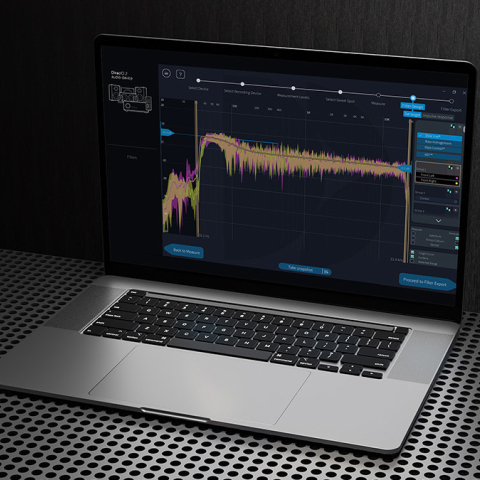
Made in Switzerland, the unusually versatile—if very expensive—Immersive Audio Processor includes a five-band parametric equalizer in each of its 16 output channels. It processes two- and multichannel sources into one of 168 loudspeaker setups with the ability to manipulate the presentation's spatial distribution using three parameters: Center, Depth/3D, and Immersion. A superb control app provides an attractive graphic interface for accessing all of the IAP's functions, and works in real time so the user can immediately hear the effects of any adjustments. Though it lacks high-resolution decoding and doesn't accommodate multiple remote zones, the IAP has four HDMI inputs and one HDMI output, three coax and two optical digital inputs, three analog stereo RCA inputs, an XLR analog stereo output, and 16 additional XLR output connectors. Setup was relatively simple, operation was flawless, and the sound was remarkably clean, transparent, and balanced, said Kal. (Vol.37 No.1 WWW) Krell Foundation preamplifier/processor: $7500 (with 4K)
Despite some wrinkles with the EQ system, this is an excellent-sounding and proficient pre/pro for audiophile ears. DSD capability is now being added. (Vol.37 No.5 WWW) Marantz AV8802A: $3999
KR, happy owner of a Marantz AV8801, intended to ignore its immediate successor, the new and somewhat more expensive AV8802: After all, the new model's improvements all seemed aimed more at the home-theater enthusiast than the music-only audiophile. But he relented on learning that, for the AV8802, Marantz has eliminated all op-amps from their signature Hyper Dynamic Amplifier Modules (HDAMs), thus promising even more of the analog refinement for which the AV8801 was known. The AV8802 offers 13.2 output channels vs the 11.2 of the AV8801, and seven HDMI inputs vs its predecessor's 6. The AV8802 supports Dolby Atmos and Auro Technologies' Auro-3D, and, with the advent of the AV8802A—to which any AV8802 can be upgraded—HDCP 2.2 copy-prevention technology. After driving its analog inputs with the analog outputs of various DACs, KR declared that, "in almost every way, the AV8802A was an improvement over the AV8801." His conclusion: "It's easy to recommend the AV8802A, despite the bump in cost: It offers cutting-edge features and outstanding sound." (Vol.38 No.11 WWW)
McIntosh MC303: $11,000 ★
The three-channel, 300Wpc MC303 amplifier measures 17.75" wide by 12.4" high by 22" deep and weighs 155 lbs. Its large front panel is home to three blue power-level meters, two gold-rimmed knobs for meter illumination and power, and two substantial handles. Driving KR's B&W 802D loudspeakers, the MC303 delivered "the relaxed spaciousness and transparency of master tapes." There was a smoothness that extended through the frequency spectrum and seemed to erase the 802Ds' crossover transitions. The Mac couldn't quite match the firm bass or natural treble of the Bel Canto Ref1000 Mk.II monoblocks, however. (Vol.32 No.5 WWW) Meridian HD621 HDMI Audio Processor: $2000 ★
Meridian's HD621 HDMI Audio Processor smoothly integrates six HDMI inputs, HD audio processing, and SD upsampling with any Meridian processor that can handle a Smartlink/MHR, including the G61R, G68, C61R, and the 861. It extracts the PCM audio data from the HDMI input, FIFO-buffers the PCM, and up/downsamples it for output to the main processor. Upsampling is accomplished by "apodizing" filters identical to those used in the Meridian 808i.2 player-preamp. HDMI from the HD621 sounded "more detailed and open" than PCM data via the Oppo DV-980H's three S/PDIF connections, while "Red Book" CD sounded "superb" through the Meridian. "So rejoice—the HD621 brings HD audio to Meridian systems, and it sounds superb with non-HD sources as well," said KR. (Vol.32 No.9 WWW) Meridian Reference 861: $20,000 ★
Multimedia controller with video, DSP-based decoding for matrixed and discrete multichannel audio sources. Functions as analog preamplifier-controller, digital and video controller, and A/D–D/A converter. Built-in, reprogrammable decoding of multichannel sources (Dolby Pro Logic, Dolby Digital, DTS, Ambisonic, etc.), plus THX and Trifield output from two-channel sources. All inputs digitally processed. Of Trifield's synthesized front-three-channels output, KR observed, "I came to regard the loss of air and the narrower soundstage as acceptable concomitants of the richer, tighter, better-defined central images. 'Audiophile air' began to seem an artifact rather than an enhancement." DTS and Dolby Digital 5.1 music recordings "injected" ambiences whose acoustics superseded his room's. Multichannel is immersive, but our KR would rather not sit in the middle of a string quartet or orchestra. For two-channel, "equal to the best...beyond significant reproach." Multichannel, he declared, is the future, and Meridian is ready now. Logical but complicated setup and option procedures entered via PC; heavy dealer involvement is key to getting the best from this ultimate component. But when the 861 is programmed for precise time alignment and amplitude balance among the speakers, and the crossover and bass management adjusted independently for the main, center, and rear channels, "everything seemed just right, and it made for consistently satisfying listening," he decided. "The TriField DSP is a greatly advantageous feature that deserves more recognition. I felt confident that whatever little silver disc I put into the 800-861, it would sound superb." Meridian's new MConfig program replaces pages of configuration options with a drag-and-drop graphic user interface, and offers guided channel-level settings and room-correction setup routines. KR: "The upgraded 861 Reference's sound was delightfully and characteristically transparent?.Still Class A after all these years." The updates in Version 6 of the 861 preamplifier-processor include SpeakerLink connections for Meridian's DSP speakers, an "endpoint" card for optimal performance with Meridian's Sooloos music-server systems, a proprietary apodizing upsampling filter for all digital inputs, and 24-bit/192kHz DACs. The 861 v6 partnered a delicately pure and transparent midrange and treble with exquisite delineation of voices and instruments, said KR. "The 861 has always been and still is the best-sounding audio processor I have heard," he concluded. Of the V8 refinements, some—most notably the newly required use of Meridian's SpeakerLink digital cable, which ensures a digital path from source to each speaker's integral amp—impact only users of Meridian's DSP speakers; others include a digital-input card that has a USB input—which itself may open the door for 24/192 input—as well as a linear power supply for lower noise, and redesigned oscillators and clocking that, according to Meridian, reduce jitter by 40%. KR's verdict: "Overall, the Meridian Reference 861, especially in its V8 incarnation, is still my favorite audio preamplifier-processor to live with." Price varies with options chosen. HD621 outboard processor adds HDMI capability. (Vol.23 No.2, Vol.26 No.8, Vol.29 No.7, Vol.34 No.5, Vol.37 No.11 WWW)
NAD Masters Series M17: $5499
In KR's view, NAD's Masters Series of products has of late taken a turn from the conservative to the adventurous—evidence of which he sees in the Masters M17, which contains individual, updateable modules for digital video, analog video, digital audio, and analog audio. Although the current model lacks a USB port and audio-data Ethernet port, a fifth module, to support streaming and Bluesound, is said to be in the works. Although KR criticized the poor positioning off the front-panel Off/Standby switch, he declared that "the M17's remote control was an unalloyed delight: slim, and just hefty enough to feel good in the hand." According to KR, "The M17's sound, too, was delightful." He noted dynamics that were "precise and satisfying," and bass that was "delivered with authority"—and that "playing hi-rez and/or multichannel files from my server, connected to the M17 via HDMI, was simply glorious, especially as these signals were passed through a Dirac Live speaker-and-room–correction filter set at [24-bit/96kHz]." (Vol.38 No.1 WWW) NAD Masters Series M27: $3999
"No mere afterthought to the Masters M17 pre-pro," according to KR, the Masters M27 is a seven-channel class-D power amp based on the recent Hypex Ncore module. Single-ended (RCA) and balanced (XLR) inputs are provided for all channels, and the Masters M27 is rated at 250Wpc—or 180Wpc with all seven channels driven. A mildly wonky on/off switch was the only fly in this multichannel ointment: KR praised the M27's sound as "notably clean and punchy," adding that "[the amplifier's] midrange and treble were completely free of any grain or, significantly, the grayish character that is a consistent flaw in the sounds of many of the otherwise excellent class-D amps I've used." (Vol.38 No.1 WWW) Parasound Halo A 31: $3295 $$$ ★
Based on circuitry developed by John Curl for the highly praised Halo JC 1, the three-channel A 31 power amplifier is rated to deliver 250Wpc into 8 ohms or 400Wpc into 4 ohms. Like other Halo models, the A 31 is solidly built and has a clean, attractive, brushed-aluminum faceplate. On the rear panel are three groups of connectors/controls, one per channel, including balanced and unbalanced inputs and gain controls. Though it lacked some upper-bass richness, the A 31 had a "clean, luminous" overall sound, with a sophisticated, detailed treble; rich, clean midrange; and firm, extended bass, said KR, adding that "the sound is full, balanced and detailed and packs a wallop." (Vol.35 No.9 WWW)
Parasound Halo P 7: $2295 $$$ ★
The Halo P 7 is a full-featured analog stereo preamp with six stereo inputs, balanced and unbalanced outputs, front-panel headphone and MP3 jacks, and an MM/MC phono preamp. It also provides two 7.1-channel unbalanced inputs that can be set for home-theater bypass, optional bass management for all sources, and RS-232/12V connections to integrate with modern A/V systems. With its "delightfully open, balanced sound" and outstanding versatility, the Halo P 7 is "the category killer of analog multichannel preamps or HT bypass," raved KR. (Vol.32 No.1 WWW) Theta Digital Dreadnaught D: $6149.95 and up
The fourth model in Theta Digital's Dreadnaught series—hence the D, which also refers to the output stage's class of operation—the Dreadnaught D uses Hypex NCore modules, coupled not with a switch-mode power supply but with a distinctly robust supply of more traditional design and construction. Hence this class-D amp's atypical size and weight of 17.5" wide by 7.9" high by 19.6" deep and 98.6 lbs. A modular design, the Dreadnaught D can be had with up to eight channels of 225W each; Theta Digital sent us a 225Wx5 sample, which, according to KR, "not only sounded good, it sounded right." After writing his review, KR continued to live with the Dreadnaught D, using only three of its five channels, and his enthusiasm for it didn't wane: "I've been on a long search for a powerful, transparent three-channel amplifier that I can lift. The Dreadnaught D meets the first two criteria." (Vol.39 Nos. 3 & 5 WWW) B Emotiva XMC-1 preamplifier-processor: $2499 $$$
The US-made Emotiva XMC-1, a 7.2-channel preamplifier-processor in a substantial (21 lbs) enclosure, offers more controls than its more austere high-end brethren (the Classé Sigma comes to mind) while forgoing needless bells and whistles: a user interface that Goldilocks and KR would describe as "just right." KR was also impressed by the XMC-1's "exemplary" OLED screen, which displays three lines of information, and the "outstanding" range of controls afforded by its front panel and remote handset. Of perhaps greatest interest is the XMC-1's distinction as the first affordable pre-pro to include Dirac Live room-correction software—in Limited Edition (LE) form—and a calibrated USB microphone; Emotiva offers a $99 upgrade for users who wish to upgrade to the full version of Dirac Live. KR's verdict: "I found the XMC-1 to be a superb-sounding pre-pro for all media." (Vol.38 No.7 WWW)
Marantz MM8077: $2399 ★
The 150Wpc MM8077 is a seven-channel power amplifier. Each channel has selectable unbalanced RCA and balanced XLR inputs, driven by a common power supply equipped with a huge transformer and a generous capacitor reservoir. The MM8807 matched the much more expensive Bryston 9BST in terms of power, transient response, and imaging, but lacked some bass definition and control, said KR. An excellent multichannel amplifier, and a perfect partner for Marantz's AV8801 pre-pro, he concluded. (Vol.36 No.3 WWW) miniDSP U-DAC8: $275 $$$
According to KR, miniDSP's new U-DAC8 is, "by an order of magnitude, the least expensive multichannel DAC on the market." The PCM-only U-DAC8 handles resolutions up to 24-bit/192kHz, is powered by a 5V wall wart, and is addressed by a front-mounted USB Type A jack. Although the U-DAC8's better-than-average detail resolution seemed accompanied by "a somewhat etched treble," KR was pleased with its performance, noting that "music sounded pretty clean across the audioband, with particularly good, tight bass." Referring to this newest miniDSP DAC as "a giant-killer," KR concluded that "the U-DAC8 is an excellent way to begin listening to multichannel files." (Vol.38 No.9 WWW) NAD T 187: $2999
The versatile T 187 preamplifier-processor's modular construction enables various combinations of: 7.1-channel inputs and outputs, six pairs of stereo analog inputs and outputs, several video inputs, up to six HDMI inputs, three each coaxial and optical inputs, one each coaxial and optical output, an Ethernet jack, and a mini stereo jack for mobile players. Additionally, the NAD's unique application of Audyssey's MultEQ XT room-correction software includes a custom target curve developed by Paul Barton. Easy to set up and use, the T 187 offered a full-bodied sound with a smooth, detailed treble, said KR. Paul Barton's target curve added a touch of warmth, with stronger, tighter low bass. "Even if it doesn't do everything possible, the NAD T 187 does everything right," concluded KR. (Vol.36 No.1 WWW)
Rotel RMB-1585: $2999
A powerful and transparent 5-channel amplifier. (Vol.37 No.9 WWW)
Rotel RSP-1572: $2199 ★
This compact, handsome preamplifier-processor offers six HDMI, two component, and two composite video inputs; two HDMI, one component, and four composite video outputs; four optical and three coaxial digital audio inputs; eight stereo analog inputs; one 7.1-channel analog input; and one USB input. Audio outputs include one optical, one coax digital, two stereo analog, and one analog 7.1-channel preamp output with dual jacks for two center and two subwoofer outputs. While the RSP-1572 lacks auto-setup and room EQ capabilities, its variable filters allow the user to effectively deal with room acoustics. The Rotel offered transparent highs, a clean midrange, and full bass, said KR. "Those of us who don't mind getting our hands dirty with some measurement tools can have it all with the RSP-1572: great sound and great looks," he concluded, though he adds that the room EQ is a bit challenging. (Vol.35 No.3 WWW) C Yamaha Aventage MX-A5000: $2999.95
Measuring 17" W by 8.25" H by 18" D and weighing 56 lbs, the MX-A5000 is a massive and versatile 11-channel amp rated to deliver 150Wpc into 8 ohms. Rear-panel Channel Select switches and front-panel Speaker Select buttons permit a wide range of configurations, including: five-channel biamping, five main channels with two independently amplified zones, a triamped center channel in a mono- or biamped five-channel system, and other, more specialized arrangements. A perfect sonic partner for Yamaha's Aventage CX-A5000 pre-pro, the MX-A5000 produced a clean, open overall sound, with a slightly soft treble, well-defined midrange, and solid bass, said Kal. "If you need 11 channels, regardless of how you choose to use them, I highly recommend Yamaha's MX-A5000," he concluded. (Vol.37 No.3 WWW) Deletions
Nuforce AVP-18 not auditioned in a long time.
Among pro-audio companies that have set their sights on the domestic market, the Swiss manufacturer Merging Technologies is noted for its experience with high-resolution networked-audio interfaces. Their NADAC Multichannel-8 (its first name stands for Network Attached Digital to Analogue Converter) is intended for use with network-based file players, and is compatible with the audio-specific Ravenna protocol. Via Ethernet, the Multichannel-8 supports PCM up to 384kHz, plus DXD and DSD256; S/PDIF and AES/EBU inputs are also supplied, and these are compatible with up to 192kHz, and DSD over PCM (DoP). In KR's system, physical hookup went smoothly, and although there was a hitch or two in setup, the effort was rewarded: "Even admitting to a positive expectation bias, I was impressed with the sound, not disappointed." KR observed that, while listening to a multichannel DSD256 file, "I had the disturbing but exhilarating feeling that music was actually being made in my room, not merely reproduced. The sound was no more 'multichannel' than it was 'stereo.'" Speaking of which, a stereo-only version of the Multichannel-8, the NADAC Stereo, is available for $10,500. (Vol.39 Nos.3 & 5 WWW) A Bryston 9B-SST2: $9095 ★
The 9B-SST2 power amplifier (called 9B-THX at the time of the review) boasts five channels, 120Wpc into 8 ohms, and is built like pro gear; ie, like a tank. Hand-soldered, double-sided glass-epoxy boards and elaborate grounding scheme front special-grade steel toroidal transformers. According to JA, "the excellent set of measurements indicates solid, reliable engineering." LG was impressed by this amp's speed, power, extension, its tightness and definition in the bass, and its "excellent" midrange. Fully the equal of more costly amps, with wide dynamic contrasts and "involving" vocals, and sonically similar to previous Bryston ST amps. THX conformance, a 20-year (!) warranty, and a reasonable price make this beefy, reliable amp an attractive package—a perfect choice, suggests LG, for home-theater and multichannel music systems. KR's long-term multi-channel reference. (Vol.23 No.9 WWW) Bryston SP-3: $9995 ★
The SP-3 combines a true analog preamp and a full-featured multichannel digital audio processor in a beautifully built, relatively compact (17" W by 5.75" H by 14.25" D) case. It uses Bryston's high-quality 24-bit/192kHz DACs and offers a full suite of connections, including: eight HDMI inputs, two HDMI outputs, a 7.1 set of analog inputs and two 7.1 sets of outputs, four S/PDIF inputs, two AES/EBU inputs, and USB, RS-232, and Ethernet jacks. The sound from the SP-3's analog stereo inputs was "absolutely pristine, powerful, and a breath of fresh air," while digital S/PDIF or TosLink datastreams sounded transparent and convincing, with especially detailed and extended treble. "I think the Bryston SP-3 is the first great audiophile preamplifier-processor," KR concluded, "It almost redefines Class A sound for a surround processor." (Vol.35 Nos.5 & 7 WWW)
From Classé's Sigma series of Chinese-made and comparatively budget-priced components comes their new AMP5, descended from the Sigma AMP2 stereo amplifier. The five-channel AMP5 shares the proprietary class-D technology of its two-channel brother, and gives the user a choice of inputs: RCA jacks for all five, or XLRs for the two front channels and RCAs for the remainder. On installing the AMP5 in his system, KR "immediately" heard a performance distinction, and ultimately praised the amp's midrange and treble as "pure and smooth—something of a surprise for a class-D amp—and the bass was powerful, delineated, and extended." His verdict: "performance that easily competes with or outperforms comparable nonswitching designs." (Vol.38 No.5 WWW) Classé Sigma SSP preamplifier-processor: $5000
The Chinese-built Classé Sigma SSP offers a less expensive alternative to the company's flagship, the SSP-800 ($9500), without giving up too much in the bargain. The Sigma lacks an analog 7.1-channel input, and doesn't support composite or component video. Video inputs and outputs are limited to HDMI: eight of the former and only one of the latter. But the Sigma's parametric equalizer has more bandpass filters per channel—five instead of nine—and the less expensive component supports DLNA audio via Ethernet and AirPlay: "Ideas not yet born when the SSP-800 appeared," as KR puts it. Perhaps best of all, per KR, "the Classé Sigma SSP sounds more like a top-tier analog preamp than any pre-pro near its price." (Vol.38 No.5 WWW) exaSound e28 Mk.2 multichannel DAC: $3299
Like exaSound's e18, the e28 uses a Sabre32 D/A chip capable of handling almost any PCM format with resolutions up to 32-bit/384kHz; but, while the earlier model could play DSD files only in stereo and at the base sampling rate of 2.82MHz, the e28 handles DSD sampling rates of 2.82, 3.072, 5.64, 6.14, 11.28, and 12.28MHz without converting the signal to PCM. In addition, the e28 includes an enhanced headphone output, and is specified as having lower distortion and noise than its predecessor in every measured mode. The sound was smooth and balanced overall, with sweet highs, a decidedly pure midrange, and an exceptional sense of space, said Kal. "The exaSound e28 is a real-world, second-generation, cutting-edge, multichannel DAC. I wouldn't hold my breath waiting for something better to come along any time soon," he concluded. (Vol.36 No.11, Vol.38 No.11 WWW)
Made in Switzerland, the unusually versatile—if very expensive—Immersive Audio Processor includes a five-band parametric equalizer in each of its 16 output channels. It processes two- and multichannel sources into one of 168 loudspeaker setups with the ability to manipulate the presentation's spatial distribution using three parameters: Center, Depth/3D, and Immersion. A superb control app provides an attractive graphic interface for accessing all of the IAP's functions, and works in real time so the user can immediately hear the effects of any adjustments. Though it lacks high-resolution decoding and doesn't accommodate multiple remote zones, the IAP has four HDMI inputs and one HDMI output, three coax and two optical digital inputs, three analog stereo RCA inputs, an XLR analog stereo output, and 16 additional XLR output connectors. Setup was relatively simple, operation was flawless, and the sound was remarkably clean, transparent, and balanced, said Kal. (Vol.37 No.1 WWW) Krell Foundation preamplifier/processor: $7500 (with 4K)
Despite some wrinkles with the EQ system, this is an excellent-sounding and proficient pre/pro for audiophile ears. DSD capability is now being added. (Vol.37 No.5 WWW) Marantz AV8802A: $3999
KR, happy owner of a Marantz AV8801, intended to ignore its immediate successor, the new and somewhat more expensive AV8802: After all, the new model's improvements all seemed aimed more at the home-theater enthusiast than the music-only audiophile. But he relented on learning that, for the AV8802, Marantz has eliminated all op-amps from their signature Hyper Dynamic Amplifier Modules (HDAMs), thus promising even more of the analog refinement for which the AV8801 was known. The AV8802 offers 13.2 output channels vs the 11.2 of the AV8801, and seven HDMI inputs vs its predecessor's 6. The AV8802 supports Dolby Atmos and Auro Technologies' Auro-3D, and, with the advent of the AV8802A—to which any AV8802 can be upgraded—HDCP 2.2 copy-prevention technology. After driving its analog inputs with the analog outputs of various DACs, KR declared that, "in almost every way, the AV8802A was an improvement over the AV8801." His conclusion: "It's easy to recommend the AV8802A, despite the bump in cost: It offers cutting-edge features and outstanding sound." (Vol.38 No.11 WWW)
The three-channel, 300Wpc MC303 amplifier measures 17.75" wide by 12.4" high by 22" deep and weighs 155 lbs. Its large front panel is home to three blue power-level meters, two gold-rimmed knobs for meter illumination and power, and two substantial handles. Driving KR's B&W 802D loudspeakers, the MC303 delivered "the relaxed spaciousness and transparency of master tapes." There was a smoothness that extended through the frequency spectrum and seemed to erase the 802Ds' crossover transitions. The Mac couldn't quite match the firm bass or natural treble of the Bel Canto Ref1000 Mk.II monoblocks, however. (Vol.32 No.5 WWW) Meridian HD621 HDMI Audio Processor: $2000 ★
Meridian's HD621 HDMI Audio Processor smoothly integrates six HDMI inputs, HD audio processing, and SD upsampling with any Meridian processor that can handle a Smartlink/MHR, including the G61R, G68, C61R, and the 861. It extracts the PCM audio data from the HDMI input, FIFO-buffers the PCM, and up/downsamples it for output to the main processor. Upsampling is accomplished by "apodizing" filters identical to those used in the Meridian 808i.2 player-preamp. HDMI from the HD621 sounded "more detailed and open" than PCM data via the Oppo DV-980H's three S/PDIF connections, while "Red Book" CD sounded "superb" through the Meridian. "So rejoice—the HD621 brings HD audio to Meridian systems, and it sounds superb with non-HD sources as well," said KR. (Vol.32 No.9 WWW) Meridian Reference 861: $20,000 ★
Multimedia controller with video, DSP-based decoding for matrixed and discrete multichannel audio sources. Functions as analog preamplifier-controller, digital and video controller, and A/D–D/A converter. Built-in, reprogrammable decoding of multichannel sources (Dolby Pro Logic, Dolby Digital, DTS, Ambisonic, etc.), plus THX and Trifield output from two-channel sources. All inputs digitally processed. Of Trifield's synthesized front-three-channels output, KR observed, "I came to regard the loss of air and the narrower soundstage as acceptable concomitants of the richer, tighter, better-defined central images. 'Audiophile air' began to seem an artifact rather than an enhancement." DTS and Dolby Digital 5.1 music recordings "injected" ambiences whose acoustics superseded his room's. Multichannel is immersive, but our KR would rather not sit in the middle of a string quartet or orchestra. For two-channel, "equal to the best...beyond significant reproach." Multichannel, he declared, is the future, and Meridian is ready now. Logical but complicated setup and option procedures entered via PC; heavy dealer involvement is key to getting the best from this ultimate component. But when the 861 is programmed for precise time alignment and amplitude balance among the speakers, and the crossover and bass management adjusted independently for the main, center, and rear channels, "everything seemed just right, and it made for consistently satisfying listening," he decided. "The TriField DSP is a greatly advantageous feature that deserves more recognition. I felt confident that whatever little silver disc I put into the 800-861, it would sound superb." Meridian's new MConfig program replaces pages of configuration options with a drag-and-drop graphic user interface, and offers guided channel-level settings and room-correction setup routines. KR: "The upgraded 861 Reference's sound was delightfully and characteristically transparent?.Still Class A after all these years." The updates in Version 6 of the 861 preamplifier-processor include SpeakerLink connections for Meridian's DSP speakers, an "endpoint" card for optimal performance with Meridian's Sooloos music-server systems, a proprietary apodizing upsampling filter for all digital inputs, and 24-bit/192kHz DACs. The 861 v6 partnered a delicately pure and transparent midrange and treble with exquisite delineation of voices and instruments, said KR. "The 861 has always been and still is the best-sounding audio processor I have heard," he concluded. Of the V8 refinements, some—most notably the newly required use of Meridian's SpeakerLink digital cable, which ensures a digital path from source to each speaker's integral amp—impact only users of Meridian's DSP speakers; others include a digital-input card that has a USB input—which itself may open the door for 24/192 input—as well as a linear power supply for lower noise, and redesigned oscillators and clocking that, according to Meridian, reduce jitter by 40%. KR's verdict: "Overall, the Meridian Reference 861, especially in its V8 incarnation, is still my favorite audio preamplifier-processor to live with." Price varies with options chosen. HD621 outboard processor adds HDMI capability. (Vol.23 No.2, Vol.26 No.8, Vol.29 No.7, Vol.34 No.5, Vol.37 No.11 WWW)
In KR's view, NAD's Masters Series of products has of late taken a turn from the conservative to the adventurous—evidence of which he sees in the Masters M17, which contains individual, updateable modules for digital video, analog video, digital audio, and analog audio. Although the current model lacks a USB port and audio-data Ethernet port, a fifth module, to support streaming and Bluesound, is said to be in the works. Although KR criticized the poor positioning off the front-panel Off/Standby switch, he declared that "the M17's remote control was an unalloyed delight: slim, and just hefty enough to feel good in the hand." According to KR, "The M17's sound, too, was delightful." He noted dynamics that were "precise and satisfying," and bass that was "delivered with authority"—and that "playing hi-rez and/or multichannel files from my server, connected to the M17 via HDMI, was simply glorious, especially as these signals were passed through a Dirac Live speaker-and-room–correction filter set at [24-bit/96kHz]." (Vol.38 No.1 WWW) NAD Masters Series M27: $3999
"No mere afterthought to the Masters M17 pre-pro," according to KR, the Masters M27 is a seven-channel class-D power amp based on the recent Hypex Ncore module. Single-ended (RCA) and balanced (XLR) inputs are provided for all channels, and the Masters M27 is rated at 250Wpc—or 180Wpc with all seven channels driven. A mildly wonky on/off switch was the only fly in this multichannel ointment: KR praised the M27's sound as "notably clean and punchy," adding that "[the amplifier's] midrange and treble were completely free of any grain or, significantly, the grayish character that is a consistent flaw in the sounds of many of the otherwise excellent class-D amps I've used." (Vol.38 No.1 WWW) Parasound Halo A 31: $3295 $$$ ★
Based on circuitry developed by John Curl for the highly praised Halo JC 1, the three-channel A 31 power amplifier is rated to deliver 250Wpc into 8 ohms or 400Wpc into 4 ohms. Like other Halo models, the A 31 is solidly built and has a clean, attractive, brushed-aluminum faceplate. On the rear panel are three groups of connectors/controls, one per channel, including balanced and unbalanced inputs and gain controls. Though it lacked some upper-bass richness, the A 31 had a "clean, luminous" overall sound, with a sophisticated, detailed treble; rich, clean midrange; and firm, extended bass, said KR, adding that "the sound is full, balanced and detailed and packs a wallop." (Vol.35 No.9 WWW)
The Halo P 7 is a full-featured analog stereo preamp with six stereo inputs, balanced and unbalanced outputs, front-panel headphone and MP3 jacks, and an MM/MC phono preamp. It also provides two 7.1-channel unbalanced inputs that can be set for home-theater bypass, optional bass management for all sources, and RS-232/12V connections to integrate with modern A/V systems. With its "delightfully open, balanced sound" and outstanding versatility, the Halo P 7 is "the category killer of analog multichannel preamps or HT bypass," raved KR. (Vol.32 No.1 WWW) Theta Digital Dreadnaught D: $6149.95 and up
The fourth model in Theta Digital's Dreadnaught series—hence the D, which also refers to the output stage's class of operation—the Dreadnaught D uses Hypex NCore modules, coupled not with a switch-mode power supply but with a distinctly robust supply of more traditional design and construction. Hence this class-D amp's atypical size and weight of 17.5" wide by 7.9" high by 19.6" deep and 98.6 lbs. A modular design, the Dreadnaught D can be had with up to eight channels of 225W each; Theta Digital sent us a 225Wx5 sample, which, according to KR, "not only sounded good, it sounded right." After writing his review, KR continued to live with the Dreadnaught D, using only three of its five channels, and his enthusiasm for it didn't wane: "I've been on a long search for a powerful, transparent three-channel amplifier that I can lift. The Dreadnaught D meets the first two criteria." (Vol.39 Nos. 3 & 5 WWW) B Emotiva XMC-1 preamplifier-processor: $2499 $$$
The US-made Emotiva XMC-1, a 7.2-channel preamplifier-processor in a substantial (21 lbs) enclosure, offers more controls than its more austere high-end brethren (the Classé Sigma comes to mind) while forgoing needless bells and whistles: a user interface that Goldilocks and KR would describe as "just right." KR was also impressed by the XMC-1's "exemplary" OLED screen, which displays three lines of information, and the "outstanding" range of controls afforded by its front panel and remote handset. Of perhaps greatest interest is the XMC-1's distinction as the first affordable pre-pro to include Dirac Live room-correction software—in Limited Edition (LE) form—and a calibrated USB microphone; Emotiva offers a $99 upgrade for users who wish to upgrade to the full version of Dirac Live. KR's verdict: "I found the XMC-1 to be a superb-sounding pre-pro for all media." (Vol.38 No.7 WWW)
The 150Wpc MM8077 is a seven-channel power amplifier. Each channel has selectable unbalanced RCA and balanced XLR inputs, driven by a common power supply equipped with a huge transformer and a generous capacitor reservoir. The MM8807 matched the much more expensive Bryston 9BST in terms of power, transient response, and imaging, but lacked some bass definition and control, said KR. An excellent multichannel amplifier, and a perfect partner for Marantz's AV8801 pre-pro, he concluded. (Vol.36 No.3 WWW) miniDSP U-DAC8: $275 $$$
According to KR, miniDSP's new U-DAC8 is, "by an order of magnitude, the least expensive multichannel DAC on the market." The PCM-only U-DAC8 handles resolutions up to 24-bit/192kHz, is powered by a 5V wall wart, and is addressed by a front-mounted USB Type A jack. Although the U-DAC8's better-than-average detail resolution seemed accompanied by "a somewhat etched treble," KR was pleased with its performance, noting that "music sounded pretty clean across the audioband, with particularly good, tight bass." Referring to this newest miniDSP DAC as "a giant-killer," KR concluded that "the U-DAC8 is an excellent way to begin listening to multichannel files." (Vol.38 No.9 WWW) NAD T 187: $2999
The versatile T 187 preamplifier-processor's modular construction enables various combinations of: 7.1-channel inputs and outputs, six pairs of stereo analog inputs and outputs, several video inputs, up to six HDMI inputs, three each coaxial and optical inputs, one each coaxial and optical output, an Ethernet jack, and a mini stereo jack for mobile players. Additionally, the NAD's unique application of Audyssey's MultEQ XT room-correction software includes a custom target curve developed by Paul Barton. Easy to set up and use, the T 187 offered a full-bodied sound with a smooth, detailed treble, said KR. Paul Barton's target curve added a touch of warmth, with stronger, tighter low bass. "Even if it doesn't do everything possible, the NAD T 187 does everything right," concluded KR. (Vol.36 No.1 WWW)
This compact, handsome preamplifier-processor offers six HDMI, two component, and two composite video inputs; two HDMI, one component, and four composite video outputs; four optical and three coaxial digital audio inputs; eight stereo analog inputs; one 7.1-channel analog input; and one USB input. Audio outputs include one optical, one coax digital, two stereo analog, and one analog 7.1-channel preamp output with dual jacks for two center and two subwoofer outputs. While the RSP-1572 lacks auto-setup and room EQ capabilities, its variable filters allow the user to effectively deal with room acoustics. The Rotel offered transparent highs, a clean midrange, and full bass, said KR. "Those of us who don't mind getting our hands dirty with some measurement tools can have it all with the RSP-1572: great sound and great looks," he concluded, though he adds that the room EQ is a bit challenging. (Vol.35 No.3 WWW) C Yamaha Aventage MX-A5000: $2999.95
Measuring 17" W by 8.25" H by 18" D and weighing 56 lbs, the MX-A5000 is a massive and versatile 11-channel amp rated to deliver 150Wpc into 8 ohms. Rear-panel Channel Select switches and front-panel Speaker Select buttons permit a wide range of configurations, including: five-channel biamping, five main channels with two independently amplified zones, a triamped center channel in a mono- or biamped five-channel system, and other, more specialized arrangements. A perfect sonic partner for Yamaha's Aventage CX-A5000 pre-pro, the MX-A5000 produced a clean, open overall sound, with a slightly soft treble, well-defined midrange, and solid bass, said Kal. "If you need 11 channels, regardless of how you choose to use them, I highly recommend Yamaha's MX-A5000," he concluded. (Vol.37 No.3 WWW) Deletions
Nuforce AVP-18 not auditioned in a long time.