

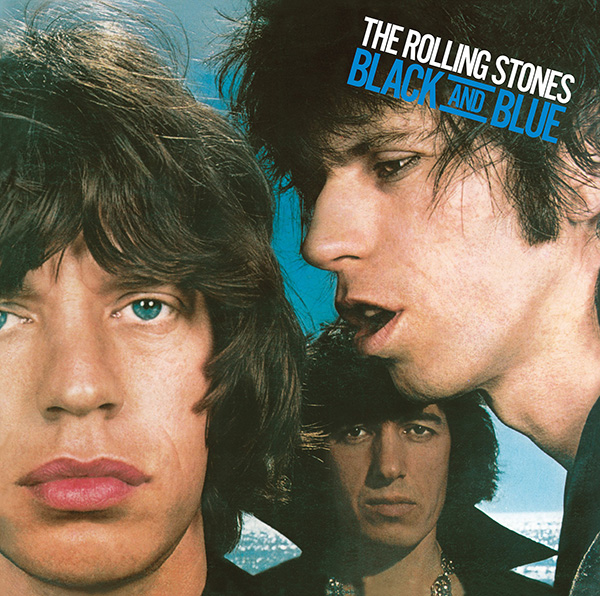
In the Rolling Stones' long history, the Mick Taylor era was a peak, if not the peak. Taylor, who replaced cofounder Brian Jones in the late 1960s, proved a great musical foil for Keith Richards. He was a technical wizard on the guitar; those fluid higher-octaves riffs and runs were the perfect counterpoint to Richards's jabbing and stabbing and growling style. At heart, he was a bluesman, so a great fit for a band named after a Muddy Waters tune. The run of albums from Let It Bleed through It's Only Rock 'n Roll took the Stones' music in new directions and set the standard for tight, fast, and loose arena rock circa the early 1970s.
It was great until it wasn't. Torn, frayed, drug-addled, and burned out, Taylor quit the Stones at the end of 1974, just before sessions for a new album were to start in Munich's Musicland Studios. Losing the flashiest part of their guitar onslaught would throw most rock bands for a loop. Not the Rolling Stones. Richards and Mick Jagger commenced to spend 6 months holding auditions for a new guitarist, even while recording an album.
That album, Black and Blue, was reissued in November 2025 in a variety of formats, a few months ahead of the golden anniversary of its April 1976 debut (footnote 1). The five-LP, one-Blu-ray Super Deluxe version is the subject of this review. Its two main features are a Steven Wilson remix of the album's 16-track tapes and a complete concert from Earl's Court, London, previously available only as a bootleg. The Blu-ray features a French TV special: Les Rolling Stones aux Abattoirs (The Rolling Stones at The Slaughterhouses) Paris-Juin 1976.
About those auditions: They were quite the happening. Jeff Beck and Rory Gallagher dropped by (and later claimed they were just jamming with friends). American guitarists Harvey Mandel (of Canned Heat) and Wayne Perkins (who played on Bob Marley's Catch a Fire and Joni Mitchell's Court and Spark) threw their hats in the ring and ended up on several Black and Blue tracks. Then Ronnie Wood showed up, and the pieces of the new-look Stones fell into place.
At the time, Wood was in Faces, another hard-rocking English band, famously fronted by Rod Stewart; Wood and Stewart first worked together in the original Jeff Beck Group. According to Paul Sexton's detailed and entertaining essay in the Deluxe Edition's lavishly illustrated hardcover booklet, Jagger, Richards, drummer Charlie Watts, and bassist Bill Wyman decided "this is an English band" and thus countryman Wood was the best fit. Wood told Sexton that he "just had the Stones in [his] sights." The pieces fell into place when Stewart put Faces on hiatus to pursue a solo career. In his own words, by the time the Black and Blue overdub sessions happened in early 1976, Wood knew "this is where I'm meant to be."
Wyman left the band in 1992. Watts died in 2021. Wood, Jagger, and Richards are still at it, with a new album in the works.
The Blu-ray offers your choice of audio: HD stereo, Dolby Atmos, and DTS HD. I auditioned the DTS in 5.1 surround. I greatly enjoyed it. Wilson's multichannel mix of the album tracks further extends his dehazing and detailing of the sound. Those 1976 multitracks must have been remarkably clean. Recording engineers Keith Harwood, Glyn Johns, and Phil McDonald knew what they were doing; they captured a crisper sound than the Stones captured on their previous 1970s albums. Most importantly, the musicians' playing stands up to the new mini-spotlights. Rockers like "Hand of Fate" and "Crazy Mama" are extra-rocking in surround. "Hot Stuff," "Melody," and "Memory Motel" reveal new, tasty guitar licks and vocal harmonies.
The part of this deluxe box—what I keep coming back to—is the Earl's Court concert. It's a much better version of what was presented on Love You Live.
Footnote 1: The original album's promo campaign featured a controversial billboard image of a bruised and bound model (Anita Russell) with the tagline, "I'm 'Black and Blue' from the Rolling Stones—and I love it!" See youtube.com/shorts/Uj_b0rIcfgA.
Footnote 2: In typical Stones fashion, the "Americas Tour" was announced with a performance on a flatbed truck on the streets of Manhattan, documented at youtu.be/vZAwnP5DJA0.
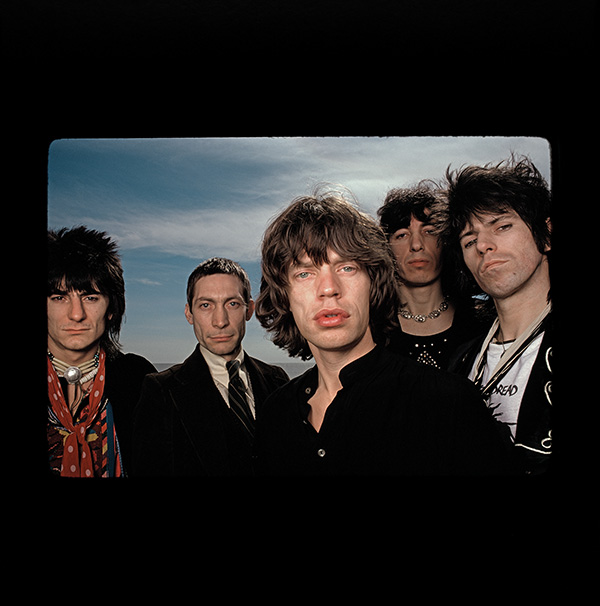
Photo by Hiro (1976)
Before he joined officially, Wood stood in for Taylor during the June–August 1975 "Tour of the Americas," which actually covered only US cities (footnote 2). After Black and Blue's release, the retooled Stones embarked on a European tour. That is when the 1976 Earl's Court and Paris shows happened. Those multinight stands also comprised most of 1977's Love You Live album; it's not clear if there is any overlap between these newly "official" releases and the highly edited live album.
As far as reissues go, this newly polished Black and Blue is a good one. Steven Wilson did a good job clarifying and fattening the sound, highlighting the already good quality of the basic tracks. The work of Mandel, Perkins, and Wood stands out a bit more than in the original mixes. Bonus tracks include snippets of four jams (or auditions): one with Mandel, two with Beck, and one with Beck plus session guitarist Robert A. Johnson. Though interesting, they don't add value as much as the live tracks do. Two throwaway tunes—"I Love Ladies" and "Shame, Shame, Shame"—fill out the bonus disc/platter.
The Earl's Court and Paris live recordings are great time capsules. They bury the myth that the Stones lost a step in the mid-'70s. At those concerts, the band was tight, high-energy, and fully engaged with each other and the audience. The Paris video is great fun, with Jagger dressed as something between a pirate and a drag queen, strutting at his androgynous best. Richards and Wood seem by turns amused and bemused, more interested in locking in with Watts's beat and trading fiery riffs and leads. Wyman, as always, stands to the side and rear, his face emotionless, his bassline rock solid.
Footnote 1: The original album's promo campaign featured a controversial billboard image of a bruised and bound model (Anita Russell) with the tagline, "I'm 'Black and Blue' from the Rolling Stones—and I love it!" See youtube.com/shorts/Uj_b0rIcfgA.















