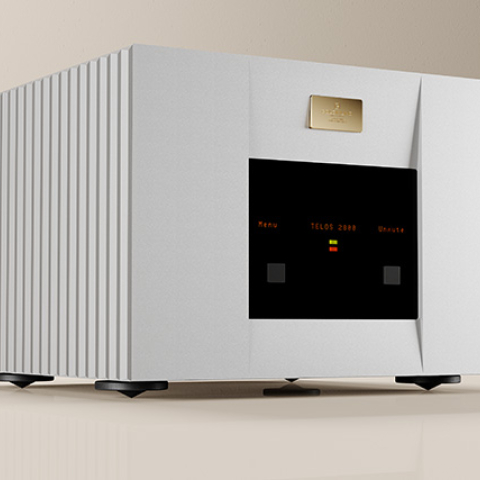
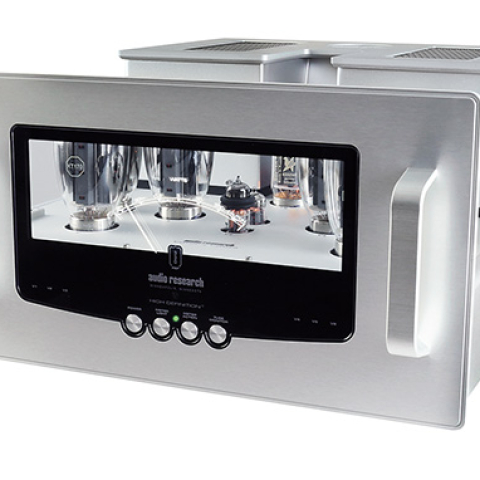
Can a power-supply upgrade produce audible sonic benefits? If you've upgraded the power supply of a phono preamplifier, you probably don't need to be convinced that it does, and those usually cost only a small percentage of the price of the model they power. But to add Simaudio's Moon Evolution 820S power supply ($8000) to the Moon Evolution 650D DAC–CD transport ($9000), which I reviewed in the November 2011 issue, almost doubles the latter's cost—though the 820S can be used to simultaneously power two Moon Evolution components, like the 750D DAC ($14,000), 740P preamplifier ($9500), and 610LP ($7500) and 810LP phono preamplifier ($13,000).
What costs so much?
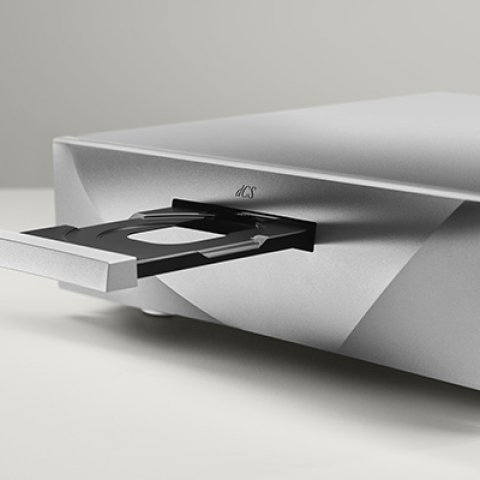
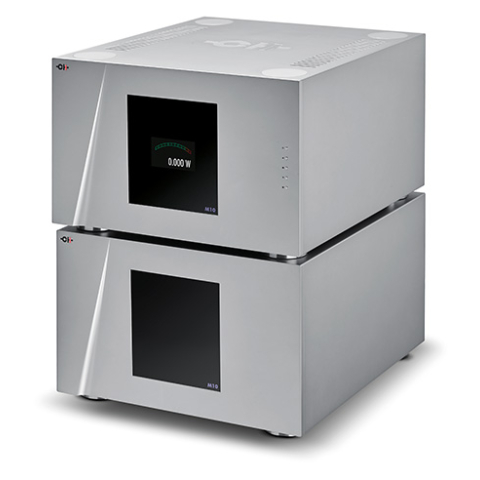
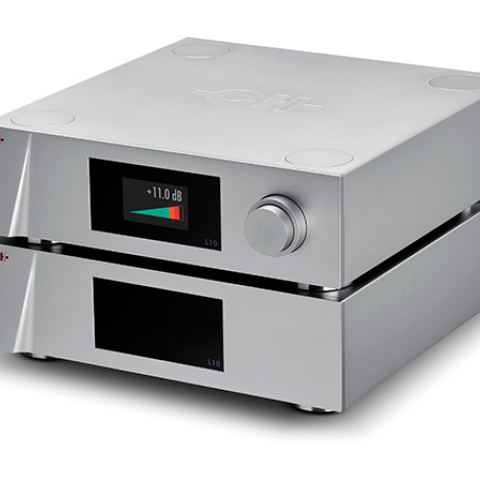
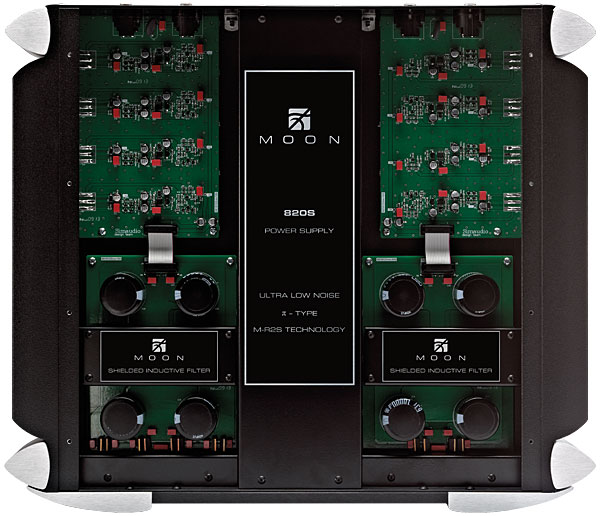
The Moon Evolution 820S's sculpted case is large (18.75" W by 4" H by 16.81" D), heavy (40 lbs), and nearly identical to the 650D's. Inside, to left and right, are two identical circuit boards separated by a large enclosure containing a pair of custom, proprietary toroidal transformers said to have low magnetic, electrical, and thermal loss that's claimed to result in improved power transfer and lower regulation factor, whatever that second term means. Simaudio says that all of this results in faster current flow and improved dynamic performance. Though the two boards are identical, each is not reserved to power one of the two Moon Evolution components the 820S can drive. Rather, one board powers analog circuits, the other digital. In other words, when used in the 650D and 750D DAC-transports, one board provides the supply for the transport mechanism, front-panel display, software control circuitry, and digital audio circuitry; the other board is reserved exclusively for the analog signal, after it has been converted from digital.
 The 820S's analog and digital supplies each have one special "pi" filter—at its simplest, a capacitor across the rectifier output, an inductor in series, and another capacitor across the load—to greatly reduce the transmission of noise in the AC power supply. The 820S has four capacitors totaling 40,000µF of capacitance and dual-choke 40mH (2x20mH) of inductance.
Each supply includes four stages of Simaudio's Moon Reference Regulation System (M-R2S), a fully discrete voltage-regulation circuit that uses a "precision reference," temperature-insensitive Texas Instruments NSI LM329 zener-diode chip to feed a discrete transistor-based hybrid amplification circuit (as opposed to the more commonly used single voltage-regulation chip). The M-R2S outputs pure DC power that Simaudio claims is exceptionally fast, precise, and stable, with a level of noise that is "virtually unmeasurable."
The 820S uses four-layer printed circuit boards with pure copper traces with extremely low impedance characteristics and short, low-noise signal paths, as well as the "finest quality," accurately matched electronic components used in a symmetrical circuit design.
Simaudio's one-sheet for the 820S claims that it brings the $9500 740P preamp's performance closer to that of the more expensive 850P ($30,000) in terms of transparency, neutrality, imaging, and noise, while adding the 820S to the $7500 610LP brings the latter's noise level, and thus the "blackness" of its backgrounds, closer to that of the more expensive 810LP ($13,000). Simaudio claims that adding the 820S to the 810LP itself produces even blacker backgrounds and more precise soundstaging and imaging—but I get the sense that, for an $8000 bump, the improvement is relatively small.
The 820S's analog and digital supplies each have one special "pi" filter—at its simplest, a capacitor across the rectifier output, an inductor in series, and another capacitor across the load—to greatly reduce the transmission of noise in the AC power supply. The 820S has four capacitors totaling 40,000µF of capacitance and dual-choke 40mH (2x20mH) of inductance.
Each supply includes four stages of Simaudio's Moon Reference Regulation System (M-R2S), a fully discrete voltage-regulation circuit that uses a "precision reference," temperature-insensitive Texas Instruments NSI LM329 zener-diode chip to feed a discrete transistor-based hybrid amplification circuit (as opposed to the more commonly used single voltage-regulation chip). The M-R2S outputs pure DC power that Simaudio claims is exceptionally fast, precise, and stable, with a level of noise that is "virtually unmeasurable."
The 820S uses four-layer printed circuit boards with pure copper traces with extremely low impedance characteristics and short, low-noise signal paths, as well as the "finest quality," accurately matched electronic components used in a symmetrical circuit design.
Simaudio's one-sheet for the 820S claims that it brings the $9500 740P preamp's performance closer to that of the more expensive 850P ($30,000) in terms of transparency, neutrality, imaging, and noise, while adding the 820S to the $7500 610LP brings the latter's noise level, and thus the "blackness" of its backgrounds, closer to that of the more expensive 810LP ($13,000). Simaudio claims that adding the 820S to the 810LP itself produces even blacker backgrounds and more precise soundstaging and imaging—but I get the sense that, for an $8000 bump, the improvement is relatively small.
 In my review of the 650D, I said that "the 650D has 18 stages of independent, inductive, DC power-supply voltage regulation (Simaudio calls this i2DCf) vs the 750D's 24 stages." In other words, adding the 820S to the 650D should bring its sound closer to that of the more expensive 750D. Interestingly, after that review was published, I heard from some readers and Simaudio fans who said that they preferred the 650D's sound to the 750D's, which in comparison they found too analytical and "clinical." Would adding an 820S improve or worsen the 650D's sound?
Easy installation
In my review of the 650D, I said that "the 650D has 18 stages of independent, inductive, DC power-supply voltage regulation (Simaudio calls this i2DCf) vs the 750D's 24 stages." In other words, adding the 820S to the 650D should bring its sound closer to that of the more expensive 750D. Interestingly, after that review was published, I heard from some readers and Simaudio fans who said that they preferred the 650D's sound to the 750D's, which in comparison they found too analytical and "clinical." Would adding an 820S improve or worsen the 650D's sound?
Easy installation
The 820S upgrade path was obviously planned during the design of the other products mentioned—in my case, that of the 650D. Each has both analog and digital multi-pin power-supply inputs. The 820S comes with two pairs of umbilical cables, only one of which was needed: I removed the power cord from the 650D and plugged it into the 820S. I then pressed the 820S's power switch—a blue LED came on—and powered up the 650D as usual. The 820S is designed to be left on at all times.
iPad in hand . . .
Once the Moon Evolution 820S was installed, I began my informal listening and drew some conclusions. After almost two months of listening that way, I browsed my collection using the Meridian Music Server's iPad app and spent a few evenings listening to individual tracks in a playlist. Once I'd heard a few dozen selections, it was time to shut it all down, return the 650D to self-powered operation, and listen to the same tracks again. A comparison like this is far more easily done in the digital domain, especially with a music server. Among the things I listened to first were 16-bit/44.1kHz and hi-rez versions of the same tracks, downloaded from HDtracks. The hi-rez versions of Steely Dan's Gaucho (24/96 download vs gold SACD/CD, MCA/Mobile Fidelity Sound Lab), James Brown's 20 All Time Greatest Hits! (24/192 vs Polydor CD), and Béla Fleck, V.M. Bhatt, and Jie-Bing Chen's Tabula Rasa (24/88.2 vs CD, Water Lily Acoustics WLA-CS-44-CD) sounded obviously better.
The Moon Evolution 820S's sculpted case is large (18.75" W by 4" H by 16.81" D), heavy (40 lbs), and nearly identical to the 650D's. Inside, to left and right, are two identical circuit boards separated by a large enclosure containing a pair of custom, proprietary toroidal transformers said to have low magnetic, electrical, and thermal loss that's claimed to result in improved power transfer and lower regulation factor, whatever that second term means. Simaudio says that all of this results in faster current flow and improved dynamic performance. Though the two boards are identical, each is not reserved to power one of the two Moon Evolution components the 820S can drive. Rather, one board powers analog circuits, the other digital. In other words, when used in the 650D and 750D DAC-transports, one board provides the supply for the transport mechanism, front-panel display, software control circuitry, and digital audio circuitry; the other board is reserved exclusively for the analog signal, after it has been converted from digital.
The 820S's analog and digital supplies each have one special "pi" filter—at its simplest, a capacitor across the rectifier output, an inductor in series, and another capacitor across the load—to greatly reduce the transmission of noise in the AC power supply. The 820S has four capacitors totaling 40,000µF of capacitance and dual-choke 40mH (2x20mH) of inductance.
Each supply includes four stages of Simaudio's Moon Reference Regulation System (M-R2S), a fully discrete voltage-regulation circuit that uses a "precision reference," temperature-insensitive Texas Instruments NSI LM329 zener-diode chip to feed a discrete transistor-based hybrid amplification circuit (as opposed to the more commonly used single voltage-regulation chip). The M-R2S outputs pure DC power that Simaudio claims is exceptionally fast, precise, and stable, with a level of noise that is "virtually unmeasurable."
The 820S uses four-layer printed circuit boards with pure copper traces with extremely low impedance characteristics and short, low-noise signal paths, as well as the "finest quality," accurately matched electronic components used in a symmetrical circuit design.
In my review of the 650D, I said that "the 650D has 18 stages of independent, inductive, DC power-supply voltage regulation (Simaudio calls this i2DCf) vs the 750D's 24 stages." In other words, adding the 820S to the 650D should bring its sound closer to that of the more expensive 750D. Interestingly, after that review was published, I heard from some readers and Simaudio fans who said that they preferred the 650D's sound to the 750D's, which in comparison they found too analytical and "clinical." Would adding an 820S improve or worsen the 650D's sound?
Easy installationThe 820S upgrade path was obviously planned during the design of the other products mentioned—in my case, that of the 650D. Each has both analog and digital multi-pin power-supply inputs. The 820S comes with two pairs of umbilical cables, only one of which was needed: I removed the power cord from the 650D and plugged it into the 820S. I then pressed the 820S's power switch—a blue LED came on—and powered up the 650D as usual. The 820S is designed to be left on at all times.
Once the Moon Evolution 820S was installed, I began my informal listening and drew some conclusions. After almost two months of listening that way, I browsed my collection using the Meridian Music Server's iPad app and spent a few evenings listening to individual tracks in a playlist. Once I'd heard a few dozen selections, it was time to shut it all down, return the 650D to self-powered operation, and listen to the same tracks again. A comparison like this is far more easily done in the digital domain, especially with a music server. Among the things I listened to first were 16-bit/44.1kHz and hi-rez versions of the same tracks, downloaded from HDtracks. The hi-rez versions of Steely Dan's Gaucho (24/96 download vs gold SACD/CD, MCA/Mobile Fidelity Sound Lab), James Brown's 20 All Time Greatest Hits! (24/192 vs Polydor CD), and Béla Fleck, V.M. Bhatt, and Jie-Bing Chen's Tabula Rasa (24/88.2 vs CD, Water Lily Acoustics WLA-CS-44-CD) sounded obviously better.