

Measurements Wired ANC Active
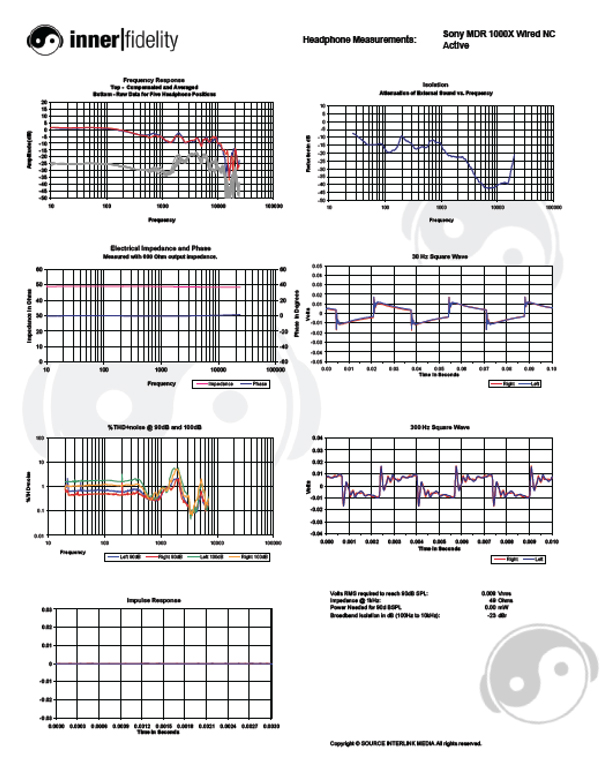
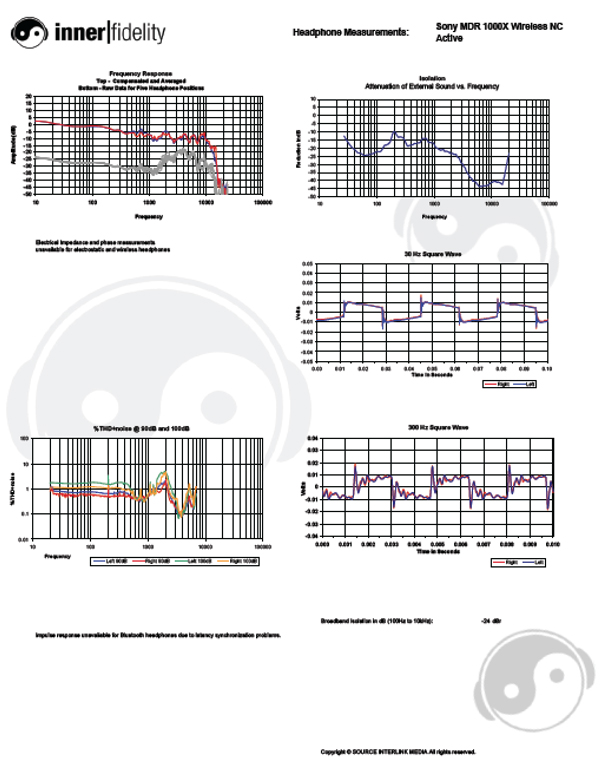
 30Hz square wave is a bit swayback and THD+noise plot shows some low frequency distortion. I did hear this mode as slightly looser sounding than ANC active modes. Looking at the bass in the raw frequency response, 30Hz square wave, and THD+noise plots of the wired ANC Active mode it's readily apparent that the noise canceling circuit does a lot to improve the quality of bass response. However, THD+noise plots show significant added noise evidenced by the elevated, noiseless horizontal lines.
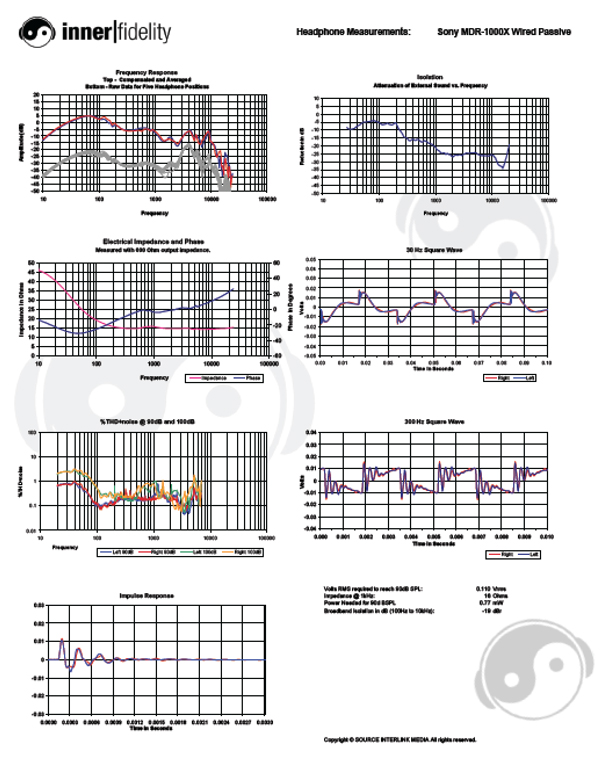
Wired passive plots show a headphone with a very big bass hump, too much energy at 4kHz, and a clear notch in the presence region at 1.2kHz. 30Hz square wave has a big swayback, and THD+noise shows a very big rise below 100Hz. The MDR-1000X sounds pretty bad in this mode.
One thing to point out, however, is that the curve looks smoother in this mode than the roughness seen in the noise canceling active modes that seems to give it a more grainy sound. It seems to me manufacturers may be well served by making the headphone sound good in passive mode so that the DSP doesn't have to work so hard on corrections, which possibly causes the the coarseness and unevenness in corrected response.
Impedance in wired active mode shows a dead flat 48 Ohms indicating an input terminating resistor simulating a normal headphone load. This is a good idea as it will ensure a stable load for the headphone amp to drive. In passive wired mode the headphone's impedance is an surprisingly low 16 Ohms.
ANC active modes show about 24dBr isolation, which is quite good, but not quite as good as the Bose QC 35's -28dB.
30Hz square wave is a bit swayback and THD+noise plot shows some low frequency distortion. I did hear this mode as slightly looser sounding than ANC active modes. Looking at the bass in the raw frequency response, 30Hz square wave, and THD+noise plots of the wired ANC Active mode it's readily apparent that the noise canceling circuit does a lot to improve the quality of bass response. However, THD+noise plots show significant added noise evidenced by the elevated, noiseless horizontal lines.
Wired passive plots show a headphone with a very big bass hump, too much energy at 4kHz, and a clear notch in the presence region at 1.2kHz. 30Hz square wave has a big swayback, and THD+noise shows a very big rise below 100Hz. The MDR-1000X sounds pretty bad in this mode.
One thing to point out, however, is that the curve looks smoother in this mode than the roughness seen in the noise canceling active modes that seems to give it a more grainy sound. It seems to me manufacturers may be well served by making the headphone sound good in passive mode so that the DSP doesn't have to work so hard on corrections, which possibly causes the the coarseness and unevenness in corrected response.
Impedance in wired active mode shows a dead flat 48 Ohms indicating an input terminating resistor simulating a normal headphone load. This is a good idea as it will ensure a stable load for the headphone amp to drive. In passive wired mode the headphone's impedance is an surprisingly low 16 Ohms.
ANC active modes show about 24dBr isolation, which is quite good, but not quite as good as the Bose QC 35's -28dB.
Click on graphs image to download .pdf for closer inspection.
Measurements Wireless ANC Active
Click on graphs image to download .pdf for closer inspection.
Measurements Wireless ANC Off
Click on graphs image to download .pdf for closer inspection.
Measurements Wired Passive
Click on graphs image to download .pdf for closer inspection.
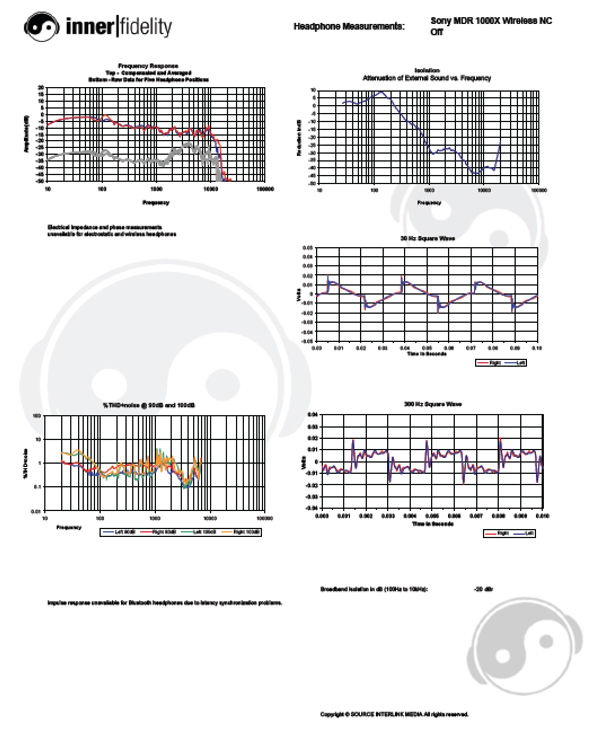
Lot of graphs here, let's start with the Wireless ANC Off. Raw frequency response plots show the headphone is sealing well in all positions and plots are very consistant. Bass shows a modest and nicely shaped bass emphasis to 200Hz which is just slightly high. Subsequent response a bit rough but flat (or slightly down hill) to 1.4kHz. The bad news is that from roughly 600Hz to 1.5kHz the curve should be running slightly uphill to give the cans appropriate presence.
The peak at 4kHz is slightly high in frequency but about the right level. Subsequent treble fall from 4kHz to 10kHz is just slightly hot, but in listening didn't seem too out of proportion as it seems to balance out the recessed presence region a bit.
The overall roughness of the plot and course 300Hz square wave indicate the somewhat grainy sounding treble heard. Response drops like a rock after 10kHz in wireless modes, but is apparent in wired modes. Seems like the Bluetooth is clipping off the top octave. Fortunately, I guess, you really can't hear it as the graininess gets in the way of good resolution.















