Where the Blue Point doesn't quite achieve state-of-the-art performance is in the bass. The midbass is somewhat woolly compared to the Linn Klyde and others at this performance level, which tends to thicken the sound too much unless the rest of the system errs toward leanness. I've noticed that a very popular analog combo these days is one of the Well-Tempered 'tables and a Sumiko Blue Point; both the flagship WTT and the less expensive WTRP share a leaner, more subdued bottom end than the Linns and VPIs of the world, and seem to complement the Blue Point's inherent flab quite nicely. The Blue Point sounded much more musically right in the low end on the WTRP than it did on the firmer-sounding Roksan 'table, although the bottom end was still leaner than the Linn's.
This characteristic was most apparent on groove-heavy records with in-yo-face electric bass like Donny Hathaway Live and Stevie Ray Vaughan's Couldn't Stand the Weather. On the former, Willie Weeks's godlike Fender P-bass was upfront and strong with the Blue Point, but lacked the extreme firmness of pitch definition and speed that the Linn rig has in spades (footnote 3). This criticism should be taken in the proper context, however: Very few cartridges and/or 'tables I've heard are as good as the Linn rig in this regard. And on Stevie Ray's instrumental "Scuttlebuttin'," Tommy Shannon's fast-riffing Fender Jazz Bass lines were somewhat blurred through the Blue Point, obscuring Tommy's great running lines and leaving me wishing I could reach over and tweak the system's "Tighten Da Bass" knob—if it had one.
At the other end of the spectrum, the Blue Point sounded a little on the sweet side of neutral. Where the Linn rig sounded very close tonally to well-mastered CD versions of LPs I own, like the AudioQuest Robert Lucas albums, the Blue Point was just a wee bit soft in the high end; not enough to really dull the overall sound, but a definite reduction in the air around instruments and vocalists. Chris Layton's ride cymbal on Couldn't Stand the Weather's "Tin Pan Alley" came across as slightly muted and rounded-off, as did the sharp transient attacks of Stevie's fairly clean Stratocaster on this track; what should have been snapped strings hitting the frets with a metallic click sounded more like they were picked with a plastic Fender Medium. This slight loss in the high end also tended to slightly reduce the sense of recorded space, although not nearly to the degree that digital regularly imposes.
But it was in the midrange where the Blue Point more than made up for these shortcomings. Donny's vocals throughout Live, but especially on the cover of "Jealous Guy" that cuts Lennon's original, sounded clean, clear, and dramatically present. And Cornell Dupree's Telecaster-fed Fender Twin cut right through the mix, sounding as real from top to bottom as it does whenever I see him live. It's such a gas to hear a $125 cartridge do this well through the all-important midrange; the Blue Point is definitely the cartridge equivalent of the Spica TC-50, another inexpensive overachiever that sacrifices the frequency extremes for excellent midrange performance.
What sets the Blue Point apart from most other cheap cartridges in my experience is its balance. You don't get the screechy highs, the nasal mids, or the lumpy bass that you do with other inexpensive cartridges; there's no real problem area that sticks out to remind you that yes, you didn't lay out very much green for it. The Blue Point is right at home with the best turntables and arms; my pal Mike Quinn has one mounted on an LP-12 with an Akito arm, and the sound is killer. In fact, the Blue is so killer, it's downright shocking when you trade up to the—
Sumiko Blue Point Special
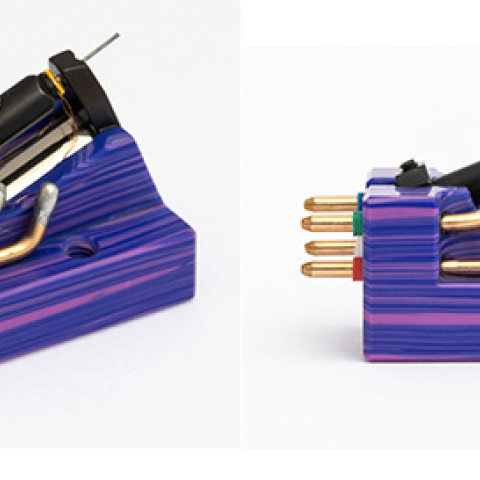
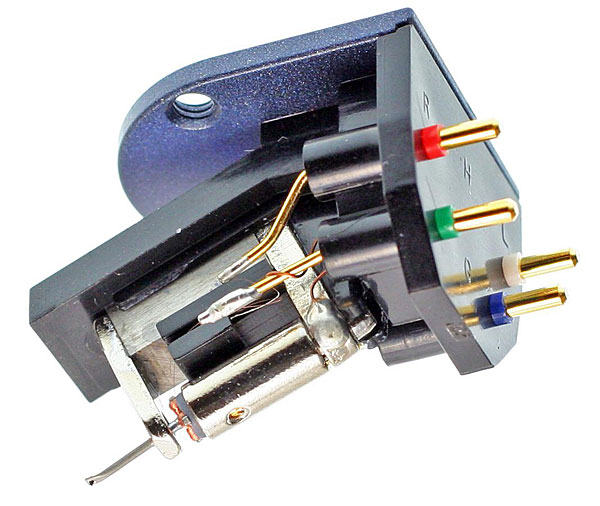
I've said it before: what a difference a naked body can make! Listening to the nude Blue Point Special, it was hard to believe that this was the same cartridge as the original version. I expected a slight improvement; what I got was virtually a different cartridge.
All the stock Blue Point's woolliness in the upper bass was gone with the Special, and in its place was a much faster and tighter low end. On first listen, the Special sounded wimpier than the standard Blue Point, just as most well-designed speakers sound kind of anemic in quickie comparisons with bottom-heavy JBLs. But after I played a few familiar records and start noticing intricate basslines that sounded like simple riffs with the standard Blue Point, I knew the Special was pretty special.
 Because the Blue Point Special lacks the bass bloat of the stock version, matching it with the Well-Tempered 'table was a little trickier; I had to bring the arm paddle much farther out of the silicone damping goo before Willie Weeks would even show his face in my listening room. But even after doing all of Bill Firebaugh's cartridge-optimization math and playing with the arm-damping arrangement, the sound of the Special mounted on the WTRP still lacked the kind of kidney-punch bass of the Linn rig. With its fixed-pivot Tabriz arm, the meatier-sounding Roksan 'table was a better match for the Blue Point Special. Mounted on the Roksan, the Blue Point Special came a lot closer to the Linn's level of low-end articulation than the standard Blue Point fitted to either the Roksan or the WTRP.
Nowhere was this increased sense of bass agility more apparent than on Couldn't Stand the Weather. Where the standard Blue Point had blurred the fast basslines on "Scuttlebuttin'," the Special hung on to the groove and laid it all out in fine detail. You know how when you hear a really rockin' song your head sways back and forth? Mounted on the Roksan 'table, the Blue Point Special has head-sway out the butt. So much so, in fact, that I went and put on the Fabulous Thunderbirds' Butt Rockin' (Chrysalis CHR 1319), and damned if I didn't sit there and listen to side one three times in a row. If white boys ever get funkier than "One's Too Many," I'll eat my turban; the Blue Point Special pulsed it all along in fine chicken-fried fashion.
The Special was clearly better than the standard Blue Point across the board, and this is no exaggeration; I was honestly taken aback at the virtual transformation that took place once the Blue Point dropped trou. The high end became more extended, cleaner, and had more air than the stock cartridge. "Tin Pan Alley" 's ride cymbal now had the proper shimmer, and Stevie's guitar regained its proper cutting tone; switching to the Blue Point Special was like removing the speakers' grilles.
In terms of image focus and detail, the Blue Point Special was far superior to the standard version, but fell short of the Linn Klyde. Still, for less than a third the price of the Linn cartridge, this must be considered outstanding performance. On Couldn't Stand the Weather's "Cold Shot," the speaker-level output of Stevie's guitar amp was plugged into a Fender Vibratone speaker cabinet; this is similar to the Leslie organ speaker cabinet, which rotates its speaker drivers to give up that reedy, churchy sound you hear from the Hammond B-3 organs they're usually mated with. With the Linn rig, it was clearly apparent that they miked the Vibratone with two mikes pointed at different areas of the cabinet; this was slightly but audibly less clear with the Blue Point Special.
As excellent as the Special may be, it's no serious rival to the $1000 Linn Klyde; the Special isn't embarrassed by the comparison, but the Linn sounds better. But where the two cartridges are similar is in their sense of dynamic freedom. The Klyde has an effortlessness about it that makes music sound unrestrained and free, and the Blue Point Special shares this quality. Compared to the other cartridges in the survey, the Special stood way out at the top of the list in getting out of the way of the music's ebb and flow, letting the groove and sturm'n'drang of the musicians flow freely and easily. As big a steal as the standard Blue Point is at only $125, I think the $295 Blue Point Special is an even bigger one.
CG concludes
Because the Blue Point Special lacks the bass bloat of the stock version, matching it with the Well-Tempered 'table was a little trickier; I had to bring the arm paddle much farther out of the silicone damping goo before Willie Weeks would even show his face in my listening room. But even after doing all of Bill Firebaugh's cartridge-optimization math and playing with the arm-damping arrangement, the sound of the Special mounted on the WTRP still lacked the kind of kidney-punch bass of the Linn rig. With its fixed-pivot Tabriz arm, the meatier-sounding Roksan 'table was a better match for the Blue Point Special. Mounted on the Roksan, the Blue Point Special came a lot closer to the Linn's level of low-end articulation than the standard Blue Point fitted to either the Roksan or the WTRP.
Nowhere was this increased sense of bass agility more apparent than on Couldn't Stand the Weather. Where the standard Blue Point had blurred the fast basslines on "Scuttlebuttin'," the Special hung on to the groove and laid it all out in fine detail. You know how when you hear a really rockin' song your head sways back and forth? Mounted on the Roksan 'table, the Blue Point Special has head-sway out the butt. So much so, in fact, that I went and put on the Fabulous Thunderbirds' Butt Rockin' (Chrysalis CHR 1319), and damned if I didn't sit there and listen to side one three times in a row. If white boys ever get funkier than "One's Too Many," I'll eat my turban; the Blue Point Special pulsed it all along in fine chicken-fried fashion.
The Special was clearly better than the standard Blue Point across the board, and this is no exaggeration; I was honestly taken aback at the virtual transformation that took place once the Blue Point dropped trou. The high end became more extended, cleaner, and had more air than the stock cartridge. "Tin Pan Alley" 's ride cymbal now had the proper shimmer, and Stevie's guitar regained its proper cutting tone; switching to the Blue Point Special was like removing the speakers' grilles.
In terms of image focus and detail, the Blue Point Special was far superior to the standard version, but fell short of the Linn Klyde. Still, for less than a third the price of the Linn cartridge, this must be considered outstanding performance. On Couldn't Stand the Weather's "Cold Shot," the speaker-level output of Stevie's guitar amp was plugged into a Fender Vibratone speaker cabinet; this is similar to the Leslie organ speaker cabinet, which rotates its speaker drivers to give up that reedy, churchy sound you hear from the Hammond B-3 organs they're usually mated with. With the Linn rig, it was clearly apparent that they miked the Vibratone with two mikes pointed at different areas of the cabinet; this was slightly but audibly less clear with the Blue Point Special.
As excellent as the Special may be, it's no serious rival to the $1000 Linn Klyde; the Special isn't embarrassed by the comparison, but the Linn sounds better. But where the two cartridges are similar is in their sense of dynamic freedom. The Klyde has an effortlessness about it that makes music sound unrestrained and free, and the Blue Point Special shares this quality. Compared to the other cartridges in the survey, the Special stood way out at the top of the list in getting out of the way of the music's ebb and flow, letting the groove and sturm'n'drang of the musicians flow freely and easily. As big a steal as the standard Blue Point is at only $125, I think the $295 Blue Point Special is an even bigger one.
CG concludes
I can confidently recommend the Sumiko Blue Point. While it will work better in different systems and appeal to different tastes, it offers a true glimpse of high-end phono playback for a very reasonable price. The cheapest Grados may be the least expensive "not shitty" cartridges you can buy, but if you've got something better than a Dual and you want true high-end sound, the Blue Point is a solid Class D performer and an utter steal. The real pick of this litter, though, is Sumiko's Blue Point Special. For only $295, this nuded MC comes within shouting distance of the very best. I've heard cartridges priced much higher than the Blue Point Special which weren't able to match its sheer musicality and outright tonal honesty; as several of them are in Class C of Stereophile's "Recommended Components," the Blue Point Special becomes the least expensive phono cartridge to get a Class C rating. Look at it this way: For less than the price of the cheapest NAD CD player, you can take home a phono cartridge that'll blow away the Levinson No.30. I don't know about you, but that's music to my ears.
Footnote 3: I should tell you that Willie's bass sound on this record is not the muy tightivo anemic solid-state–amped Modern Electric Bass Tone so heavily favored by Today's Bassists. Donny Hathaway Live was recorded back in '71, when proper bass players wore wide-striped bellbottom pants, plugged their Fender P-Basses into Fender, Marshall, and Ampeg tube amps, and sounded like Godzilla instead of that moderne clickety-clack.
I've said it before: what a difference a naked body can make! Listening to the nude Blue Point Special, it was hard to believe that this was the same cartridge as the original version. I expected a slight improvement; what I got was virtually a different cartridge.
Because the Blue Point Special lacks the bass bloat of the stock version, matching it with the Well-Tempered 'table was a little trickier; I had to bring the arm paddle much farther out of the silicone damping goo before Willie Weeks would even show his face in my listening room. But even after doing all of Bill Firebaugh's cartridge-optimization math and playing with the arm-damping arrangement, the sound of the Special mounted on the WTRP still lacked the kind of kidney-punch bass of the Linn rig. With its fixed-pivot Tabriz arm, the meatier-sounding Roksan 'table was a better match for the Blue Point Special. Mounted on the Roksan, the Blue Point Special came a lot closer to the Linn's level of low-end articulation than the standard Blue Point fitted to either the Roksan or the WTRP.
Nowhere was this increased sense of bass agility more apparent than on Couldn't Stand the Weather. Where the standard Blue Point had blurred the fast basslines on "Scuttlebuttin'," the Special hung on to the groove and laid it all out in fine detail. You know how when you hear a really rockin' song your head sways back and forth? Mounted on the Roksan 'table, the Blue Point Special has head-sway out the butt. So much so, in fact, that I went and put on the Fabulous Thunderbirds' Butt Rockin' (Chrysalis CHR 1319), and damned if I didn't sit there and listen to side one three times in a row. If white boys ever get funkier than "One's Too Many," I'll eat my turban; the Blue Point Special pulsed it all along in fine chicken-fried fashion.
I can confidently recommend the Sumiko Blue Point. While it will work better in different systems and appeal to different tastes, it offers a true glimpse of high-end phono playback for a very reasonable price. The cheapest Grados may be the least expensive "not shitty" cartridges you can buy, but if you've got something better than a Dual and you want true high-end sound, the Blue Point is a solid Class D performer and an utter steal. The real pick of this litter, though, is Sumiko's Blue Point Special. For only $295, this nuded MC comes within shouting distance of the very best. I've heard cartridges priced much higher than the Blue Point Special which weren't able to match its sheer musicality and outright tonal honesty; as several of them are in Class C of Stereophile's "Recommended Components," the Blue Point Special becomes the least expensive phono cartridge to get a Class C rating. Look at it this way: For less than the price of the cheapest NAD CD player, you can take home a phono cartridge that'll blow away the Levinson No.30. I don't know about you, but that's music to my ears.
Footnote 3: I should tell you that Willie's bass sound on this record is not the muy tightivo anemic solid-state–amped Modern Electric Bass Tone so heavily favored by Today's Bassists. Donny Hathaway Live was recorded back in '71, when proper bass players wore wide-striped bellbottom pants, plugged their Fender P-Basses into Fender, Marshall, and Ampeg tube amps, and sounded like Godzilla instead of that moderne clickety-clack.