Sidebar 1: Review context
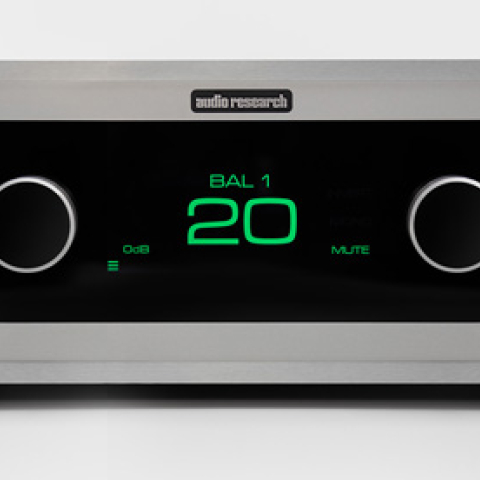
I auditioned the four processors reviewed in this issue under identical conditions and at matched levels. Additionally, the reference playback system has remained nearly constant for the past year, providing a stable platform on which to audition and compare digital processors. The converters under review fed an Audio Research LS2 line-stage preamplifier, which in turn drove a Mark Levinson No.23.5 power amplifier via its unbalanced inputs. Loudspeakers were Hales System Two Signatures, occasionally augmented with a Muse Model 18 subwoofer.
A Theta Data Series II transport or Museatex CD-Deck provided the digital signal, and a variety of digital interconnects were auditioned with each processor. Other converters on hand for comparison included the Meridian 203, Theta DS Pre Generation III, Musik System Zero, and that low-cost standard, the Audio Alchemy Digital Decoding Engine. The excellent $1500 Musik System Zero provided a good benchmark for these much-lower-priced units under review, and the Audio Alchemy DDE brought another reference point at the lower end of the scale.
Interconnects included Expressive Technologies IC-2, AudioQuest Diamond, and Monster Cable Sigma. Loudspeaker cable was 8' runs of bi-wired AudioQuest Sterling/Midnight. All AC power to the processors was conditioned with a Tice Power Block and Titan, and all the processors were left on during the three-week audition (footnote 1).—Robert Harley
Footnote 1: Leaving your D/A converter on all the time ensures that it will always sound its best. If you turn it on just before listening, you'll never hear what it can really do. I find that it often takes several days or even a week before a processor reaches its maximum smoothness and liquidity. In addition, leaving the processor constantly powered reduces turn-on/off stress on internal components, increasing the product's life.
Footnote 1: Leaving your D/A converter on all the time ensures that it will always sound its best. If you turn it on just before listening, you'll never hear what it can really do. I find that it often takes several days or even a week before a processor reaches its maximum smoothness and liquidity. In addition, leaving the processor constantly powered reduces turn-on/off stress on internal components, increasing the product's life.