

One such "favored" deep-bass album is a dreamy live recording of Toshio Hosokawa's composition "Lotus Under the Moonlight – Concerto for Piano & Orchestra," a live performance from 2006 at the Concert Hall Art Tower Mito in Japan; Hosokawa/Mozart (Live) (16/44.1 FLAC, ECM/Tidal) is a perfect example of a record that, in order to be fully grasped, needs the scale and impact of its bass to reach the listener.
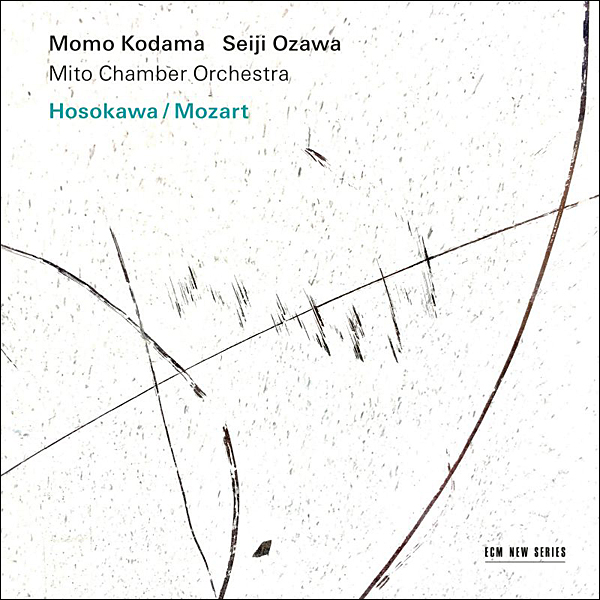 Performed by pianist Momo Kodama and Seiji Ozawa's Mito Chamber Orchestra, Hosokawa/Mozart is punctuated by strong, long, circa-40Hz drum booms with copious reverb tails. Those foreboding booms are set against long, vibrant silences and quiet, moody ramblings on Momo Kodama's close-miked keyboard. The language of this composition relies heavily on its contrast structure, pitting a cavernous bass drum and deep, long-string piano notes against sharp-pointed staccato clinking on the treble part of Kodama's keyboard.
To get cleaner, more detailed sound from the extreme left of Kodama's keyboard, I tweaked the 3000 Micro's low-pass filter downward to 68Hz and the level down to –29dB, at which point the bass-register piano notes snapped into full-textured focus. At that moment, with that recording, my system's octave-to-octave tonal balance seemed ideal. Bass and lower midrange exhibited a satisfyingly pure harmonic structure. Plus, all the bass sounds appeared to be coming from the LS3/5a's, not the sub.
I couldn't stop myself: I measured my new three-speaker three-way to see what all that mindful listening had wrought. The low-pass filter was set for 68Hz with a 12dB/octave slope, which, as expected, left the 100Hz to 1kHz octaves unchanged. The 40Hz–100Hz region measured essentially flat, matching my 100/1k/10kHz baseline, and 30Hz was now down by only 5dB; it had been down 25dB before the subwoofer was added. At 20Hz, my system was now down only 14dB. Except for a narrow –5dB dip at 160Hz, and another, slightly broader dip at 400Hz, my homebrew LS-3-way measured +0/–2dB from 40Hz to 12kHz. I was deeply (pun intended) impressed.
Performed by pianist Momo Kodama and Seiji Ozawa's Mito Chamber Orchestra, Hosokawa/Mozart is punctuated by strong, long, circa-40Hz drum booms with copious reverb tails. Those foreboding booms are set against long, vibrant silences and quiet, moody ramblings on Momo Kodama's close-miked keyboard. The language of this composition relies heavily on its contrast structure, pitting a cavernous bass drum and deep, long-string piano notes against sharp-pointed staccato clinking on the treble part of Kodama's keyboard.
To get cleaner, more detailed sound from the extreme left of Kodama's keyboard, I tweaked the 3000 Micro's low-pass filter downward to 68Hz and the level down to –29dB, at which point the bass-register piano notes snapped into full-textured focus. At that moment, with that recording, my system's octave-to-octave tonal balance seemed ideal. Bass and lower midrange exhibited a satisfyingly pure harmonic structure. Plus, all the bass sounds appeared to be coming from the LS3/5a's, not the sub.
I couldn't stop myself: I measured my new three-speaker three-way to see what all that mindful listening had wrought. The low-pass filter was set for 68Hz with a 12dB/octave slope, which, as expected, left the 100Hz to 1kHz octaves unchanged. The 40Hz–100Hz region measured essentially flat, matching my 100/1k/10kHz baseline, and 30Hz was now down by only 5dB; it had been down 25dB before the subwoofer was added. At 20Hz, my system was now down only 14dB. Except for a narrow –5dB dip at 160Hz, and another, slightly broader dip at 400Hz, my homebrew LS-3-way measured +0/–2dB from 40Hz to 12kHz. I was deeply (pun intended) impressed.
 While I was reveling in low bass and flat frequency response, I noticed something else I thought was important: In my room, the SVS's dual 8" cones projected their energy with more ease and flow than the 6.5" KEF KC62 cones had. In my incommodious room, the 3000 Micro sounded like it was cruising effortlessly, thanks, probably, to the 50% increase in piston area (over the KC62, footnote 1). This effortlessness translated into a less-audible integration between it and the LS3/5a satellites. Lesson learned: The harder a sub is working, the more you hear it huffin' and puffin'.
At the risk of sounding like a schoolmarm, I'll remind readers that "scaling" subwoofers to main speakers—and all three speakers together to the listening room—is the main challenge facing audiophiles who seek a fast-sounding, clear-spoken sub-sat system. By "scaling" I mean paying mindful attention to the ratio of the main speaker's cone area, to the subwoofer's cone area, and that to the room's volume. When these three elements are in a just-right proportion, the speakers stand a better chance of disappearing.
SVS + Harbeth M30.2
While I was reveling in low bass and flat frequency response, I noticed something else I thought was important: In my room, the SVS's dual 8" cones projected their energy with more ease and flow than the 6.5" KEF KC62 cones had. In my incommodious room, the 3000 Micro sounded like it was cruising effortlessly, thanks, probably, to the 50% increase in piston area (over the KC62, footnote 1). This effortlessness translated into a less-audible integration between it and the LS3/5a satellites. Lesson learned: The harder a sub is working, the more you hear it huffin' and puffin'.
At the risk of sounding like a schoolmarm, I'll remind readers that "scaling" subwoofers to main speakers—and all three speakers together to the listening room—is the main challenge facing audiophiles who seek a fast-sounding, clear-spoken sub-sat system. By "scaling" I mean paying mindful attention to the ratio of the main speaker's cone area, to the subwoofer's cone area, and that to the room's volume. When these three elements are in a just-right proportion, the speakers stand a better chance of disappearing.
SVS + Harbeth M30.2
Once my brain acclimated to the sound of full-range response, bass frequencies when they weren't there were conspicuous in their absence. That's how it was when I installed the Harbeth M30.2 monitors and powered them with the Parasound Halo A21+ amplifier. At first, all I noticed was how fast, flat, and uncolored they were and how much they sounded like an electrostatic speaker. But once I got past my Parasound-drives-Harbeth awe, I noticed how fast the 30.2s rolled off below 50Hz and how lacking in fullness the lower registers of Areni Agbabian's piano sounded while playing "Mother" from her album Bloom (24/96 FLAC, ECM/Qobuz). A Stereophile reader who goes by the screen name "thethanimal" recommended Bloom to me, describing it as "Gorgeously atmospheric vocals and piano from this Armenian-American woman, with Nicholas Stocker on various hand drums, chimes, bells, gongs, etc. Air, space, reverb tails, timbre, tactile drum skins, nuance, and emotion for days. Seems right up your alley." Thethanimal nailed my taste perfectly.
Playing Bloom, the Harbeths had never sounded more fit, fine, and inner-detailed. My brain kept saying "Wow! That is what fast, flat frequency response sounds like!" When the Areni Agbabian album finished, I got out my Stereophile Editor's Choice warble tones and measured the M30.2s at my listening position.
A Stereophile reader who goes by the screen name "thethanimal" recommended Bloom to me, describing it as "Gorgeously atmospheric vocals and piano from this Armenian-American woman, with Nicholas Stocker on various hand drums, chimes, bells, gongs, etc. Air, space, reverb tails, timbre, tactile drum skins, nuance, and emotion for days. Seems right up your alley." Thethanimal nailed my taste perfectly.
Playing Bloom, the Harbeths had never sounded more fit, fine, and inner-detailed. My brain kept saying "Wow! That is what fast, flat frequency response sounds like!" When the Areni Agbabian album finished, I got out my Stereophile Editor's Choice warble tones and measured the M30.2s at my listening position.
 Normally when I measure speakers, I set my baseline at 80dB at 1kHz. In this case, after I plotted the graph, 1kHz turned out to have an obvious 3dB peak. When I lowered my baseline to 500Hz, the M30.2s measured ±3dB, 50Hz– 12kHz, except for a sharp 7dB dip at 120Hz and a 5dB slump at 2.2kHz. That's flat.
Where should I start with my SVS 3000 Micro subwoofer settings? The Harbeth drops 24dB/octave below 50Hz, so, for fun and symmetry, I decided to set the low-pass filter at 24dB/octave at 50Hz.
Measuring, it appeared that 24dB/octave at 50Hz was a good idea. It also appeared that I had set the 3000 Micro's level too low. I tweaked the level up to –20dB and then, adjusting in 1dB increments, to –16dB. For a long while, I was lost in a focused zone of listen-measure-adjust-measure-listen. In addition to the 24dB/octave filter slope, I tried 18dB and 12dB/octave. I experimented with phase, because at one point I had a 6dB peak at the 50Hz crossover frequency. I started messing with the 3000 Micro's parametric EQ, trying to eliminate that inaudible but mentally bothersome 7dB dip at 120Hz.
When I stopped experimenting, the 120Hz dip was gone; 80Hz was up 2dB from baseline; 50Hz was up 3dB; 40Hz was right on baseline; 30Hz was only 3dB down (!!); and 20Hz was still easily audible at –15dB. Now I am listening to a DIY 3-way speaker that is ±3dB, 30Hz–12kHz. The impact on the music isn't only in the bass. After those adjustments, Bloom had significantly more "air, space, reverb tails, timbre, tactile drum skins, nuance, and emotion." And I'm smiling.
I could bore you with details about how easily the SVS combined with the Magnepan .7s, but I would rather tell you how the SVS 3000 Micro subwoofer made me fall back in love and admiration with the Harbeth 30.2s. As long as I've had the "2s," and as much as I've enjoyed their neutrality and stat-like resolution, I have been uncomfortable with their 24dB/octave fast rolloff. The 30.2's bass goes at least 20Hz lower than my LS3/5a, but the abruptness of the 30.2s low-frequency cutoff seems unnatural. I've noticed it frequently, and it has kept me from using the 30.2s for pleasure listening.
Normally when I measure speakers, I set my baseline at 80dB at 1kHz. In this case, after I plotted the graph, 1kHz turned out to have an obvious 3dB peak. When I lowered my baseline to 500Hz, the M30.2s measured ±3dB, 50Hz– 12kHz, except for a sharp 7dB dip at 120Hz and a 5dB slump at 2.2kHz. That's flat.
Where should I start with my SVS 3000 Micro subwoofer settings? The Harbeth drops 24dB/octave below 50Hz, so, for fun and symmetry, I decided to set the low-pass filter at 24dB/octave at 50Hz.
Measuring, it appeared that 24dB/octave at 50Hz was a good idea. It also appeared that I had set the 3000 Micro's level too low. I tweaked the level up to –20dB and then, adjusting in 1dB increments, to –16dB. For a long while, I was lost in a focused zone of listen-measure-adjust-measure-listen. In addition to the 24dB/octave filter slope, I tried 18dB and 12dB/octave. I experimented with phase, because at one point I had a 6dB peak at the 50Hz crossover frequency. I started messing with the 3000 Micro's parametric EQ, trying to eliminate that inaudible but mentally bothersome 7dB dip at 120Hz.
When I stopped experimenting, the 120Hz dip was gone; 80Hz was up 2dB from baseline; 50Hz was up 3dB; 40Hz was right on baseline; 30Hz was only 3dB down (!!); and 20Hz was still easily audible at –15dB. Now I am listening to a DIY 3-way speaker that is ±3dB, 30Hz–12kHz. The impact on the music isn't only in the bass. After those adjustments, Bloom had significantly more "air, space, reverb tails, timbre, tactile drum skins, nuance, and emotion." And I'm smiling.
I could bore you with details about how easily the SVS combined with the Magnepan .7s, but I would rather tell you how the SVS 3000 Micro subwoofer made me fall back in love and admiration with the Harbeth 30.2s. As long as I've had the "2s," and as much as I've enjoyed their neutrality and stat-like resolution, I have been uncomfortable with their 24dB/octave fast rolloff. The 30.2's bass goes at least 20Hz lower than my LS3/5a, but the abruptness of the 30.2s low-frequency cutoff seems unnatural. I've noticed it frequently, and it has kept me from using the 30.2s for pleasure listening.
 I never imagined that a $799.99 subwoofer could make The Big Harbeth (the P3ESR is The Small Harbeth) into one of the most musically satisfying speakers I've ever engaged with, but it did. Listening with the Harbeth plus sub has shown me once again how important the balance is between treble extension and bass extension. If one or the other rolls off too soon, my brain will be distracted by it.
You know
I never imagined that a $799.99 subwoofer could make The Big Harbeth (the P3ESR is The Small Harbeth) into one of the most musically satisfying speakers I've ever engaged with, but it did. Listening with the Harbeth plus sub has shown me once again how important the balance is between treble extension and bass extension. If one or the other rolls off too soon, my brain will be distracted by it.
You know
I have used BBC LS3/5a speakers for more than 40 years. In all that time, subwoofers were never more than an occasional curiosity—until I discovered this hot new category of high-tech microsubs. My experiences with KEF's KC62 sub ($1499.99) taught me a lot, and these SVS 3000 Micro auditions have taught me even more. The first thing I learned from the SVS was that the KEF's 6.5" cones might have been a little small for matching with my speakers in my room. The SVS's 8" cones let music flow with more ease. Both subs are extremely well-built, offer good value at their price points, and perform effectively as enhancements to my reference loudspeakers. If I were asked what, if anything, the more expensive KEF KC62 did better than the less expensive SVS 3000 Micro, I'd say pitch definition. Pace and timing, too. But it was close. The KEF's tone seemed slightly more correct, and it danced with slightly greater precision. Nevertheless, in my room, with my speakers, and my mostly gentle music, I felt more at ease, more satisfied, with the SVS 3000 Micro. A big part of that satisfaction came from the intoxicating-to-use SVS smartphone app, which seems well and thoroughly conceived. In fact, everything about my first SVS subwoofer experience pointed to a manufacturer that specializes in "well and thoroughly conceived" subwoofer experiences.
If I was a consumer instead of a reviewer, I'd probably buy this one. Highly recommended.
Footnote 1: The 3000 Micro's dual 8" cones have about 50% more woofer-cone area than the KEF KC62's dual 6.5" cones: 50.3 square inches compared to 33.2 square inches for the KEFs.
Performed by pianist Momo Kodama and Seiji Ozawa's Mito Chamber Orchestra, Hosokawa/Mozart is punctuated by strong, long, circa-40Hz drum booms with copious reverb tails. Those foreboding booms are set against long, vibrant silences and quiet, moody ramblings on Momo Kodama's close-miked keyboard. The language of this composition relies heavily on its contrast structure, pitting a cavernous bass drum and deep, long-string piano notes against sharp-pointed staccato clinking on the treble part of Kodama's keyboard.
To get cleaner, more detailed sound from the extreme left of Kodama's keyboard, I tweaked the 3000 Micro's low-pass filter downward to 68Hz and the level down to –29dB, at which point the bass-register piano notes snapped into full-textured focus. At that moment, with that recording, my system's octave-to-octave tonal balance seemed ideal. Bass and lower midrange exhibited a satisfyingly pure harmonic structure. Plus, all the bass sounds appeared to be coming from the LS3/5a's, not the sub.
While I was reveling in low bass and flat frequency response, I noticed something else I thought was important: In my room, the SVS's dual 8" cones projected their energy with more ease and flow than the 6.5" KEF KC62 cones had. In my incommodious room, the 3000 Micro sounded like it was cruising effortlessly, thanks, probably, to the 50% increase in piston area (over the KC62, footnote 1). This effortlessness translated into a less-audible integration between it and the LS3/5a satellites. Lesson learned: The harder a sub is working, the more you hear it huffin' and puffin'.
At the risk of sounding like a schoolmarm, I'll remind readers that "scaling" subwoofers to main speakers—and all three speakers together to the listening room—is the main challenge facing audiophiles who seek a fast-sounding, clear-spoken sub-sat system. By "scaling" I mean paying mindful attention to the ratio of the main speaker's cone area, to the subwoofer's cone area, and that to the room's volume. When these three elements are in a just-right proportion, the speakers stand a better chance of disappearing.
Once my brain acclimated to the sound of full-range response, bass frequencies when they weren't there were conspicuous in their absence. That's how it was when I installed the Harbeth M30.2 monitors and powered them with the Parasound Halo A21+ amplifier. At first, all I noticed was how fast, flat, and uncolored they were and how much they sounded like an electrostatic speaker. But once I got past my Parasound-drives-Harbeth awe, I noticed how fast the 30.2s rolled off below 50Hz and how lacking in fullness the lower registers of Areni Agbabian's piano sounded while playing "Mother" from her album Bloom (24/96 FLAC, ECM/Qobuz).
A Stereophile reader who goes by the screen name "thethanimal" recommended Bloom to me, describing it as "Gorgeously atmospheric vocals and piano from this Armenian-American woman, with Nicholas Stocker on various hand drums, chimes, bells, gongs, etc. Air, space, reverb tails, timbre, tactile drum skins, nuance, and emotion for days. Seems right up your alley." Thethanimal nailed my taste perfectly.
Playing Bloom, the Harbeths had never sounded more fit, fine, and inner-detailed. My brain kept saying "Wow! That is what fast, flat frequency response sounds like!" When the Areni Agbabian album finished, I got out my Stereophile Editor's Choice warble tones and measured the M30.2s at my listening position.
Normally when I measure speakers, I set my baseline at 80dB at 1kHz. In this case, after I plotted the graph, 1kHz turned out to have an obvious 3dB peak. When I lowered my baseline to 500Hz, the M30.2s measured ±3dB, 50Hz– 12kHz, except for a sharp 7dB dip at 120Hz and a 5dB slump at 2.2kHz. That's flat.
Where should I start with my SVS 3000 Micro subwoofer settings? The Harbeth drops 24dB/octave below 50Hz, so, for fun and symmetry, I decided to set the low-pass filter at 24dB/octave at 50Hz.
Measuring, it appeared that 24dB/octave at 50Hz was a good idea. It also appeared that I had set the 3000 Micro's level too low. I tweaked the level up to –20dB and then, adjusting in 1dB increments, to –16dB. For a long while, I was lost in a focused zone of listen-measure-adjust-measure-listen. In addition to the 24dB/octave filter slope, I tried 18dB and 12dB/octave. I experimented with phase, because at one point I had a 6dB peak at the 50Hz crossover frequency. I started messing with the 3000 Micro's parametric EQ, trying to eliminate that inaudible but mentally bothersome 7dB dip at 120Hz.
I never imagined that a $799.99 subwoofer could make The Big Harbeth (the P3ESR is The Small Harbeth) into one of the most musically satisfying speakers I've ever engaged with, but it did. Listening with the Harbeth plus sub has shown me once again how important the balance is between treble extension and bass extension. If one or the other rolls off too soon, my brain will be distracted by it.
I have used BBC LS3/5a speakers for more than 40 years. In all that time, subwoofers were never more than an occasional curiosity—until I discovered this hot new category of high-tech microsubs. My experiences with KEF's KC62 sub ($1499.99) taught me a lot, and these SVS 3000 Micro auditions have taught me even more. The first thing I learned from the SVS was that the KEF's 6.5" cones might have been a little small for matching with my speakers in my room. The SVS's 8" cones let music flow with more ease. Both subs are extremely well-built, offer good value at their price points, and perform effectively as enhancements to my reference loudspeakers. If I were asked what, if anything, the more expensive KEF KC62 did better than the less expensive SVS 3000 Micro, I'd say pitch definition. Pace and timing, too. But it was close. The KEF's tone seemed slightly more correct, and it danced with slightly greater precision. Nevertheless, in my room, with my speakers, and my mostly gentle music, I felt more at ease, more satisfied, with the SVS 3000 Micro. A big part of that satisfaction came from the intoxicating-to-use SVS smartphone app, which seems well and thoroughly conceived. In fact, everything about my first SVS subwoofer experience pointed to a manufacturer that specializes in "well and thoroughly conceived" subwoofer experiences.
Footnote 1: The 3000 Micro's dual 8" cones have about 50% more woofer-cone area than the KEF KC62's dual 6.5" cones: 50.3 square inches compared to 33.2 square inches for the KEFs.















