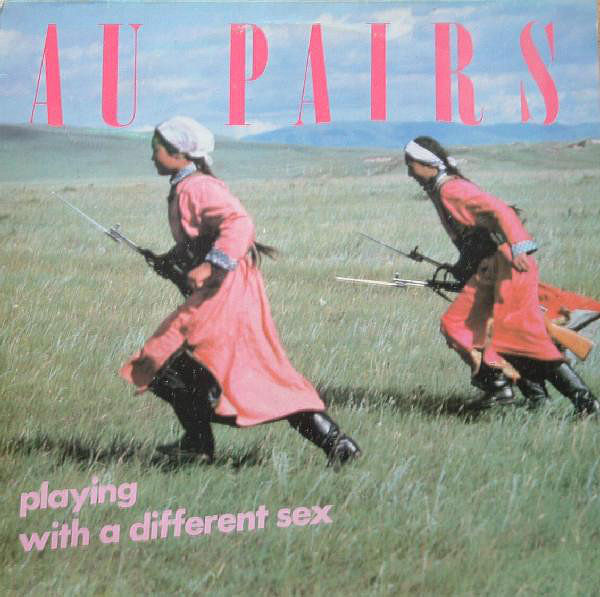
Au Pairs also liked sarcasm and humor with their politics. Brilliantly named—there were two men and two women in the band—their first album, Playing with a Different Sex (1981), is one of my favorites. Mainly about "gender issues," it touches on other serious matters, such as Britain's involvement in Northern Ireland, but it's hardly dull: It brims with excitement. It's passionate, catchy pop with a singer—Lesley Woods—who possesses a stunning voice. (Woods now works as lawyer representing immigrants.)
 Politics, though, needn't be spelled with a capital P; it isn't necessary to shout Marxist slogans. The Fall usually aren't seen as political. Mark E. Smith—singer, songwriter, founder, and basically whole band—would have hated being called that. Then again, Smith was famed for his caustic wit, and things he didn't hate would make a rather short list.
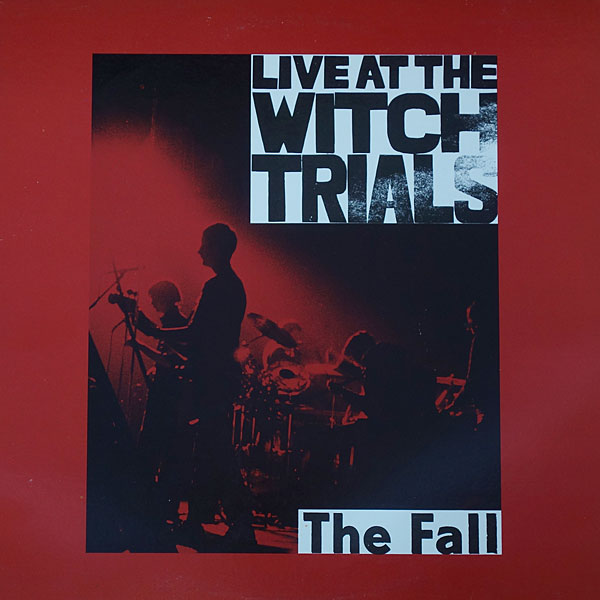 But The Fall was political in that they sang about working-class life. Across 32 studio albums and more changes of personnel than the Trump administration, they produced an impressive body of work. Imagine a rather inebriated man in the corner of the pub, ranting at you. He may have had a few pints, but he is still making sense, making cutting comments but also making you laugh. Add repetitive guitar and you've got The Fall. Recorded in one day, their debut album, Live at the Witch Trials, is a must-listen. It's crude, straightforward—and great.
 This was also the time of squatters, and of art school students who fed into the music scene. Inspired by seeing The Slits, guitarist Ana da Silva and bassist Gina Birch formed The Raincoats. Their eponymous 1979 debut was ranked by Kurt Cobain at number 20 in his top 50 albums, ever. It would be about the same in mine. With Vicky Aspinall on violin and guest artist Lora Logic on sax, it still sounds fresh and distinctive today. Logic, briefly a member of X-Ray Spex (fab band, not here because I consider them punk), had her own group, Essential Logic, which is worth checking out: Post-punk did like its puns. The Raincoats would soon move away from recognizable Western rock and into what later would be called world music. Lydon was a fan, saying that they "offered a completely different way of doing things."
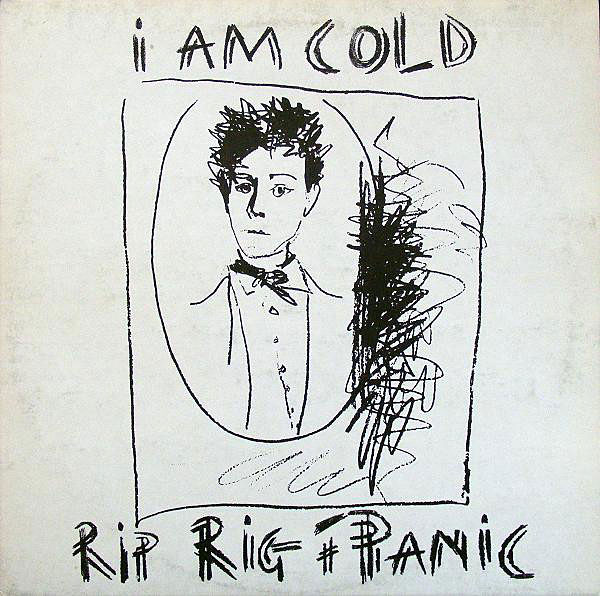 That can also be said of The Pop Group. The Pop Group mixed radical politics, dub, and funk, but there was also an element of free jazz. Their debut album, Y (1979), is awesome. True, it takes a few listens to warm up to it—the band's name is deeply ironic—but when you get it you really get it. Maybe not everyone, mind: My partner shudders with dread when I say I'm going to put it on the deck. Members of the band went on to form the group Rip Rig + Panic (named, roughly, after a Roland Kirk album), which further explored the combination of jazz and tribal-influenced music. Rip Rig + Panic was joined on their wonderful (and actually quite accessible) second album, I am Cold (1982), by Don Cherry and his stepdaughter Neneh (footnote 2).
The politics of the time would also spawn the label 2 Tone Records, with fantastic bands such as The Specials. But that's another story.
This is pop?
That can also be said of The Pop Group. The Pop Group mixed radical politics, dub, and funk, but there was also an element of free jazz. Their debut album, Y (1979), is awesome. True, it takes a few listens to warm up to it—the band's name is deeply ironic—but when you get it you really get it. Maybe not everyone, mind: My partner shudders with dread when I say I'm going to put it on the deck. Members of the band went on to form the group Rip Rig + Panic (named, roughly, after a Roland Kirk album), which further explored the combination of jazz and tribal-influenced music. Rip Rig + Panic was joined on their wonderful (and actually quite accessible) second album, I am Cold (1982), by Don Cherry and his stepdaughter Neneh (footnote 2).
The politics of the time would also spawn the label 2 Tone Records, with fantastic bands such as The Specials. But that's another story.
This is pop?
This was the time of the single, and New Musical Express was the periodical. Each week, we avidly read the singles reviews before heading off first thing Saturday morning to check them out. (Often we'd impatiently wait by the record shop counter whilst the hassled assistant unpacked them.) Independent record companies such as Rough Trade were flourishing, releasing dozens of singles a week. Longevity wasn't necessary. Some groups, like Sheffield band 2.3, had one great single—"All Time Low"—and then disappeared. Others, like The Fire Engines, lasted a bit longer. Many were skinny white boys, with floppy fringes and button-up shirts, clearly inspired by T. Rex and Loaded-era Velvet Underground. Notables included Glasgowbased Orange Juice, who would release a series of truly blinding singles on Postcard Records (tag line: "The Sound of Young Scotland").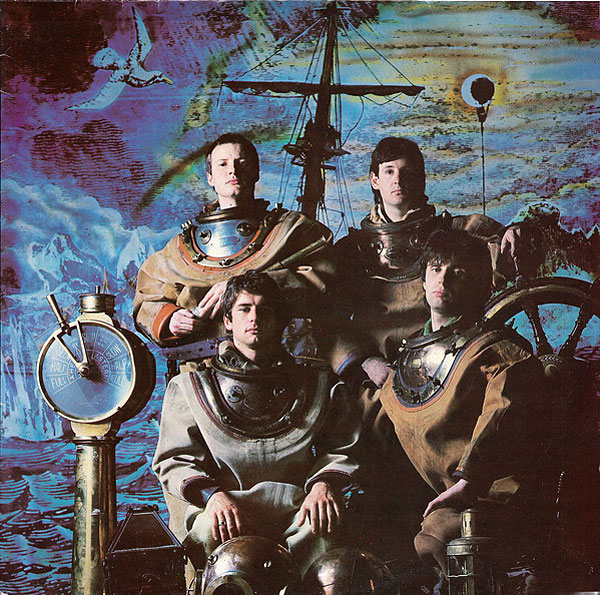 Then there was XTC. (Technically, they shouldn't be here, as they were formed, as Star Park, in 1972, but hey, post-punk hated rules, and their first release wasn't until 1978.) With a gifted songwriter in Andy Partridge, who shares Ray Davies's eye for the minutiae of English life (there's an unwritten law that the word "Englishness" must be used whenever discussing XTC), they produced a series of cracking singles. Often (lazily) compared to Talking Heads, they lasted longer and enjoyed more success than many other bands on this list, producing four albums in our self-demarcated period alone. My favorite is Black Sea (1980). Who can resist a cover shot of a band wearing 19th century deep-sea diving suits? Also, the songs are bloody good, the album kicking off with the biting "Respectable Street," an attack on suburbia. Being from that world, I appreciated that.
 But it wasn't just boys. Marine Girls (including Tracey Thorn, who would later start Everything But The Girl, with Ben Watt) and Young Marble Giants used minimal instrumentation and lovely vocals to produce gentle, beautiful music. Songs from the Giants such as "Searching for Mr. Right" and "Final Day" are hauntingly brilliant. Check out their debut, Colossal Youth (1980).
 No Dark Things
Most people would probably identify post-punk as earnest men in long coats and spiky hair, in rooms without light bulbs, never smiling—bands such as Echo & the Bunnymen, The Cure, Joy Division, and A Certain Ratio (ACR). But even including Joy Division, whose lead singer, Ian Curtis, committed suicide just before the band's first tour, I find this music spiritually uplifting. That includes their album Closer (1980), which perhaps wasn't appreciated as such on its release, coming as it did just months after Curtis's tragic death. The non-album single "Love Will Tear Us Apart," which followed, is one of the greatest singles ever released. Fact. Following Curtis's death, the band re-formed as New Order and in 1981 released Movement: a transitional album between Joy Division and the more danceable classics to follow. Then and now, Echo & the Bunnymen are personal faves. Dare I say, they're the Liverpool band I listen to most. In the day, Ian McCulloch's singing was often compared to Jim Morrison's; the similarities are there but shouldn't be overstated. The Bunnymen blend pop, post-punk, and psychedelia with grace. Heaven Up Here (1981) for me is pop perfection. Every track is sublime, concerned with melancholy and a sense of loss, but the sheer majesty gives the listener hope. Even the cover is stunning, all members looking meaningfully out over a wet Welsh beach. (Yep, they're wearing overcoats, and it's not sunny.) That being said, I always think of The Cure's Seventeen Seconds (1980), which includes the awesome "A Forest," as a companion to Heaven Up Here, in spite of the former being less anthemic and more dreamy. Songs to remember
So many great bands, and a fair few missed out. Sharing influences but sounding very different from each other. What they also shared was the desire to depart from the standard rock template. Some shone for a short time; others, like The Cure, remain. Collectively, they created a wealth of stunning music and influenced many bands that followed, some of which became household names—some perhaps sooner than others: I recently went to see Sirocco, a band whose debut album is just out as I write this. Ostensibly, it was to support my 17-year-old nephew, the bassist in the band. Hearing his style, the sharp guitar and the jerky pop, I smiled: This is the music I love.
Footnote 2: Mr. Cherry isn't the only bona fide jazz great involved in this story; Miles Davis appeared on Scritti Politti's 1988 single "Oh Patti (Don't Feel Sorry for Loverboy)."
Politics, though, needn't be spelled with a capital P; it isn't necessary to shout Marxist slogans. The Fall usually aren't seen as political. Mark E. Smith—singer, songwriter, founder, and basically whole band—would have hated being called that. Then again, Smith was famed for his caustic wit, and things he didn't hate would make a rather short list.
But The Fall was political in that they sang about working-class life. Across 32 studio albums and more changes of personnel than the Trump administration, they produced an impressive body of work. Imagine a rather inebriated man in the corner of the pub, ranting at you. He may have had a few pints, but he is still making sense, making cutting comments but also making you laugh. Add repetitive guitar and you've got The Fall. Recorded in one day, their debut album, Live at the Witch Trials, is a must-listen. It's crude, straightforward—and great.
This was also the time of squatters, and of art school students who fed into the music scene. Inspired by seeing The Slits, guitarist Ana da Silva and bassist Gina Birch formed The Raincoats. Their eponymous 1979 debut was ranked by Kurt Cobain at number 20 in his top 50 albums, ever. It would be about the same in mine. With Vicky Aspinall on violin and guest artist Lora Logic on sax, it still sounds fresh and distinctive today. Logic, briefly a member of X-Ray Spex (fab band, not here because I consider them punk), had her own group, Essential Logic, which is worth checking out: Post-punk did like its puns. The Raincoats would soon move away from recognizable Western rock and into what later would be called world music. Lydon was a fan, saying that they "offered a completely different way of doing things."
That can also be said of The Pop Group. The Pop Group mixed radical politics, dub, and funk, but there was also an element of free jazz. Their debut album, Y (1979), is awesome. True, it takes a few listens to warm up to it—the band's name is deeply ironic—but when you get it you really get it. Maybe not everyone, mind: My partner shudders with dread when I say I'm going to put it on the deck. Members of the band went on to form the group Rip Rig + Panic (named, roughly, after a Roland Kirk album), which further explored the combination of jazz and tribal-influenced music. Rip Rig + Panic was joined on their wonderful (and actually quite accessible) second album, I am Cold (1982), by Don Cherry and his stepdaughter Neneh (footnote 2).
The politics of the time would also spawn the label 2 Tone Records, with fantastic bands such as The Specials. But that's another story.
This was the time of the single, and New Musical Express was the periodical. Each week, we avidly read the singles reviews before heading off first thing Saturday morning to check them out. (Often we'd impatiently wait by the record shop counter whilst the hassled assistant unpacked them.) Independent record companies such as Rough Trade were flourishing, releasing dozens of singles a week. Longevity wasn't necessary. Some groups, like Sheffield band 2.3, had one great single—"All Time Low"—and then disappeared. Others, like The Fire Engines, lasted a bit longer. Many were skinny white boys, with floppy fringes and button-up shirts, clearly inspired by T. Rex and Loaded-era Velvet Underground. Notables included Glasgowbased Orange Juice, who would release a series of truly blinding singles on Postcard Records (tag line: "The Sound of Young Scotland").
Then there was XTC. (Technically, they shouldn't be here, as they were formed, as Star Park, in 1972, but hey, post-punk hated rules, and their first release wasn't until 1978.) With a gifted songwriter in Andy Partridge, who shares Ray Davies's eye for the minutiae of English life (there's an unwritten law that the word "Englishness" must be used whenever discussing XTC), they produced a series of cracking singles. Often (lazily) compared to Talking Heads, they lasted longer and enjoyed more success than many other bands on this list, producing four albums in our self-demarcated period alone. My favorite is Black Sea (1980). Who can resist a cover shot of a band wearing 19th century deep-sea diving suits? Also, the songs are bloody good, the album kicking off with the biting "Respectable Street," an attack on suburbia. Being from that world, I appreciated that.
But it wasn't just boys. Marine Girls (including Tracey Thorn, who would later start Everything But The Girl, with Ben Watt) and Young Marble Giants used minimal instrumentation and lovely vocals to produce gentle, beautiful music. Songs from the Giants such as "Searching for Mr. Right" and "Final Day" are hauntingly brilliant. Check out their debut, Colossal Youth (1980).
No Dark ThingsMost people would probably identify post-punk as earnest men in long coats and spiky hair, in rooms without light bulbs, never smiling—bands such as Echo & the Bunnymen, The Cure, Joy Division, and A Certain Ratio (ACR). But even including Joy Division, whose lead singer, Ian Curtis, committed suicide just before the band's first tour, I find this music spiritually uplifting. That includes their album Closer (1980), which perhaps wasn't appreciated as such on its release, coming as it did just months after Curtis's tragic death. The non-album single "Love Will Tear Us Apart," which followed, is one of the greatest singles ever released. Fact. Following Curtis's death, the band re-formed as New Order and in 1981 released Movement: a transitional album between Joy Division and the more danceable classics to follow. Then and now, Echo & the Bunnymen are personal faves. Dare I say, they're the Liverpool band I listen to most. In the day, Ian McCulloch's singing was often compared to Jim Morrison's; the similarities are there but shouldn't be overstated. The Bunnymen blend pop, post-punk, and psychedelia with grace. Heaven Up Here (1981) for me is pop perfection. Every track is sublime, concerned with melancholy and a sense of loss, but the sheer majesty gives the listener hope. Even the cover is stunning, all members looking meaningfully out over a wet Welsh beach. (Yep, they're wearing overcoats, and it's not sunny.) That being said, I always think of The Cure's Seventeen Seconds (1980), which includes the awesome "A Forest," as a companion to Heaven Up Here, in spite of the former being less anthemic and more dreamy. Songs to remember
So many great bands, and a fair few missed out. Sharing influences but sounding very different from each other. What they also shared was the desire to depart from the standard rock template. Some shone for a short time; others, like The Cure, remain. Collectively, they created a wealth of stunning music and influenced many bands that followed, some of which became household names—some perhaps sooner than others: I recently went to see Sirocco, a band whose debut album is just out as I write this. Ostensibly, it was to support my 17-year-old nephew, the bassist in the band. Hearing his style, the sharp guitar and the jerky pop, I smiled: This is the music I love.
Footnote 2: Mr. Cherry isn't the only bona fide jazz great involved in this story; Miles Davis appeared on Scritti Politti's 1988 single "Oh Patti (Don't Feel Sorry for Loverboy)."