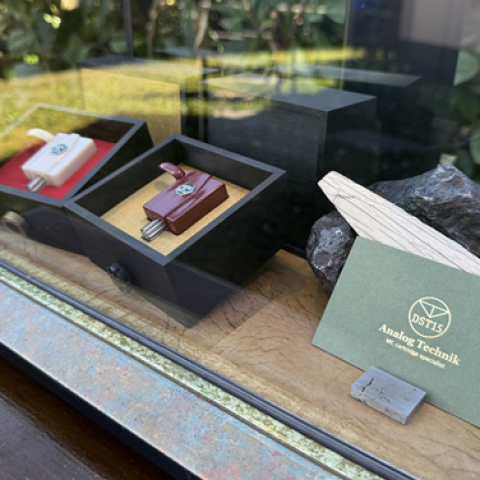
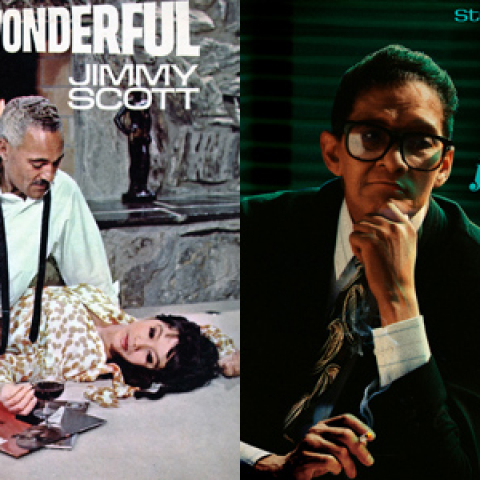
Having recently upgraded my phono system, I've been playing LPs more frequently. As a kind of tribute, one of the first recordings I played through the Sabrinas was Concert, Dave Wilson's first recording of a pipe organ (Wilson H-1-77). I started with Johann Gottfried Walter's Concerto 3, played by James Welch on a tracker-action organ. There was a great sense of space, the sound of the organ filling the venue in a manner both powerful and delicate. I think of the pipe organ as a "slow" instrument, with no real transients—compared to, say, a piano—but with this recording played through the Sabrinas, the organ sounded unusually "quick," with a lot of dynamic variation.
Further listening revealed that one of the Sabrina's strengths was its ability to faithfully reproduce dynamic variations. Piano recordings demonstrated this particularly well. Sonata, pianist Robert Silverman's recording of solo works by Liszt (CD, Stereophile STPH008-2), engineered by John Atkinson and Robert Harley, has a wide dynamic range: The sound of Silverman's piano goes from whisper quiet to blow-the-house-down loud, with everything in between. Just for the fun of it—don't try this at home—I first played the recording at what would be for me a normal volume for this sort of music, and then at a volume two clicks higher on the CAT preamp's volume control—an increase of about 3dB.
The peak volume, measured with the iPhone 6 AudioTools Analog SPL meter app (C weighting, high microphone level, low-pass filter disabled) was 95.7dB. This SPL measurement is not calibrated to professional standards, but it gives at least some measured indication of the level. To my ears, it was very loud: Other than to demonstrate a speaker's dynamic capability, I wouldn't want to listen at this level. The Sabrinas—for this test, driven by the Theta Prometheus—took it all in stride, with no audible distortion. Reproduction of dynamic contrasts is one of the strengths of horn-based speakers such as my Avantgarde Uno Nanos; the Sabrinas came closer to the Avantgardes in this respect than any other speaker I've reviewed.
 And the bass? Well, that Wilson pipe-organ recording has lots of it, including several pedal low Cs (32Hz). I expected a speaker of the Sabrina's size, with just a single 8" woofer, to merely hint at these notes, or present them only as harmonics. But no, there they were: clean, and at levels that, while not quite room-shaking, were certainly more than enough to provide a solid musical foundation. The Avantgarde Uno Nano, which has a powered subwoofer section with twin 10" drivers, and the GoldenEar Technology Triton One, with its powered DSP-controlled subwoofers and passive radiators, go even lower, but the Sabrina was not far behind. The bass was tuneful, and transients, such as those in recordings of bass drums or timpani, had appropriately quick onset and very little overhang. Wilson identifies its woofer as having been first used in the Alexia and modified for use in the Sabrina. Whatever those modifications were, the effect is that the driver now provides greater extension and power-handling capability while retaining the quickness of a normal 8" driver. Quite a feat.
Furthermore, the crossover from woofer to midrange—often a difficult area—sounded seamless. This was evident in the reproduction of such instruments as cello, double bass, and bass guitar, and in recordings of male voices. I've heard some otherwise-fine speakers that made baritones sound more tenorish than I know those singers sound in real life, with less chest resonance. A recording I've played quite a bit lately—and that I chose as one of my 2016 Records to Die For—is Frank Sinatra's Ultimate Sinatra collection (4 CDs, Universal B00224360-02), which chronicles Old Blue Eyes' career. In his early days as a band singer, Sinatra's voice was decidedly lighter—he took some high notes that could have come from a tenor, but there was still a chest resonance. The Sabrina reproduced this very faithfully.
In fact, the reproduction of voices, male or female, was another of the Sabrina's strengths. As a standard for a recording of a woman's voice, I always go back to Sylvia McNair's Sure Thing: The Jerome Kern Songbook (CD, Philips 442 129-2), which also serves as a test of a speaker's reproduction of the midrange and treble. The midrange-tweeter crossover had a smoothness similar to that of the woofer-midrange blend, and the Sabrina's treble was revealing without being exaggerated, which would have shown up as "spitty" sibilants. Sibilants sounded overemphasized only when they'd been recorded that way. (The highs were sweeter with the McIntosh MC275LE than with the Theta Prometheus, but I happily listened to the Wilsons with each amplifier for long periods, without having the urge to switch to the other amp.)
The soundstage thrown by the Sabrinas was wide and deep, with images on it precisely defined. The deepest soundstage and most precisely defined images I've heard from a pair of speakers under review were with Fujitsu Ten's Eclipse TD712 Mk.2, which I reviewed in January 2007. The spatial definition produced by that single-driver speaker was uncanny—but the Eclipse couldn't match the Sabrina (or any number of high-quality, multi-driver speakers) in maximum loudness capability and bass extension. Compared to other multi-driver speakers, the Sabrinas' imaging was excellent. When I played the "Depth of Image" tracks from The Best of Chesky Jazz and More Audiophile Tests, Vol.2 (CD, Chesky JD68), the Sabrina's reproduction of them was comparable to that of the GoldenEar Triton One—and the GoldenEars did better on this test than any other multi-driver speaker I've heard in my listening room.
Colorations from the Sabrina's cabinet? There weren't any—at least, not that I could hear. John Atkinson may be able to pick up something with his accelerometer, but the Sabrina had the most sonically inert cabinet of any floorstanding speaker of my experience, surpassing even the otherwise admirable—and, of course, much cheaper—GoldenEar Triton One.
And the bass? Well, that Wilson pipe-organ recording has lots of it, including several pedal low Cs (32Hz). I expected a speaker of the Sabrina's size, with just a single 8" woofer, to merely hint at these notes, or present them only as harmonics. But no, there they were: clean, and at levels that, while not quite room-shaking, were certainly more than enough to provide a solid musical foundation. The Avantgarde Uno Nano, which has a powered subwoofer section with twin 10" drivers, and the GoldenEar Technology Triton One, with its powered DSP-controlled subwoofers and passive radiators, go even lower, but the Sabrina was not far behind. The bass was tuneful, and transients, such as those in recordings of bass drums or timpani, had appropriately quick onset and very little overhang. Wilson identifies its woofer as having been first used in the Alexia and modified for use in the Sabrina. Whatever those modifications were, the effect is that the driver now provides greater extension and power-handling capability while retaining the quickness of a normal 8" driver. Quite a feat.
Furthermore, the crossover from woofer to midrange—often a difficult area—sounded seamless. This was evident in the reproduction of such instruments as cello, double bass, and bass guitar, and in recordings of male voices. I've heard some otherwise-fine speakers that made baritones sound more tenorish than I know those singers sound in real life, with less chest resonance. A recording I've played quite a bit lately—and that I chose as one of my 2016 Records to Die For—is Frank Sinatra's Ultimate Sinatra collection (4 CDs, Universal B00224360-02), which chronicles Old Blue Eyes' career. In his early days as a band singer, Sinatra's voice was decidedly lighter—he took some high notes that could have come from a tenor, but there was still a chest resonance. The Sabrina reproduced this very faithfully.
In fact, the reproduction of voices, male or female, was another of the Sabrina's strengths. As a standard for a recording of a woman's voice, I always go back to Sylvia McNair's Sure Thing: The Jerome Kern Songbook (CD, Philips 442 129-2), which also serves as a test of a speaker's reproduction of the midrange and treble. The midrange-tweeter crossover had a smoothness similar to that of the woofer-midrange blend, and the Sabrina's treble was revealing without being exaggerated, which would have shown up as "spitty" sibilants. Sibilants sounded overemphasized only when they'd been recorded that way. (The highs were sweeter with the McIntosh MC275LE than with the Theta Prometheus, but I happily listened to the Wilsons with each amplifier for long periods, without having the urge to switch to the other amp.)
The soundstage thrown by the Sabrinas was wide and deep, with images on it precisely defined. The deepest soundstage and most precisely defined images I've heard from a pair of speakers under review were with Fujitsu Ten's Eclipse TD712 Mk.2, which I reviewed in January 2007. The spatial definition produced by that single-driver speaker was uncanny—but the Eclipse couldn't match the Sabrina (or any number of high-quality, multi-driver speakers) in maximum loudness capability and bass extension. Compared to other multi-driver speakers, the Sabrinas' imaging was excellent. When I played the "Depth of Image" tracks from The Best of Chesky Jazz and More Audiophile Tests, Vol.2 (CD, Chesky JD68), the Sabrina's reproduction of them was comparable to that of the GoldenEar Triton One—and the GoldenEars did better on this test than any other multi-driver speaker I've heard in my listening room.
Colorations from the Sabrina's cabinet? There weren't any—at least, not that I could hear. John Atkinson may be able to pick up something with his accelerometer, but the Sabrina had the most sonically inert cabinet of any floorstanding speaker of my experience, surpassing even the otherwise admirable—and, of course, much cheaper—GoldenEar Triton One.
 LIAR
LIAR
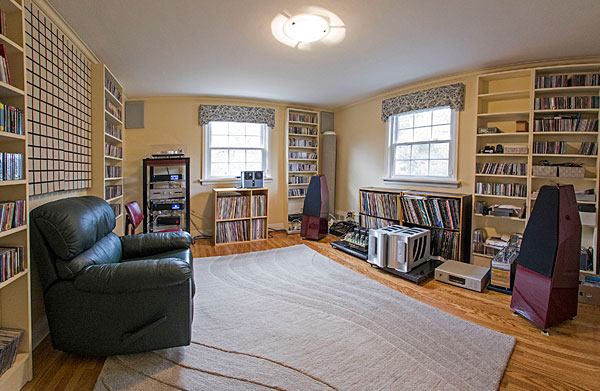
My dedicated listening room began life as one of our house's three upstairs bedrooms. When reviewing a speaker, I go to considerable lengths to set them up just right, but much of my listening is not actually done in that room. Instead, it involves what's been called the Listening In Another Room (LIAR) test. Right now, having listened to the first track of Sure Thing in the listening room, I'm sitting on a loveseat in our living room, down on the main floor, my laptop on a small table in front of me as I work on this review, keeping an ear out for Sylvia McNair. She seems to be upstairs, singing. The extent to which this illusion is maintained is, for me, one of the tests of speaker performance. I wouldn't want to judge a speaker solely on the basis of how it sounds outside the listening room, but the LIAR test does have the advantage of eliminating the effects of minor variations in the positions of speakers and listener. The Avantgarde Uno Nano, whatever its shortcomings, performs very well on the LIAR test, and the Sabrina was very much in the same class. A variation on the basic LIAR test is to consider whether listening downstairs makes me want to go upstairs. And now, if you'll excuse me . . .
Who will buy?
From the start, beginning with the WAMM and the WATT/Puppy, Wilson Audio Specialties has been driven more by technology than by marketing—with technology applied in the service of music. One assumes their speakers have never been designed to hit specific price points, but to reach certain levels of performance, upon which they're priced according to their design and manufacturing costs, with an eye to economic survival and continued technological development. Wilson's expectation was apparently that consumers would appreciate what the speakers had to offer, and would be willing to pay the price—and in that Wilson has been extraordinarily successful. Did the development of the Sabrina mark a departure? Did they set out to design a full-range speaker that has the essence of the Wilson sound, at a significantly lower price? If so, Wilson has succeeded spectacularly in producing a speaker that, while of relatively modest size, indeed has all the hallmarks of the Wilson sound: wide frequency range, high resolution, real bass, a striking absence of cabinet colorations, and a particular adeptness in communicating the dynamic contrasts of live music. Who will buy the Sabrina? Adrian Low, the owner of Audio Excellence, told me that a number of his customers who own larger Wilson speakers have moved to smaller homes and found that their Wilsons are now too big for them. Downsizing to the much smaller Sabrina would involve few or no compromises in sound quality. Another group of potential buyers are audiophiles who have long admired Wilson speakers but never been able to afford them. Finally, there are those who didn't consider themselves to be in the speaker market at all but who, on hearing the Sabrinas, said, "I've got to have these speakers!"
I'm inclining toward membership in that last group myself.
And the bass? Well, that Wilson pipe-organ recording has lots of it, including several pedal low Cs (32Hz). I expected a speaker of the Sabrina's size, with just a single 8" woofer, to merely hint at these notes, or present them only as harmonics. But no, there they were: clean, and at levels that, while not quite room-shaking, were certainly more than enough to provide a solid musical foundation. The Avantgarde Uno Nano, which has a powered subwoofer section with twin 10" drivers, and the GoldenEar Technology Triton One, with its powered DSP-controlled subwoofers and passive radiators, go even lower, but the Sabrina was not far behind. The bass was tuneful, and transients, such as those in recordings of bass drums or timpani, had appropriately quick onset and very little overhang. Wilson identifies its woofer as having been first used in the Alexia and modified for use in the Sabrina. Whatever those modifications were, the effect is that the driver now provides greater extension and power-handling capability while retaining the quickness of a normal 8" driver. Quite a feat.
Furthermore, the crossover from woofer to midrange—often a difficult area—sounded seamless. This was evident in the reproduction of such instruments as cello, double bass, and bass guitar, and in recordings of male voices. I've heard some otherwise-fine speakers that made baritones sound more tenorish than I know those singers sound in real life, with less chest resonance. A recording I've played quite a bit lately—and that I chose as one of my 2016 Records to Die For—is Frank Sinatra's Ultimate Sinatra collection (4 CDs, Universal B00224360-02), which chronicles Old Blue Eyes' career. In his early days as a band singer, Sinatra's voice was decidedly lighter—he took some high notes that could have come from a tenor, but there was still a chest resonance. The Sabrina reproduced this very faithfully.
In fact, the reproduction of voices, male or female, was another of the Sabrina's strengths. As a standard for a recording of a woman's voice, I always go back to Sylvia McNair's Sure Thing: The Jerome Kern Songbook (CD, Philips 442 129-2), which also serves as a test of a speaker's reproduction of the midrange and treble. The midrange-tweeter crossover had a smoothness similar to that of the woofer-midrange blend, and the Sabrina's treble was revealing without being exaggerated, which would have shown up as "spitty" sibilants. Sibilants sounded overemphasized only when they'd been recorded that way. (The highs were sweeter with the McIntosh MC275LE than with the Theta Prometheus, but I happily listened to the Wilsons with each amplifier for long periods, without having the urge to switch to the other amp.)
LIARMy dedicated listening room began life as one of our house's three upstairs bedrooms. When reviewing a speaker, I go to considerable lengths to set them up just right, but much of my listening is not actually done in that room. Instead, it involves what's been called the Listening In Another Room (LIAR) test. Right now, having listened to the first track of Sure Thing in the listening room, I'm sitting on a loveseat in our living room, down on the main floor, my laptop on a small table in front of me as I work on this review, keeping an ear out for Sylvia McNair. She seems to be upstairs, singing. The extent to which this illusion is maintained is, for me, one of the tests of speaker performance. I wouldn't want to judge a speaker solely on the basis of how it sounds outside the listening room, but the LIAR test does have the advantage of eliminating the effects of minor variations in the positions of speakers and listener. The Avantgarde Uno Nano, whatever its shortcomings, performs very well on the LIAR test, and the Sabrina was very much in the same class. A variation on the basic LIAR test is to consider whether listening downstairs makes me want to go upstairs. And now, if you'll excuse me . . .
From the start, beginning with the WAMM and the WATT/Puppy, Wilson Audio Specialties has been driven more by technology than by marketing—with technology applied in the service of music. One assumes their speakers have never been designed to hit specific price points, but to reach certain levels of performance, upon which they're priced according to their design and manufacturing costs, with an eye to economic survival and continued technological development. Wilson's expectation was apparently that consumers would appreciate what the speakers had to offer, and would be willing to pay the price—and in that Wilson has been extraordinarily successful. Did the development of the Sabrina mark a departure? Did they set out to design a full-range speaker that has the essence of the Wilson sound, at a significantly lower price? If so, Wilson has succeeded spectacularly in producing a speaker that, while of relatively modest size, indeed has all the hallmarks of the Wilson sound: wide frequency range, high resolution, real bass, a striking absence of cabinet colorations, and a particular adeptness in communicating the dynamic contrasts of live music. Who will buy the Sabrina? Adrian Low, the owner of Audio Excellence, told me that a number of his customers who own larger Wilson speakers have moved to smaller homes and found that their Wilsons are now too big for them. Downsizing to the much smaller Sabrina would involve few or no compromises in sound quality. Another group of potential buyers are audiophiles who have long admired Wilson speakers but never been able to afford them. Finally, there are those who didn't consider themselves to be in the speaker market at all but who, on hearing the Sabrinas, said, "I've got to have these speakers!"