

Recording of May 2019: Never the Same

Francesco Diodati Yellow Squeeds: Never the Same
Francesco Diodati, electric & acoustic guitar, gongs; Francesco Lento, trumpet; Glauco Benedetti, tuba, valve trombone, flute; Enrico Zanisi, piano, Fender Rhodes, synths; Enrico Morello, drums, gongs
Auand AU9080 (CD). 2019. Francesco Diodati, Marco Valente, prods.; Stefano Del Vecchio, Roberto Lioli, engs. DDD. TT: 44:24
Performance ****½
Sonics **** Guitarist Francesco Diodati is one of the freshest voices to enter jazz in the new millennium. If this news comes as a surprise, you probably live in the US. A disproportionate amount of the innovation and energy within America's only indigenous art form now comes out of Europe. Most of the American jazz community has not gotten the memo.
Francesco Diodati, electric & acoustic guitar, gongs; Francesco Lento, trumpet; Glauco Benedetti, tuba, valve trombone, flute; Enrico Zanisi, piano, Fender Rhodes, synths; Enrico Morello, drums, gongs
Auand AU9080 (CD). 2019. Francesco Diodati, Marco Valente, prods.; Stefano Del Vecchio, Roberto Lioli, engs. DDD. TT: 44:24
Performance ****½
Sonics **** Guitarist Francesco Diodati is one of the freshest voices to enter jazz in the new millennium. If this news comes as a surprise, you probably live in the US. A disproportionate amount of the innovation and energy within America's only indigenous art form now comes out of Europe. Most of the American jazz community has not gotten the memo.
Recording of May 2020: The Hot Rats Sessions
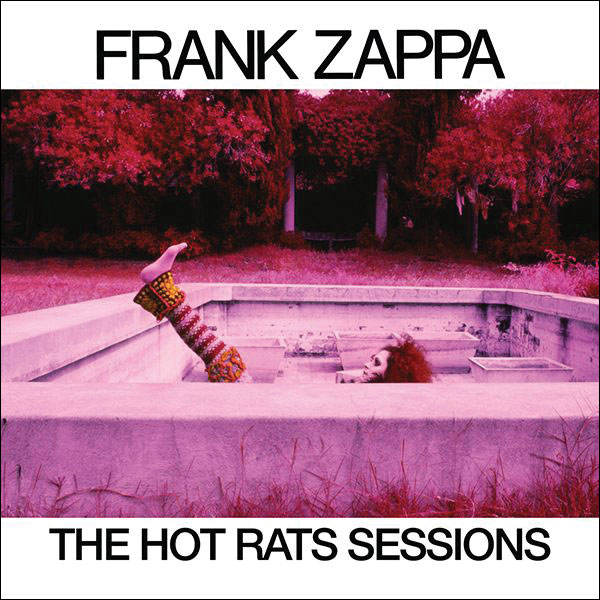
Frank Zappa: The Hot Rats Sessions
Zappa Records/UMe ZR20032 (6 CDs). 19692019. Frank Zappa, prod.; Joe Travers, Craig Parker Adams, Jack Hunt, others, engs.
Performance *****
Sonics **** Frank Zappa's first real solo album (he conducted but did not play on Lumpy Gravy) is probably his greatest recording and perhaps his most uncharacteristic in that his singing voice is nowhere to be heard. The one vocal, "Willie the Pimp," is sung by Captain Beefheart, whose Zappa-produced pinnacle Trout Mask Replica was released the same year (1969).
Zappa Records/UMe ZR20032 (6 CDs). 19692019. Frank Zappa, prod.; Joe Travers, Craig Parker Adams, Jack Hunt, others, engs.
Performance *****
Sonics **** Frank Zappa's first real solo album (he conducted but did not play on Lumpy Gravy) is probably his greatest recording and perhaps his most uncharacteristic in that his singing voice is nowhere to be heard. The one vocal, "Willie the Pimp," is sung by Captain Beefheart, whose Zappa-produced pinnacle Trout Mask Replica was released the same year (1969).
Recording of May 2021: Heavy Sun
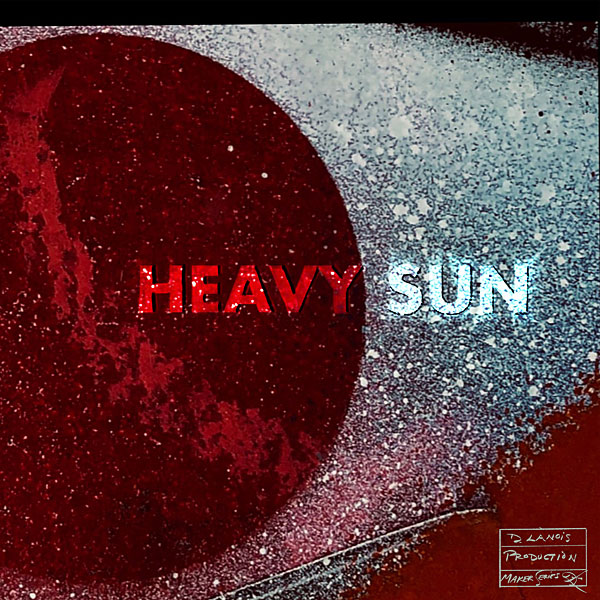
Daniel Lanois: Heavy Sun
eOne Music EMC-CD-28392 (CD). 2021. Daniel Lanois, Wayne Lorenz, prods.; Daniel Lanois, Wayne Lorenz, engs.; Noah Mintz, mastering.
Performance ****½
Sonics ****½ Daniel Lanois may not be a household name as a solo artist, but over four decades he has gained great notoriety as a producer. After serendipitously catching Brian Eno's attention with his homespun recording projects in the late '70s, Quebec-born, Ontario-based Lanois became protégé and then partner to the ambient/pop tastemaker; together, they innovated sonic techniques and worked with such off-the-radar experimental jazz artists as soft-pedal pianist Harold Budd and fourth-world trumpeter Jon Hassell.
eOne Music EMC-CD-28392 (CD). 2021. Daniel Lanois, Wayne Lorenz, prods.; Daniel Lanois, Wayne Lorenz, engs.; Noah Mintz, mastering.
Performance ****½
Sonics ****½ Daniel Lanois may not be a household name as a solo artist, but over four decades he has gained great notoriety as a producer. After serendipitously catching Brian Eno's attention with his homespun recording projects in the late '70s, Quebec-born, Ontario-based Lanois became protégé and then partner to the ambient/pop tastemaker; together, they innovated sonic techniques and worked with such off-the-radar experimental jazz artists as soft-pedal pianist Harold Budd and fourth-world trumpeter Jon Hassell.
Recording of May 2022: Strictly a One-Eyed Jack

John Mellencamp: Strictly a One-Eyed Jack
Republic (16/44.1 stream, EMI/Qobuz). 2022. John Mellencamp, prod.; David Leonard, eng.
Performance ****
Sonics **** You might think an artist with 22 Top-40 hits would identify his winning formula and stick with it. Instead, John Mellencamp's long career has been a tale of determined development and often improvement. On his latest album, the 70-year-old Indiana native has nestled deeper into his rural Midwestern roots, eschewing rock defiance for folk philosophy. The result is a powerful baring of the soul, which, to many Americans, will also be a glance in the mirror.
Republic (16/44.1 stream, EMI/Qobuz). 2022. John Mellencamp, prod.; David Leonard, eng.
Performance ****
Sonics **** You might think an artist with 22 Top-40 hits would identify his winning formula and stick with it. Instead, John Mellencamp's long career has been a tale of determined development and often improvement. On his latest album, the 70-year-old Indiana native has nestled deeper into his rural Midwestern roots, eschewing rock defiance for folk philosophy. The result is a powerful baring of the soul, which, to many Americans, will also be a glance in the mirror.
Recording of May 2023: The Off-Off Broadway Guide to Synergism
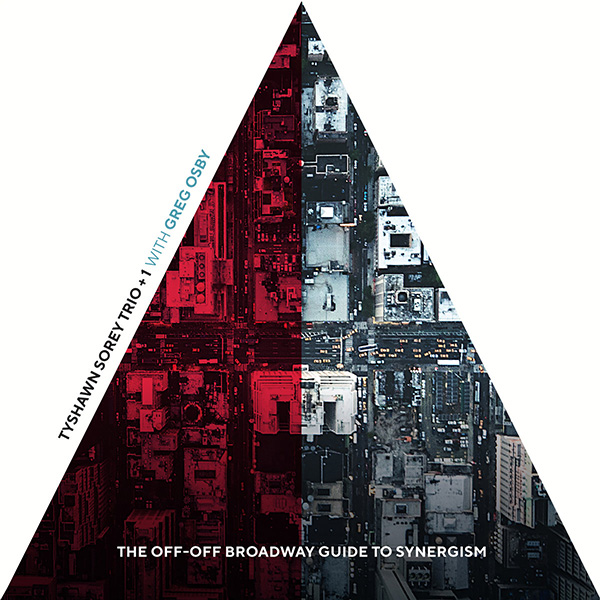
Tyshawn Sorey Trio + 1: The Off-Off Broadway Guide to Synergism
Sorey, drums; Aaron Diehl, piano; Russell Hall, bass; Greg Osby, alto saxophone
Pi P196 (3 CDs, available as download). 2022. Sorey, prod.; Kengchakaj Kengkarnka, recording/mixing eng.
Performance *****
Sonics ***½
Sorey, drums; Aaron Diehl, piano; Russell Hall, bass; Greg Osby, alto saxophone
Pi P196 (3 CDs, available as download). 2022. Sorey, prod.; Kengchakaj Kengkarnka, recording/mixing eng.
Performance *****
Sonics ***½
Recording of May 2024: Britten: Violin Concerto, Chamber Works

Benjamin Britten: Violin Concerto, Chamber Works
Isabelle Faust, violin; Symphonieorchester des Bayerischen Rundfunks, Jakub Hrůa, cond.; Boris Faust, viola; Alexander Melnikov, piano
Harmonia Mundi HMM902668 (CD, reviewed as 24/96). 2024. Sebastian Braun, Julian Schwenker, prods.; Schwenker, Klemens Kamp, engs.
Performance *****
Sonics **** I sat mesmerized when I first encountered a recording of Benjamin Britten's early Violin Concerto from 1939 (revised in 1958) at an audio show exhibit sponsored by High End by Oz. Ever since I heard those portions of Linus Roth's superbly recorded SACD for Channel Classics, I've longed for a version that would move beyond its strange harmonies and dissonances to reveal all facets of this communicative yet enigmatic work. Isabelle Faust rarely shies away from music conducive to deep thought and feeling; recently she has recorded works by Berg, Schoenberg, Bartók, and Stravinsky. Her hair-raising, emotionally wrought rendition of the Britten concerto, with Jakub Hrůa conducting the Bavarian Radio Symphony Orchestra for Harmonia Mundi, reveals depths and nuances that competing versions only hint at.
Isabelle Faust, violin; Symphonieorchester des Bayerischen Rundfunks, Jakub Hrůa, cond.; Boris Faust, viola; Alexander Melnikov, piano
Harmonia Mundi HMM902668 (CD, reviewed as 24/96). 2024. Sebastian Braun, Julian Schwenker, prods.; Schwenker, Klemens Kamp, engs.
Performance *****
Sonics **** I sat mesmerized when I first encountered a recording of Benjamin Britten's early Violin Concerto from 1939 (revised in 1958) at an audio show exhibit sponsored by High End by Oz. Ever since I heard those portions of Linus Roth's superbly recorded SACD for Channel Classics, I've longed for a version that would move beyond its strange harmonies and dissonances to reveal all facets of this communicative yet enigmatic work. Isabelle Faust rarely shies away from music conducive to deep thought and feeling; recently she has recorded works by Berg, Schoenberg, Bartók, and Stravinsky. Her hair-raising, emotionally wrought rendition of the Britten concerto, with Jakub Hrůa conducting the Bavarian Radio Symphony Orchestra for Harmonia Mundi, reveals depths and nuances that competing versions only hint at.
Recording of May 2025: Joe Henderson: Multiple
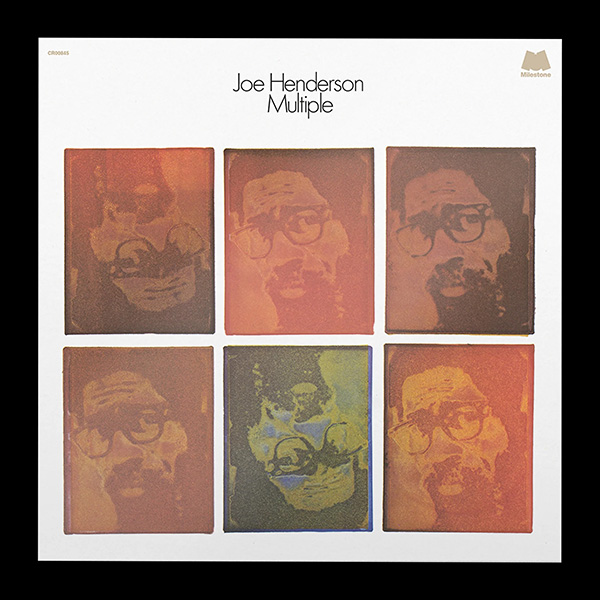
Joe Henderson: Multiple
Milestone/Craft CR 00845 (LP). 1973/2025. Orrin Keepnews, prod.; Elvin Campbell, Al Vanderbilt, engs.
Performance ****½
Sonics ****½ The essence of jazz is supposed to be the free-flowing exploration of ideas and expressions. Yet hardcore fans of the music have the unnerving habit of supporting and denigrating the work of the same player from record to record. Artistic growth is often seen as a negative. Even devoted fans might not follow an artist who veers off into a stylistic direction they abhor. The classic example is Miles Davis, who went through several artistic reinventions during his long career. Many of those who love Kind of Blue recoil from Dark Magus, On the Corner, or You're Under Arrest. So-called fusionadding influences from rock and/or funkis most often the villain in these judgments. After starting out as a hard-bop devotee in the early 1960s, with such classic Blue Note sessions as Page One, Our Thing, and Inner Urge, Joe Henderson grew curious about funk, about adding it to his jazz mix. In 1973, on Orrin Keepnews's Milestone label (now owned by the Concord Music Group), Henderson cut Multiple, one of the highlights of his discography.
Milestone/Craft CR 00845 (LP). 1973/2025. Orrin Keepnews, prod.; Elvin Campbell, Al Vanderbilt, engs.
Performance ****½
Sonics ****½ The essence of jazz is supposed to be the free-flowing exploration of ideas and expressions. Yet hardcore fans of the music have the unnerving habit of supporting and denigrating the work of the same player from record to record. Artistic growth is often seen as a negative. Even devoted fans might not follow an artist who veers off into a stylistic direction they abhor. The classic example is Miles Davis, who went through several artistic reinventions during his long career. Many of those who love Kind of Blue recoil from Dark Magus, On the Corner, or You're Under Arrest. So-called fusionadding influences from rock and/or funkis most often the villain in these judgments. After starting out as a hard-bop devotee in the early 1960s, with such classic Blue Note sessions as Page One, Our Thing, and Inner Urge, Joe Henderson grew curious about funk, about adding it to his jazz mix. In 1973, on Orrin Keepnews's Milestone label (now owned by the Concord Music Group), Henderson cut Multiple, one of the highlights of his discography.
Recording of May 2026: Willows

Willows
Music by Vaughan Williams, Caroline Shaw, Ellen Reid, and Traditional/Sam Amidon
Pekka Kuusisto, violin; Sam Amidon, folksinger; Norwegian Chamber Orchestra
Platoon PLAT29192 (reviewed in stereo as 24/96 WAV files).
Music by Vaughan Williams, Caroline Shaw, Ellen Reid, and Traditional/Sam Amidon
Pekka Kuusisto, violin; Sam Amidon, folksinger; Norwegian Chamber Orchestra
Platoon PLAT29192 (reviewed in stereo as 24/96 WAV files).
Recording of November 1962: Berlioz: Symphonie fantastique
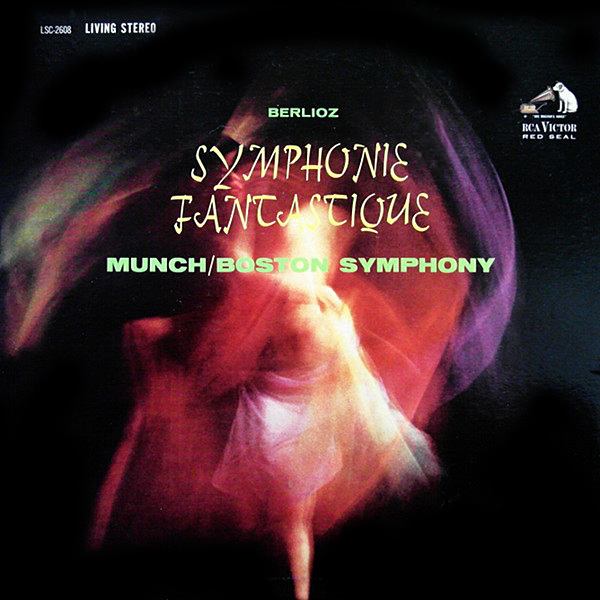
Berlioz: Symphonie fantastique
Boston Symphony Orchestra, Charles Munch, conductor
RCA Victor LSC-2608 (LP). TT: 48:40 It is easy to forget that the hi-fi movementsthe "March to the Scaffold" and the "Dream of a Witches' Sabbath"comprise barely a third of the music in the Symphonie fantastique, yet when we listen to most of the available versions of this, we can understand why the first three movements are usually passed up by the record listener. Two are slow and brooding, one is a wispy sort of waltz, and all three require a certain combination of flowing gentleness and grotesquerie that few orchestras and fewer conductors can carry off. It is in these first three movements where most readings of Berlioz' best-known work fall flat. Either they are too sweetly pastoral or too episodic and choppy, or they degenerate into unreliered dullness.
Boston Symphony Orchestra, Charles Munch, conductor
RCA Victor LSC-2608 (LP). TT: 48:40 It is easy to forget that the hi-fi movementsthe "March to the Scaffold" and the "Dream of a Witches' Sabbath"comprise barely a third of the music in the Symphonie fantastique, yet when we listen to most of the available versions of this, we can understand why the first three movements are usually passed up by the record listener. Two are slow and brooding, one is a wispy sort of waltz, and all three require a certain combination of flowing gentleness and grotesquerie that few orchestras and fewer conductors can carry off. It is in these first three movements where most readings of Berlioz' best-known work fall flat. Either they are too sweetly pastoral or too episodic and choppy, or they degenerate into unreliered dullness.
Recording of November 1981: Citadels of Mystery
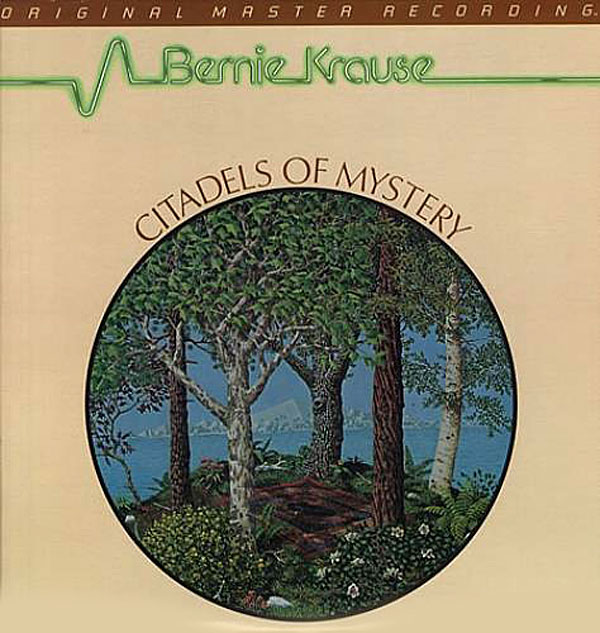
Bernie Krause: Citadels of Mystery
Mobile Fidelity MFSL 1-505 (LP). This is a very hyped, contrived recording, but then nobody ever pretended that this kind of musical construction was supposed to approximate the sound of a live performance. The strings are quite steely on this but, in all other respects, the recording is is stupendousunctuously rich, smooth and limpidly clear, with some awesomely taut low end and cuttingly crisp percussion sounds.
Mobile Fidelity MFSL 1-505 (LP). This is a very hyped, contrived recording, but then nobody ever pretended that this kind of musical construction was supposed to approximate the sound of a live performance. The strings are quite steely on this but, in all other respects, the recording is is stupendousunctuously rich, smooth and limpidly clear, with some awesomely taut low end and cuttingly crisp percussion sounds.