

Recording of August 2006: Gram Parsons: The Complete Reprise Sessions
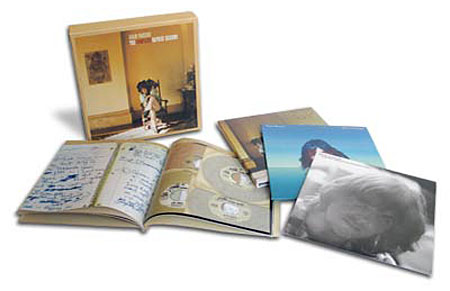
GRAM PARSONS: The Complete Reprise Sessions
Rhino/Reprise RS 74669 (3 CDs). 1972–73/2006. Emmylou Harris, James Austin, reissue prods.; Hugh Davies, Ed Barton, orig. engs.; Dan Hersch, Bill Inglot, remastering engs. AAD? TT: 2:01:26
Performance *****
Sonics **1/2 to ****1/2
Rhino/Reprise RS 74669 (3 CDs). 1972–73/2006. Emmylou Harris, James Austin, reissue prods.; Hugh Davies, Ed Barton, orig. engs.; Dan Hersch, Bill Inglot, remastering engs. AAD? TT: 2:01:26
Performance *****
Sonics **1/2 to ****1/2
Recording of August 2007: Beethoven Piano Concertos 1 & 4
BEETHOVEN Piano Concertos 1 & 4
Lang Lang, piano; Christoph Eschenbach, Orchestre de Paris
Deutsche Grammophon B0008725-02 (CD). 2007. Arend Prohmann, prod.; Jrgen Bulgrin, eng. DDD. TT: 74:30
Performance ****
Sonics ****
Lang Lang, piano; Christoph Eschenbach, Orchestre de Paris
Deutsche Grammophon B0008725-02 (CD). 2007. Arend Prohmann, prod.; Jrgen Bulgrin, eng. DDD. TT: 74:30
Performance ****
Sonics ****
Recording of August 2008: Romaria
THE DOWLAND PROJECT: Romaria
The Dowland Project: John Potter, tenor; John Surman, tenor & bass recorder. soprano saxophone, bass clarinet; Milos Valent, violin, viola; John Stubbs, baroque guitar, vihuela
ECM New Series 1970 (CD). 2008. Manfred Eicher, prod.; Markus Heiland, eng.
DDD. TT: 77:00
Performance ***½
Sonics ****
The Dowland Project: John Potter, tenor; John Surman, tenor & bass recorder. soprano saxophone, bass clarinet; Milos Valent, violin, viola; John Stubbs, baroque guitar, vihuela
ECM New Series 1970 (CD). 2008. Manfred Eicher, prod.; Markus Heiland, eng.
DDD. TT: 77:00
Performance ***½
Sonics ****
Recording of August 2009: Dark Night of the Soul

Danger Mouse and Sparklehorse: Dark Night of the Soul
With: Frank Black, Julian Casablancas, Vic Chesnutt, Wayne Coyne, Flaming Lips, David Lynch, Jason Lytle, James Mercer, Iggy Pop, Gruff Rhys, Suzanne Vega.
CD/download. 2009. Danger Mouse, Sparklehorse, prods., engs. AAD? TT: 43:16
Performance ****
Sonics ****
With: Frank Black, Julian Casablancas, Vic Chesnutt, Wayne Coyne, Flaming Lips, David Lynch, Jason Lytle, James Mercer, Iggy Pop, Gruff Rhys, Suzanne Vega.
CD/download. 2009. Danger Mouse, Sparklehorse, prods., engs. AAD? TT: 43:16
Performance ****
Sonics ****
Recording of August 2010: Jasmine
Keith Jarrett/Charlie Haden: Jasmine
Keith Jarrett, piano; Charlie Haden, double bass
ECM 2165 (CD). 2010. Manfred Eicher, exec. prod.; Keith Jarrett, prod.; Martin Pearson, eng. DDD. TT: 62:54
Performance *****
Sonics *****
Keith Jarrett, piano; Charlie Haden, double bass
ECM 2165 (CD). 2010. Manfred Eicher, exec. prod.; Keith Jarrett, prod.; Martin Pearson, eng. DDD. TT: 62:54
Performance *****
Sonics *****
Recording of August 2011: Bon Iver
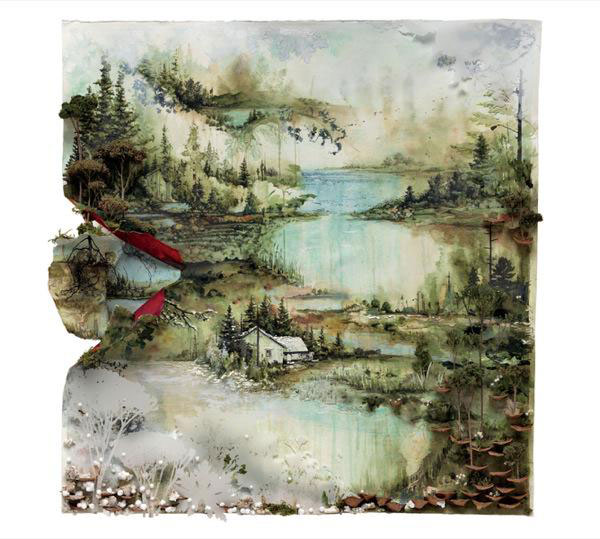
Bon Iver: Bon Iver
Jagjaguwar 52135 (CD). 2011. Justin Vernon, prod., eng.; Brian Joseph, eng.; Nate Vernon, Andy Immerman, asst. engs.; Greg Calbi, mastering. AAD. TT: 39:28
Performance ****
Sonics **** Many, though certainly not all, musicians of most genres dream of composing, crafting, birthing a hit recordone they will forever be known for, and that will make them enough money that they'll never have to sleep on another hard floor or friend's stained couch as long as they live. Very few fulfill this dream, and those who do often don't know why or just how it happened.
Jagjaguwar 52135 (CD). 2011. Justin Vernon, prod., eng.; Brian Joseph, eng.; Nate Vernon, Andy Immerman, asst. engs.; Greg Calbi, mastering. AAD. TT: 39:28
Performance ****
Sonics **** Many, though certainly not all, musicians of most genres dream of composing, crafting, birthing a hit recordone they will forever be known for, and that will make them enough money that they'll never have to sleep on another hard floor or friend's stained couch as long as they live. Very few fulfill this dream, and those who do often don't know why or just how it happened.
Recording of August 2012: Joplin: Treemonisha

Joplin: Treemonisha
Anita Johnson, soprano; AnnMarie Sandy, mezzo-soprano; Chauncey Packer, Robert Mack, tenors; Edward Pleasant, high baritone; Darren Stokes, Frank Ward Jr., basses; others; Paragon Ragtime Orchestra and Singers, Rick Benjamin
New World 80720-2 (2 CDs). 2012. Judith Sherman, prod., eng. DDD. TT: 99:06
Performance ****
Sonics ***** The great ragtime composer Scott Joplin had grander ambitions than just the magnificent miniatures for piano he's famous for. When he died, in 1917, he had spent much of the previous 10 years polishing and campaigning for his full-length opera, Treemonisha, the piano-vocal score for which he had published in 1911. Joplin had studied classical composition and notation with a German scholar who had happened to settle in his hometown of Texarkana, Arkansas; lore has it that Julius Weiss gave young Joplin lessons in exchange for Mrs. Joplin's services as a laundress. Treemonisha is through-composed, with sophisticated harmonies clearly influenced by European teachings, but it also incorporates early-jazz beats, proto-blues sounds, odd syncopations, occasional Victorian-type ballads, African-American folk and pop music, and moments that recall field hollers and revival meetingsin short, all of the music of the Black experience in America is represented.
Anita Johnson, soprano; AnnMarie Sandy, mezzo-soprano; Chauncey Packer, Robert Mack, tenors; Edward Pleasant, high baritone; Darren Stokes, Frank Ward Jr., basses; others; Paragon Ragtime Orchestra and Singers, Rick Benjamin
New World 80720-2 (2 CDs). 2012. Judith Sherman, prod., eng. DDD. TT: 99:06
Performance ****
Sonics ***** The great ragtime composer Scott Joplin had grander ambitions than just the magnificent miniatures for piano he's famous for. When he died, in 1917, he had spent much of the previous 10 years polishing and campaigning for his full-length opera, Treemonisha, the piano-vocal score for which he had published in 1911. Joplin had studied classical composition and notation with a German scholar who had happened to settle in his hometown of Texarkana, Arkansas; lore has it that Julius Weiss gave young Joplin lessons in exchange for Mrs. Joplin's services as a laundress. Treemonisha is through-composed, with sophisticated harmonies clearly influenced by European teachings, but it also incorporates early-jazz beats, proto-blues sounds, odd syncopations, occasional Victorian-type ballads, African-American folk and pop music, and moments that recall field hollers and revival meetingsin short, all of the music of the Black experience in America is represented.
Recording of August 2013: Magnetic
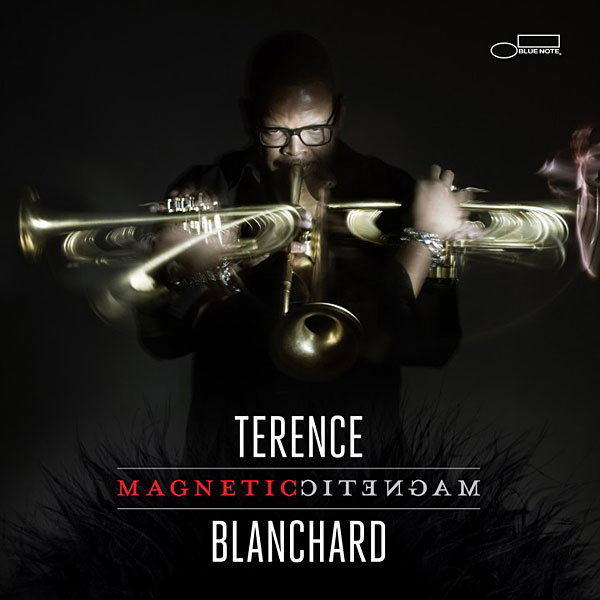
For all those who hold dear the notion that jazz has seen its best daysthat, like classical music, it now lacks star power (no more Birds, Mileses, or Coltranes on the marquees), has already said much of what it had to say, and what's left is merely esoteric noodling or soulless bop-by-rote mopping upthere is Terence Blanchard. Once the archetypal sideman, this New Orleanian contemporary of Donald Harrison and Wynton Marsalis has become a successful leader. His poise, generous spirit, and workaholic lifestyle not to mention his instantly recognizable trumpet tonehave quietly made him one of the leading figures in today's jazz mainstream.
Recording of August 2014: Turn Blue

The Black Keys: Turn Blue
Nonesuch 7559795555 (LP/CD/HDtracks download). 2014. Black Keys, Danger Mouse, prods.; Kennie Takahashi, eng.; Collin Dupuis, Geoff Neal, Bill Skibbe, asst. engs.; Tchad Blake, mix. TT: 45:09
Performance ****
Sonics **** There was a time when calling the Black Keys "sexy" would have been thought perversely stunted, given that they were a two-man, raw-as-hell, blow-me-down, frat-rock grinder that jammed and pounded and convinced everyone that their version of Tony Joe White's groove was something new and revolutionary.
Nonesuch 7559795555 (LP/CD/HDtracks download). 2014. Black Keys, Danger Mouse, prods.; Kennie Takahashi, eng.; Collin Dupuis, Geoff Neal, Bill Skibbe, asst. engs.; Tchad Blake, mix. TT: 45:09
Performance ****
Sonics **** There was a time when calling the Black Keys "sexy" would have been thought perversely stunted, given that they were a two-man, raw-as-hell, blow-me-down, frat-rock grinder that jammed and pounded and convinced everyone that their version of Tony Joe White's groove was something new and revolutionary.
Recording of August 2015: Sly and the Family Stone Live at the Fillmore East

Sly and the Family Stone: Live at the Fillmore East, October 4th & 5th, 1968
Epic 88843023712 (4 CDs). 2015. Sly Stone, orig. prod.; Bob Irwin, reissue prod.; Vic Anesini, mastering. AAD? TT: 3:27:31
Performance *****
Sonics **** The first thing you hear is not Sly Stone's keyboards or harmonica. Not Freddie Stone's guitar. Not Greg Errico's amazing drumming. Not Larry Graham's slapping bass. Not the voices of Rose Stone (also keys) and Cynthia Robinson (also trumpet). Not Jerry Martini's saxophone. No. The first thing you hear is pure energy: the nuclear reaction of musical power that Sly and his Family Stone generated onstage on two October nights in 1968 at the Fillmore East. James Brown and his band(s) had nothing on these seven. This is prime Sly, when the band was still hungry, before the hits, before his life spun out of control, the music suffered, and the family split.
Epic 88843023712 (4 CDs). 2015. Sly Stone, orig. prod.; Bob Irwin, reissue prod.; Vic Anesini, mastering. AAD? TT: 3:27:31
Performance *****
Sonics **** The first thing you hear is not Sly Stone's keyboards or harmonica. Not Freddie Stone's guitar. Not Greg Errico's amazing drumming. Not Larry Graham's slapping bass. Not the voices of Rose Stone (also keys) and Cynthia Robinson (also trumpet). Not Jerry Martini's saxophone. No. The first thing you hear is pure energy: the nuclear reaction of musical power that Sly and his Family Stone generated onstage on two October nights in 1968 at the Fillmore East. James Brown and his band(s) had nothing on these seven. This is prime Sly, when the band was still hungry, before the hits, before his life spun out of control, the music suffered, and the family split.