

Music Reference RM-200 Mk.II power amplifier
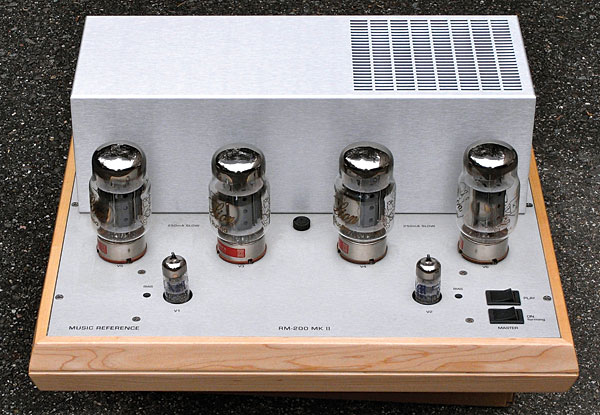
In his "Manufacturer's Comment" in response to my review of the original Music Reference RM-200 power amplifier in the April 2002 issue, designer Roger Modjeski admitted that being a manufacturer was not his first choice. "Frankly, I'd rather consult than produce," he claimed. "I'd rather be making a living doing stand-up comedy," I said to myself after reading his comment.
Music Reference RM-200 power amplifier
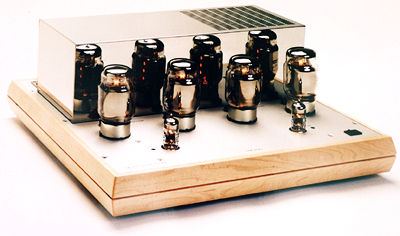
Reviewing a vacuum-tube power amplifier is like having your pants pulled down in front of a large crowd of people. I don't know how else to describe the feeling of spending a month or two luxuriating in fabulous sound, then writing a glowing review, then receiving a copy of the review as it will appear in the magazine, complete with John Atkinson's assessment of the amp's test-bench performance, which is usually miserable.
Music Reference RM-9 power amplifier
 Do you believe in beginner's luck? If so, some of your personality traits should be quite predictable. Let's see. You're very likely an optimist with a "bull-market" mentality, play the lottery, and, most important, bought a CD player within a year of its introduction, or a solid-state amp in the '60s. You're apt to mail in a profusion of bingo cards (you know, the kind Stereo Review is full of) and spend hours perusing specifications in the hope of finding a kernel of truth in all of that chaff. You'd particularly be appalled at that fellow I ran into the other day, who had bought an AR-1 in 1956 and waited another decade before buying another speakerjust to make sure stereo wasn't a fad. Hey, relax, I won't turn you in; the mere fact that you're reading Stereophile is sufficient reason for redemption.
Nagra VPA monoblock power amplifier
Nagra's VPA amplification system consists of two slim, handsome monoblock amplifiers intended for vertical placement. They look good adjacent to the speakers. However, two 845 tubes put out a lot of heat, so the amplifier should be at least a foot away from your speakers...unless you're looking for a nice crackle finish.
Nestorovic Alpha-1 power amplifier
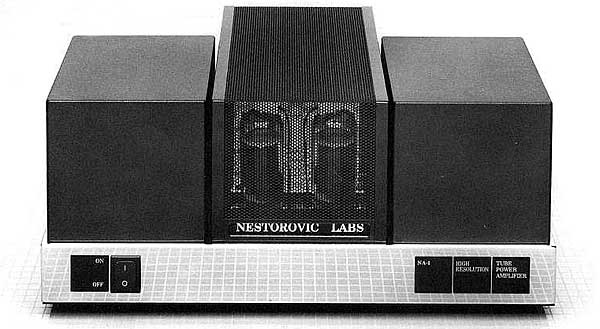
The great debate that has long separated audiophiles is tubes vs solid-state. Other topics, CD for example, may temporarily steal the spotlight, but year-in and year-out no other subject is the cause of as much controversy as whether tubed or solid-state circuitry produces the more accurate sound. As is typical with long-standing feuds, the split runs deep, and tempers often flare.
New York Audio Laboratories Futterman OTL-1 power amplifier
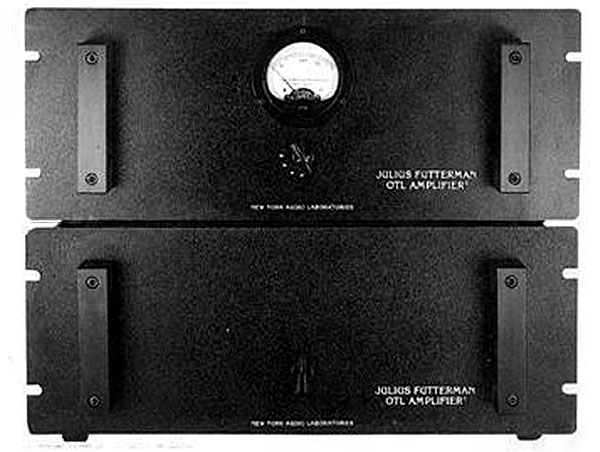
Few people in the high end know the difference between glorious excess and wretched folly as well as Harvey Rosenberg. Harvey's audio equipment always strives towards the glorious folly of providing the most romantic sound possible with modern technology. This may explain why his relatively small company, New York Audio Laboratories, can build an amplifier like the Futterman OTL-1, which costs a glorious $12,000 a stereo pair and actively competes for the title of best amplifier in the world.
Nobis Cantabile power amplifier
I dig tube amps. When all's said and done, good tube amps seem to sound more like real life than most solid-state gear; even after listening to and enjoying the hell out of musical solid-state designs like the Audio Research D-240 II and the Muse Model One Hundred, once I hook up the big VTL Deluxe 225s again it's just like going home. I could go on about timbral accuracy and clearer midrange textures, but the bottom line is, music just plain sounds better when you shoot it through good tubes, and once most people experience that magic, they're hooked.
Octave Audio MRE 220 SE monoblock power amplifier
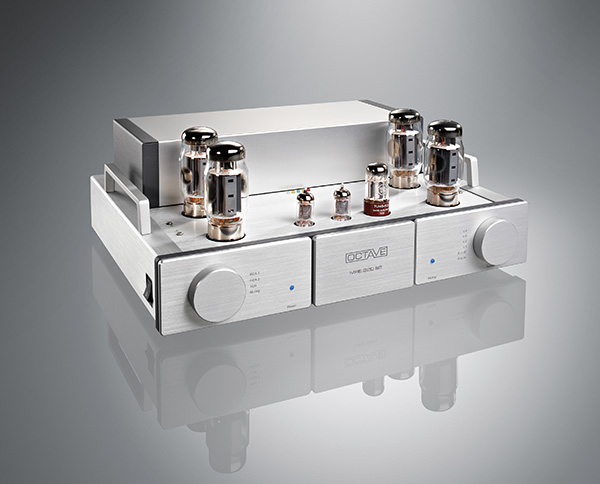
Tubes, tubes, tubeshow we love to bask in their glow, roll them, and take their second-harmonic distortion into our hearts as if it were a child or a pet. Some may put out so much heat that we have no choice but to open a window, turn on the air conditioning, or listen in the garb of Adam and Eve before that fatal first bite. As they and you age, you can never be sure who's at their best. Tubes, at least, can be replaced, albeit at significant expense...
I haven't reviewed much tube gear, but when I haveBruce Moore and VTL (in my pre-Stereophile days), Audio Research, and in our September 2022 issue, the towering Octave Jubilee Mono SE tubed pentode push-pull monoblocksI've been enamored of their sound. I waxed ecstatic about the "captivating beauty" and "heavenly" highs of the Jubilee Mono SEs. I can still recall how gorgeous they sounded; every listen was special.
Hence, my enthusiastic "yes" to a solicitation from John Quick, VP of Sales & Marketing for Dynaudio North America, Octave's North American distributor, to review the smaller MRE 220 SE mono push-pull tube amplifier.
Octave Audio RE 290 power amplifier
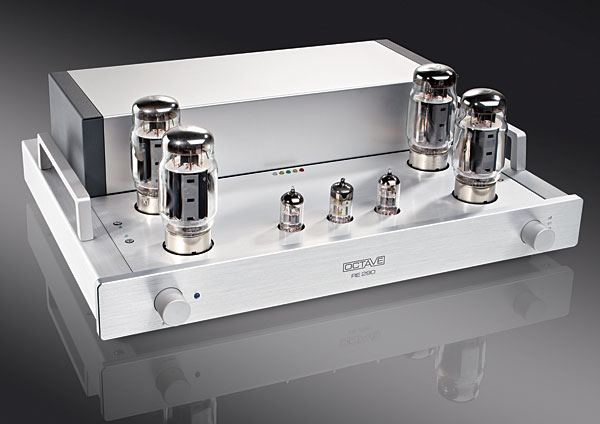
Ever since I became a Stereophile contributing editor, people have asked me, "How do you determine what equipment you're going to review? Do you get to pick your own, or does John Atkinson tell you what to do?"
I've chosen roughly 85% of the components I've reviewed for Stereophile, those choices made on the bases of what I find interesting, and what I think readers would like to know about. It's as simple as that.
Octave Jubilee Class A monoblock power amplifier
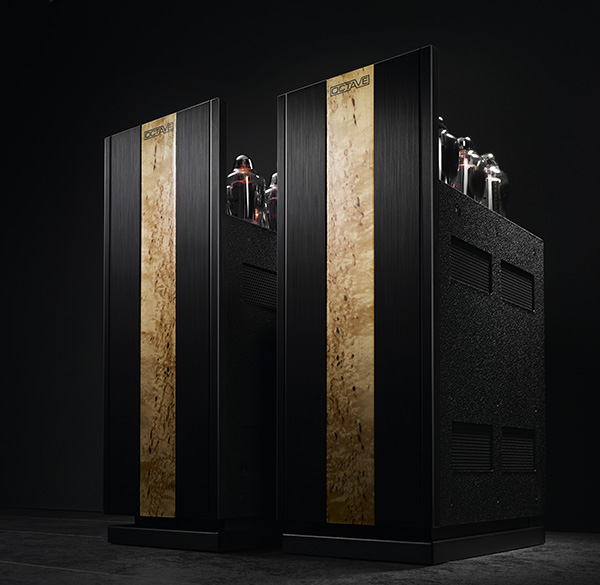
A first for German manufacturer Octave is the Jubilee Class A mono ($85,000/pair), a push-pull class-A monoblock with a self-regulating autobias pentode circuit that can also run in "high power" class-AB mode. The Jubilee Class A monoblock uses KT120, KT150, or KT170 output tubes.