

Terence Blanchard: Animal Magnetism
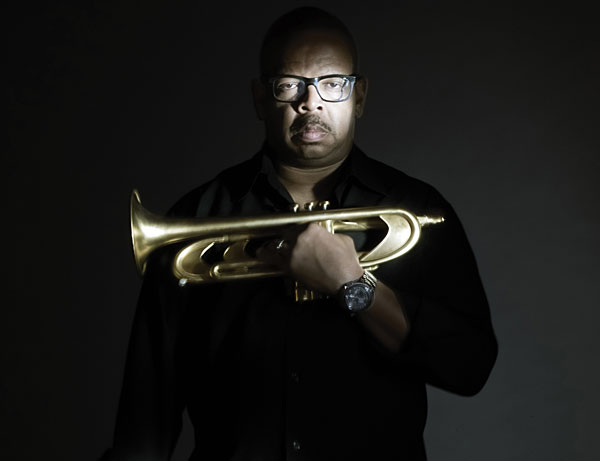
Down deepest, beneath everything he does, underlying all the facets of his ever-expanding career in music, Terence Blanchard is still a New Orleans guy. Question that and you can hear his dander rise.
The Tight Lines Project

It has been six years since we last released a recording on the Stereophile labela jazz album featuring Attention Screen, the late Bob Reina's free-jazz ensemble. This dry spell was mainly due to the increasing demands made on our editorial team's time by social media and the magazine's website, but also by John Atkinson's recording activities with the Portland State Chamber Choir, who issue their recordings on their own label. Nevertheless, we've been keeping our eyes and ears open for suitable opportunities.
The Beatles Reanimated: The Giles Martin Revolver Remix
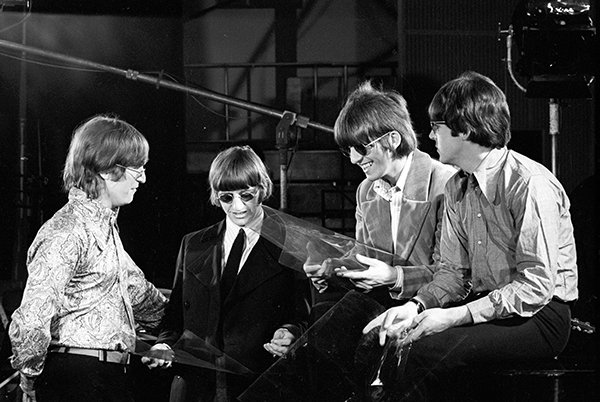
On a warm day in September 2022, alongside 40 or so press colleagues, I was treated to an advance demonstration of the Dolby Atmos mix of The Beatles' Revolver, at Republic Studios on Broadway In New York City's midtown. Producer/mixer Giles Martinson of original Beatles producer Sir George Martinwas our host. Giles Martin's demeanor was self-deprecating, and he seemed to know all there is to know about the Beatles and their productions. As Martin played songs from Revolver in surround sound, the assembled group seemed amazed by what they heard.
The Bob Dylan Bootleg Series
BOB DYLAN: The Bootleg Series, Volumes 1-3 (Rare & Unreleased, 1961-1991) Columbia C3K 47382 (3 CDs only). Jeff Rosen, prod.; Mark Wilder, Tim Geelan, Josh Abbey, Jim Ball, engs. AAD. TT: 3:50:52
The Clash: Still Calling
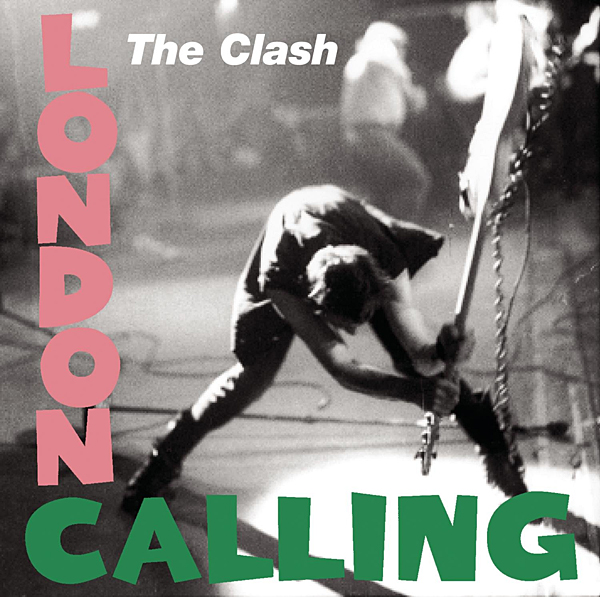
It's not just the gray hairs or the expanding waistline that suggest one is getting old: it's also when the albums you love so much, and so vividly remember hearing for the first time, have become a part of the rock heritage industry. So it is with London Calling by the Clash, which celebrates its 40th birthday in December 2019.
The Classical Voice: Finding Your Way In
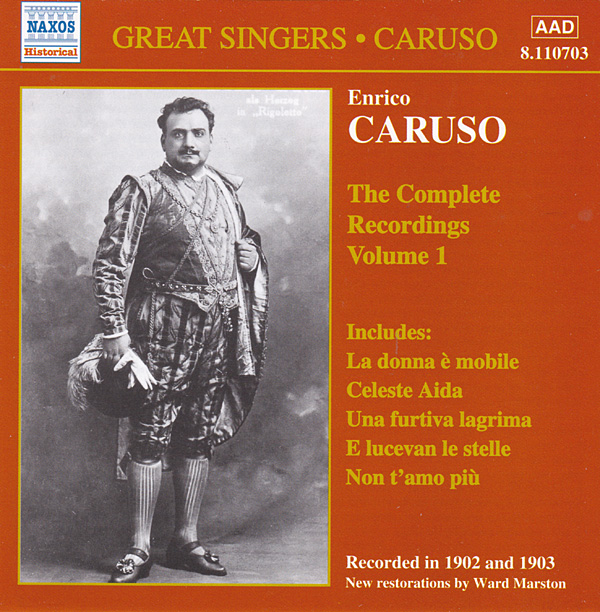
How to explain the power that trained operatic voices hold over many of us? For me, the pull began days after I was born, when acoustic 78s of tenor Enrico Caruso and coloratura sopranos Amelita Galli-Curci and Luisa Tetrazzini played in the background. There was something about the way the dramatic-to-the-core Caruso sang, as if his life depended on it, while the high-flying coloraturas skipped lightly through impossible strings of notes. It moved me like little else.
The Complete Stax/Volt Singles
THE COMPLETE STAX/VOLT SINGLES, 1959-1968 (Footnote 1)
244 songs by Otis Redding, Sam & Dave, Booker T. & the MGs, Carla Thomas, Rufus Thomas, William Bell, Eddie Floyd, The Bar-Kays, The Mar-Keys, and many, many others Atlantic 7-82218-2 (9 CDs only). Reissue producer: Steve Greenberg. AAD. TT: 10:52:07
244 songs by Otis Redding, Sam & Dave, Booker T. & the MGs, Carla Thomas, Rufus Thomas, William Bell, Eddie Floyd, The Bar-Kays, The Mar-Keys, and many, many others Atlantic 7-82218-2 (9 CDs only). Reissue producer: Steve Greenberg. AAD. TT: 10:52:07
The Fifth Element #9
I don't know who originated the idea of "desert island" recordings. I do know that for many years there was a BBC radio program in the UK that asked celebrities to list their choices. While reading quite a few of those lists, I had the sneaking suspicion that the respondents either hadn't entered fully into the spirit of the task, or were tailoring their choices with a view to what the radio or reading audience would think. (Interior monologue: "I am an anorak-wearing viola da gamba player. Hmmm. Birth of the Cool had better be on my list. London Calling, too, just to be safe.")
The Final Word: Yo Yo Ma Live
I sometimes do crazy things to experience live music. In my late teens I met a woman—a friend of a friend of my girlfriend—who was a flautist attending the Mannes School of Music in New York City. She was a classic New Yorker, from a classic New York family. Though apparently demure and retiring, she had fearlessly ridden the city subways since childhood, taking the Broadway line at any hour of day or night (her stop was Dyckman Street, above 200th). All of her parents' money and energy, such as it was, had gone into their daughter's musical career, and I was so inspired by this level of focus and devotion that I hitchhiked from Boston to New York and back in order to attend her first concert, a performance of the two Mozart flute concerti. My presence was remarked upon as the act of a true friend, but I was the beneficiary: It was a great concert, and a good start to a life of experiencing the "call" of live music.
The Forever Half-Life of Quadraphonics

The popular history of quadraphonics (4-channel sound from LP records, tapes, and radio broadcasts) chronicles a spectacular failure. The major record labels, led by CBS/Columbia and JVC/RCA, invested millions in ill-fated schemes to convince music lovers to ditch 2-channel stereo for 4-channel surround sound. The concept was killed, so the story goes, by competing and incompatible LP formats, high prices on the better-sounding discrete-channel reel tapes, and a collective shrug by the buying public.
That story is mostly true, though the format thrived for a while in Japan and Germany, and it never fully died. Now, modern tech has made possible rereleases of 1970s quad albums on relatively common formats: multichannel SACD and Blu-ray discs (BD). No more "meh" LP formats, no more fussy 1970s-tech decoders.