

Birth of the Blue Listening Session
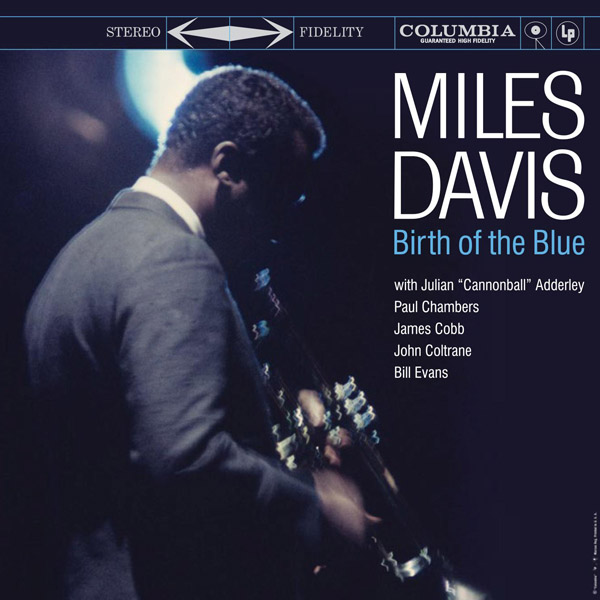
On Thursday, December 5, 2024, Miles Davis came back to New York City. Miles was escorted by Acoustic Sounds' Chad Kassem. This "from beyond the grave" appearance was one of the most memorable listening sessions I have ever experienced. Kassem previewed for us his Analogue Productions' issue Miles Davis—Birth of the Blue (Sony/Columbia APJ 172, 2024). The release date is set for December 13th. on 180-gram vinyl and SACD.
Bonnie Raitt, Blues Sister: Her Life And Times In Eight Songs

When an icon drops her first album in six years, you sit up and take notice. Bonnie Raitt made her earliest record a half-century and more ago, in August 1971. She was 21 and could easily have been carded; the face on the cover of Bonnie Raittthat first albumhas yet to shed all its baby fat.
Book Review: A Love Supreme
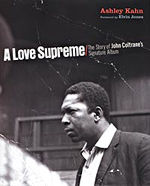
A Love Supreme: The Story of John Coltrane's Signature Album
by Ashley Kahn; Foreword by Elvin Jones. New York, Viking Books, 2002; hardcover, 260 pages, 9" by 8". $27.95.
by Ashley Kahn; Foreword by Elvin Jones. New York, Viking Books, 2002; hardcover, 260 pages, 9" by 8". $27.95.
Book Review: Flowers in the Dustbin
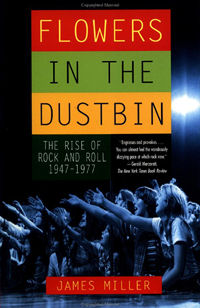
Flowers in the Dustbin: The Rise of Rock and Roll, 1947-1977
by James Miller
New York: Fireside/Simon & Schuster, 1999. Paperback, 8.5" by 5.5", 416 pp. $15.00. ISBN 0-6848-6560-2.
by James Miller
New York: Fireside/Simon & Schuster, 1999. Paperback, 8.5" by 5.5", 416 pp. $15.00. ISBN 0-6848-6560-2.
Book Review: Kill 'Em and Leave: Searching for the Real James Brown
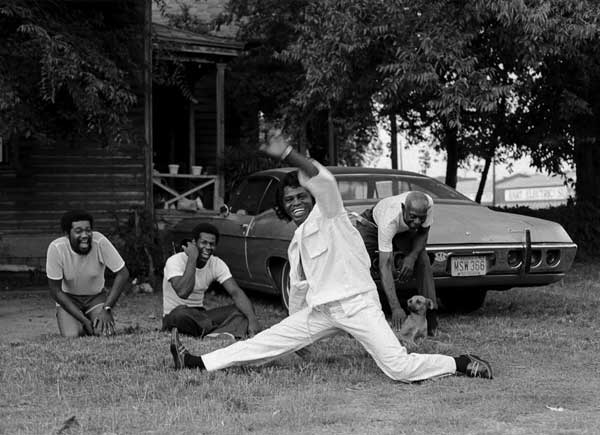
Kill 'Em and Leave: Searching for the Real James Brown and the American Soul
by James McBride. Spiegel & Grau, 2016. Hardbound, 232 pp., $28. Also available as paperback, eBook, and audiobook. Comparing James McBride's search for James Brown with the quest depicted in the classic John Ford film The Searchers reveals some dramatic changes in American racial attitudes over the years, along with some consistencies. Ford's film begins in postCivil War Texas; its white protagonist, a former Confederate soldier named Ethan Edwards (John Wayne), spends most of the film hunting for the Comanches who've kidnapped his niece. To Edwards, such captives are tainted"they ain't white," he railsand he intends to kill the girl when he finds her.
by James McBride. Spiegel & Grau, 2016. Hardbound, 232 pp., $28. Also available as paperback, eBook, and audiobook. Comparing James McBride's search for James Brown with the quest depicted in the classic John Ford film The Searchers reveals some dramatic changes in American racial attitudes over the years, along with some consistencies. Ford's film begins in postCivil War Texas; its white protagonist, a former Confederate soldier named Ethan Edwards (John Wayne), spends most of the film hunting for the Comanches who've kidnapped his niece. To Edwards, such captives are tainted"they ain't white," he railsand he intends to kill the girl when he finds her.
Book Review: Make More Noise!

Make More Noise! Women in Independent Music UK 19771987
Various artists. Various producers.
Cherry Red Records. CRCDBOX99. 4CD set and book.
Music *****
Sonics *** The title of this set4 CDs and a bookcomes from British suffragette Emmeline Pankhurst's call to arms for women to fight for their rights: "You have to make more noise than anybody else," said Pankhurst, who died in 1928. The first words you hear on Disc One of Make More Noise! are sung by Poly Styrene of X-Ray Spex, who was born almost 100 years after Pankhurst and died a decade ago, in 2011: "Some people think that little girls should be seen and not heard." This opening lyric, from the song "Oh Bondage Up Yours!," is followed by a raw sax solo by Styrene's bandmate Lora Logic.
Various artists. Various producers.
Cherry Red Records. CRCDBOX99. 4CD set and book.
Music *****
Sonics *** The title of this set4 CDs and a bookcomes from British suffragette Emmeline Pankhurst's call to arms for women to fight for their rights: "You have to make more noise than anybody else," said Pankhurst, who died in 1928. The first words you hear on Disc One of Make More Noise! are sung by Poly Styrene of X-Ray Spex, who was born almost 100 years after Pankhurst and died a decade ago, in 2011: "Some people think that little girls should be seen and not heard." This opening lyric, from the song "Oh Bondage Up Yours!," is followed by a raw sax solo by Styrene's bandmate Lora Logic.
Book Review: Norman Granz: The Man Who Used Jazz for Justice
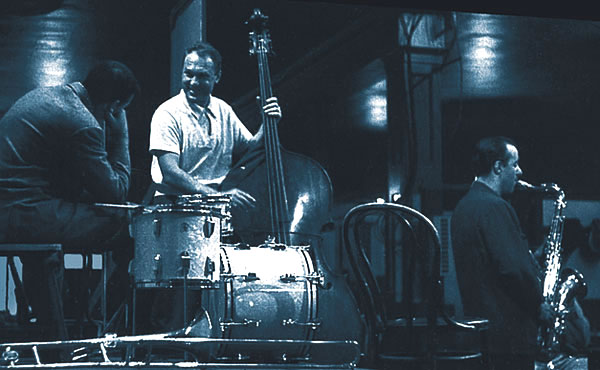
Norman Granz: The Man Who Used Jazz for Justice
By Tad Hershorn. Berkeley: University of California Press, 2011. 470pp. Hardcover, $34.95. One night in 1942, Billie Holiday was singing at a Los Angeles nightclub. Between sets, she crossed the street to have a drink with Norman Granz. She was in tears because some black friends who had come to hear her had been turned away.
By Tad Hershorn. Berkeley: University of California Press, 2011. 470pp. Hardcover, $34.95. One night in 1942, Billie Holiday was singing at a Los Angeles nightclub. Between sets, she crossed the street to have a drink with Norman Granz. She was in tears because some black friends who had come to hear her had been turned away.
Book Review: Pops: A Life of Louis Armstrong
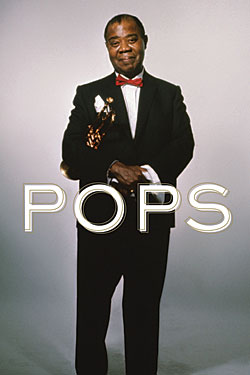 Pops: A Life of Louis Armstrong, by Terry Teachout (Houghton Mifflin Harcourt, 2009): 475pp. Hardcover, $30; paperback, $16.95.
If you plan to read just one book about Louis Armstrong, whose virtuosic cornet solos pushed jazz past rudimentary ensemble playing and launched his phenomenal career as an instrumentalist and singer, make it Pops. Teachout built it on brickwork laid by authors who preceded him, so you'll benefit from their research, as well as from narrative on 650 previously private reels of tape that Armstrong recorded and archived. Moreover, Teachout is a musician and music critic who offers opinions on his subject's discography.
Few people seem to realize that Armstrong (19011971) called himself LOU-iss. "All White Folks call me Louie," he once noted, and in some instances that may have been patronizing. In others, it was surely an instinctive response to the man's infectious warmth and informality.
Pops: A Life of Louis Armstrong, by Terry Teachout (Houghton Mifflin Harcourt, 2009): 475pp. Hardcover, $30; paperback, $16.95.
If you plan to read just one book about Louis Armstrong, whose virtuosic cornet solos pushed jazz past rudimentary ensemble playing and launched his phenomenal career as an instrumentalist and singer, make it Pops. Teachout built it on brickwork laid by authors who preceded him, so you'll benefit from their research, as well as from narrative on 650 previously private reels of tape that Armstrong recorded and archived. Moreover, Teachout is a musician and music critic who offers opinions on his subject's discography.
Few people seem to realize that Armstrong (19011971) called himself LOU-iss. "All White Folks call me Louie," he once noted, and in some instances that may have been patronizing. In others, it was surely an instinctive response to the man's infectious warmth and informality.
Book Review: Queen of Bebop: The Musical Lives of Sarah Vaughan
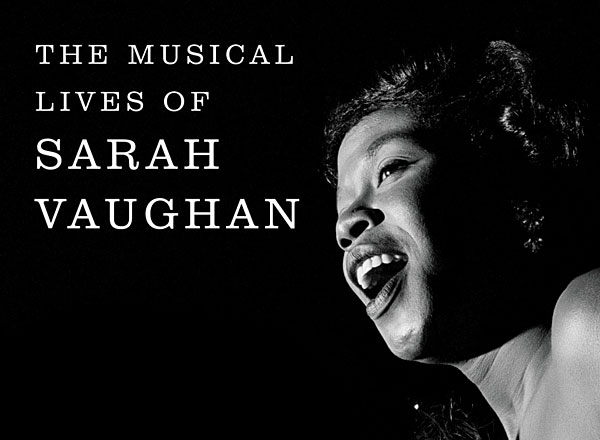
Queen of Bebop: The Musical Lives of Sarah Vaughan
By Elaine M. Hayes. 419 pp. Ecco/HarperCollins, 2017. Hardbound: $27.99. Available in eBook and digital audiobook formats. This is the second biography of Sarah Vaughan (19241990), whose towering vocal talents took her to the top rung of the jazz ladder, beside Billie Holiday and Ella Fitzgerald. The author, trained as a classical musician, puts far more emphasis on the singer's recordings than Leslie Gourse did in Sassy, her 1993 Vaughan biography. Hayes's grasp of music, and her definitions of the musical terms she uses, make this the better account.
By Elaine M. Hayes. 419 pp. Ecco/HarperCollins, 2017. Hardbound: $27.99. Available in eBook and digital audiobook formats. This is the second biography of Sarah Vaughan (19241990), whose towering vocal talents took her to the top rung of the jazz ladder, beside Billie Holiday and Ella Fitzgerald. The author, trained as a classical musician, puts far more emphasis on the singer's recordings than Leslie Gourse did in Sassy, her 1993 Vaughan biography. Hayes's grasp of music, and her definitions of the musical terms she uses, make this the better account.
Book Review: The Cello Suites
 The Cello Suites: J.S. Bach, Pablo Casals, and the Search for a Baroque Masterpiece, by Eric Siblin (New York: Atlantic Monthly Press, 2009); hardcover, 318 pp. $24.
In his lifetime, J.S. Bach (16851750) was an obscure figure. He never lived in a major city, he didn't work in the musical formoperathat in his era could propel a composer to stardom, and his style seemed antiquated to many. Bach saw a mere nine of his compositions published; when his consummate masterwork, The Art of the Fugue, appeared the year after he died, it sold just 30 copies.
Eric Siblin includes these and countless other facts in The Cello Suites, a book that will fascinate anyone who loves Bach's music. He notes, for instance, that Bach's four musical sons kept his work in circulation, that Mozart was mightily impressed by a motet he heard at a Leipzig church, and that the 12-year-old Beethoven raised some eyebrows when he performed The Well-Tempered Clavier in Vienna.
The Cello Suites: J.S. Bach, Pablo Casals, and the Search for a Baroque Masterpiece, by Eric Siblin (New York: Atlantic Monthly Press, 2009); hardcover, 318 pp. $24.
In his lifetime, J.S. Bach (16851750) was an obscure figure. He never lived in a major city, he didn't work in the musical formoperathat in his era could propel a composer to stardom, and his style seemed antiquated to many. Bach saw a mere nine of his compositions published; when his consummate masterwork, The Art of the Fugue, appeared the year after he died, it sold just 30 copies.
Eric Siblin includes these and countless other facts in The Cello Suites, a book that will fascinate anyone who loves Bach's music. He notes, for instance, that Bach's four musical sons kept his work in circulation, that Mozart was mightily impressed by a motet he heard at a Leipzig church, and that the 12-year-old Beethoven raised some eyebrows when he performed The Well-Tempered Clavier in Vienna.