

Lyle Lovett: Music among great players can be a conversation

2022 is turning out to be a good year for Lyle Lovett, not least because he is, to use a cowboy metaphor, back in the saddle.
"I've been out of work for two years," he says archly. Normally, Lovett performs more than 100 concerts a year, regardless of whether he's released new work. But the pandemic pinned him down at home in Houston, with his wife and their nowfour-year-old twins, in the house his grandfather built in 1911. Domesticity suits Lovett. "There was plenty to do every minute of every day. Absolutely no boredom!" He sounds like he means it; unselfconscious mentions of paternal tenderness bubbled up in our conversation from time to time.
Manfred Eicher: "You Can't Record Everybody"

There has never been a record producer like Manfred Eicher, founder and sole proprietor of ECM records, the German-based jazz (and sometimes classical) label that celebrates its 50th anniversary this month.
Eicher doesn't quite win the all-time prize for longevity. Edward Lewis started Decca (UK) in 1929 and owned it until 1980. David Sarnoff controlled RCA from 19191970. William Paley did the same at Columbia from 1938-1988. But unlike those other, financially heftier titans, who deferred to department heads and studio producers, Eicher has supervised every single one of ECM's albumsmore than 1600 of them.
Many Happy Returns

Today is the 60th anniversary of the iconic Fender Stratocaster electric guitar, the instrument that in the hands of Buddy Holly, Jimi Hendrix, Eric Clapton, Stevie Ray Vaughan, Mark Knopfler, Buddy Guy, Hank B. Marvin, and many other virtuosi, shaped and guided rock music ever since. To celebrate the day, we are reprinting the tribute by Corey Greenberg, himself a Strat player, to the guitar's inventor, the late Leo Fender, that was published in our June 1991 issue.Ed.
Mission Accomplished: Du Pré's Elgar

The stars lined up.
According to biographer Charles Reid, the British conductor Sir John Barbirolli "burned with Elgarian zeal," attributable in part to Barbirolli's participation, as a young cellist in the London Symphony Orchestra of 1919, in the premiere performance of Edward Elgar's Cello Concerto. That performance, conducted by the composer and with Felix Salmond as soloist, was a disasterElgar's rehearsal time had been cut short by a lack of cooperation from another conductor on the bill, a slight the composer never forgaveyet from then on, the 19-year-old Barbirolli regarded Elgar's music with reverence.
Moby: Sound of Mind

The loudness wars are over. The valiant but hopelessly outnumbered forces that stood against squashing the dynamics and life out of recordings, all in the name of almighty loudness, have been vanquished. Scattered across the smoking battlefield are the lifeless bodies of thousands of disappointed listeners, many so young they will never now know what it's like to hear a natural, uncompressed recording.
Music for a Glass Bead Game
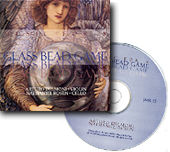
ARTURO DELMONI & NATHANIEL ROSEN: Music for a Glass Bead Game
J.S. Bach: Two-Part Inventions 1, 3, 6, 7, 9, 10, 13. Kodály: Duo for Violin & Cello. Giordani: Duetto II. Martinu: Duo for Violin & Cello. Handel: Passacaglia
Arturo Delmoni, violin; Nathaniel Rosen, cello
John Marks Records JMR 15 (CD). John Marks, prod.; Jerry Bruck, eng. DDD. TT: 62:34
J.S. Bach: Two-Part Inventions 1, 3, 6, 7, 9, 10, 13. Kodály: Duo for Violin & Cello. Giordani: Duetto II. Martinu: Duo for Violin & Cello. Handel: Passacaglia
Arturo Delmoni, violin; Nathaniel Rosen, cello
John Marks Records JMR 15 (CD). John Marks, prod.; Jerry Bruck, eng. DDD. TT: 62:34
National Sawdust: An Artistic Incubator
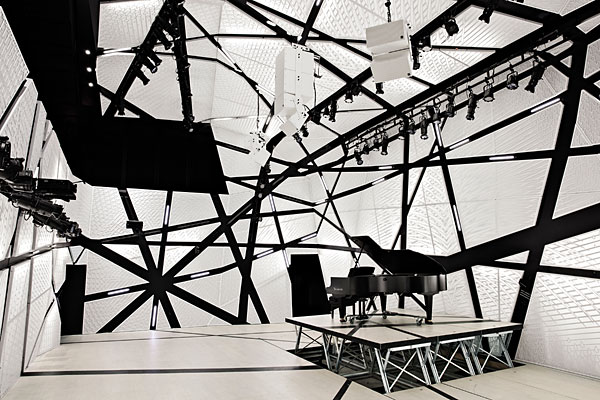
Saturday night in hipster Brooklyn . . . yet there could have been actual sawdust on the floor. Inside National Sawdust, a youngish crowd, many clearly ready to party, were shuffling, some were full-blown jitterbugging, while onstage the Lost Bayou Ramblers, a progressive young Cajun band who'd at first seemed a bit awed by their futuristic surroundings, were slugging beers, sawing a fiddle, squeezing an accordion, and generally finding their groove.
New Cantus CD Features Luminous Sound

In June 2007, I again recorded Minnesotan male choir Cantus live on location, this time in the glorious acoustic of Sauder Concert Hall at Goshen College, in Goshen, Indiana. The resultant CD, While You Are Alive (Cantus CTS-1208), is the eighth I have engineered of the group; it is a collection of 20th- and 21st-century works that explores, illuminates, and celebrates all stages of life, from birth to death.
New Cantus CD from John Atkinson
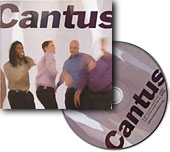
Stereophile's seventh CD of Minnesotan male choir Cantus, called with delightful originality Cantus (CTS1207) and recorded at 88.2kHz with 24-bit resolution, is now available from our e-commerce page, for $16.95 plus S&H.
New York Tenor Central

Even as hypergentrification runs rampant, enriching financial opportunities for some and crushing small-business dreams for others, New York City remains ground zero for jazz and for the small clubs it thrives in. The New York Times may not cover jazz unless someone of the stature of Wynton Marsalis is on the bill, but the music moves ahead undeterred, taking up residence at such iconic venues as the Blue Note, Cornelia Street Café, Fat Cat, 55 Bar, Jazz Gallery, Mezzrow, Smalls, Smoke, the Village Vanguard, and Zinc Bar.