

Entech Number Cruncher 203.2 & 205.2 D/A converters

"They're cuuuute!" Not a very professional reaction, but what can I say? When the Monster Cable folks pulled out their new Entech Number Crunchers during a recent visit to Santa Fe, I couldn't help myself. I was edging John Atkinson and Wes Phillips out of the way, using my long arms to reach over...gotta get one! There would be time later for the critical evaluation and cool, detached objectivity—first, I had to get one. The Entechs are the Beanie Babies of the audio world
Esoteric D-07 D/A processor

In November 2009, I took part in an intriguing comparison between live and recorded sound. I first recorded a live piano recital in 24-bit/96kHz digital, then allowed the audience to immediately hear the recording in the same room. (See my February 2010 thoughts on the comparison here.) For playback, I used two of the mono Esoteric D-01VU D/A converters locked to the ultra-high-precision Esoteric G-0Rb "atomic" master clock. I was very impressed by the sound of this cost-no-object digital system, so when I visited the Japanese company's room at the 2010 Consumer Electronics Show and saw their new, relatively affordable D-07 D/A processor ($4800), I asked for a review sample.
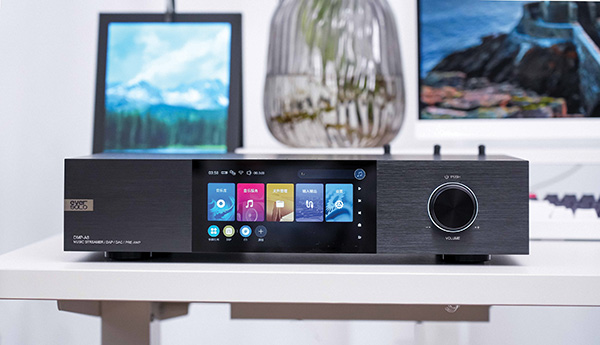
Eversolo DMP-A8 streaming preamplifier
A few summers ago, I briefly got it in my head that I could become a wine connoisseur. This was due to a very generous and unexpected gift. A local acquaintance had passed away, and his wife wanted to rid her basement of his small wine collection.
I don't know why I was chosen as the lucky recipient, but after stammering half a dozen thank-yous, I suddenly owned about 150 fine wines. A few carried four-figure price tags.
Reliably telling a Pinot Grigio from a Chardonnay isn't part of my skill set. Grape varieties, terroir, vintages? You might as well ask a toddler to become conversant in quantum mechanics. Still, I was intrigued by the bottles and amused by the ridiculousness of the situation. Me, an oenophile? I supposed I could pretend, and I did.
After opening and drinking, with my wife, a 1988 Château Léoville Barton, I wrote an over-the-top review and emailed it to a wine-loving friend for his amusement. "I beheld Hawthorn berries and beef stock along with a suggestion of blonde tobacco. Other than the obvious green walnut, there was a top note of wet Baja beach at dawn, mixing subtly with minke-whale flatulence and a hint of two-day-old scallop innards. Finally, with subsequent sips, I detected the aroma of the well-worn merkin of a Honduran sex worker. All in all, not a bad wine."
Eat your heart out, Robert Parker!
exaSound s88 multichannel D/A processor

I have reported on exaSound DACs since the introduction of the e18 in 2013, but those reports were in my Music in the Round column. This is Stereophile's first full review of an exaSound product and the first time one has spent time on JA's test bench.
Extraction vs Generation

Many years ago I bought the first model of the Audio/Pulse ambience synthesizer. Like many audiophiles, I was convinced (and still am) that the standard two-speaker stereo experience provides an unsatisfying concert-hall impression. But the Audio/Pulse didn't remain long in my stereo system. You see, at best the unit provided a fair reproduction of the sound of my upstairs bathroom, topped off with a nasty flutter echo. I already get that sound every morning in the shower.
Ferrum Wandla D/A preamplifier
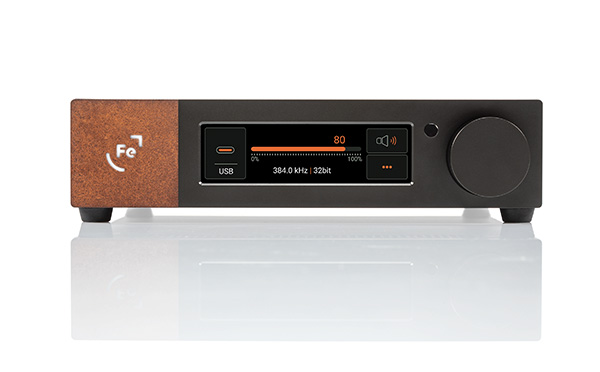
I can roll out of bed and install a $10,000 phono cartridge while finishing my coffee, but I postpone DAC installations until I am in the exact right mood to handle the potential stressespecially DACs with a touch screen and a complex menu. To my delight, Ferrum Audio's new Wandla digital converter was completely stress-free to install. It took only minutes to connect the USB-C cable, the Cardas Audio Clear Beyond interconnects, and 24V DC power adapter.
Connecting the power adapter caused a power-switch symbol to appear on the front panel touch screen. The moment I touched it, I smiled like the Cheshire Cat, because I saw a USB-C symbol, a loudspeaker symbol, three dots in a box, and a volume control bargraph. That told me the Wandla recognized my chosen input and was waiting for a signal. All that remained was for my Roon Nucleus+ server to recognize and enable the new DAC, which it did without prodding or reprimand. For me, that was a wow moment, a good start to what promised to be an interesting review.
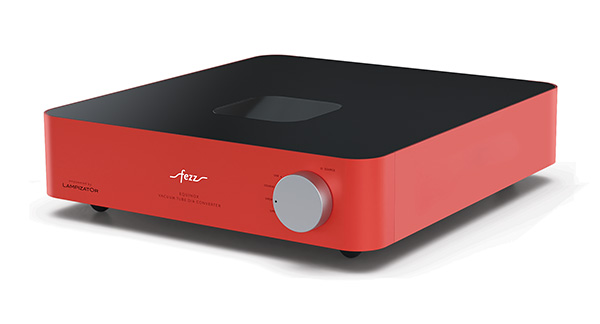
Fezz Equinox D/A processor
It wasn't long ago that bottom-shelf DACs had this dry, gray, punchy, grainy sound, emerging from a weird mechanical clarity. Their sound reminded me of cheap whisky. The ones that didn't sound like $1 shots replaced the dry grain with some blurry gel. No vitality. No subtle contrasts. No nuance. No air. No atmospherics, no reverberance, and nothing I would call transparency.
Digital's rapidly evolving technology made the next wave of DACs sound strikingly clear and quiet, with some touchy-feely hints of wetness to suggest a more natural transparency. Unfortunately, most of these newfangled wet DACs sounded like distilled water tastes.
For me, digital transparency didn't become truly wet, colorful, or naturalistic until I discovered NOS R-2R converters, which made midlevel four-figure DACs, like my Denafrips and HoloAudio, sound like bits bathed in luminosity. Very relaxed. Grainless. Ektachrome.
GeerFab Audio D.BOB digital breakout box

This unique device is a solution to a problem that previously couldn't be solved.
There are, of course, any number of little boxes that can extract audio from the HDMI video bitstream; they began to appear on the market to fill a need for a way to route audio from a player's HDMI output In the recent past, you could buy a good-qualityeven audiophile-gradeuniversal player and listen to SACDs via its good-sounding analog outputs. But good-sounding universal players are becoming scarce.
Genesis Technologies Digital Lens

Let's say you play a CD on a poor-quality CD transport and store the digital audio data in a massive computer memory. You then repeat the process, but this time play the CD into the memory from the finest CD transport extant (say, the Mark Levinson No.31). A week later you feed the two sets of data from the massive memory into a digital processor and listen to the music. Would the CD transports' sonic signatures be removed from the signal? Could you hear a difference between the transports a week later?
Gold Note DS-10 D/A processor

I felt like I'd just been offered a choice of 31 flavors of Baskin-Robbins ice cream topped with up to 57 varieties of Heinz ketchup, 57 condiments, and 47 brands of coddled cream. My head began to spin, my stomach churned, and my mouth grew very dry as I read that Gold Note's DS-10 ($2995) was a "chameleon DAC" with 192 setup options that enable it to "completely blend in with different music genres, giving the listener the opportunity to adapt the behavior of the unit to the music playing, to one's stereo system and, most of all, to the listener's taste."