

Harmonic Technology CyberLight Wave & P2A interconnects

When no one's watching, it's easy to express your opinion. When tens of thousands of people are reading over your shoulder, it becomes more difficult. In fact, it can be downright creepy—especially when what you're thinking sounds like one of those grand, all-encompassing (over)statements you yourself tend to distrust. You don't want to be wrong; on the other hand, if you're too much of a wuss to express what you reallythink just because someone might take it as grandiose, then it's time to give up.
Harmonic Technology interconnect & speaker cable
My review of the Audio Research VTM200 monoblock power amplifier elsewhere in this issue drove it home to me big time: Cables are important, and even more important is getting good cable advice from someone who knows and understands the gear you're using.
JPS Labs Aluminata interconnect, speaker cable, AC cord

Taken together, these unusual interconnect, loudspeaker, and AC cables brought a new measure of spaciousness, scale, smoothness, heretofore unimagined detail, and overall musical ease and naturalness to my music system. And they did it while sounding neither dull nor bright—just right.
Kimber Kable Carbon Series speaker cable and interconnect, PK10 Palladian power cable
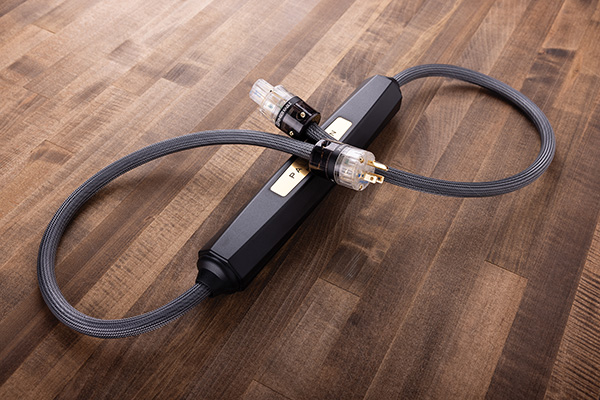
Ray Kimber founded his enterprise in the late 1970s, and for the last half-century has withstood the ravages of this difficult market. He first got involved in cable technology while addressing the problems of induced interference in audio connections where high-power installation lighting was involved, especially early thyristor-controlled systems.
Kimber PBJ interconnect

It's always a jolting, life-renewing Ka-BLAM when a new experience shatters your preconceptions of the order of things. From the moment you realize your dad isn't running right alongside you as you fly down the sidewalk on your first two-wheeler, to when you become a made man, these experiences forever alter how you view yourself and the world around you.
Lindsay-Geyer Highly Magnetic Cables

Why cable again?
Well, the obvious reason is that it has been a while since my last foray into Cableland (July 1988). Many new products have been introduced in the interim, so it appeared appropriate to once again open Pandora's Box. Those of you who still remember my speaker cable article of 2½ years ago will recollect the considerable controversy that evolved from that project.
Some of the response was quite predictable, though the venom with which it was laced was not. The manufacturers of those outrageously priced "garden-hose"type cables that I failed to rave about were more than just perturbed.
MIT CVT Terminator 2 interconnect & speaker cable

These are the first interconnects and speaker cables I have reviewed for Stereophile. Each of us has his little niche, and editor John Atkinson likes us to play in the sandboxes we most enjoy. For me, that has usually meant inexpensive speakers and expensive tube electronics. But there's another reason I've tended to shy away from cables.
MIT MI-330 Proline Shotgun interconnects & MH-750 Shotgun speaker cables

In the last year I've written about several components of a truly engaging system: the VPI TNT Mk.IV turntable and JMW Memorial 12" tonearm (February '99), Grado Reference cartridge; the Wadia">http://www.stereophile.com/cdplayers/156">Wadia 830 CD player (October 1999); and Thiel's">http://www.stereophile.com/floorloudspeakers/216">Thiel's CS7.2 loudspeakers (February 2000). I've recounted the evolution of my listening-room setup as well, and described its optimization using ASC">http://www.stereophile.com/roomtreatments/215">ASC Tube Traps and Art Noxon's MATT test in the February issue. The final piece of the puzzle, and the one I'll tackle here, was the cable package from MIT: the MI-330 Shotgun Proline interconnects and the MH-750 shotgun speaker cables.
Monster Cable Sigma Retro Gold speaker cables & interconnects
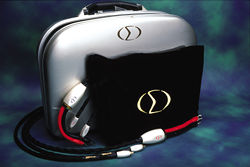
I've been in a nostalgic funk of late. What started it was visiting Golden, Colorado, where I spent my graduate-school days, and seeing all of the changes, not to mention the lecture halls full of kids who couldn't be a day over 12. When I commented on how young the freshmen looked, our host—a colleague of mine from grad school, now a professor—responded, "Those are seniors, Brian." I felt a little old.
Nirvana Audio S-X Ltd. loudspeaker cable

Nirvana Audio's cables have long been fixtures in my audio system: first the SL interconnects and speaker cables, and, after their debut in 1998, the S-X Ltd. interconnect. In 2002, after a long development process, designer Stephen Creamer introduced the companion S-X Ltd. speaker cable ($2780/2.5m pair, add $50/pair for biwire configuration). He explored a wide range of options, including dramatically different structures and materials, but always returned to the elements he'd used before—and ended up with a design that combined elements of his two existing speaker cables, the SL and the entry-level Royale. At its core, the S-X Ltd. has the Royale's two conductors, each a symmetrical Litz element consisting of 285 isolated strands of high-purity copper of several different gauges. In the S-X Ltd., the conductors are spaced slightly apart to minimize capacitance, wound into a twisted pair, and wrapped in FEP insulation.