

Listening #110
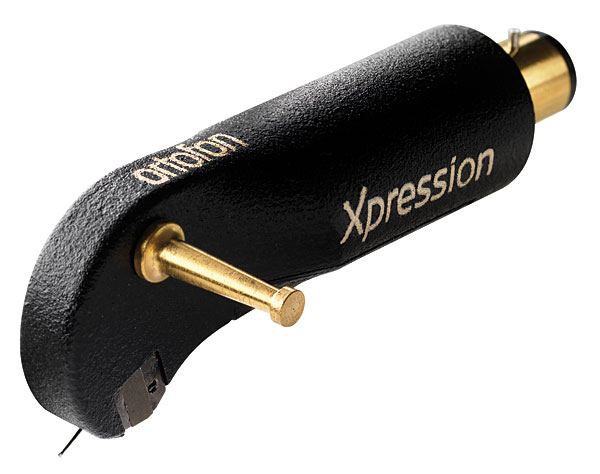
Phono cartridgesalong with mothballs, hobnails, laundry bluing, hot-water bottles, lighter fluid, fur coats, and typewritersare among the most outdated of consumer goods: To most people who make their living in the world of consumer electronics, every new cartridge that hits the shelves is little more than a coughing spasm from the death-room down the hall. You can imagine, then, the welcome accorded new samples of the even more anachronistic pickup head, which combines phono cartridge, headshell, and barbell into a product one seldom sees outside the school librarian's junk drawer. New pickup heads, which tend to look the same as old pickup heads, are manufactured in pessimistically small quantities, and seldom get much attention.
Listening #148
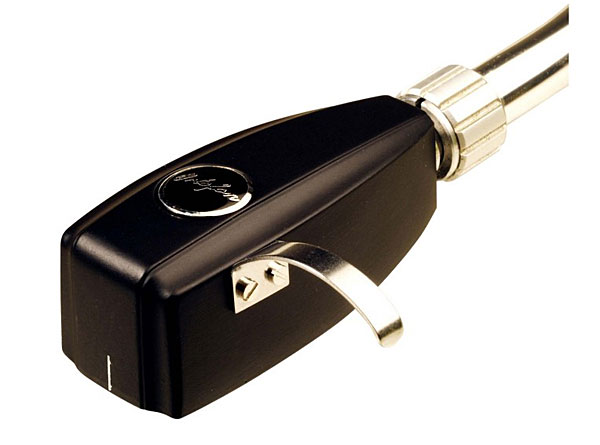
"Too much Stokowski."Sergei Rachmaninoff in 1940, reacting to a demonstration of a stereo recording of Leopold Stokowski conducting the Philadelphia Orchestra
I don't remember when, but at some point during the past few years I realized that, in my home, mono cartridges outnumber their stereo counterparts. A few weeks ago, my collection of phono equipment took another step in the same strange direction: After receiving from Ortofon a sample of their CG 25 DI Mk.II mono pickup head ($902) for review, I was so impressed with its sound that I asked if I could buy the review sample. Now, having put check in mail, I own twice as many mono cartridges as stereo ones. Take that, multichannelism.
Listening #156

Just as John Atkinson has a special telephone on his desk, by means of which the late J. Gordon Holt expresses his displeasure at this magazine's continuing decline into latitudinarianism, my own desk is littered with a dozen or so windup timers, each set to remind me how long it's been since I last wrote about this or that hi-fi eccentricity. Each timer has its own distinctive ring: The one labeled "LOWTHER" is a bit shrill, especially at certain humidity levels, while the one marked "QUAD ESL" can be heard to best advantage only when sitting in a particular spotand even I have to admit that my "CARTRIDGE ALIGNMENT" timer seems to go off rather too often.
Listening #157
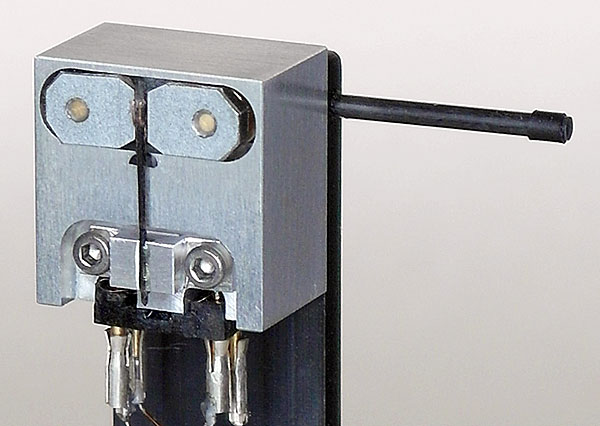
In a typical phono cartridge, the stylus is at one end of an oversize cantilever (oversize in comparison with the cartridge's other moving parts), the fulcrum of which is nearer the cantilever's other end. That design makes possible a certain amount of mechanical compliance that, when the cartridge is lowered to the record surface, helps the stylus seat itself in the groove rather than bounce or skip all over the place. Without at least a modicum of springiness, cueing up a record would be more difficult, and jukeboxes and automatic record changers might never have been possible. Imagine!
Listening #168: Ortofon SPU #1S phono cartridge

I'm a progressive who enjoys the company of his conservative friends, a Catholic who's thankful for his atheist friends, and a carnivore who cherishes his vegetarian friends. I'm also a vintage-audio enthusiast who loves his audiophile friends who aren't so inclinedso I was doubly happy to see, in the September 2016 edition of Michael Fremer's "Analog Corner," a hearty endorsement of Ortofon's latest SPU: a 58-year-old phono-cartridge design that, like the coelacanth, continues to thrive despite expectations.
Mikey is a longtime friend who harbors no love for vintage phonographyyet after playing his first record with the new SPU #1E ($659), he wrote: "I immediately, and much to my surprise, got what the SPU cult is all about."
Listening #176: MusiKraft Cartridge Bodies & EMIA Phono Transformer
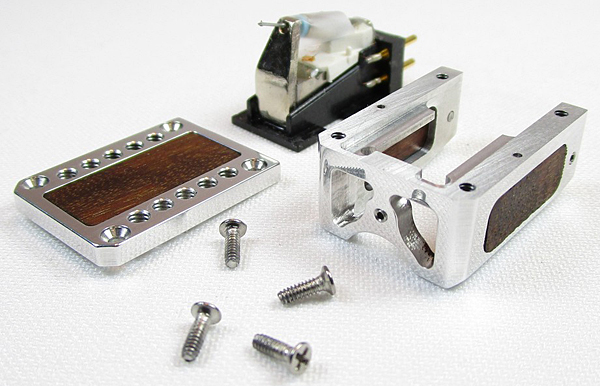
How can you tell a classic product from the hi-fi hoi polloi? One sure sign is when third-party developers spring up around the thing, offering parts and service intended to maximize its performanceor just to keep it on the road. Thus regarded, a few true classics emerge: Quad's ESL and ESL-63 loudspeakers. Altec's 802 and 806 compression drivers. The Linn LP12 and Garrard 301/401 turntables. The Rega RB-300 tonearm and its direct descendants.
Listening #184: Zu DL-103 Mk.II phono cartridge

On at least one occasion that I can recallin 1996, in the early days of Listener magazinea US publicist for the Japanese manufacturing company Denon told me that they planned to discontinue their DL-103 moving-coil phono cartridge, an enduringly popular model that had been in production since 1962 (footnote 1). At the time, neither the DL-103 nor any of their other cartridge models appeared on Denon's US price lists, and neither English-language promotional materials nor even a basic spec sheet was available to American consumers or press.
Listening #186: Miyajima Saboten L phono cartridge
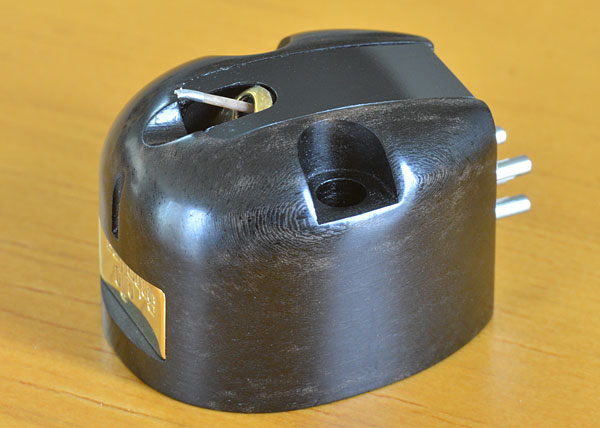
In the early 1960s, young people who were anxious see the Beatles on The Ed Sullivan Show had to first sit through a seeming eternity of bad comedians, bad puppet shows, and acrobats spinning dinner plates to the tune of Khachaturian's Sabre Dance. So it is here: Before I can get to the Miyajima Saboten L phono cartridge, I have to report on something I left out of my April 2018 column, which was devoted to Zu Audio's modification of the classic Denon DL-103 cartridge. And since this is information I've been holding on to for almost a year, I suppose I also left it out of my August 2017 column, which was devoted to the MusiKraft Audio's own modification of the Denon DL-103.
Listening #192: Koetsu, Ortofon, EMT
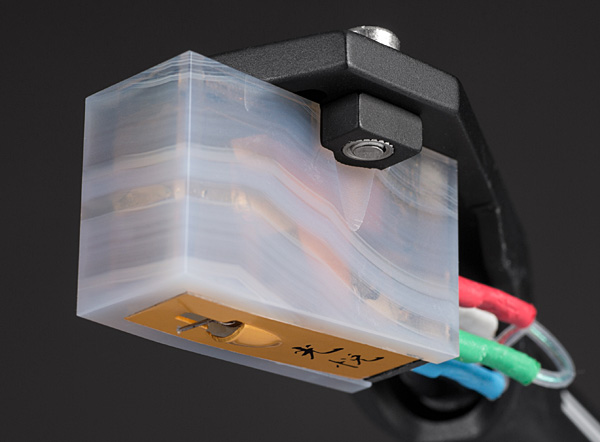
Although my house is now home to a borrowed pair of DeVore Fidelity Orangutan O/93 loudspeakersa loan I gratefully accepted early this year, when my 1966 Altec Flamencos proved a bit too large for my new listening roomit's a matter of pride that I own almost everything else in my playback system, cables included. So it's with no small discomfort that I acknowledge having nearly $30,000 worth of borrowed phono cartridges scattered around my living and dining rooms. (The former is where I listen to them, and the latterthe sunniest room in the houseis where I install them.)
Listening #195: Ortofon SPU Century & Grandinote Celio
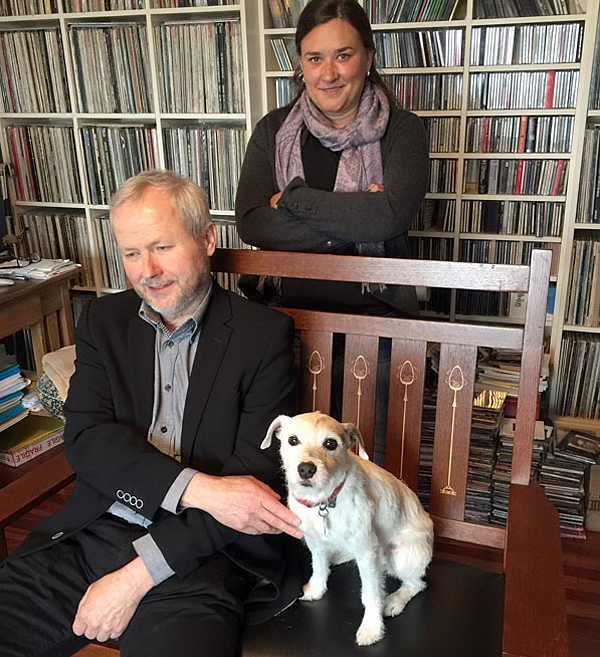
Easy pickup: Art’s Dog, Chatter, cozies up to Leif Johannsen of Ortofon A/S and Dee Hustinova of Ortofon USA. (Photo: Art Dudley)
According to the 2018 edition of the UN's World Happiness Report, Denmark is the third-happiest nation on Earth, trailing only its neighbors Finland and Norway.
I heard that yesterday afternoon, on NPR. The reporter even spelled out the word used by Danes to describe their feelings of happiness: hygge. Apparently, at present, Denmark is positively rotten with hygge.