

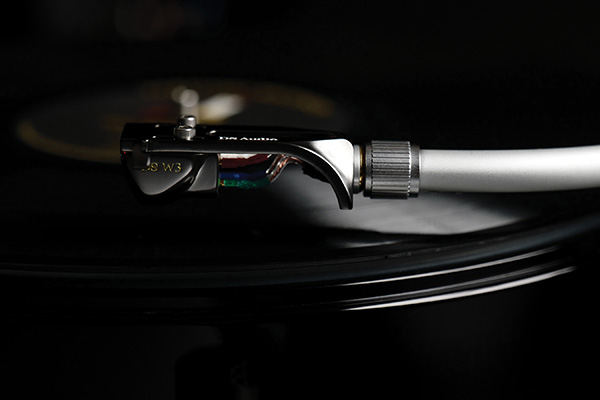
Spin Doctor #11: Alternative Phono Cartridge Technologies and the DS Audio DS-W3 optical cartridge system
Over the last 50 years, I must have installed well over 1000 phono cartridges, but I still remember the very first one: a Goldring G850 I put into the family Garrard Autoslim turntable when I was 11 years old. In 1973, the G850 was the least expensive moving magnet cartridge Goldring made. The change from the flipover-stylus ceramic cartridge that came with the Garrard wasn't an attempt to satisfy a youthful audiophile itch but, rather, a result of my first encounter with a system compatibility problem.
A few months earlier, I had convinced my nonaudiophile dad to upgrade the family stereo. We went from our ancient Monacor SMX-50 tube receiver to a pretty weird but less ancient Sony all-in-one cassette system called the TC-133CS. I failed to understand that the new Sony's magnetic phono input was incompatible with our old ceramic cartridge. Once I figured that out, I tried to convince my dad that what we really needed was a Shure M75ED. After all, that cartridge came from the same company that made the legendary V-15 Type III, widely regarded as the best cartridge in the world at the time. My dad, however, had different plans. Guided by his home-product purchasing bible, Consumer Reports, he decided we should go instead with the less-costly Goldring.
Spin Doctor #14: Lyra Atlas λ Lambda phono cartridge and fixing footfall problems
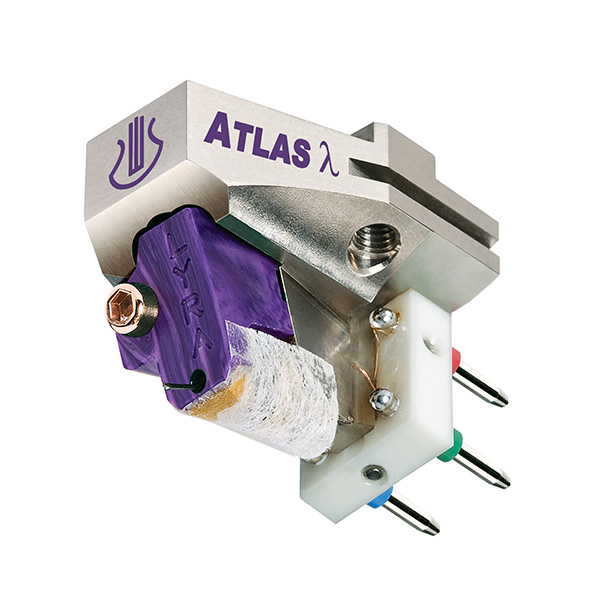
It has been more than a decade since 2012, when Lyra launched the original Atlas moving coil cartridge as the company's flagship, but in the intervening years, there have been a few updates. First, in 2016, Lyra introduced what they call the SL versions of the Atlas and also the Etna. These cartridges were designed to take advantage of a new crop of transimpedance phono preamps like the CH Precision P1 and the Sutherland Phono Loco, which boast exceptionally low noise levels but work best with cartridges that have very low impedance. Cutting the number of turns on each of the cartridge's two coils in half reduces the moving mass and inertia, allowing the stylus/cantilever assembly to respond more accurately to the tiny groove modulations. This results in improved tracking at the cost of a lower output level, which, thankfully, transimpedance phono preamps are well-equipped to handle.
Then in 2020, both Atlas and Etna versions were updated to new λ Lambda versions, with a redesigned suspension and damper system that Lyra says delivers enhancements in clarity and resolution.
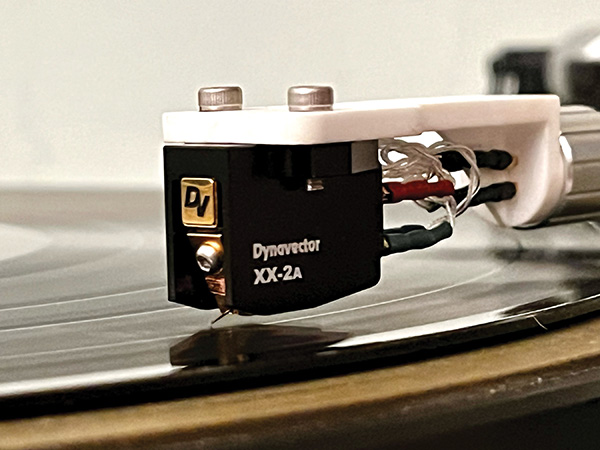
Spin Doctor #16: Sutherland Dos Locos Phono Preamp, Dynavector XX-2A Phono Cartridge
Ron Sutherland makes a strong case for being crowned the king of all phono preamps, though I expect he would blush at any such suggestion. In 1979, with degrees in physics and electronic engineering (where his final project involved designing and building a digital logiccontrolled preamp), he teamed up with Gayle Sanders to found electrostatic speaker company MartinLogan. ("Martin" and "Logan" are Sanders' and Sutherland's middle names, respectively.) But after a few years, he found the increasingly corporate mindset at M-L a bit stifling, so he decided to go his own way. Ron wanted to build gear he thought was cool and fun while not being directed solely by its commercial potential. He joined up with his brother to start Sutherland Engineering, creating hi-fi equipment that piqued his own interest and hopefully that of a bunch of customers.
At first, Sutherland made a wide range of components, including preamps, power amps, and DACs, but gradually he focused more and more on phono preamps. Today that's the only thing he makes...
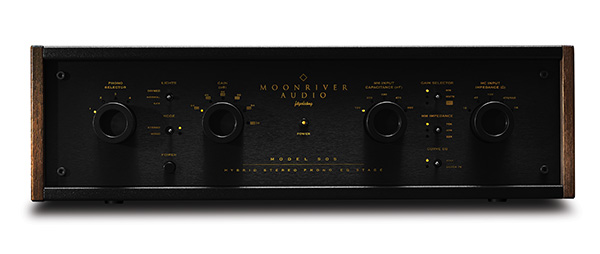
Spin Doctor #18: Moonriver 505 Phono Stage, DS Audio E3 Optical Phono Cartridge System
I spent the second three-and-a-half years of my life living with my family in Sweden. Our home was on an island just outside of Stockholm called Lidingö, which locals tell me today is like the Beverly Hills of Stockholm, a fancy place where the rich and famous live. Fifty-nine years ago, it wasn't quite so fancy; it just seemed like a cool place for a little kid from New York City to grow up.
I can't honestly say I remember many details about my life between the ages of three and a half and seven, yet apparently some of that Swedish way of thinking ended up influencing my life view, specifically, how Swedes approach consumer goods and purchasing decisions.
Spin Doctor #19: An exotic Audio-Technica cartridge and a Vivid flagship speaker
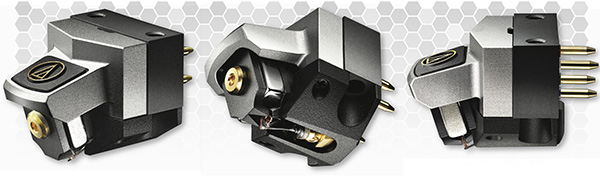
I think of Audio-Technica as the maker of some of the best high-value cartridges out there. From the ubiquitous AT3600L, which can be had for a little more than a Big Mac meal at McDonald's, to the popular OC9 moving coil series, A-T's cartridges have long been easy-to-recommend options that deliver great sound mounted on just about any turntable.
But occasionally, Audio-Technica likes to show off its technological chops by launching a cartridge that breaks new ground. Last year, they celebrated their 60th anniversary by stunning everyone with the AT-MC2022, which uses an outrageous integrated stylus and cantilever fashioned from a single piece of lab-grown diamond. In 2016, they flexed their capabilities with the AT-ART1000, which completely reconfigured how the elements of a moving coil cartridge are arranged, with spectacular results.
Now, eight years after the AT-ART1000 was launched, A-T has introduced the AT-ART1000x, which incorporates several small but important improvements.
Spin Doctor #26: The Sorane TA-1 tonearm and the Ortofon MC 90X phono cartridge
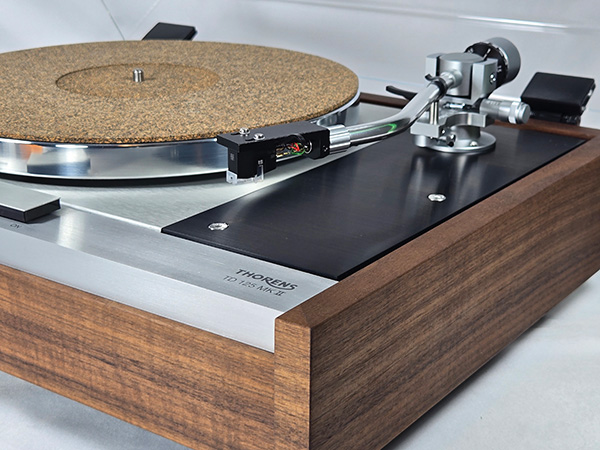
Photo by Dave Archambault@vinylnirvana.com.
A friend who sells high-end audio gear once pointed out that people who shop for separate tonearms are very different from those interested in phono cartridges or turntables in general. If you think about it, this makes sense. Almost everyone buying a new turntable needs a cartridge to go with it, and most turntables come equipped with a tonearm. Tonearm shoppers are more avid enthusiasts than general consumers.
It wasn't always that way. In earlier days of high fidelity, 60 or more years ago, people putting together a cutting-edge phono playback system would typically buy what was known as a motor unit: a Thorens TD 124, Garrard 301, or a few years later the Garrard 401 or Technics SP-10. They would match it up with a tonearm from a company like SME or Ortofon.Spin Doctor #30: The Belleson Radiance & EBI Audio Khumar
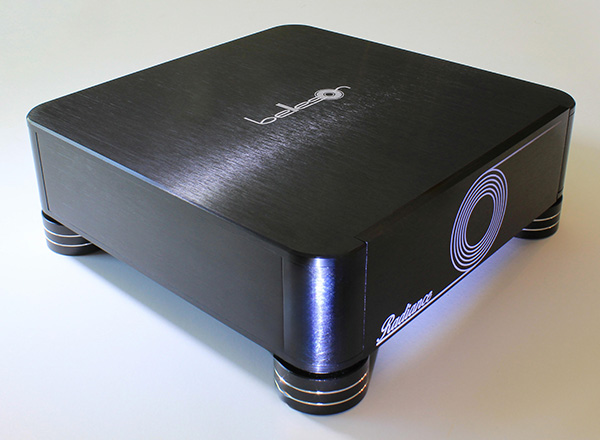
As the Spin Doctor, I tend to lead an analog life. I'm not just talking about my preferred ways of listening to music, but also my approach to other everyday technology. For decades, there has been a push to turn everything we use into a connected, "smart" device. We now have technology that allows us to change the color temperature of the lights in our living room while we sit on the sofa, or to answer our front doorbell from the other side of the world. I prefer an older-school approach.
Spin Doctor #36: Musical Fidelity Nu-Vista Vinyl S phono preamp, Sumiko Oriole phono cartridge
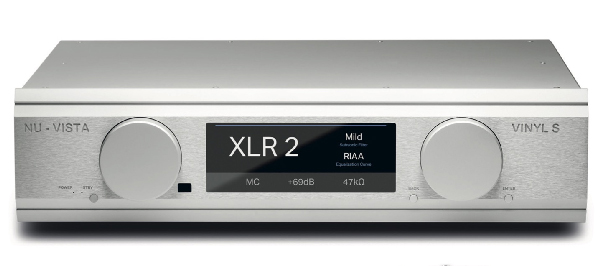
I get nervous when I hear that an audio company I like is suddenly under new ownership. Are the new owners planning to carry forward the legacy of the company's founders, or will they try to move things in a different direction?
Spin Doctor #7: Korf Audio TA-SF9R tonearm, Zu Audio DL-103 Mk.II Rev B phono cartridge, Gates CB100 transcription turntable
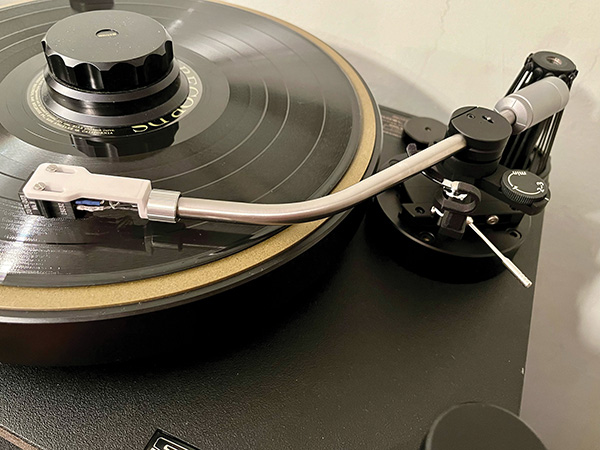
About four years ago, the stand-alone tonearm market went through a bit of a crisis. First, in December 2019, SME announced that it would stop selling tonearms separately, effective immediately. From that point on, SME tonearms would be available only in combination with SME turntables. . .
Five months later, in May 2020, we received the second blow in this double whammy of bad tonearm news. That's when the Ichikawa Jewel Company of Japan, maker of Jelco tonearms, announced without warning that they were shutting down operations, closing their doors for good. They blamed a combination of an aging workforce, worn-out tooling that needed to be replaced, and the coronavirus pandemic. . .
We lost two key players all at once, but it's not as if we suddenly had nowhere to turn for tonearms. Turntable manufacturers like Acoustic Signature, Clearaudio, Origin Live, Pro-Ject, Rega, and VPI all sell their tonearms separately . . . A number of smaller tonearm specialists have popped up in recent decades: Acoustical Systems, Graham, GrooveMaster, Kuzma, Reed, Schick, Schröder, and at the ultrahigh end, Swedish Analog Technologies. Now we can add Korf Audio to the list.
Spin Doctor #9: Soviet-era Hi-Fi & 2 Aidas phono cartridges
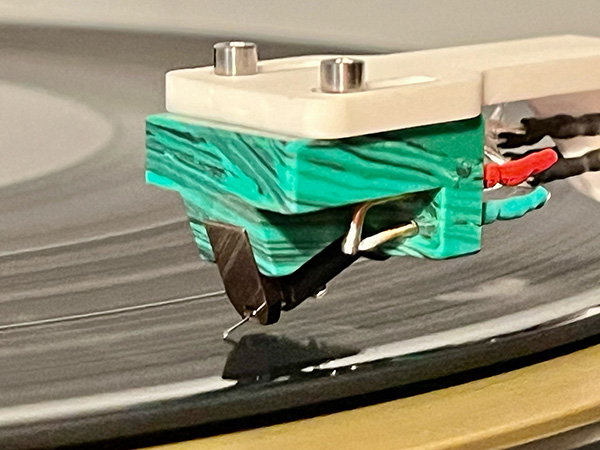
In 1985, I visited what was then known as Soviet Estonia with my family. My paternal grandparents, Mimi and Pop, had emigrated to the US from this small Baltic country in 1929. Fifty-six years later, after more than a decade of rejection, the family was granted permission by the Soviet authorities to visit our ancestral homeland, and the whole family, including Mimi, made the trek. (Pop died in 1962.)
Once we were there, we were more or less free to move around in the capital city Tallinn, but leaving the city was strictly forbidden, except as part of a planned group excursion with our KGB minderser, "Intourist guides."