

PS Audio PerfectWave P10 Power Plant AC Regenerator

Stereophile hasn't reviewed a PS Audio power regenerator since February 2009, when Robert Deutsch tried the company's then-flagship, the Power Plant Premier ($2195). But earlier this year, as I prepared to write my review of PS Audio's NuWave DSD DAC (published in the May 2016 issue), a perfect opportunity to revisit the line came about: I read, in the owner's manual for the PSA DAC, that "power conditioners and the quality of the AC power can make a significant difference in sound quality." Eager to help the NuWave DSD put its best foot forward, I asked PS Audio to assist me in dealing with my AC power, which is marginal here in crowded New York City. They sent me their PerfectWave P10 Power Plant AC Regenerator ($4999)and John Atkinson asked me to spill some ink on this most recent of the company's clean-power flagships.
PS Audio Power Plant Premier AC Regenerator

Determining whether an idea is brilliant or off the wall is often a matter of perspective—and of looking at the results that follow from the idea. Take the notion of AC regeneration. AC is what comes from the wall socket, courtesy a network of power-generation plants, and it's specified as having a certain voltage and frequency, with the amount of current limited by fuses or circuit breakers in the electrical panel of the house or apartment. Audio components—other than those powered by batteries—are designed to convert this alternating current (AC) to direct current (DC), then produce variable AC that drives the speakers to produce a facsimile of that signal. In short, AC provides the raw material used by audio components to do their job.
PS Audio Quintet Power Center
PS">http://www.stereophile.com/powerlineaccessories/ps_audio_power_plant_pr… Audio's Power Plant Premier is a high-end product that takes the regeneration approach in providing audio/video gear with the cleanest AC possible. But not everyone can afford to spend $2195 on such a product, and although the new amplifier design that forms the basis of the Premier is relatively efficient, it does use power, and concern about conservation of the planet's energy resources might lead one to prefer a passive approach to power-line treatment. PS Audio's line of Power Centers provides such an alternative. The model I had for review was the Quintet Power Center, which differs from the Duet Power Center only in having five pairs of receptacles to the Duet's two.
PS Audio Ultimate Outlet AC conditioner

PS Audio's Power Plant AC-regeneration devices have taken the audio and home-theater worlds by storm. The P300 was voted 2000 Accessory of the Year in Stereophile (December 2000), and the P600 won the Editors' Choice Platinum Award in Stereophile Guide to Home Theater (January 2001). The Power Plant differs from conventional power-line conditioners (PLCs) in that it doesn't just "clean up" AC but actually synthesizes (or regenerates) it. Each Power Plant is essentially a special-purpose amplifier, producing AC to run the equipment plugged into it, the maximum output wattage indicated by the model number. (The most powerful Power Plant available is the P1200, which produces 1200W.)
Richard Gray's Power Company 400S AC line conditioner
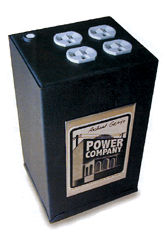
The Richard Gray's Power Company 400S arrived on the audiophile scene last year with a bang. Weighing in at a hefty 20 lbs and at $700 a pop, this four-outlet power conditioner, according to the paperwork, "effectively 'positions' audio, video, and home theater equipment 'electronically closer' to your utility company transformer, without introducing any type of series electronic 'traps' or capacitors into the circuit, which we feel degrade the performance of certain equipment, and severely limit the amount of current they can handle."
Shunyata Research AC power products
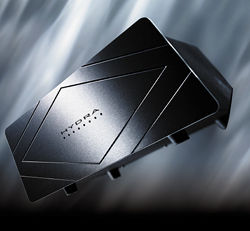
Power-line conditioning and exotic power cords, once considered the lunatic fringe of tweaking, have become normal parts of audiophile life. Over the last several years Shunyata Research, founded by former NSA research scientist Caelin Gabriel, has established itself as a leading innovator in the area. The company's latest efforts include the Hydra Model 8 power-distribution center ($1995), for use with whole systems or front ends; the two-outlet "mini" Hydra Model 2 ($395), intended for use with power amplifiers; and the Anaconda Alpha and Anaconda vX power cords ($1995), the new top models in the PowerSnakes line.
Shunyata Research Everest 8000 power conditioner
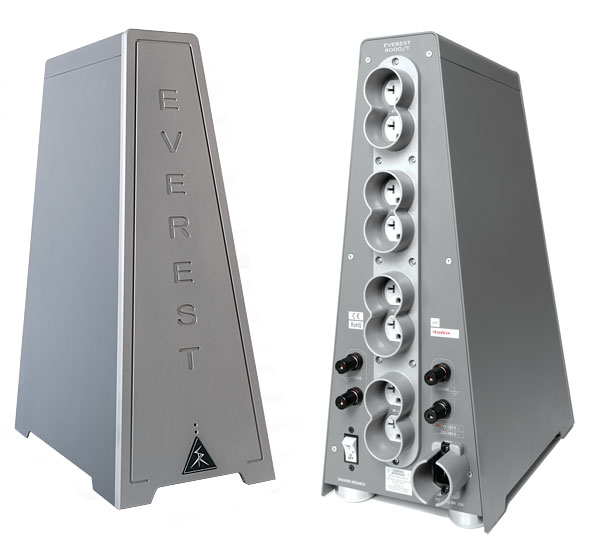
Shunyata Research is the brainchild of Caelin Gabriel, whose résumé includes stints at NSA, in military R&D, and in the computer industry, first digging weak signals out of noise then developing very high-speed network devices. He is also a lifelong audiophile.
Shunyata's roots are in the scientific understanding and engineering base Gabriel has developed during his career. I've long been impressed by those scientific underpinningswhich extend not only in audio but also to other fields including medical devicesand by how open the company is in talking about its technologies.
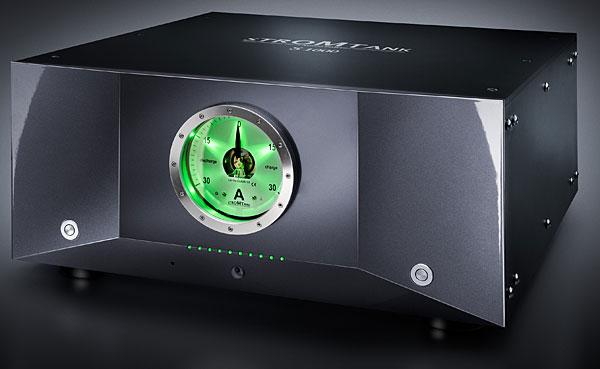
Stromtank S 1000 computer-controlled battery power source
The Kingdom of Audiophiledom rests on a paradox. Inanimate audio systems and rooms aim to deliver music that animates our senses and touches our souls. The inherently lifeless exists to bring music to life.
This holistic realitythat systems and rooms function as living organisms where every part is interconnected and interrelatedcame home to me when, during one of the first AXPONAs in Chicago, I entered a long, cavernous basement room with several spongy "conference room" walls. "There is no way that any setup can deliver good sound in this room," self said to self. Yet, the system sounded unbelievably good.
Stromtank S-4000 ProPower MK-II XT computer-controlled battery power source
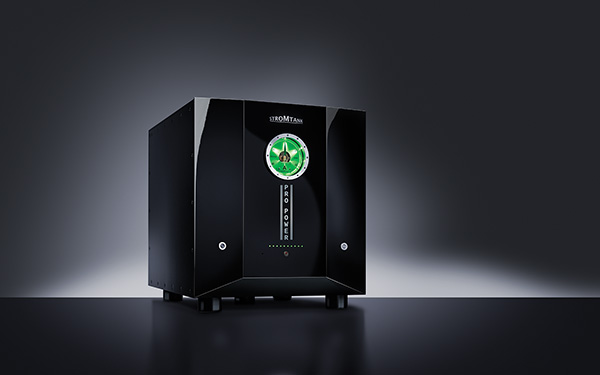
In my enthusiastic 2022 review of the Stromtank S-1000 ($16,900), I described the Stromtank as a computer-controlled lithium iron phosphate (LiFePO4) battery array that, coupled with its AC inverters and all the trimmings, supplies clean, constant, stable off-grid AC power to hi-fi components. By softly depressing a single button on the front panel, Stromtank owners can easily switch from wall-connected mode (when the Stromtank's dimmable front-panel meter is blue) to a disconnected, battery-only state (when the meter is green). At the end of a listening session, users can return to blue mode to recharge the battery array.
Torus Power RM20 Audio/Video Power-Isolation Transformer
When I arranged to review the Bryston 28B-SST monoblock power amplifier, I wanted to be certain that the 1kW amplifier wouldn't be starved for current. Bryston advised me that Plitron, who manufacture the 28B-SST's toroidal transformer, also make Power Isolation Units (PIUs), under the brand name Torus Power. Torus explained that its PIUs combine surge suppression with massive toroidal transformers to provide AC power conditioning and protection from voltage surges.