

Blue Note 45s and the Sunday Times
I have an http://www.nytimes.com/2010/08/08/arts/music/08jazz.html? >article in the Arts & Leisure section of this past Sunday’s New York Times about vinyl reissues of Blue Note jazz albums mastered at 45 rpm.
Bob Brookmeyer, Standards
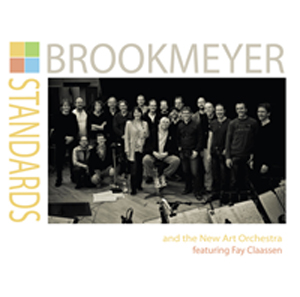
Sometimes you hear a CD, things come up, you store it away and forget about it, until something compels you to take it out of the closet, give it a spin, and you kick yourself for your negligence, you realize, suddenly, belatedly, that this is a really special album. That's my story with Bob Brookmeyer's Standards (on the ArtistShare label), a pretty magnificent send-off from one of the most elegantly inventive big-band composers in jazz, released in 2011, shortly before he died at the age of 81.
Bobby Bradford (continued)
As I was saying a few days ago, Bobby Bradford’s rare appearance at the Jazz Standard last Saturday was one of the most bracing sets I’ve seen in a long time. In the early-to-mid ‘90s, New Yorkers could go hear this sort of jazz—exuberant, free, but highly disciplined music—almost every night at the Knitting Factory. Just about everyone in Bradford’s band on Saturday was a regular at “the Knit” in its heyday—David Murray on tenor sax, Marty Ehrlich on alto, Mark Dresser on bass, Andrew Cyrille on drums: an extraordinary band.
Booker Little on Pure Pleasure
Pure Pleasure Records is a British audiophile-label that—like the stateside Analogue Productions, Classic Records, and Cisco Recordings—reissues blue-chip jazz albums on pristine virgin vinyl. Pure Pleasure’s focus is the catalogue of Candid Records, an adventurous label that lasted only from 1960-61, with critic Nat Hentoff in charge of A&R. In the past few years, PPR has released such essential works of modern jazz as The Newport Rebels, Charles Mingus Presents Charles Mingus, and Max Roach’s We Insist! But its latest reissue, trumpeter Booker Little’s Out Front, is a revelation. Little was 23 when he recorded this, his fourth and final album as a leader; he died of uremia just six months later—a huge loss for the music.
Carla Bley's Lost Chords
It’s a mystery how Carla Bley’s new CD, The Lost Chords Find Paolo Fresu (ECM), achieves its greatness. Even the word seems too freighted for music so minimal. A scale segues into a simple melody, followed by a straight harmony, some swishes on snare and hi-hat, a bass line that follows an equally simple counterpoint. Yet some quirky gravity holds these strands in magical equipoise, like a Calder mobile.
Carla Bruni
Not the least astonishing moment of President Barack Obama’s recent trip to Europe (and for my more serious thoughts on that diplomatic voyage, click http://www.slate.com/id/2215264/"> here) was when Michelle Obama met Carla Bruni and appeared her peer in every way, not at all outclassed. Ms. Bruni, of course, is the Italian-born French model and chanteuse who last year married French President Nicolas Sarkozy and, soon after, dazzled, nay seduced, every world leader she met at diplomatic soires. Mrs. Obama’s one-upmanship in London in no way shoves Ms. Bruni aside—the pairing marked, more, the reemergence of a French-American cultural entente, and we are all the headier for it.
Cecile McLorin Salvant
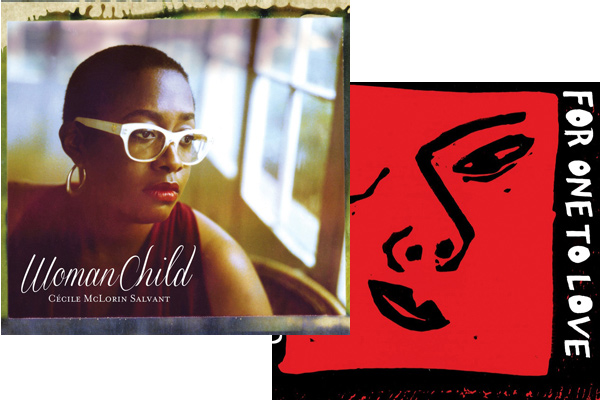
How the hell could I have missed Cecile McLorin Salvant? It's not as if she's been toiling in obscurity. She won the Thelonious Monk award in 2010, the Downbeat Critics' Prize for best jazz album (WomanChild) in 2014, and a Grammy for best jazz vocal album ( For One to Love) just this year. She's been singing with her trio at the Village Vanguard this past week, and every set has been sold out or nearly so. Again, how did Isomeone who's supposed to follow this sort of thingmiss the boat?
Cecile McLorin Salvant, Dreams and Daggers

It was almost exactly a year ago that I first heard Cecile McLorin Salvant at the Village Vanguard. I came home and wrote a blog for this space, wondering how I could have missed her ascent (she'd already won a Grammy and other prizes) and deeming her the best jazz singer around, standing among the greats of all time. I went back to see her, dragging along my wife and two friends, the following Sundaythe late set, the final set of his week-long stintand she was better still . . .
Charlie Haden & Gonzalo Rubalcalba, Tokyo Adagios
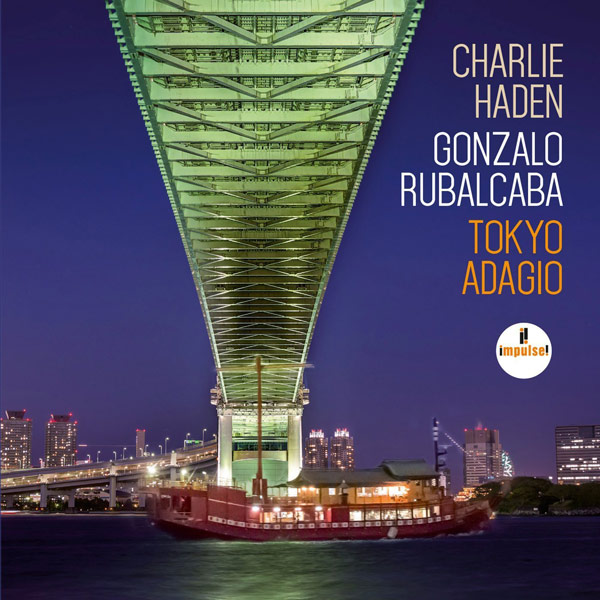
Charlie Haden, the most inventive bassist of his generation, died at the age of 76 a little more than a year ago, but his widow (and producer-manager), Ruth Cameron-Haden, says he left behind many unreleased tapes of live concerts. So it's likely, thankfully, that we haven't heard the last of him. The first nugget from the archive, Tokyo Adagio (on the Impulse! label)live duets with the pianist Gonzalo Rubalcaba, taken from a four-night gig in 2005 at the Blue Note jazz club in Tokyois a gorgeous album, an auspicious beginning.
Charlie Haden Duos
Charlie Haden, the world’s most distinctive and enticing bass player, seems to have adopted a new tradition. It started as a special occasion, a dozen years ago, in celebration of his 60th birthday, when he played a week of duets at the Blue Note jazz club in New York, each night with a different pianist. He repeated the experiment on his 70th, and this week he’s doing it again, just short of his 72nd, not a round number, which leads me to suspect he’s doing it—and may do it again, semi-regularly—simply because it’s so thrilling, so fun.