

High-End's Elder Statesmen...er, People
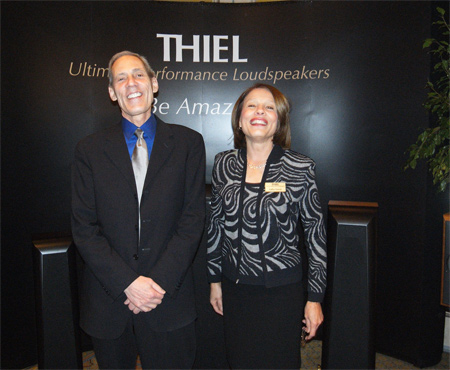
I can't believe that it's been 21 years since Thiel founders Jim Thiel and Kathy Gornik and I emptied the first of many bottles of fine wine talking about music and loudspeakers. But here they are, snapped outside the dem room they were sharing with Bryston and Wireworld, as passionate about audio, music, and the high-end audio industry as ever. And in the case of Kathy, looking even better than ever!
Holy Moly McCormack!
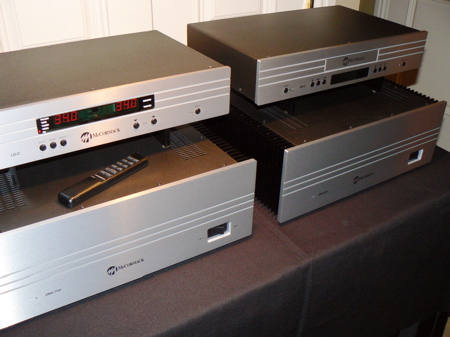
McCormack rolled out a complete line overhaul down to the cosmetics. About the only thing the company retained was its distributed node architecture (DNA) technology for its amplifiers. There are two new amps: the 250Wpc DBA-250 ($3995) and a 750W monoblock, the DNA-750 ($4750/each). Both amplifiers feature completely re-engineered voltage gain and driver circuits.
I Can See Clearly Now
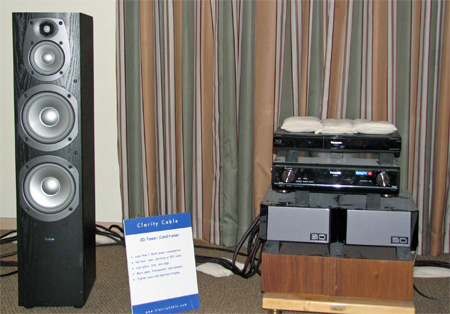
Clarity Cable of Wichita, KS had a neat little demo going at T.H.E. Show. Rather than pairing their single cable line and new Clarity Audio Pillows with high-priced electronics, they intentionally chose inexpensive mass-market electronics. With a twist. The Infinity Beta 50 speakers were rewired with Clarity wire. (You can also find Clarity wire in MaxxHorn speakers). The CD player was a Panasonic DMP-BD30 with a flimsy chassis, etc. Yet the sound was impressively full-range and inviting.
i Yi Yi
Simaudio's 100Wpc Moon i3.3 ($3300) is a very flexible component. In its stock version, it's an integrated amplifier with five single-ended line-level inputs, an RS 232 communication port, and a headphone jack. However, users can add a phono section module ($300), a balanced input module ($200), and a DAC module ($400) that accepts USB2, S/PDIF, and Toslink. In fact, buy all three modules when you buy the i3.3 and you get the whole package for $4000.
I'll Take a Pass
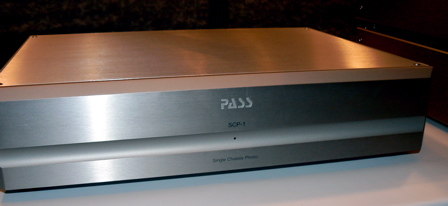
The Pass SCPI phono section ("under $4000") was an awfully slick looking piece of kit. "Basically, we took everything we learned in the Aleph Ono and improved upon it," said Pass engineer Wayne Colburn. The SCPI accommodates multiple inputs and has improved circuit traces, capacitors, and toroidal power supply.
I'm Thor, The Thaid!
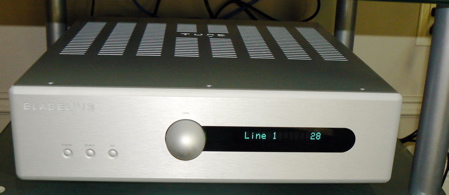
Another company new to me—another high-end integrated. Actually, I'm in favor of both. I think HE integrateds make a lot of sense and new blood is always good for the breed. Actually, Mike Bladelius is not a new name in audio, having designed for Threshold in the early 1990s, but Bladelius Design Group certainly seemed like a new kid on the block.
In All Directions
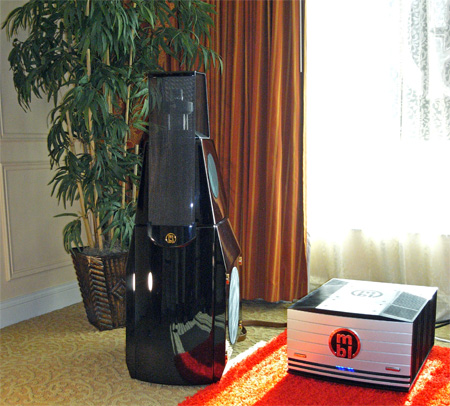
The omnidirectional MBL speakers, which use a unique pulsating quasi-spherical array of ribbons, make a strong argument for the benefits of this design approach. Featured in their room when I visited was the new 111F ($35,000/pair), which uses the "Radialstrahler" drivers for the treble and upper midrange, with conventional drive-units used for the lower frequencies. A big change from the earlier version I reviewed">http://www.stereophile.com/loudspeakerreviews/643">reviewed in 2002 was the use of side-firing direct radiators for the bass rather than the 111B's coupled-cavity LF enclosure. These are mechanically coupled to eliminate vibrational excitation of the enclosure.
In the Beginning, there was Absolute Fidelity
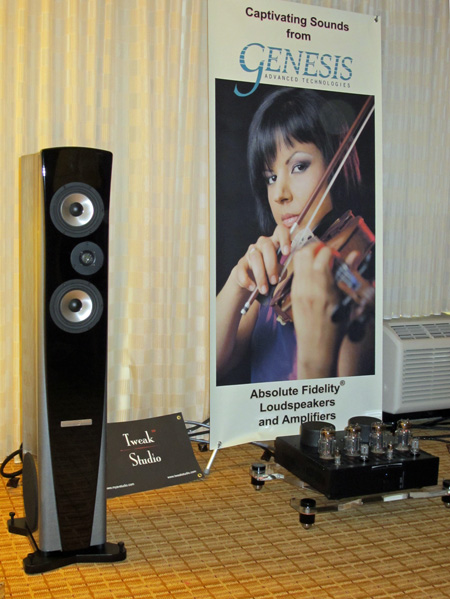
Gary Koh of Genesis was delighted to show me his Absolute Fidelity Foundation. These brand new, extremely attractive rack and amplifier stands are available in various sizes and support configurations.
In The Groove
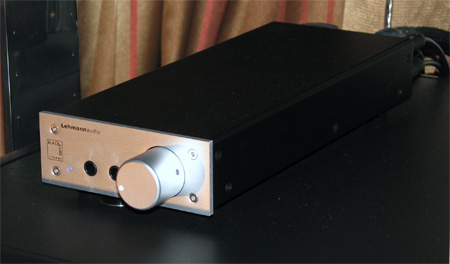
Allen Perkins' Spiral Groove has expanded beyond its excellent turntable, which has won major awards in Japan, to issue a new amp, DAC, and cabling. The patented cable line, close to final production, includes speaker cable, interconnect, and digital interconnect. Price has yet to be determined. Proof of its quality is that it used Spiral Groove's two tonearms and the entire line of Sonics speakers designed by Joachim Gerhard (formerly of Audio Physic) and now manufactured in Berkeley, CA. Having heard pre-production samples several of these products at Casa Bellecci-Serinus, I know that one of Allen's concerns is to eschew hard-edged digititis and over-hyped sound in favor of the more natural presentation of analog.
Inside Scoop
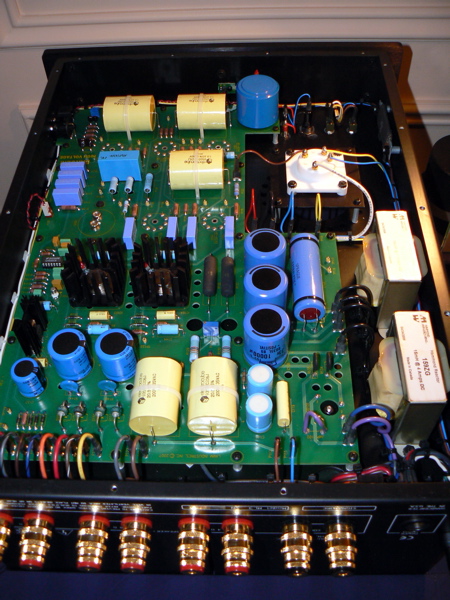
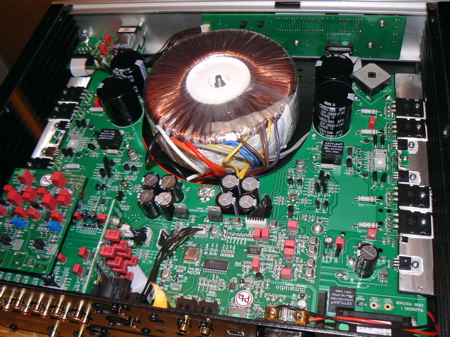
This is what the Lamm ML3 Signature looks like under the hood. Clean layout and P2P wiring throughout.