

The Entry Level #37
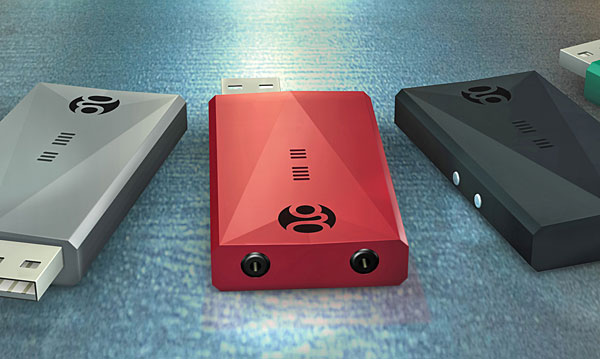
As I discuss in this issue's "As We See It," a handful of audio companies have recently turned to the crowdfunding website Kickstarter to launch and promote new products. The most notable of these is Light Harmonic. The Sacramento, Californiabased electronics maker first caused a stir at the 2011 Axpona show with the release of its impressive Da Vinci DAC ($20,000), one of the few home audio converters capable of handling the 384kHz sampling rate.
The Entry Level #38

Last month, I wrote about Light Harmonic's use of Kickstarter to fund the final production and packaging of their Geek Out portable USB DACheadphone amplifier. The campaign raised $303,061 from 2146 backers. That success led Light Harmonic to create a new division dedicated to mass-market products: LH Labs. The Geek Out would be its first product. (Pre-orders are still being accepted.) LHL's second product would be the Geek Pulse, a "pure class-A" desktop integrated amplifierDAC capable of handling 32-bit/384kHz PCM files, as well as decoding native DSD64 and DSD128 files.
The Entry Level #39
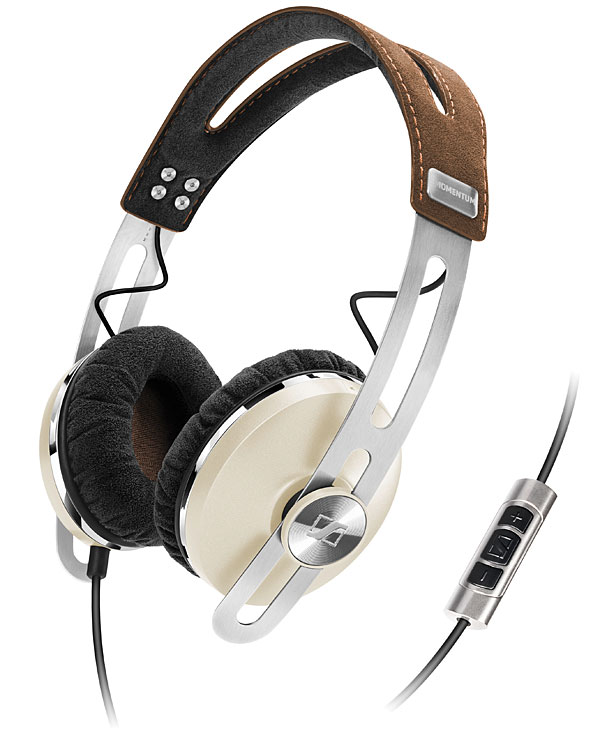
In his article on the future of audio engineering in this issue, John La Grou tells ussuccinctly and correctly, I thinkthat we are rapidly moving from a culture of handheld devices to one of headworn devices. He postulates that by perhaps as early as 2025, rather than being actively sought out, most audio/video media will be delivered, like milk or the newspaperbut delivered not to our front doors, but more or less straight to our brains. Fascinating? Sure. Frightening? Kinda, yeah.
The Entry Level #4
Dinner with Natalie and Nicole was still three hours away and, thanks to the Okki Nokki record-cleaning machine that I wrote about last month, I had a half-dozen newly cleaned LPs begging to be played. A gray and listless day had somehow blossomed into a clear, brilliant night filled with promise and anticipation. Outside, tattooed against the dark violet sky, a strange, enormous moon hovered over Jersey City, and flooded my listening room with enchanting white light. It was time to enjoy my new records and better acquaint myself with the Wharfedale Diamond 10.1 loudspeakers ($350/pair), and the only way to do that would be to compare the latter to a known quantity: the PSB Alpha B1 ($279/pair). John Atkinson had reviewed the PSBs in our May 2007 issue, and admired their naturally balanced treble and superb midrange. Soon after, the PSBs won our "Budget Product of the Year" award, and I could not resist the urge to buy a pair. I've lived happily with them ever since, most appreciating their ability to make sense of the densely arranged, sometimes poorly recorded noise- and psych-rock albums I tend to lust after. How would the Wharfedales compare?
The Entry Level #40
Today, the system sounds better than usualin fact, amazing: warm, detailed, powerfully present, remarkably true. But how can this be? Isn't it more likely that my system, a well-considered but nevertheless inanimate, unfeeling collection of boxes and wiresNAD C 316BEE CD player, Arcam FMJ A19 integrated amplifier, KEF LS50 loudspeakers, AudioQuest Big Sur interconnects and Rocket 33 speaker cablessounds today exactly as it did yesterday?
The Entry Level #41

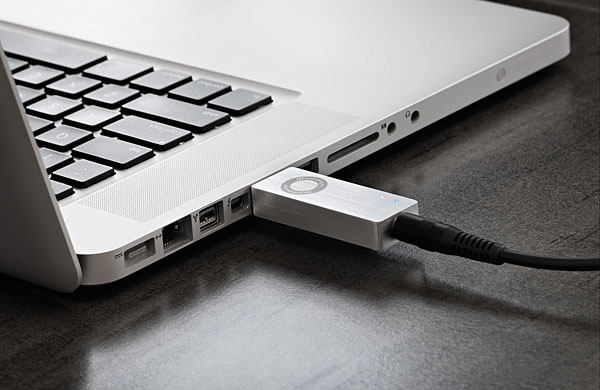
What I failed to make absolutely clear in my April column is that I really, truly, thoroughly enjoyed all three USB DACheadphone amps that I auditioned: the Audioengine D3 ($189), the AudioQuest DragonFly v1.2 ($149), and the Cambridge Audio DacMagic XS ($199). Each offered a slightly different perspective on the music, but none could be accused of closing lanes on the George Washington Bridge, dumping several feet of snow on top of our car, or doing anything especially wrong.
The Entry Level #42

In response to my review of Music Hall's USB-1 turntable, that company's founder and president for life, Roy Hall, noted my detailed explanation of the product, diverse taste in music, and keen attention to minutiae. He then offered six words of final observation that will, if there is any justice in this world, go down in Stereophile lore: "The kid has gotta get laid."
The Entry Level #5
 Let me hear your body talk.
Olivia Newton John But first a confession: I'm not the hip young man you might like me to be (or the one I might like me to be). I'm actually sort of old-fashioned. While my taste in music is nearly as uninhibited and adventurous as that of anyone I know, I prefer to enjoy that music in ways far more restrained and much less modern. I think I would have been right at home in the 1950s, wearing Ray-Bans and Levi's, listening to (and loving, equally and deeply) the music of both Jack Scott and John Cage, and playing my records on a record player. I heard from Kelli recently. She said something about moving all of her music into the clouds. "Huh?" "Cloud music," she said.
The Entry Level #6
 Natalie was either impressed by my impeccable taste in music or high on Brussels sprouts: At some point during the meatloaf dinner at my place (see last month's column), with a smile so wicked and dazzling it could knock a stylus from a groove, she asked if I would be the DJ at her next house party.
"Really?"
"Yeah. I've loved everything you've played tonight."
Delighted, I tried not to show it. I turned from Natalie's brilliant smile to stare at the hi-fi, as if the hi-fi would be the guiding light for my next few moves. I was worried, of course, because worrying is what I do. I hadn't DJ'd since college, and while I'd been looking for a reason to set up a turntable and speakers at Natalie and Nicole's apartment, I hadn't exactly expected this turn of events.
"You want me to play LPs?"
Natalie was either impressed by my impeccable taste in music or high on Brussels sprouts: At some point during the meatloaf dinner at my place (see last month's column), with a smile so wicked and dazzling it could knock a stylus from a groove, she asked if I would be the DJ at her next house party.
"Really?"
"Yeah. I've loved everything you've played tonight."
Delighted, I tried not to show it. I turned from Natalie's brilliant smile to stare at the hi-fi, as if the hi-fi would be the guiding light for my next few moves. I was worried, of course, because worrying is what I do. I hadn't DJ'd since college, and while I'd been looking for a reason to set up a turntable and speakers at Natalie and Nicole's apartment, I hadn't exactly expected this turn of events.
"You want me to play LPs?"
The Entry Level #7

Around midnight, Natalie decided to move the party from her and Nicole's apartment (see last month's column) to our favorite local dive, Lucky 7, just a few blocks away on the corner of Second and Coles, in Jersey City. We threw wide the old red door and stepped into the stench of stale beer, the sound of cheap speaker cones tearing at the seams. I love Lucky's as much as anyone, but the music there on a Saturday night is always too goddamned loud.