

Feastrex Drive-Units

I like the idea of a speaker using a single full-range driver, requiring no crossover, so when Michael Tang of Michael Tang Audio emailed me, saying that one of the interesting products he's importing is the Japanese Feastrex driver, I made sure to check it out at SSI. There are two versions of this driver: the NF-5 ($2000), with uses an Alnico magnet, and the NF-5EX, with uses a field-coil magnet ($3000), requiring an external DC power supply. (Michael says he's used a car battery for this purpose.)
Focal–MicroMega
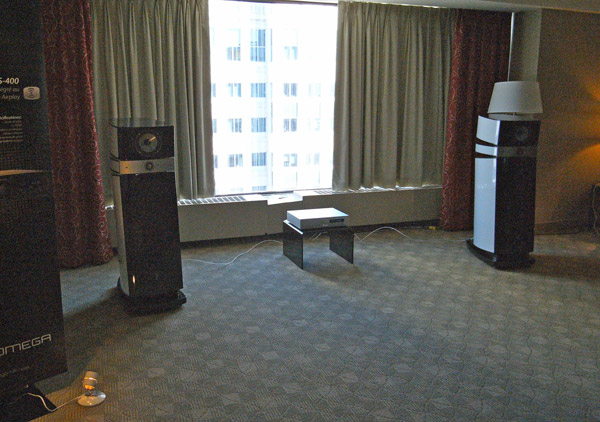
The impressive sound of the Focal Maestro Utopia III speakers in one of the SSI rooms being run by retailer Son-or-Filtronique was familiar from my July 2010 review but the small amplifier driving them via Crystal speaker cables was not. It was the Micromega AS-400 integrated amplifier ($4995), which Art Dudley will be reviewing in the July 2011 issue Stereophile. As well as the usual analog inputs, the AS-400 accepts WiFi audio data via a new version of the French company's Airstream module and uses a high-quality D/A section using Cirrus Logic DAC chips.
Gerard Rejskind of UHF magazine
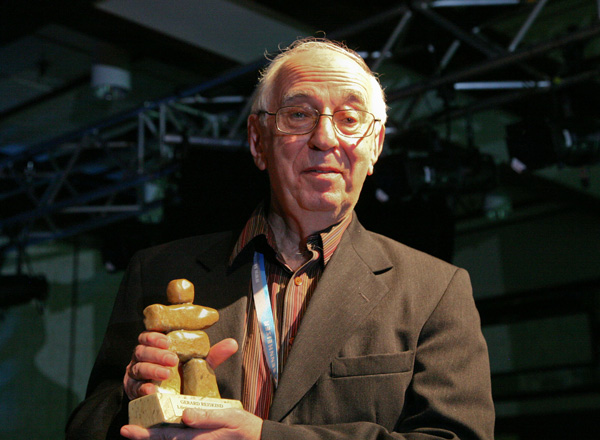
One of the most welcome innovations since Michel Plante and Sarah Tremblay took over the Montreal show has been the presentation of Lifetime Achievement Awards. One of the 2011 recipients was Gerard Rejskind, publisher and editor of Ultra High Fidelity magazine. A fixture CES shows as wall as SSI, Gerard has always impressed me as being one of nature's gentlemen: thoughtful, self-effacing, with a mellifluous voice, and devoted to the cause of music and the best in sound reproduction. Good choice, Michel and Sarah!
Give it up for the band Give
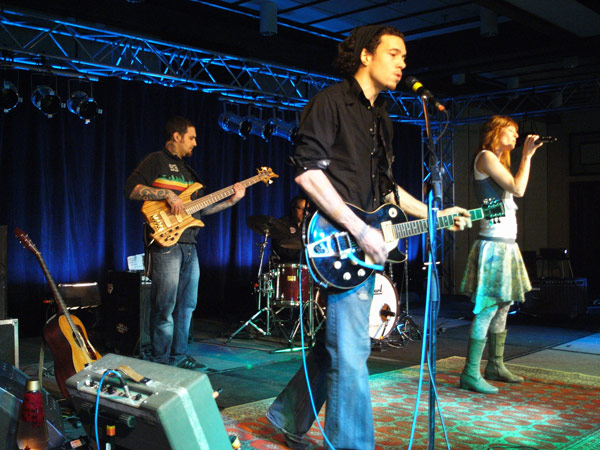
Resident band at SSI is Give, featuring vocalist Caroline St-Louis and guitarist Stephen Ritch, who performed for trade and press attendees at the Awards party Thursday night. At the 2010 Show, SSI had their new CD available (a beautifully recorded album that proved that rock music doesn't have to be compressed to sound good); this year, the Show was selling a USB key of the Give Band's music.
Gradient's Revolution
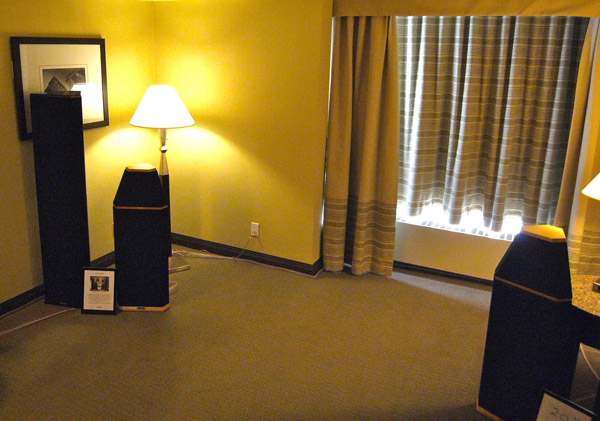
While visiting Gradient’s North American distributor, Simplifi, I listened to the current version of their classic Revolution loudspeaker ($7995), which had been favorably reviewed in Stereophile back in 1995. Earlier in the show I’d been impressed with the uncanny spatial realism in the MBL room; the interestingly shaped, dipolar Gradient Revolution was at least its equal in that regard. On one record, singer Willie Nelson was right damn there, and when someone in his band started giving hell to a tambourine, the effect was almost nerve-rattlingly real. What a cool speaker!
Graeme Humfrey's Man-cave
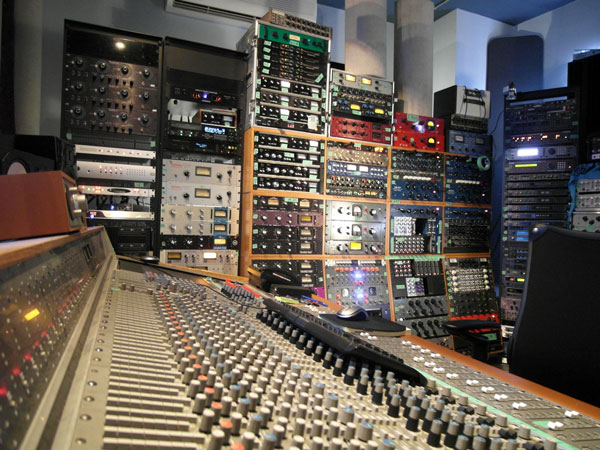
What impressed me the most at the Coup de Foudre party was the recording studio that adjoins the retail store, operated by CdF's co-owner, Graeme Humfrey, who is also a much-in-demand recording engineer. His audio mixing room is filled to the brim with equipment, some of it the very latest, and some of it classics, such as multiple Pultec equalizers that are valued for their sound quality.
Gunmetal glory from Raysonic
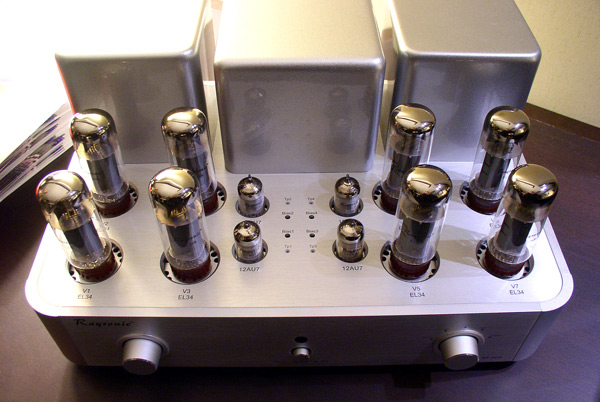
I’m not familiar with Raysonic, but their system sounded excellent: a large-scale presentation with good color and texture, elements of which may have been owing to the impressive-looking Raysonic Reference 26 mono tube amplifiers ($16,500/pair in Canadian funds). Each 180Wpc amp contains 12 Russian-made 7591AEH output tetrodes, configured for true balanced operation. (We were told that the loudspeakers, which bore the name Revolver, aren’t commercially affiliated with Raysonic.)
Homeland Security
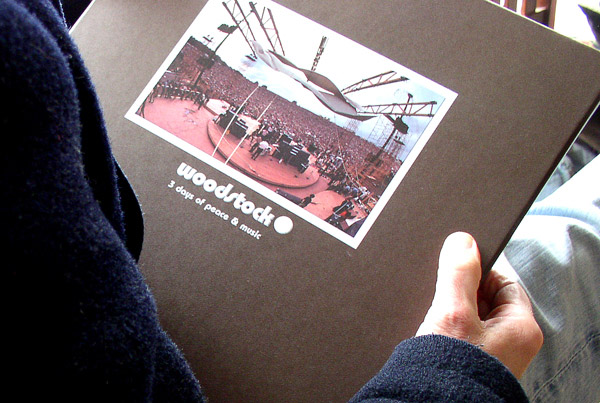
I was never happier to be an audiophile than when my train stopped at the US/Canada border on my way home. The customs officers who boarded our train were quite serious-minded, and as I waited in my seat I heard them grill other passengers regarding the precise nature of the Canadian goods they harbored. When it came my turn, a surly-something man in a black uniform examined my Customs Declaration, saw that I was bringing some new LPs into the US, and broke into a friendly smile: “What vinyl did you get?” We chatted amiably for a moment about old Quads and Garrard 301s before he went on to crack other skulls than mine. (Just kidding. In fact ours was the rare trainin my experience, at leastfrom which no passengers needed to be removed for lack of a passport.)
JA Explains Speaker Measurements

On Sunday at 2pm, John Atkinson gave an illustrated talk entitled "How to measure loudspeakers and what the measurements mean." The scheduling was not ideal, just three hours before the show's closing, and the door to the meeting room where the talk was held was locked, and could be opened only from the inside or with a special card, which was not provided. As a result, attendance at the talk was not as great as it might have been, but the people who were there listened with rapt attention. One person told me afterwards that he has a book on loudspeaker measurement that he's had difficulty understanding, but, having heard JA's presentation, it made much more sense to him. Other than the specifics of how loudspeakers are measured, I thought the most interesting part of JA's presentation was . . .
Jim Thiel-designed, Les Paul-signed

The 2011 SSI was my first chance to see and hear the Limited Edition Les Paul Signature version of Thiel's well-received CS3.7 loudspeaker. The last complete design by the late Jim Thiel, the CS3.7 was favorably reviewed by Wes Phillips in December 2008. Wes concluded that he "loved, loved, loved the Thiel CS3.7!"