

Antelope Audio's Atomic Masterwork
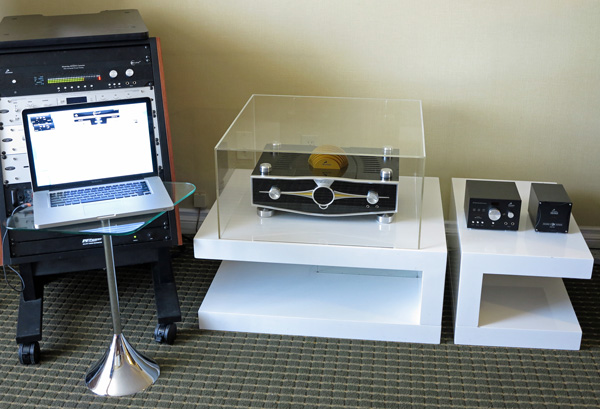
Because it was housed in a protective plastic case, which was allergic to my flash, my photo cannot possibly do full justice to the US pre-debut of the gorgeous Rubicon Atomic AD/DA preamp (price not yet announced, probably under $40,000, hopefully to be demonstrated in full form at the Rocky Mountain Audio Fest in October and available for purchase at the end of the year). This 384kHz converter, phono preamp, and headphone amplifier with an integrated atomic clock and gold-plated relay volume control utilizes the 10M Rubidium atomic clock, which is said to be 100,000 times more stable than a traditional crystal oscillator. Coupled with Antelope's 64-bit "Acoustically Focused Clocking technology" the Rubidium purportedly manages jitter superbly. Already boasting an award from Japan, the unit is one of several from the company that uses DACs endorsed by Morten Lindberg, founder and chief engineer of audiophile label 2L.
Antique and Classic Hi-fi by RJB Electronics
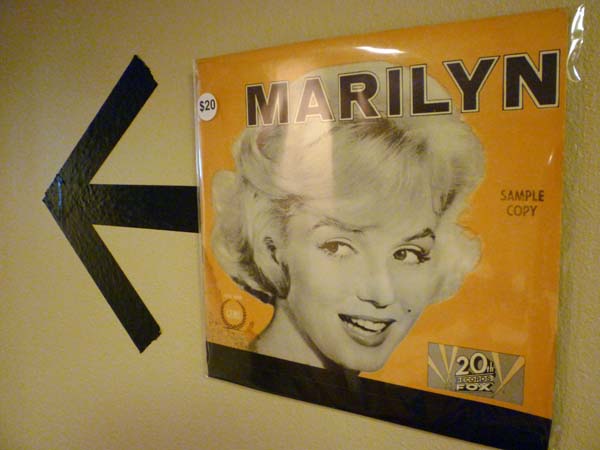
My very favorite gear of T.H.E. Show Newport was presented by Ross Blomgren of RJB Electronic Services. Blomgren specializes in the repair and restoration of antique jukeboxes, radios, and hi-fi, and the products he had on display were, in my opinion, some of the most beautiful to be found at the show.
Audience’s Clairaudient 16+16 Mk.II
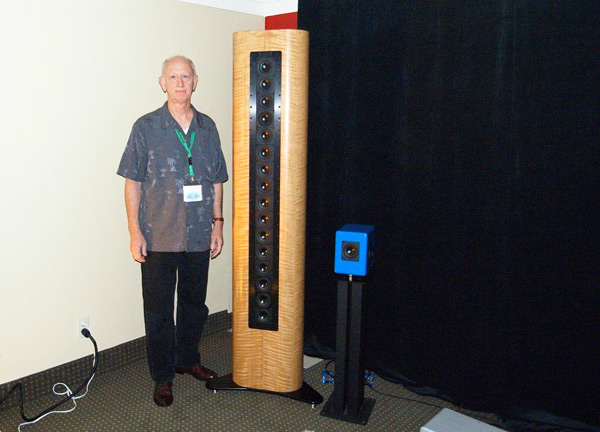
John McDonald’s Audience company has developed a range of speakers using a proprietary 3” cone driver to cover the complete audio range. The flagship Clairaudient 16+16 ($72,000/pair) made its debut at the Newport Beach Show. Each Clairaudient 16+16 uses 16 of the latest-generation drivers firing to the front and another 16 to the back, and is specified to be flat to 30Hz.
Audio Artistry CBT36
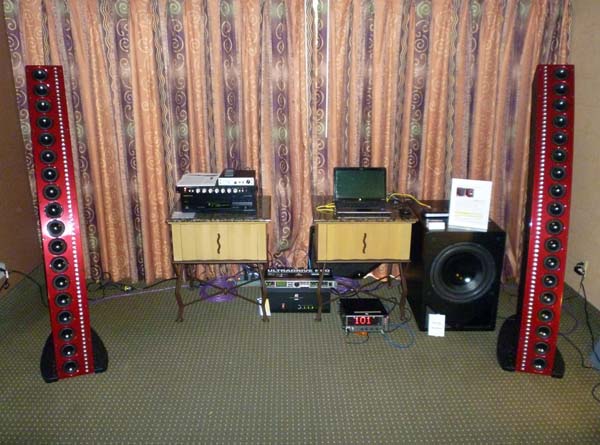
John Atkinson reported on Don Keele’s unusual constant-directivity CBT36 loudspeaker from last year’s Rocky Mountain Audiofest. At T.H.E. Show Newport, Keele and Marshall Kay, president of Audio Artistry, purposefully created an “economy system” (an iPad running Media Monkey, Benchmark DAC1, Crown preamp, ATI amplifier, Behringer DSP processor) to show how well the speaker could perform under sub-optimal conditions.
Audio Note Meishu integrated amplifier
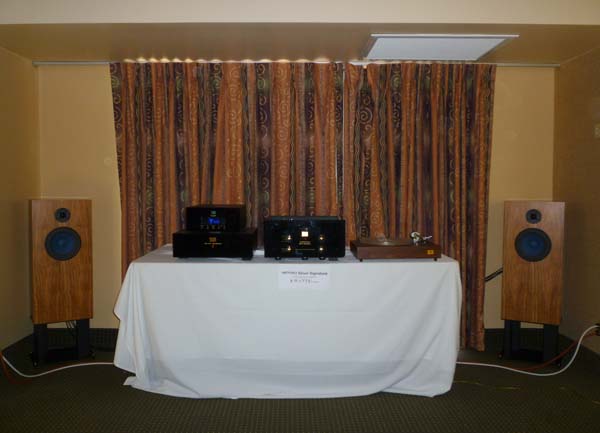
Audio Note’s Dave Cope was unusually glum: The E/SPe HE loudspeakers ($9650/pair; seen in a lovely Russian birch plywood) are designed to be positioned in the corners of a room, but doing so here, in the small Atrium suite, meant that they’d be tucked beneath a strange overhang that seemed to rob the speakers of their charm. The effect, however, was largely music-dependent and I nevertheless heard glimpses of Audio Note’s characteristic drama, tone color, and texture, albeit on a smaller scale. I have no reason to believe that this impressive system wouldn’t sound wonderful under better conditions.
Audioengine Thinks Small
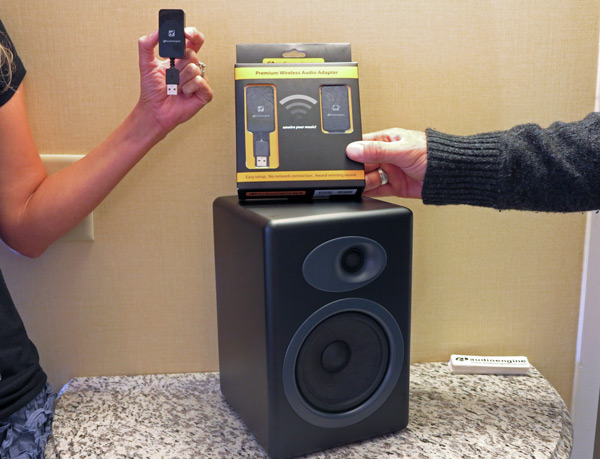
Audioengine, which made a deservedly major mark a few years back with its perfect-for-desktop-computers, self-powered loudspeakers, has just issued the W3 as a replacement for the W1 ($149, I believe). A plug-and-play "premium wireless audio adapter" designed to move computer audio around your home or office, it can transmit 16-bit signals to up to three receivers ($89 for a receiver kit) via a closed 802.11 network. (Those desiring to send 24-bit signals can opt for the D2.) Also fairly new are the Audioengine 5+ powered loudspeakers ($399 and up).
Aura Restaurant and Bar
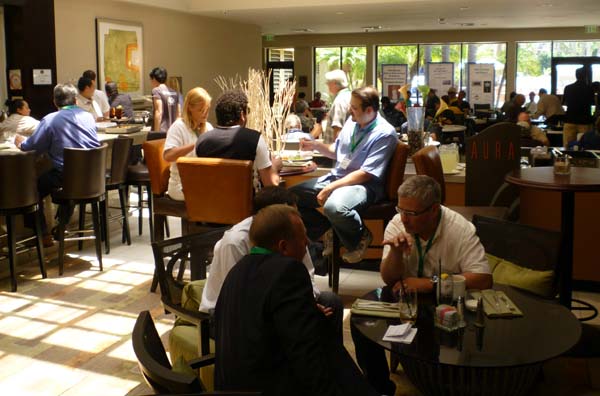
And, for those who weren’t brave enough for Tornado Potato or Rolling Sushi, the Aura restaurant and bar proved the perfect place to see and be seen, to mingle, to catch up on business, or to simply enjoy food and drink.
AVM Electronics
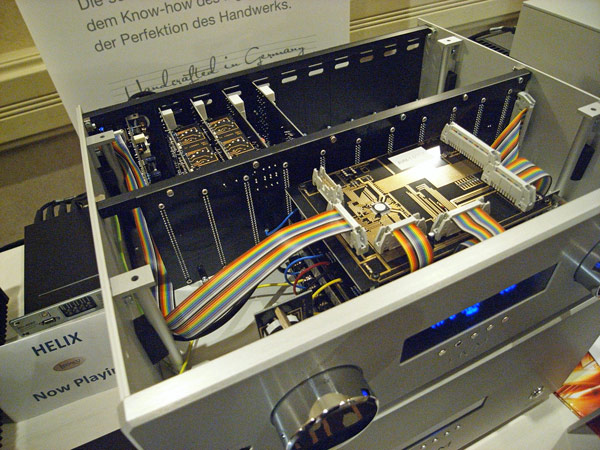
The German AVM company has been around for a long time, but its products are new to the USA. AVM's Udo Besser was instrumental in bringing Burmester products to the US and now intends to do the same for AVM. Shown in my photo is the PA8 modular preamp (starting at $10,000), which can have various options, including a tubed output stage, added. Also on show was the ML8 Music Library, which has either 2TB of hard-drive storage or 600GB of solid-state storage, the CD8 CD player, and the 450Wpc SA8 amplifier.
Ayon–Lumenwhite
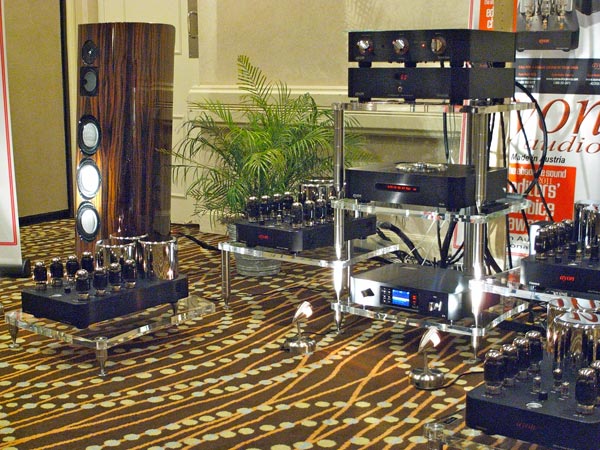
Sharing a Hilton ballroom with Legacy and AVM, the Austrian Ayon tube amplification was being demmed with Lumenwhite Artisan speakers ($40k/pair). Source was the new Ayon Music Server and two-box preamp. Listening to Pink Floyd's "Another Brick in the Wall," I thought the sound was better than it had any right to be given the suboptimal acoustics. Then I spotted some of the Synergistic ART Acoustic bowls on the wallsmy left brain knows these silly little bowls can have no audible effect on room acoustics in the audio range; my right brain was busy telling my feet to tap!
B.M.C.—Stage III—Tandem
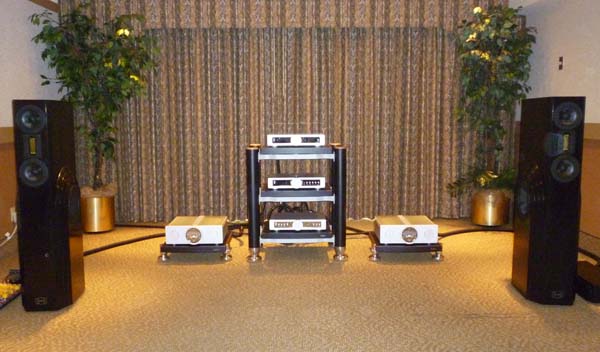
John Atkinson reported on B.M.C.’s new Arcadia loudspeaker ($36,300/pair) from January’s CES. But B.M.C.’s Carlos Candeias has already upgraded his design with SpeakON connectors between the outboard crossovers and the speaker cabinets, improved internal wiring, and a revised magnet construction in the midrange drivers. In addition, the speaker’s spikes now screw directly into the speaker’s base for better grounding. The changes come at no additional cost. “We improved the model, but that doesn’t always mean you have to raise the price,” said Candeias.