

Rockport's Avior: 220 pounds of joy
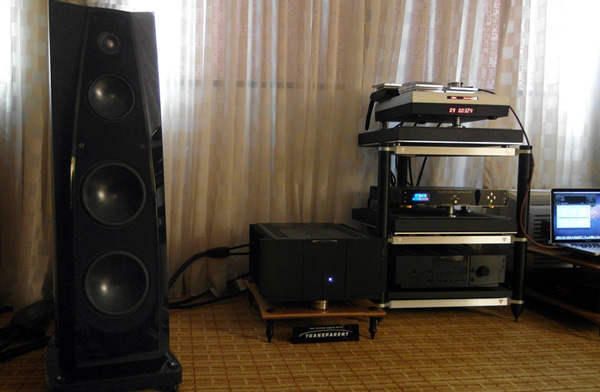
The three-way, 220 lb Avior loudspeaker from Rockport Technologies ($29,500/pair) uses the same beryllium tweeter as the company's $225,000 Arrakis, complemented with all-new midrange and bass drivers that are built around Rockport's proprietary carbon-fiber sandwich/composite cones. The Avior sounded truly impressive with a Playback Designs MPS-5 CD/SACD player/DAC ($17,000), Electrocompaniet EC4.8 preamplifier ($5129), BAT VK-655SE amplifier ($14,000), and cabling from Transparent Audio. A representative from the Omaha, Nebraska dealer The Sound Environment demonstrated the system with humor, charm, candorand good music.
Rocky Beginnings
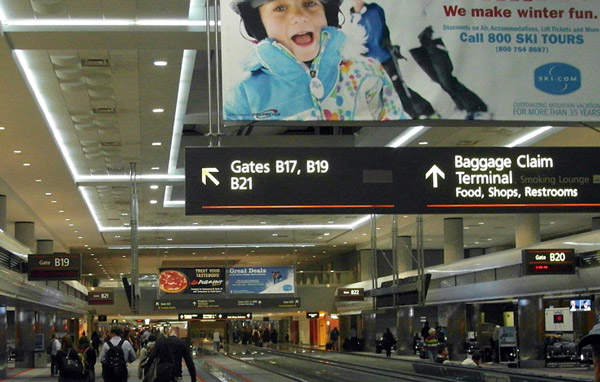
Barring the unlikely resurrection of either the summertime Consumer Electronics Show in Chicago or this magazine’s own fondly remembered movable feasts of the 1990s, there is only one hi-fi event for which I would board an airplane: Welcome to Denver. And while this non-flyer is already considering renting a car and driving home Monday, I’m glad as hell to be here: I think this is going to be fun.
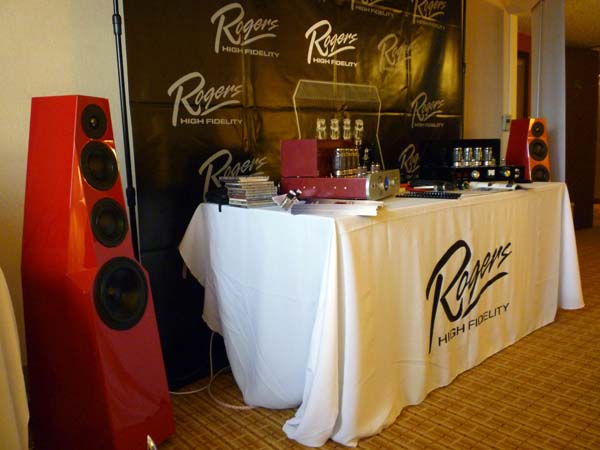
Rogers—Totem—Bel Canto—Well Tempered—Kimber
“These blood-red eyes don’t see so good / But what’s worse is, if they could / Would I change my ways?”
So sings Dan Auerbach on “These Days,” the closing track from the Black Keys’ excellent 2010 album, Brothers. As Auerbach sings, achingly, slide guitar weeps, bells chime, bass guitar thumps along woefully, cymbals splash, and floor toms rumble. It’s a beautiful few moments of R&B-inspired pop music, flooded with heartache.
Sanders Sound Delivers
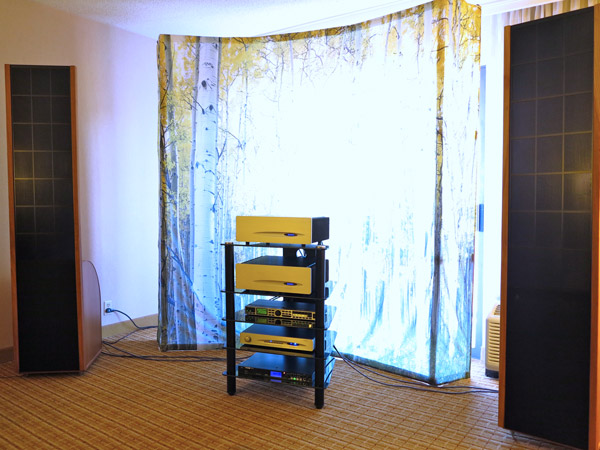
People sat up and took notice when Sanders Sound Systems released their Model 10 full-size electrostatic loudspeakers with analog electronic crossover amplifiers a few years back. The latest version, Model 10c ($13,000/pair) was delivering solid, full-range sound from a system that also includes Sanders Magtech Stereo amplifier ($5000), new preamplifier that combines both line and phono stages ($4000), and their own interconnects and speaker cables.
Save the Music

I noticed this sign hanging above the entrance to the Marriott Tech Center, home of the Rocky Mountain Audio Fest. “Save the Music”—a fine message, but sort of vague. What's it about? I wondered. Inside the hotel, near the elevators, I found a postcard with a picture of a pianist at a piano, both the musician and his instrument covered in what appeared to be thick black oil. (Oh no!) At the top of the postcard again were the words, “Save the Music.”
On the back of the postcard, I found a message from dCS, titled, “Saving the Music for 25 Years.” Audiophiles are familiar with dCS&—we know who the company is and what it does—but this postcard seemed addressed to those who may be new to the hi-fi world:
Schröder: Completely Unbiased

A pivoted straight-line-tracking tonearm? The description is far less oxymoronic than it seems, given the arrival of the Schröder LT tonearm ($8900). This fascinating and apparently very well-executed design works by augmenting the main arm pivot with an extra pivot at the base, the latter said to offer exceptionally low resistance to the arm and cartridge as they follow the inward spiral of the groove. The geometric relationship between the two pivots is such that the headshelland the cartridge and stylusmaintain perfect tangency to the groove from beginning to end. Thus the headshell requires no offset angle, which also means that no anti-skating force is required. Very cool.
Sensorium AVR
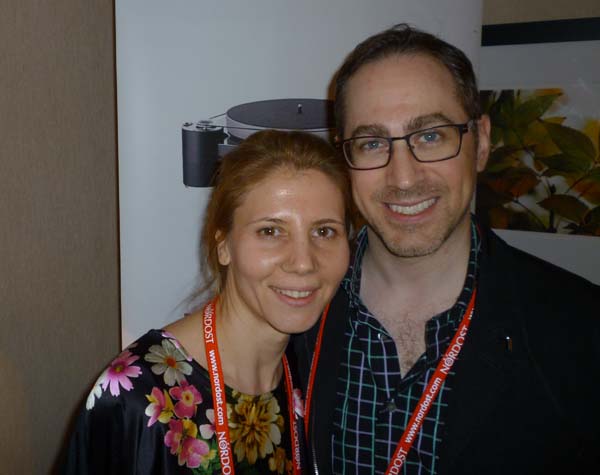
As Jason Victor Serinus mentioned, there was a party going on in the Music Hall room; and, while this meant that you really couldn’t evaluate the sound of the system, it also meant that you were bound to actually have fun.
Hmm: Evaluate sound or have fun, evaluate sound or have fun?
Oh, darn. I guess I’ll have fun.
Small Audioengine Rocks
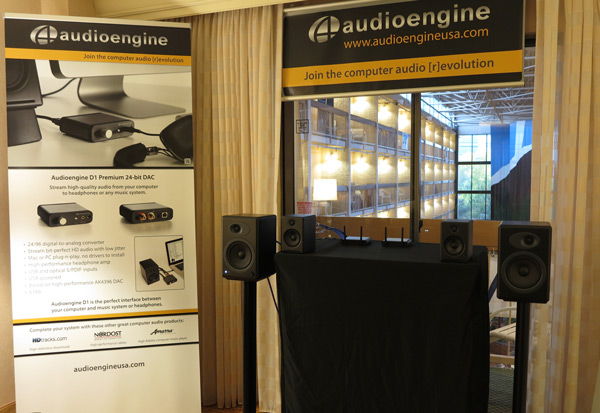
What more can be said about Audioengine's flagship self-powered loudspeakers, the A5 ($399/pair) and A2 ($199/pair), than has already been said? We currently use the bigger babies for sound on an antiquated TV in my husband's man cave, aka "the cottage," and they're astounding for the price. The speakers were showing off thanks to several prototype Audioengine products that are still in the development stage.
Smiling Faces at RMAF
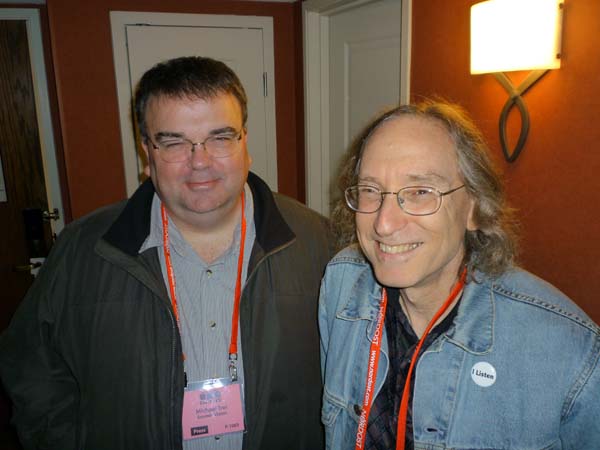
I’ve seen many, many smiling faces at the Rocky Mountain Audio Fest. These two belong to Sound and Vision’s Mike Trei and CNET’s Audiophiliac, Steve Guttenberg.
Sonic Studio’s Amarra Preview

Since Sonic Studio dropped the price of its Amarra music software system to $189, lots more people have been enjoying its sound. Less than two months after Amarra’s last release, James Anderson announced the imminent arrival of 2.4.3 (free to current owners). He also played Reference Recordings’ superb recording of Copland’s Symphony 3, one of whose movements has become known as the “Ode to the Common Man.” Turns out that the performance was recorded using Sonic Studio’s professional Soundblade products. Played back with Amarra 2.4.3, it sounded fabulous, with absolutely tight, room-shaking bass. No doubt Amarra’s optional equalization component, which can help control bass booming created by either room nodes or less than flat loudspeaker response, had more than a little to do with the success of the presentation.