

August 2024 Rock/Pop Record Reviews

Various Artists: Jem Records Celebrates Jagger & Richards; Kerry King: From Hell I Rise; Liam Gallagher and John Squire: Liam Gallagher and John Squire; Bob Schneider: The Human Torch; Marcus King: Mood Swings.
August 2025 Classical Record Reviews

Kiss on Wood, Rachel Yonan, viola; Kwan Yi, piano.; Shostakovich: Piano Concerti 1–2; Piano Works, Yuja Wang, piano; Boston Symphony/Andris Nelson; Begin The Song! A Purcell Academy, Paul-Antoine Bénos-Djian, countertenor; Le Consort; Chopin: 24 Préludes; Sonata 2, Emil Gryesten, piano.
August 2025 Jazz Record Reviews

Adam O'Farrill: For These Streets; Billy Mohler: The Eternal; Louis Stewart/Jim Hall: The Dublin Concert; Denny Zeitlin: With a Song in My Heart.
August 2025 Rock/Pop Record Reviews

Goose: Everything Must Go; Mark Pritchard & Thom Yorke: Tall Tales; Sons Of The East: SONS; Hayden Pedigo: I'll Be Waving As You Drive Away.
Birth of the Blue Listening Session
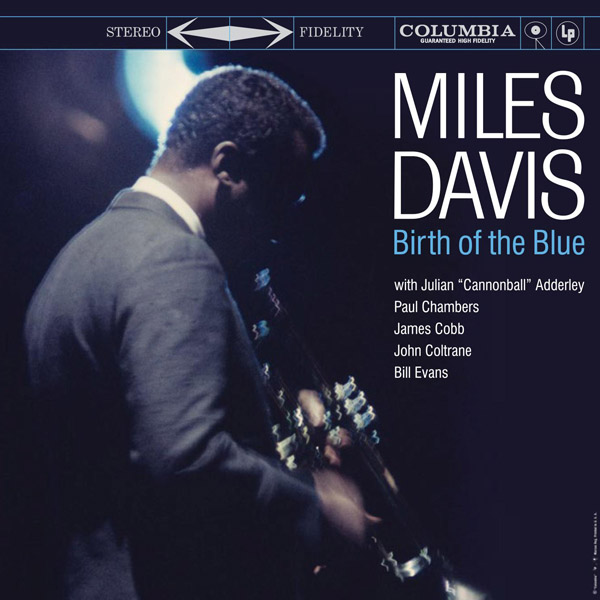
On Thursday, December 5, 2024, Miles Davis came back to New York City. Miles was escorted by Acoustic Sounds' Chad Kassem. This "from beyond the grave" appearance was one of the most memorable listening sessions I have ever experienced. Kassem previewed for us his Analogue Productions' issue Miles Davis—Birth of the Blue (Sony/Columbia APJ 172, 2024). The release date is set for December 13th. on 180-gram vinyl and SACD.
Brilliant Corners #21: German kitchens, Japanese amps, and Afropop gems
I have a day job at a museum. One of my favorite things about working there is taking the elevator from my office down to one of the floors open to the public; I walk into the galleries through a discreet panel in the wall. This makes me feel like I'm in one of those horror-movie manors with a tunnel concealed behind a bookshelf. Sometimes I startle people, which I kind of enjoy.
Mostly I like spending time looking at art, especially in the early mornings when the galleries are empty. Lately, I've been watching art handlers hanging a roughly 100'-long tapestry depicting some manner of planetary jetsamor maybe they are aquatic plantsby Nigerian artist Otobong Nkanga. And I make regular trips to a small theater to watch mesmerizing footage of Orchard Street in working-class lower Manhattan, shot in 1955 by veteran filmmaker Ken Jacobs. Captured on warm, saturated 16mm film, the long-gone people on the screen appear as vividly alive as the museumgoers around me.
My favorite-ever thing at the museum, though, is a life-sized kitchen. Austrian architect Grete Lihotzky designed it for a Frankfurt housing complex in 1927.
Brilliant Corners #28: The McIntosh MC225 and Jerome Sabbagh's Analog Tone Factory
There are things that make me feel so unpleasantly lightheaded that some days I worry my cranium might float away like a helium balloon. Like baby animals generated by AI that I can no longer distinguish from real ones. Skin care for tweens. Headlines about American politics that read like headlines about Turkmenistan. The music of Charli XCX.
And being middle aged. Even the term is a con. At 54, I'm not in the middle of anything, and given the way my back feels in the mornings, the thought of living to 108 fills me with terror. There are things about this stage of life that arrive imperceptibly, and not just the physical frailties. Chief among them is the way one's time on earth begins to feel unsettling and sometimes poignant in its suddenly tangible brevity. Now, when I speak to people in their early 20s, I find myself amazed by their belief that life is brimming with endless possibility and lasts nearly forever. I suppose I might envy them, but I remember being their age and wouldn't relish being that person again.
Fortunately, there's more to middle age than bewilderment at cottagecore and one's worsening nocturia.
Brilliant Corners #32: the Air Tight ATM-2Plus amplifier, Tube Rolling, and Joni Mitchell's Hejira
If you go to Tokyo, there's a good chance you'll develop a new appreciation for shopping malls. The Japanese know malls. They know just what to do with them. Inside a Tokyo mall, you can peruse the usual handbags and shoes in their unending variety. But you can also stare at Fuji apples as large as a baby's head swaddled in tissue paper, flip through the world's most exquisite stationery, stock up on fabric from the 1920s, and taste things that will haunt you well into retirement.
Brilliant Corners #35: the 2025 Capital Audiofest and a Classic Frank Sinatra Album
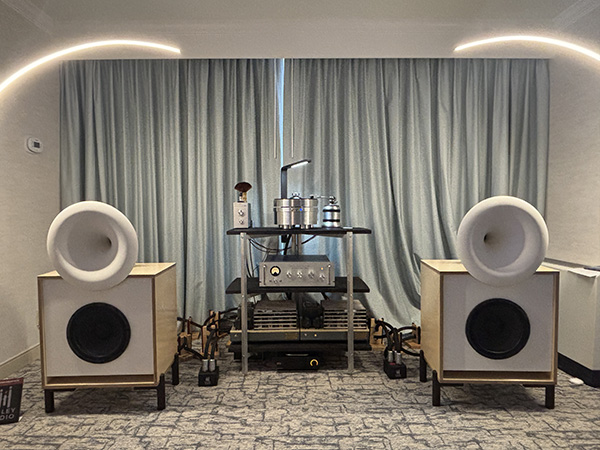
"You should come to CAF," Ken Micallef said. He has been saying this for what seems like decades. "It's cool, smaller and more manageable than AXPONA. You'll like it."
Brilliant Corners #9: a DAC and a Streamer from France's Totaldac
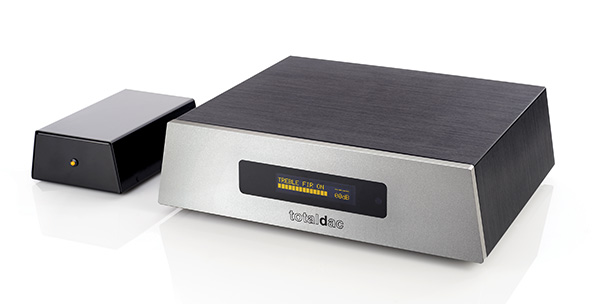
To misquote Morrissey, some knobs are better than others. The Manley Neo-Classic 300B amplifiers that I've been listening to, for example, have a knob marked "feedback" that goes from 0 to 10. I've learned so much from using it that I've come to believe that if your amp doesn't have such a knob, it should. You see, the higher you set this control, the better the amp will measure. Applying more global negative feedback to these amps lowers their nonlinear distortion and noisefloor, increases their bandwidth, renders them less sensitive to the speaker's impedance variations and otherwise makes them more stable and efficient. In fact, by applying lots of feedback to an amplifier, it's possible to reduce distortion to barely measurable levels.
So what's the problem? Well, a few turns of the knob suggest that negative feedback isn't as useful as it appears on paper.