
Stand Loudspeaker Reviews

Sort By: Post DateTitle Publish Date

Boston Acoustics Lynnfield 300L Series II loudspeaker
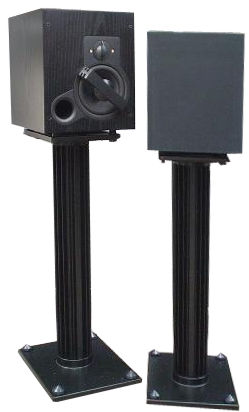
Loudspeaker manufacturer Boston Acoustics made its name—and its fortune—building high-performance but low-cost speakers. Indeed, I recently set up a modest system for my mother-in-law that was based on Boston's classic A-40—a two-way design that sold for just $160/pair back in 1986—and was very pleasantly surprised at the quality these little speakers offered. Back in the early '90s, however, the Massachusetts-based company announced that they were taking a step into the High End with a new loudspeaker line, the Lynnfields (see Thomas J. Norton's interview with Boston's Andy Kotsatos elsewhere in this issue). These were designed by expatriate British engineer Phil Jones, previously responsible for the impressive Acoustic Energy speakers.

B&W Compact Domestic Monitor 1 loudspeaker

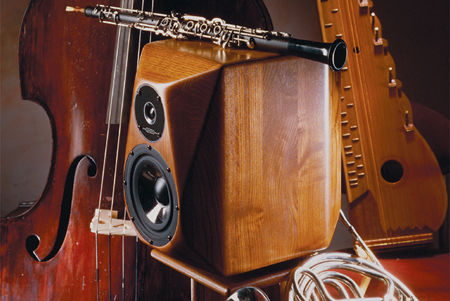
While large, floorstanding speakers appear to offer the most material for the buck, I feel that small stand-mounted speakers both offer the best value in sound quality, as well as standing the best chance of sounding good in moderate-sized listening rooms. In recent months Stereophile has reviewed a varied group of such speakers. In order of descending price, these include the Acoustic Energy AE2 Signature ($5495/pair, November '95); Dzurko Acoustics Jaguar ($4500/pair, reviewed elsewhere in this issue); Totem">http://www.stereophile.com//loudspeakerreviews/462/">Totem Mani-2 ($3995/pair, February '96); Platinum Audio Solo ($2498/pair, November '95); Coincident Speaker Technology Troubador ($1495/pair, January and February '96); Joseph">http://www.stereophile.com//loudspeakerreviews/615/">Joseph Audio RM7si ($1299-$1499/pair, February '96); Acarian">http://www.stereophile.com//loudspeakerreviews/445/">Acarian Alón Petite ($995-$1195/pair, January '96); Phase Technology PC80 II ($699/pair, December '95); and Spectrum 108cd ($399/pair, December '95).


PSB New Stratus Mini

While large, floorstanding speakers appear to offer the most material for the buck, I feel that small stand-mounted speakers both offer the best value in sound quality, as well as standing the best chance of sounding good in moderate-sized listening rooms. In recent months Stereophile has reviewed a varied group of such speakers. In order of descending price, these include the Acoustic Energy AE2 Signature ($5495/pair, November '95); Dzurko Acoustics Jaguar ($4500/pair, reviewed elsewhere in this issue); Totem">http://www.stereophile.com//loudspeakerreviews/462/">Totem Mani-2 ($3995/pair, February '96); Platinum Audio Solo ($2498/pair, November '95); Coincident Speaker Technology Troubador ($1495/pair, January and February '96); Joseph">http://www.stereophile.com//loudspeakerreviews/615/">Joseph Audio RM7si ($1299-$1499/pair, February '96); Acarian">http://www.stereophile.com//loudspeakerreviews/445/">Acarian Alón Petite ($995-$1195/pair, January '96); Phase Technology PC80 II ($699/pair, December '95); and Spectrum 108cd ($399/pair, December '95).


Joseph Audio RM7si loudspeaker

Following my review of two high-performance minimonitors last November (footnote 1), I received a letter asking why I recommended a stand-mounted speaker at all when it was possible to buy a floorstanding design with more bass for the same amount of money. Furthermore, the correspondent went on, when you consider that the minimonitor sitting on its stand occupies as much floorspace as the floorstander, it's hard to see why a market for minimonitors exists at all.


Totem Acoustic Mani-2 loudspeaker

Following my review of two high-performance minimonitors last November (footnote 1), I received a letter asking why I recommended a stand-mounted speaker at all when it was possible to buy a floorstanding design with more bass for the same amount of money. Furthermore, the correspondent went on, when you consider that the minimonitor sitting on its stand occupies as much floorspace as the floorstander, it's hard to see why a market for minimonitors exists at all.


Acarian Alón Petite loudspeaker & PW-1 woofer system

SLAM! My left foot went numb. My fellow salesman, Danny Shapiro, had lost control of the Thiel CS5 that we'd been walking into place in Demo Room V, and it had come crashing down on my foot with unerring accuracy—all 180 lbs worth. As I stared down in horror, I remembered that we'd left the spikes on. But wait a minute—there was no pool of blood spreading out from under the CS5. How could that be? Convinced that the heavy cabinet was acting as a tourniquet, I levered it off my foot, expecting a grisly sight. I got one: my new Rockport pierced by the carpet-point—right between my big and second toes. And people ask me why I like small loudspeakers.

KEF Home THX Loudspeaker System

KEF's Home THX speaker system is somewhat unusual in that it includes an active subwoofer. (While most Home Theater subs are powered types; it's just that few THX models are.) Although powered speakers have never enjoyed much popularity with American audiophiles, they can yield better results than the mix'n'match approach because each amplifier/driver combination can be optimized.

Coincident Speaker Technology Troubador loudspeaker

Coincident Speaker Technology was known until recently as Concentric Speaker Technology. Under that name they marketed a line of cylindrical speakers covered in leather. All of their previous offerings have been discontinued along with their former name; the Troubador ($1495/pair), a handsome two-way housed in an asymmetrical cabinet, is the first of their new line of speakers. A bass module/speaker support à la the Wilson Puppy is also offered. Coincident's speakers are designed by Israel Blume and are direct-marketed in the US. There's a 30-day money-back guarantee and a five-year warranty on parts and labor.
Reference 3a Royal Master Control loudspeaker

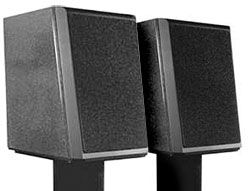
8883aroyals.1.jpgThe match between amplifier and speaker for single-ended operation is critical, which is why John Atkinson suggested I let Wavelength's Gordon Rankin lead when it came to choosing a speaker to partner his special-edition Cardinal amplifiers. If you're not talking roughly 92dB sensitivity and a fairly benign load, say no lower than 6 ohms, you're just not talking single-ended. That precluded running the Cardinals on the big Avalon Ascents with their lowish 86dB sensitivity (in spite of the relatively benign impedance curve).


After more discussion it became evident that the best speakers to use were the very ones Gordon employed in his own reference system—the Swiss-made Reference 3A Royal Master Control loudspeakers.

Advertisement
Advertisement
Advertisement