Solid State Power Amp Reviews

Sort By: Post DateTitle Publish Date

Edge NL-12 power amplifier
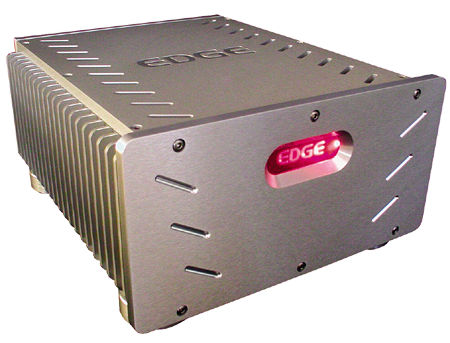
Consider the plight of solid-state muscle amps. Often derided as brutes lacking sophistication or subtlety, particularly by the SET set (ie, fans of single-ended triodes), these powerhouses are taken for granted and often, like Rodney Dangerfield, they get no respect. And once upon a time, the stereotypes were true. Every veteran audiophile has at some time heard an immensely powerful transistor amp that had the soft sonic allure of a sheet of sandpaper, a lumbering oaf of a component with nothing whatsoever to recommend it save for a bulging set of mighty moose muscles.
Theta Digital Enterprise monoblock power amplifier

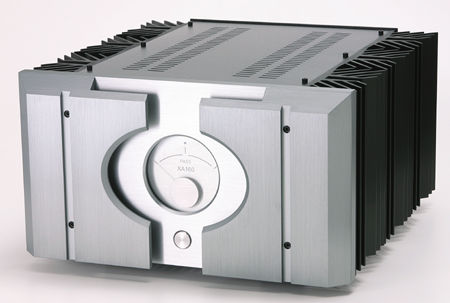
Monoblock power amplifiers seem to be moving in and out of my listening room faster than green-onion salsa from Chi-Chi's. Over the past six months I've had the Parasound">http://www.stereophile.com/amplificationreviews/774">Parasound Halo JC-1, the Halcro dm68, the Pass">http://www.stereophile.com/amplificationreviews/1103pass">Pass XA-160, the Musical">http://www.stereophile.com/amplificationreviews/104mf">Musical Fidelity kW, and now these 300W (into 8 ohms), $4500-each beauties from Theta Digital. All of these amps sounded as different as they looked, which was no surprise; too bad the "measures the same, sounds the same" dogmatists remain open for business.


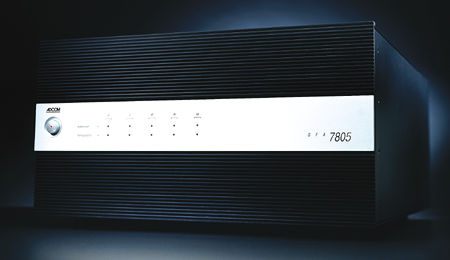
Adcom GFA-7805 five-channel power amplifier

For me, the iconic Adcom power amplifier was the GFA-555. As an aspiring audiophile, I was deeply impressed with Tony">http://www.stereophile.com/amplificationreviews/678">Tony Cordesman's review in Stereophile in 1985 (Vol.8 No.4). That did it! After years of kit-building and doing it myself, the '555 was the first factory-built amp that I wanted and could afford. Over the years, I changed speakers several times, and even added a fully regulated power supply to the '555, but it never balked. At the end of its tenure at my house, it had been demoted to my third-string backup; today it's making someone else tap his toes.


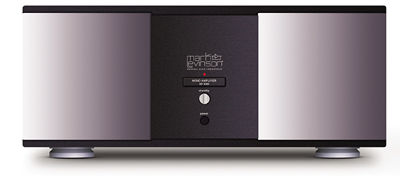
Mark Levinson No.436 monoblock power amplifier

All high-end audio companies turn over their product lines periodically. Even those amplifiers I have depended on as references go out of production. Although my reference amplifier can remain a part of the reviewing sequence, readers won't be able to purchase a discontinued model and get the results I describe. Thus I am compelled to get a review sample of a new amplifier or speaker, and hope for the best.


Lamm Industries M2.1 monoblock power amplifier

How did Michael Jordan, talented as he was at the peak of his powers, always manage to impose his will on his teammates to push them to victory when it counted most? What made Sandy Koufax able to elevate his pitching to a superhuman level when the stakes were highest? A knowledgeable, hardcore sports fan can watch the performance of two players with nearly identical statistics and, after not too long, tell you which one is merely very good and which one is great. What makes a star are intangibles—those qualities you can't quantify or analyze, but can't help but recognize when you're in their presence.


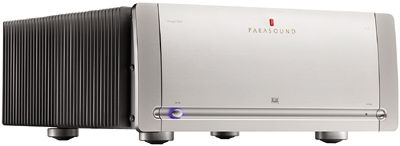
Parasound Halo JC 1 monoblock power amplifier

Thirty years ago, the upstart audio company NAD revolutionized the manufacturing of consumer-electronics components by "internationalizing" the process. Instead of physically making products, NAD hired a project team in one location to design a product that was then built at a sub-contracted factory located elsewhere. The arrangement allowed NAD to go into business with relatively little capital outlay and low overhead. Other companies have since copied this ingenious business model, and, as transportation and communication have improved, doing so has become easier and more efficient. It has brought prices down and quality up—mostly in the low and middle segments of the high-end audio and video markets.


Bryston 14B-SST power amplifier

Talking to fellow audiophiles, I sometimes hear generalizations about power-amplifier design: "High-power amplifiers don't sound as good as low-power amplifiers." "Tube amps are more musical than solid-state amps." "Class-A circuit designs always sound better than class-AB." "Bridged amplifiers don't image precisely, throw deep soundstages, or have the transparency of non-bridged output stages." Etc.
Advertisement
Advertisement
Advertisement