Recording of the Month

Sort By: Post DateTitle Publish Date

Recordings of March 2016: The Beach Boys Today! & Summer Days (And Summer Nights!!)
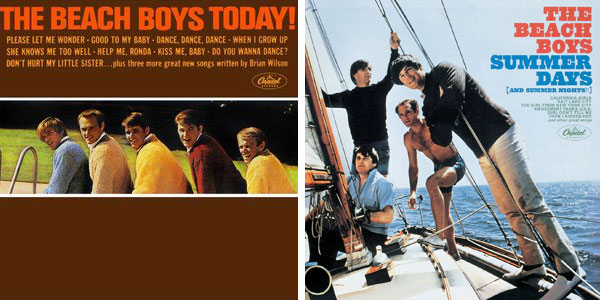
The Beach Boys Today!

Analogue Productions AAPP064 (LP). TT: 27:35

Summer Days (And Summer Nights!!)

Analogue Productions AAPP065 (LP).

TT: 27:44

Both: 1965/2016. Brian Wilson, orig. prod.; Chuck Britz, orig. eng.; Mark Linett, Alan Boyd, stereo mixes; Kevin Gray, mastering. ADA.

Performance *****

Sonics *****


It's a classic case of addition by subtraction. On December 23, 1964, on a flight from Houston to Los Angeles, Brian Wilson had a panic attack—or, perhaps, a full-fledged nervous breakdown. Two more such episodes followed in quick succession, and Brian realized that he could no longer tour with the Beach Boys. At first, Glen Campbell was brought in to replace him in the band's touring edition, until Bruce Johnston permanently took his spot. In an interview conducted by Earl Leaf, quoted by Tom Nolan in the October 28, 1971, issue of Rolling Stone, Wilson had this to say about his decision:


"I told them I foresee a beautiful future for the Beach Boys group but the only way we could achieve it was if they did their job and I did mine. They would have to get a replace ment for me ... I didn't say 'they' I said 'we' because it isn't they and me, it's 'us.'
Recording of February 2016: A Love Supreme: The Complete Masters

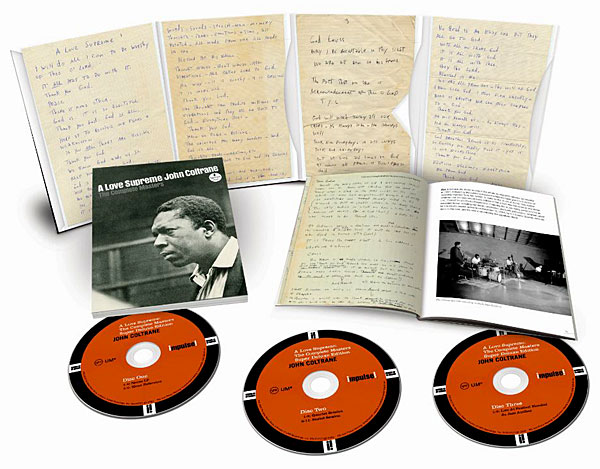
John Coltrane: A Love Supreme: The Complete Masters

John Coltrane, Archie Shepp, tenor saxophone; McCoy Tyner, piano; Jimmy Garrison, Art Davis, bass; Elvin Jones, drums

Impulse! 80023727-02 (3 CDs). 1965/2015. Bob Thiele, orig. prod.; Rudy Van Gelder, orig. eng.; Harry Weinger, Ashley Kahn, reissue prods.; Kevin Reeves, reissue mastering. ADD? TT: 2:43:31

Performance *****

Sonics *****


While every jazz fan has his or her favorite period of John Coltrane's career—the promising Prestige years, the "hits" on Atlantic, the single knockout punch of Blue Trane, his lone album for Blue Note—nearly everyone agrees that the intensely realized vision and sonic charms of A Love Supreme make that album his masterpiece. The recordings Coltrane made for his final label, Impulse!, at first swung between more free jazz outings like Impressions (1963) and more conventional recordings, such as duet albums with Duke Ellington and Johnny Hartman (both in 1963). A Love Supreme (1965) was his most coherent artistic statement, one grounded in his love for God, and embodying an affirmation of the power of love over dissension and division. The album also marked the beginning of Coltrane's final two years, in which he would relentlessly plumb new depths of meaning in his music, and hone an ever more assaultive, angular sound that seethed with emotion and an endless stream of ideas. The strident, dissonant, refractory music that followed A Love Supreme, and now known as his New Thing, remains controversial.

Recording of January 2016: Verdi: Aida

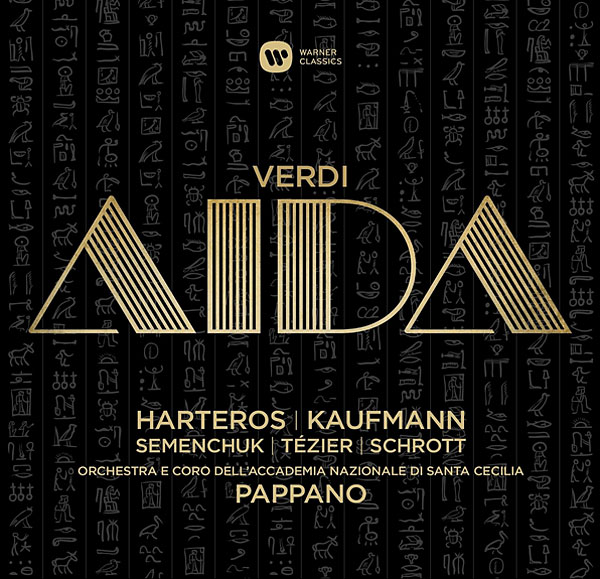
Verdi: Aida

Anja Harteros, Aida; Eleonora Buratto, High Priestess; Jonas Kaufmann, Radames; Ekaterina Semenchuk, Amneris; Ludovic Tézier, Amonasro; Erwin Schrott, Ramfis; Marco Spotti, The King; Chorus & Orchestra of Santa Cecilia Academy Rome, Sir Antonio Pappano

Warner Classics 0825646106639 (3 CDs). 2015. Stephen Johns, prod.; Luca Padovano, Giancarlo Ianucci, Claudio Emili, Marco Emili, engs. DDD. TT: 2:26:45

Performance ****½

Sonics ****½


It has been a long time since we've had a big-budget, studio recording of Aida; in fact, the last was from 2001, and it was awful—conductor Nikolaus Harnoncourt's attempt to present an intimate (read: "miniaturized") reading of the score, a sort of period-instrument approach with small-voiced singers. In all, Aida has been taken on nearly 30 studio outings (the first was in 1928), and there are "private" and video versions. This is one of the best, with what might arguably be the finest cast one can assemble today.

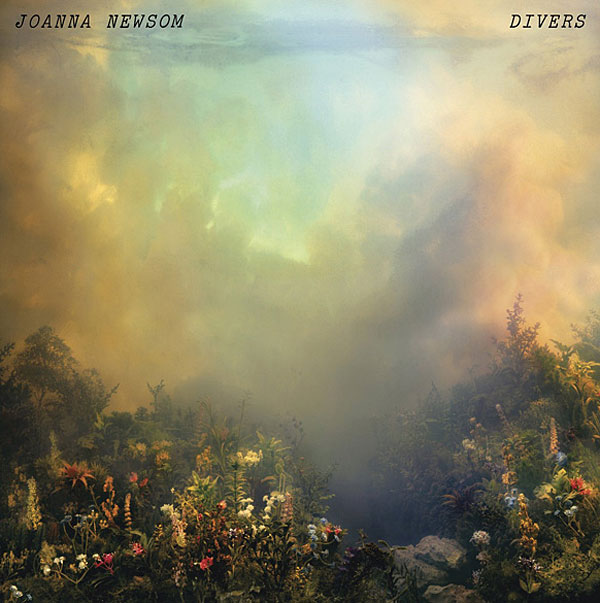
Recording of December 2015: Divers

Joanna Newsom: Divers

Drag City DC561 (LP/CD). 2015. Joanna Newsom, prod.; Noah Georgeson, prod., eng.; Steve Albini, eng.; John Golden, mastering. ADA/ADD. TT: 51:56

Performance *****

Sonics ****


It's hard to imagine a more auspicious debut than Joanna Newsom's The Milk-Eyed Mender (Drag City DC263): Her songs on that 2004 release were imaginative, memorable, and almost uniquely literate, and her performances of them—she sang as distinctively as she wrote, and on most of them, her full-size Lyon & Healy concert harp was the sole accompanying instrument—were effective and thoroughly charming. At the age of 22, Newsom had created one of the most original pop records in memory.

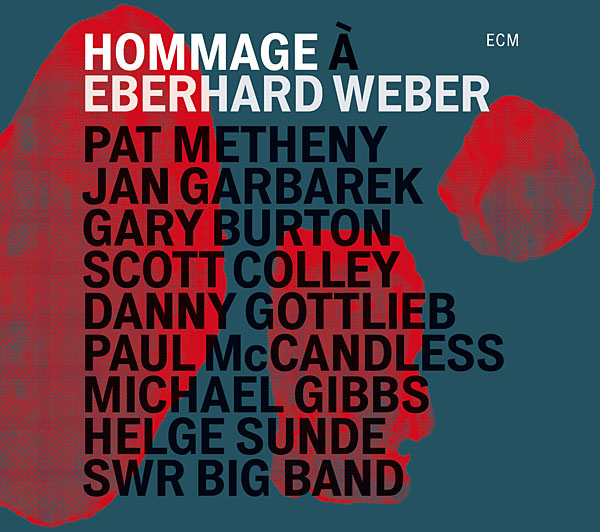
Recording of November 2015: Hommage à Eberhard Weber


Various Artists: Hommage à Eberhard Weber

Pat Metheny, Jan Garbarek, Gary Burton, Scott Colley, Danny Gottlieb, Paul McCandless, Michael Gibbs; SWR Big Band, Helge Sunde, conductor

ECM 2463 (CD). 2015. Martin Muhelis, concert prod.; Doris Hauser, Volker Neumann, Boris Kellenbenz, Pete Karam, Manfred Eicher, engs. DDD? TT: 69:48

Performance *****

Sonics *****


There once was a joke about how technology would someday replace troublesome musicians: Instead of putting up with drummers being late to gigs, keeping irregular time, and stealing everyone else's girlfriends, a trouble-free robot could take over. It seems that some of those predictions have come true. This single disc documents two concerts held in Stuttgart, Germany, in January 2015, to celebrate the 75th birthday of hometown German jazz electric bassist Eberhard Weber, who has been unable to play since suffering a stroke, in 2007. Via tape loops and video samples of Weber playing, he nonetheless played a large part in his birthday celebration, particularly in the concerts' centerpiece, Pat Metheny's 30-minute "Hommage," a rare example of Metheny writing for big band and a tour de force of Weber's distinctive playing.

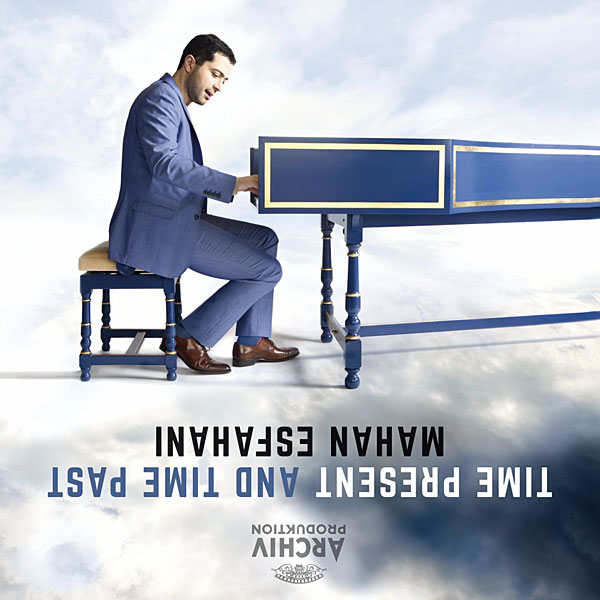
Recording of October 2015: Time Present and Time Past

Mahan Esfahani: Time Present and Time Past
C.P.E. Bach: 12 Variations on "Les Folies d'Espagne." J.S. Bach: Harpsichord Concerto in d, BWV 1052. Geminiani: Concerto Grosso in d (after Corelli). Górecki: Harpsichord Concerto. Reich: Piano Phase for Two Pianos (harpsichord version: Esfahani). A. Scarlatti: Variations on "La Folia."

Mahan Esfahani, harpsichord; Concerto Köln

Archiv Produktion 4794481 (CD). 2015. Christoph Classen, prod.; Michael Morawietz, eng. DDD. TT: 73:45

Performance ****½

Sonics *****


This razzle-dazzle release is remarkable on several levels, and I wouldn't be surprised if it converted harpsichord haters to harpsichord hipsters. Iranian-American harpsichordist Mahan Esfahani, stealing a quote from T.S. Eliot about the relevance—or irrelevance—of time and (while he's at it) the harpsichord, here presents the instrument in works written for it in the 17th and 18th centuries, interspersed with pieces by two 20th-century composers. (The album's title references these lines from Eliot's Four Quartets: "Time present and time past / Are both perhaps present in time future, / And time future contained in time past.") Esfahani's argument holds water: bringing an "olde" instrument into the present with unflinchingly contemporary music turns this debut solo-recital disc into a splendid event—and, yes, proves that baroque music, with its repeating patterns, can make a fine pairing with minimalism. It's all far less jarring than you might think, and does provoke thoughts about the slippage of time.

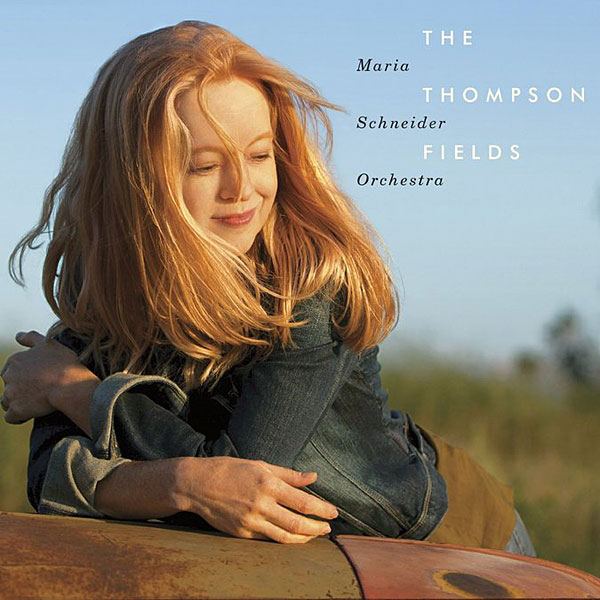
Recording of September 2015: The Thompson Fields

Maria Schneider Orchestra: The Thompson Fields

Maria Schneider, composer, arranger, conductor; 18-piece orchestra

ArtistShare AS0137 (CD). 2015. Maria Schneider, Ryan Truesdell, prods.; Brian Montgomery, eng. DDD. TT: 77:25

Performance *****

Sonics ****


The world's leading figure in orchestral jazz has not released a jazz recording in eight years. In her liner notes, Maria Schneider says, "This album was funded by my ArtistShare fan base. Making a recording like this is becoming increasingly difficult and would now be impossible without the generous support of my many participants."


Today, big jazz bands rarely tour. Some are stable entities, but on a part-time basis. Most, like Schneider's, come together for projects, then go their separate ways. Yet against all odds, large-ensemble jazz survives because no other format offers its range of expression and its power.

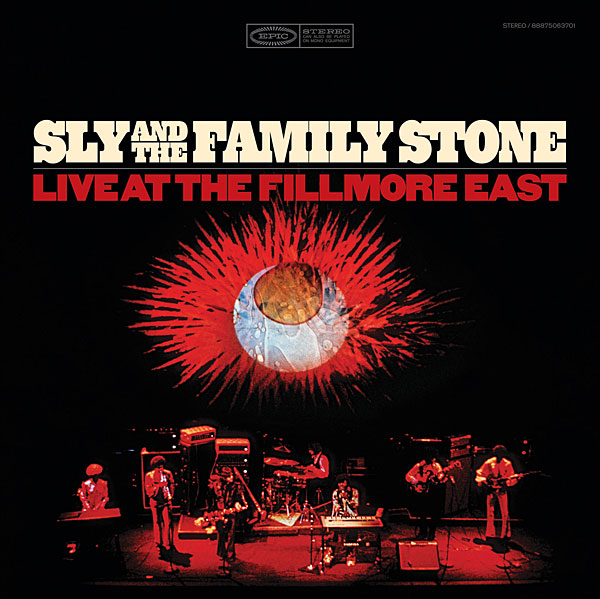
Recording of August 2015: Sly and the Family Stone Live at the Fillmore East


Sly and the Family Stone: Live at the Fillmore East, October 4th & 5th, 1968

Epic 88843023712 (4 CDs). 2015. Sly Stone, orig. prod.; Bob Irwin, reissue prod.; Vic Anesini, mastering. AAD? TT: 3:27:31

Performance *****

Sonics ****


The first thing you hear is not Sly Stone's keyboards or harmonica. Not Freddie Stone's guitar. Not Greg Errico's amazing drumming. Not Larry Graham's slapping bass. Not the voices of Rose Stone (also keys) and Cynthia Robinson (also trumpet). Not Jerry Martini's saxophone.


No. The first thing you hear is pure energy: the nuclear reaction of musical power that Sly and his Family Stone generated onstage on two October nights in 1968 at the Fillmore East. James Brown and his band(s) had nothing on these seven. This is prime Sly, when the band was still hungry, before the hits, before his life spun out of control, the music suffered, and the family split.

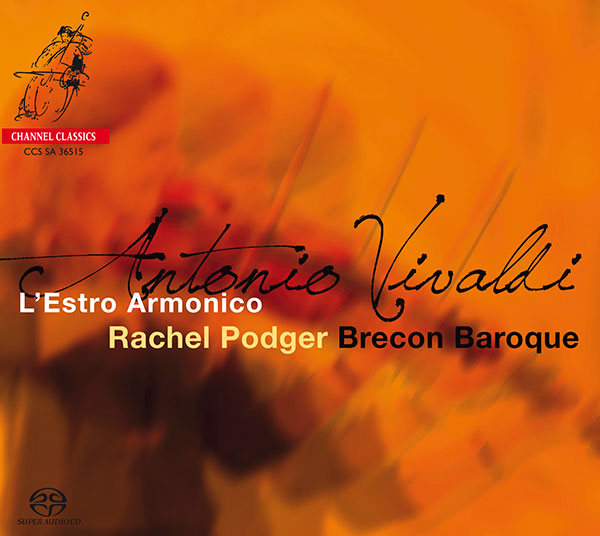
Recording of the Month: Vivaldi: L'Estro Armonico

Vivaldi: L'Estro Armonico: 12 Concertos for Violins, Op.3

Rachel Podger, Bojan Cicic, Johannes Pramsohler, violin; Brecon Baroque, Rachel Podger

Channel Classics CCS SA 36515 (2 SACD/CDs). 2015. Jonathan Freeman-Attwood, prod.; Jared Sacks, eng.; Ernst Coutinho, asst. eng. DDD. TT: 96:54

Performance *****

Sonics *****


It's no big secret that classical music is in trouble. At a time when selling a few hundred CDs will land you squarely in the upper reaches of the classical music chart, and the venerable New York Philharmonic faces an unsettled future in terms of its endowment, future conductor and hall renovation, many say that what the genre most lacks are genuine shining stars. It's been a long time since maestros like Leonard Bernstein or Georg Solti trod the boards, or a brilliant instrumentalist like Jacqueline du Pré became a celebrity and attracted the attention of a larger public that then might actually buy a record or attend a concert. In 2015, building an audience is classical music's central dilemma—so having a dominant player like baroque violinist Rachel Podger is a much-needed development. It's a sign of our fragmented times that a baroque violinist, rather than one who concentrates on the classical and romantic repertoire, has now become a leading light in the classical world.

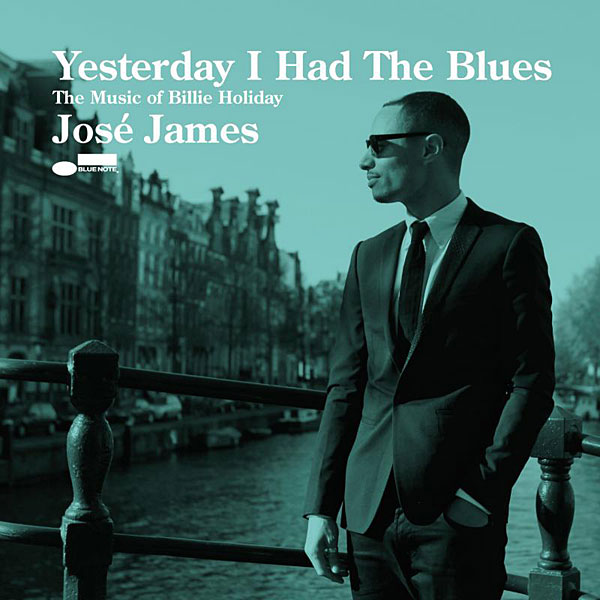
Recording of June 2015: Yesterday I Had the Blues

José James: Yesterday I Had the Blues, The Music of Billie Holiday

Blue Note B002283102 (CD). 2015. Yoshihisa Saito, exec. prod.; Don Was, prod.; Chris Allen, eng., mix. DDD? TT: 49:33

Performance ****

Sonics *****


Unlike the conundrum of today's country music, whose lyrics celebrate family and tradition even as the country-music community ignores and disrespects the giants of the music's past, jazz and rock have for the most part remembered and celebrated their musical pioneers and game changers, and the singular, monumental virtuosity of artists like Billie Holiday.

Advertisement
Advertisement
Advertisement