Art Dudley Listening

Sort By: Post DateTitle Publish Date

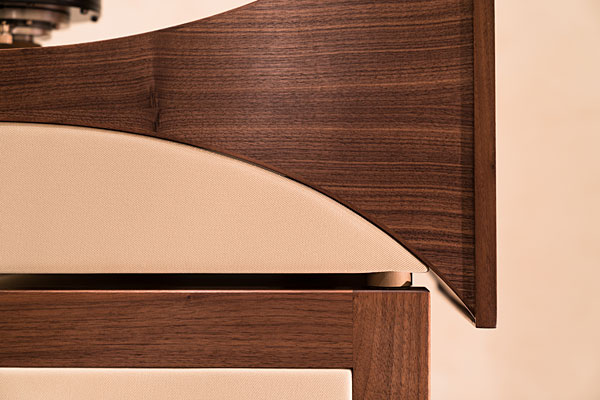
Listening #170: Audio Origami UniArm
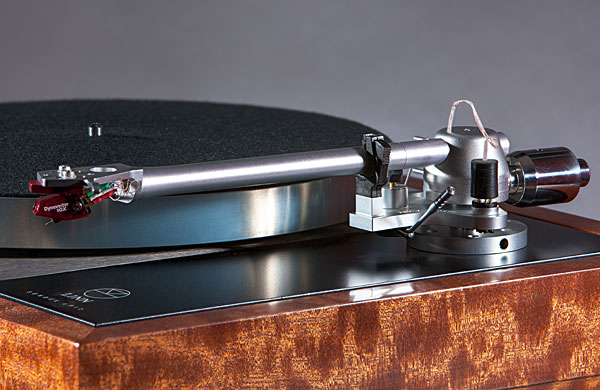
My first attempt at writing this piece began with a list of the Top Ten Audio Products I Wish Were Still in Production. Unfortunately, that proved unworkable. Although some of my selections—the Audio Research SP-6C preamplifier, the Stax ELS-F81 loudspeaker—were straightforward, it turned out that most of the others were burdened with complications. Examples: It's no longer feasible to mass-produce Bakelite headshells for a revival of the original Ortofon SPU or similar phono pickup. It's no longer possible to obtain the precisely correct vacuum tubes and other components required to return to production the Leak Stereo 20 amplifier. And I'm certain that a torch- and pitchfork-wielding mob would prevent the manufacture of an authentic Altec 604B drive-unit, unless those audio villagers were first allowed to "improve" the design.

Listening #169: Altec Flamenco

On a bright, warm day in September, at the memorial gathering for our colleague Wes Phillips, I overheard John Atkinson, in pre-ceremony conversation, discussing men's fashions: "What's popular these days," he said, with a degree of puzzlement that stopped short of disapproval, "is very long hair on just the top, with nothing on the sides and back." Then he added, this time with disdain, "What I don't understand is this trend where men wear dress shoes without socks—which I have actually seen!" The fact that we were in Park Slope, Brooklyn—the very jaw of the hipster possum—may have triggered his observations, which I overheard while chatting with Stereophile alum Laura LoVecchio. I remember reflexively looking down at my own ankles, to make sure I was wearing socks. I was.

Listening #168: Ortofon SPU #1S phono cartridge

I'm a progressive who enjoys the company of his conservative friends, a Catholic who's thankful for his atheist friends, and a carnivore who cherishes his vegetarian friends. I'm also a vintage-audio enthusiast who loves his audiophile friends who aren't so inclined—so I was doubly happy to see, in the September 2016 edition of Michael Fremer's "Analog Corner," a hearty endorsement of Ortofon's latest SPU: a 58-year-old phono-cartridge design that, like the coelacanth, continues to thrive despite expectations.


Mikey is a longtime friend who harbors no love for vintage phonography—yet after playing his first record with the new SPU #1E ($659), he wrote: "I immediately, and much to my surprise, got what the SPU cult is all about."

Listening #167: Auditorium 23 Hommage Cinema loudspeaker

Keith Aschenbrenner, proprietor of Auditorium 23, based in Frankfurt, Germany, has long been associated with the people and products of Shindo Laboratory: From the early 1990s until the EU's 2006 implementation of the RoHS 1 regulation, which banned the sale of various old-style electrolytic materials—and thus most of Shindo's products—Auditorium 23 was the brand's European distributor and, arguably, one of its most empathetic and enthusiastic retailers worldwide. Throughout that time, and continuing through to today, Aschenbrenner has also worked as a designer and manufacturer of Shindo-friendly ancillaries and loudspeakers.

Listening #166

They don't make 'em like they used to.


That aphorism has few fans among people shopping for cancer drugs, contact lenses, GPS receivers, and laptop computers, all of which seem to get better with each passing year. Hell, even I know that.


It earns a more positive reply from anyone who's shopping for an oriental rug, or a fly rod, or a tweed jacket, or a musical instrument—people who will tell you that their fond response to the market for vintage examples of such goods is motivated by two things: older products were better made than their newer counterparts (better designs, better materials, better manufacturing techniques), and some, if not all, of those products, over time, actually improve with use.

Listening #165

Fifteen years ago, when I was the Editor of Listener, I wrote a response to a reader's letter in which I repaid unpleasantness with unpleasantness: something I justified by flattering myself that my brand of unpleasantness had the advantage of being clever. Not satisfied with making his point sound foolish, I made certain that the writer of that letter would himself be made to look ridiculous. I made fun of his name, too.


Prior to publication, I showed my handiwork to my wife, Janet, as per my usual practice. I expected her to laugh at the funny bits and praise my superior logic, also as per usual.

Listening #164: Luna Cables

I should have seen this coming: Less than a year after the last time I railed against the darkness of cable reviewing—the indignity of crawling around behind my equipment rack, the tedium of comparing one wire to another, the frustration of trying to wring from the experience some fresh and hopefully entertaining observations, the horror of dealing with manufacturers whose hunger for good publicity borders on the vampiric—I have once again invited into my home a cable manufacturer and his wares.

Listening #163

One

Everything makes a difference. Everything. File that away.


Two

There are two kinds of good sound: good sound sound and good music sound. While I could describe the distinction in few words or many, it's easier to point to two recordings of Elgar's oratorio The Dream of Gerontius: by Sir Adrian Boult and the New Philharmonia Orchestra, with tenor Nicolai Gedda singing the title role (2 LPs, EMI SLS 987); and by Malcolm Sargent and the Liverpool Philharmonic Orchestra, with Heddle Nash in the lead (2 LPs, EMI RLS 709).

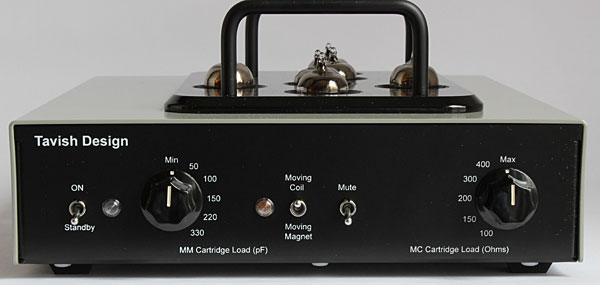
Listening #162: Tavish Adagio phono preamplifier

Though Westchester County, New York, seems a likelier locale for Bikram yoga studios, pet psychologists, and pricey restaurants specializing in "grain bowls" and fermented vegetables, the idea of manufacturing audio gear there is not without precedent. Cartridge manufacturer Micro-Acoustics (Elmsford, NY) thrived there for over two decades. George Kaye and Harvey Rosenberg's New York Audio Laboratories (Croton-on-Hudson, NY) assembled Moscode amplifiers there. Even the notorious loudspeaker manufacturer Fourier Systems (Yonkers, NY and Cocytus, Hell) got their start in the county that Hillary Clinton calls home, as needed.

Listening #161

Yet knowing how way leads on to way,

I doubted if I should ever come back.
—Robert Frost


Perhaps it was different for other audio hobbyists in other parts of the world, but to this American, the Naim Audio of the late 1970s and early '80s seemed a bit prickly. It wasn't just their road-less-traveled-by attitude toward amplifier design—scorning class-A output architecture, preferring DIN connectors to RCA jacks, routing preamp output signals and power-supply voltages through the same cable—but also the British company's perspectives on selling and setting up and even listening to hi-fi gear that seemed combative: Shopping for amplifiers based on output power is foolish. Using short speaker cables and long interconnects is the wrong way to go about it. And why do you Americans bother with all that "soundstaging" nonsense?

Advertisement
Advertisement
Advertisement