As We See It

Sort By: Post DateTitle Publish Date

A Year of Dueling Shows
This year is not only one of fallout from the most divisive political campaigns of our time, but will also one of competing audio shows too close for comfort. Southern California will see dueling audio shows three months and 35 miles apart, and New York City and Washington, DC will host shows on consecutive weekends. While a proliferation of audio shows potentially presents plenty of opportunities for audiophiles to hear new gear, such conflicts ultimately limit which manufacturers can exhibit where, and can render some shows a poor value.

The Price Event Horizon

Last July and September I made two loudspeaker-related road trips: first to Rockport Technologies, in Maine, to audition their new Lyra; and then to high-end dealer-distributor GTT Audio, in deepest, darkest New Jersey, to audition YG Acoustics' new Sonja XV. Both speakers offer innovative, proprietary drive-units and heroic audio engineering, especially regarding their enclosures, which are constructed from aluminum. Both experiences took place in superbly well-designed and optimized listening rooms with front-end and amplification components that were beyond reproach. The sound quality offered by the Rockport and YGA speakers was simply superb, both stepping entirely out of the way to offer maximum communion with the music.

The Sound of the Human Heart

Not everything that can be counted counts, and not everything that counts can be counted.—William Bruce Cameron, Informal Sociology: A Casual Introduction to Sociological Thinking (1963)


I hear not the volumes of sound merely, I am moved by the exquisite meanings.—Walt Whitman, "That Music Always Round Me," from Leaves of Grass


These two statements, to me, express the core perspective shared by Stereophile's contributors. When I encountered both of them within a span of 30 days, they spoke so strongly that I felt impelled to hook up the biggest, baddest loudspeakers I could find and broadcast them to the world, without distortion. Failing in that quest, and having not yet attained the status of the Edward R. Murrows and Walter Cronkites of eras past, I share them here.

Take Two Grateful Deads and Call Me in the Morning

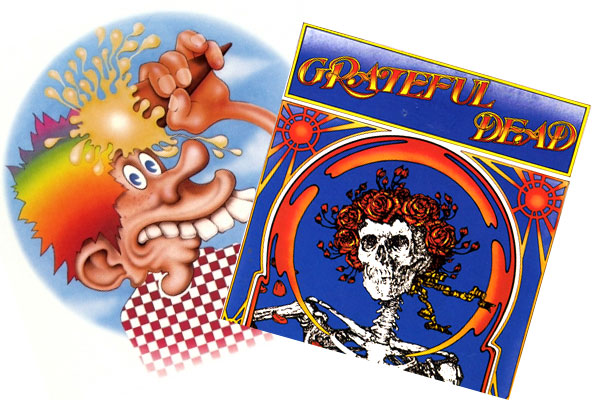
My friend was in dire straits. What had been rare occurrences of panic attacks—one every year or so—had turned into a full-blown panic disorder that made it impossible for him to enjoy peace of mind..


If you've never suffered a panic attack, the idea of one—of being, in the absence of any real threat, suddenly overwhelmed by fear—can seem inconceivably strange. Try to imagine fear flooding your mind with such fierce momentum that you struggle to catch your breath, so convincing is the sensation that everything is spinning horribly out of control. Once that happens and the fear has taken over, it doesn't matter if the threat is real or not.

Steve Guttenberg's 116th Dream

I'm at Dan D'Agostino's house listening to his triamped Apogee full-range ribbon speakers. It's 1985. His listening room is immense, easily 30' by 45', and we're rocking out to Led Zeppelin and Bonzo Dog Band records. The sound is light-years better than anything I've heard—dynamic as hell, beyond vivid, and the soundstage has infinite depth—and Dan's obviously loving that I'm blown away by his system. We get to talking. He has three pairs of Krell KMA-160 monoblocks and Reference KRS preamps for me. Thanks, I say, but how can I get them home? No problem—Dan has a van.

Don't Play It Again, Sam!

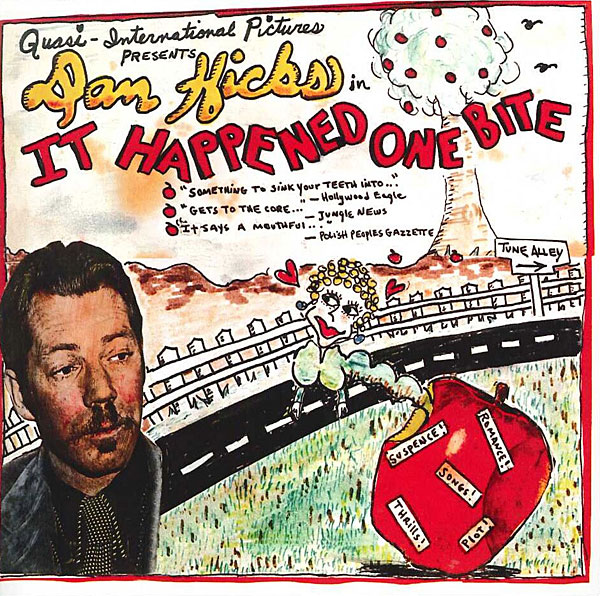
What do Prince, David Bowie, Merle Haggard, Gato Barbieri, Phife Dawg, Frank Sinatra Jr., Keith Emerson (Emerson Lake & Palmer), Dan Hicks (Dan Hicks and His Hot Licks), Maurice White (Earth, Wind & Fire), Paul Kantner and Signe Toly Anderson (Jefferson Airplane), Glenn Frey (Eagles), Dale Griffin (Mott the Hoople), pianist Paul Bley, bassist Rob Wasserman, sopranos Susan Chilcott, Phyllis Curtin, and Denise Duval, countertenor Brian Asawa, composers Steven Edward Stucky and Sir Peter Maxwell Davies, and conductors Pierre Boulez, Nikolaus Harnoncourt, Gilbert Kaplan, Gregg Smith, and Royston Nash have in common? Besides the fact that all were musicians who made multiple recordings and who died in 2016, their recorded legacies rarely, if ever, get airplay at dealerships or audio shows.

The First Transducer

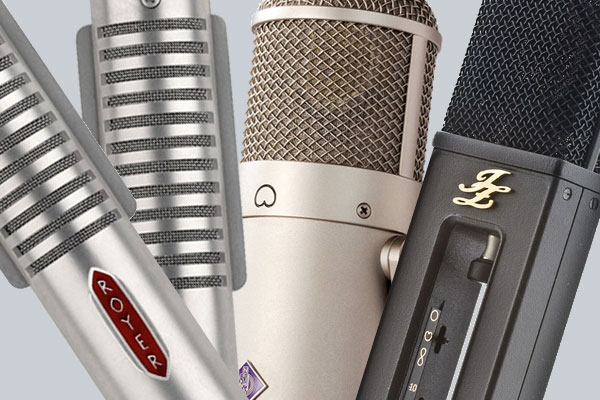
A recording engineer's choices of microphones to record singers, guitars, horns, bass, drums—or an entire orchestra—are absolutely crucial. Those very subjective choices are, in large part, what separate the best recordings from the also-rans. When I contacted some of the best engineers in the business to talk about mikes, I got an earful. I was told that mikes have a more profound impact on reproduced sound than does any other link in the recording chain. Yes, the acoustic of the recording venue also plays a huge role, and post-session mixing and mastering can of course improve or ruin the sound—but the choice of mikes is absolutely crucial.

Are You in your Happy Zone?

Once in a blue moon, I'm asked this question: How much should I spend on an audiophile rig? It's usually asked by someone with no real interest in buying an audiophile rig, but who's fishing, for giggles, for the exorbitant figure that is the presumed going rate for joining our hobby. Sometimes, when the mood strikes, I'll bang out a randomly absurd number—"$80,000!"—then lean back to observe the fallout. Nine times out of ten, that fallout consists of a head shake and a snicker, as if to say, "You guys are nuts!" But on those occasions when honesty seems the best policy, my short answer to the how-much question, regardless of the buyer's financial means, is the same: As little as possible.

What If They Gave a CES and Nobody Came?

Last January, in Las Vegas, a record 170,000 people attended the 2016 Consumer Electronics Show. Most of them neither saw nor heard a trace of high-end audio gear. Not only was all mention of what CES calls "high performance audio" absent from the show's official Attendee Guide, but the hallways of the Venetian Tower, which in past CESes were filled with high-end manufacturers, dealers, and distributors, were anything but crowded.
Advertisement
Advertisement
Advertisement