Integrated Amp Reviews

Sort By: Post DateTitle Publish Date

Schiit Audio Ragnarok integrated amplifier
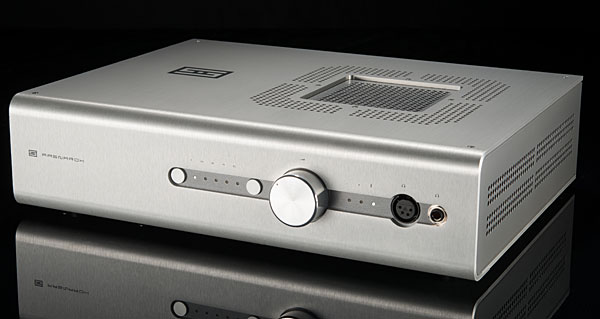
This is a story about vulgar words and what is likely one of the most innovative and exciting, yet self-consciously idiosyncratic, audio components of the 21st century: Schiit Audio's Ragnarok integrated amplifier ($1699).


I never use vulgar words—at least not in public. I rarely use the word shit as an adjective, a verb, or a noun. Therefore, when I first heard of an audio company founded by legendary audio engineer Mike Moffat (formally of Theta) and award-winning science-fiction author and audio polymath Jason Stoddard—a company named Schiit—I could permit myself to pronounce its name only as Shite. I thought it made me sound British instead of rude.
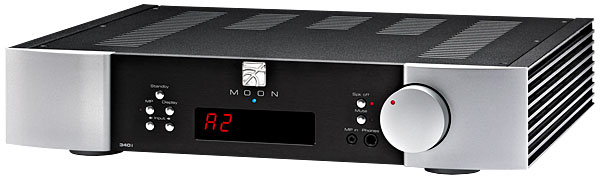
Moon by Simaudio Neo 340i integrated amplifier

August 26, 1944: The liberation of Paris. Imagine ranks of tattered Canadian soldiers marching past the Moulin Rouge à Paris. The voice of Édith Piaf singing "Ou sont-ils, mes petits copains?" (Where are my boyfriends?). Maurice Chevalier crooning "Ça sent si bon la France" (It smells so good in France). A Canadian army tank with the words Kaput and Finito painted in white above the word Montréal, motoring past the Eiffel Tower. Remember the fresh, celebratory taste of fine Champagne.

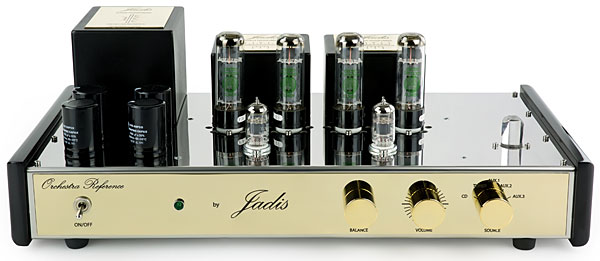
Jadis Orchestra Reference Mk.II integrated amplifier

I don't think Americans dislike the French a tenth as much as the corporate media, in their endless struggle to sell our pettiest ideas back to us in cartoon form, suggests we do. Our nations' histories are intertwined, to our great mutual benefit. Americans envy the French their centuries of cultural accomplishments, the French envy Americans their sense of industry and their wide-open spaces. (That one's a tie.) We turn to them for wine, they turn to us for blue jeans. (A point for France.) We watch their films about law-breaking hipsters, they watch our films about law-breaking gangsters. (A point for the US, in whose films things actually happen.)

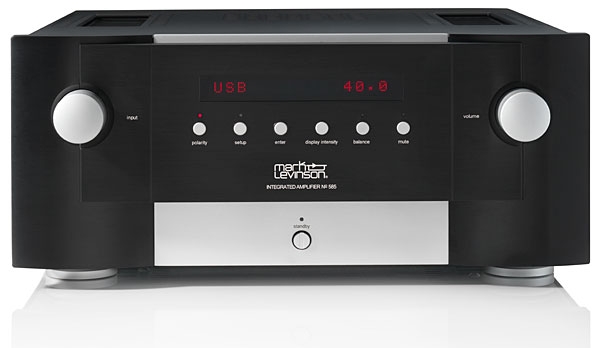
Mark Levinson No.585 integrated amplifier

In July 2000, I reviewed the Mark Levinson company's first integrated amplifier, the No.383, and found that its sound had "clarity, transparency, liquid mids and highs, with dynamic contrasts." Also evident were the No.383's power-output limitations, the result of building large power supplies and heatsinks into a single case that had to fulfill multiple functions. Still, the No.383's price of $5900 was much less than the total cost of the equivalent in Mark Levinson separates. Later, in April 2007, I reviewed a similarly powered integrated amplifier, Bryston's B100-DA ($3195), which included a built-in DAC.

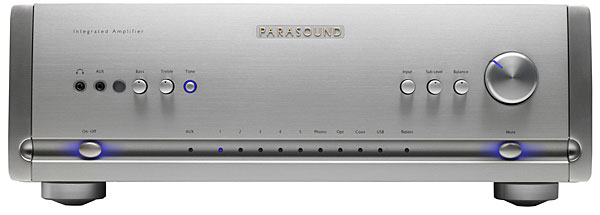
Parasound Halo Integrated integrated amplifier

Like baking bread or watering my garden, playing records in my monk's cell is an expression of my devotion to living mindfully. It is part of my search for identity and comfort. It shows me how my thoughts, feelings, and poetic imagination fit in with yours, Keith Jarrett's, and everyone else's. The only problem: Often, the stereo components that most enhance my experiences of devotion and identity are not those that I can sincerely declare to be the most accurate or neutral.

Musical Fidelity Nu-Vista 800 integrated amplifier

Nuvistors—miniature, small-signal, vacuum tubes made of metal and ceramic—were introduced by RCA in 1959, at the dawn of the transistor revolution. RCA used them throughout the 1960s in its New Vista line of television sets, mostly in the tuner section. But by the early 1970s, solid-state devices had all but replaced tubes, nuvistors included (with a few notable exceptions). Ampex based the electronics of its well-regarded, late-'60s MR-70 open-reel tape deck on nuvistors, which were also used in microphone preamplifiers—in both cases for their very low noise and reputation for reliability and long life. For a time, Conrad-Johnson used them as well. While nuvistors may seem exotic today, they're hardly rare. On eBay you can find for sale hundreds if not thousands of used and new-old stock (NOS) nuvistors, as well as nuvistor sockets, without which the tubes are less easy to implement. (But they can be, and often are, hard-wired into a circuit.)

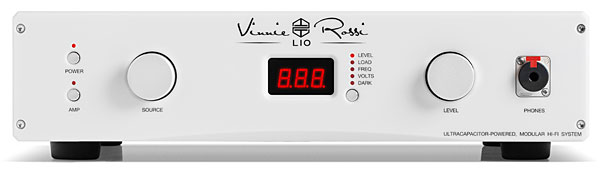
Vinnie Rossi LIO modular integrated amplifier

My girlfriend, "bb," a 6'-tall Aries artist, always says, "Math, science, religion, and even history, are all simply stories we tell ourselves about our experiences with a phenomenon we call energy."


My father, Herb Senior—the Deacon—always said, "The fundamental nature of the universe is vibratory—everything we experience is just waves!" He explained that waves—possessing power, amplitude, and frequency—are the basic building blocks of our reality. The universe actually "works" and is "comprehensible" because these waves are not random, but organized into exponential intervals called octaves. Our job, he told me, was to recognize and study this mathematical (and mystical) nature in action.


It's a shame that bb and the Deacon never met.

Creek Evolution 100A integrated amplifier

As an audio scribe, the fiercest demons I wrestle are beliefs—yours and mine; those of my friends, my editors, my fellow reviewers; and those of the engineers and promoters of the products I write about. Sometimes the force of these rabidly held and (mostly) conflicting beliefs paralyzes me with self-doubt: What do I know? What makes me qualified to listen and judge?

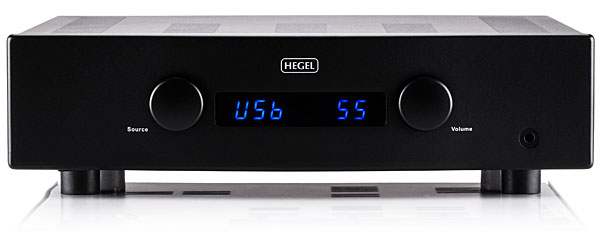
Hegel Music Systems H160 integrated amplifier

For decades, I read all the British and American audio magazines, and I pretty much believed everything written therein—with one exception. The equipment reviews published in Stereo Review had an off-puttingly disingenuous quality. I learned a lot from the magazine's reviews of recordings and loudspeakers, but every time senior editor Julian Hirsch wrote that any amp with sufficiently high power, low measured distortion, and high damping factor would sound the same as any other with similar qualifications, I felt estranged from my favorite hobby. Stereo Review's arrogance came off as duplicitous and self-serving. The magazine seemed committed to stamping out all forms of individualized audio connoisseurship.
Advertisement
Advertisement
Advertisement