Music in the Round

Sort By: Post DateTitle Publish Date

Music in the Round #100: Multichannel & Merging Anubis
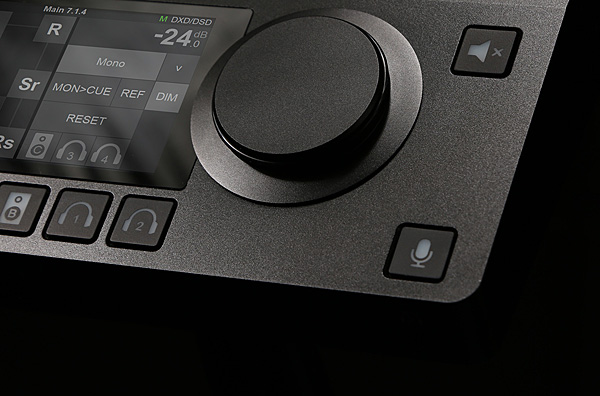
This is the 100th and—surprise!—final edition of Music in the Round. MitR began in mid-2003, shortly after SACD and DVD-A discs made high-quality multichannel music convenient and widely available. At the time, I was convinced that multichannel reproduction was superior to stereo because it was able to reproduce the full sound of the performance—not just the performers. Stereophile's founder, J. Gordon Holt, had promoted this idea many times, but the appearance of the new media finally brought it to a wider audience.

Music in the Round #99: Revel & exaSound

There is necessity as well as comfort in having a long-term reference recordings and, system. The necessity derives from the familiarity with the reference that allows for comparisons and contrasts with the equipment being tested. The comfort that comes from the familiarity lets me relax and enjoy recreational music, relieved from the need to focus my attention intently on the sound. I do relish getting my hands on lots of interesting audio equipment and getting to play it in my own home, but it's like a two-month one-night stand: The new stuff usually goes back even if I am impressed. I don't change my audio equipment often.

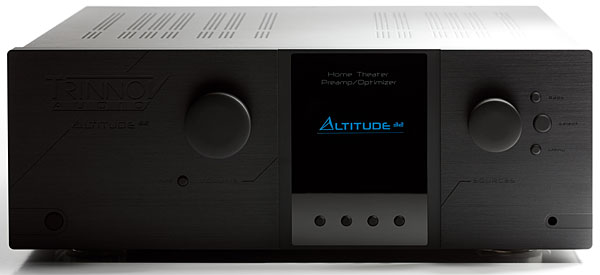
Music in the Round #98: Trinnov Altitude 32 & Essence Evolve II-4K

As I wrote before in these pages, I have long been acquainted with French electronics manufacturer Trinnov. Years ago, at an Audio Engineering Society convention in New York, a Trinnov rep used a mastering console equipped with their processor to move, at will, the sounds of instruments around the 3D soundstage and left me thoroughly impressed. That was before my conversion from stereo to multichannel music listening, and before the blurring of borders between home theater and mainstream audio.

Music in the Round #97: Hegel C53 and DSPeaker Anti-Mode X4

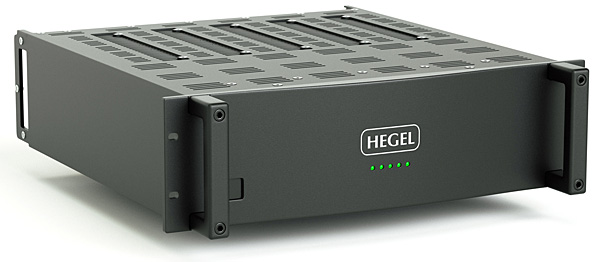
Sometime near the turn of this century, I wandered into a demo room at a Consumer Electronics Show and discovered, in the exhibit of a company I'd never heard of, an integrated amplifier that sounded clean and refreshing. It was the only product Hegel Music Systems displayed at that CES, and I don't recall its name or the associated equipment, but I've always remembered that model's striking appearance and impressive sound quality.

Music in the Round #96: Roon & Dolby Atmos

One of the recurring themes of this column has been my search for servers that will support the playback of high-resolution multichannel files with DSP for speaker/room equalization (EQ), as well as the format conversion and downsampling that are often part of those processes. Because most EQ software is PCM-based, format comversion is needed to convert DSD files to PCM. In addition, because most EQ products work within a limited range of sampling rates, PCM files sampled at high rates may have to be downsampled before being subjected to EQ. Those of us who use home-theater preamplifier-processors and audio/video receivers (AVRs) should be familiar with such constraints.

Music in the Round #95: Wolf & NAD

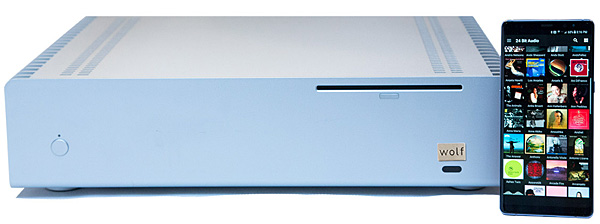
Although I no longer attend the audio pageant that was once the annual Consumer Electronics Show, I now seem to be traveling more, in hopes of recapturing the excitement CES had once provided. Last May I attended High End, in Munich, and found that while it was entirely as advertised, there was, alas, not enough emphasis on the playback of high-resolution files, and hardly any attention paid to multichannel music.

Music in the Round #94: Benchmark & Marantz

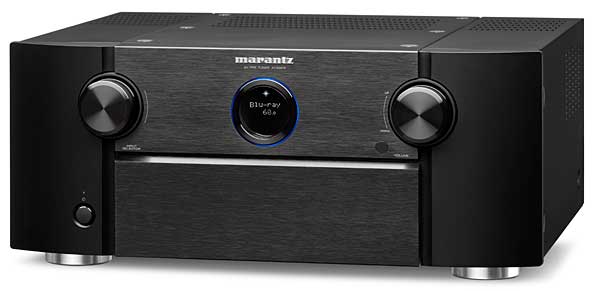
Sometimes, I feel I'm two people. One, a card-carrying audiophile, is always looking for ways to optimize his enjoyment of multichannel music recordings, a purist pursuit that begins with file playback and leads to DACs, amps, and speakers, while eschewing anything that can complicate or compromise the sound. Thus, while his main system may seem elaborate to outsiders, to him it seems streamlined: NAS>player>DAC>preamp>power amps>speakers. In fact, it's possible to combine the NAS and player in a single device, if that device's CPU and RAM are capable of doing all the tasks—but these product categories continue to evolve so quickly that he prefers to keep them discrete.

Music in the Round #93: miniDSP & Ripping SACDs

As I took my valedictory lap around High End, the immense audio show held each May in Munich, Germany, it was clear that this year's event was an exuberant flowering of mature technology. I witnessed the dominance of hardware for LP playback, as well as analog amplifiers, many of them based on tubes, and passive loudspeakers with traditional cone-and-dome drive-units. And there was no shortage of excellent and impressive musical demonstrations. Still, I experienced no revelations, and heard no announcements of any new technology that might trigger a hopeful anticipation of the near future. It was as if HE2018 were reflecting on the past with reverence and commitment, rather than striving toward the future with innovation and adventure.

Music in the Round #92: Digibit Aria Piccolo +

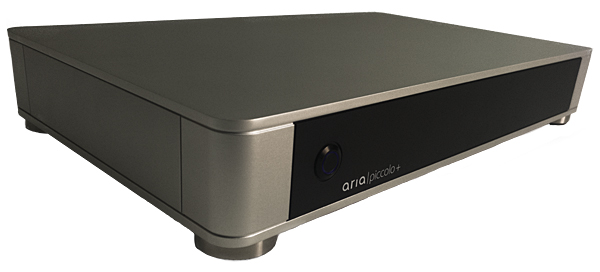
Lovers of high-resolution multichannel sound still don't have it easy. While the two-channel market is replete with snazzy, efficient music servers in stylish boxes, the only multichannel equivalents are Merging Technologies' Merging+Player Multichannel-8, and a handful of stereo devices that are rumored to do multichannel, though no such claims are made in print. To be candid, the latter will play multichannel tracks via USB, Ethernet, or HDMI outputs to suitable DACs (but that's another story), but because they're aimed at the two-channel market, they tend to skimp on the CPU horsepower and RAM needed to handle higher-resolution multichannel files. Even the Merging+Player Multichannel-8 ($13,500), with its Intel i3 CPU running Roon, couldn't entirely keep up with everything in my library.

Music in the Round #91: Parasound Halo A 52+

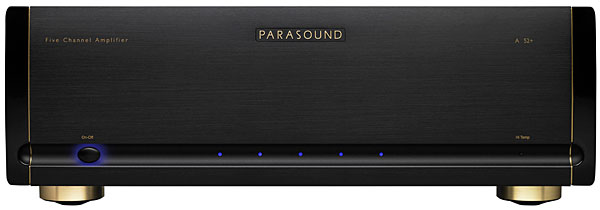
For some years now, I've tried to free myself from playing physical media and get all my music organized on a server. It's not that I don't enjoy handling and playing discs, but it's almost impossible to keep track of them. When my collection was only a thousand or two LPs, I felt I could remember each one individually. But now I have several times that many silver discs, and I know I can't.
Advertisement
Advertisement
Advertisement