Digital Processor Reviews

Sort By: Post DateTitle Publish Date

AudioQuest JitterBug USB noise filter

I got an early start on computer audio. At the end of the last century I was using WinAmp with first a CardDeluxe PCI soundcard, then a similar card from RME, to play files on a Windows PC. After I became a MacPerson, I used FireWire audio interfaces from pro-audio company Metric Halo and an inexpensive USB-connected ADC/DAC from M-Audio. But it was with the USB version of Benchmark's DAC 1 that the computer began taking over from physical discs for my music listening. At first I used iTunes au naturel, but as I acquired more high-resolution files, I began using Pure Music to handle all the tedious audio housekeeping, assigning as a dedicated music server a G4 Mac mini I'd bought in 2006.

Rega Research DAC-R D/A processor

I've spent the last month recording songs for a pal's upcoming album. His act consists of powerful female and male singers, acoustic and electric bass, and acoustic guitars and mandolin. Jay-Z is funding the project, which is destined to transform the entire hip-hop/rap beat-driven pop landscape into an acoustic-music wonderland.


Okay, I jest about that last part.

Aurender Flow D/A headphone amplifier

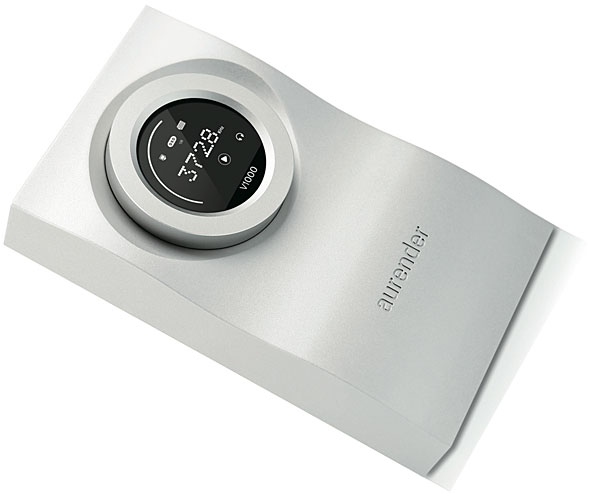
Aurender was a name new to me when I encountered the company at the 2015 Consumer Electronics Show, where they displayed a range of music servers designed in California and manufactured in South Korea. But what caught my attention in Aurender's suite was their Flow portable D/A headphone amplifier ($1295). This handsome, battery-powered device, housed in a machined aluminum case about twice the size of a pack of playing cards, offers optical S/PDIF and USB 2.0/3.0 input ports and a single ¼" stereo headphone jack. Two features distinguish the Flow from the pack: Its USB input can be used with iOS (iPhone/iPad) and Android smartphone sources, and it can accept an mSATA drive (not included in price) of up to 1TB capacity for internal storage of audio files. Visually, the Flow's distinguishing feature is its round LCD display, which stands proud of the faceplate; the bezel encircling the display acts as a velocity-sensitive volume control operating in 0.5dB steps.

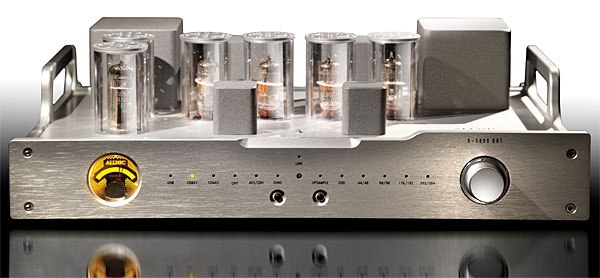
Allnic D-5000 DHT D/A processor

There may have been a time when vacuum tubes and microprocessors seemed strange bedfellows. But nowadays—given the countless digital processors with tubed output stages, and an even greater number of tubed amps and preamps whose insides are crawling with the latest solid-state devices—we're more or less used to the idea. Here as elsewhere, hybrids are no big deal.

DEQX PreMate D/A processor/digital equalizer

A decade or two ago, I stumbled on a surprising demo room at an audio show. I don't recall most of the equipment, but I do remember a pair of Paradigm Studio 20 speakers at one end, their crossover entrails dangling free, connected to the rest of the system by a multiplicity of wires. At the other end, among the usual electronics, was a PC whose screen was a crazy quilt of graphs and menus that constantly twinkled in response to the ministrations of DEQX's Kim Ryrie. He seemed totally absorbed, but looked up and proudly offered to show me what he was doing. When I told him that I was familiar with the Paradigms, he played some music that sounded just fine. Then he clicked his mouse. The sound was transformed from the familiar to the fabulous. I was dumbfounded. "What have you done?"

Cambridge Audio Azur 851D D/A processor

I've enjoyed having one of Cambridge's integrated amps in my office system for years, and the company boasts that the 851 series, designed in the UK and manufactured in China (like the rest of their line), is the best they've produced so far. After spending the last year listening to domestically manufactured DAC-preamps costing $6000 and up, I was curious to hear how a product costing only a quarter of the bottom of that range might stack up.

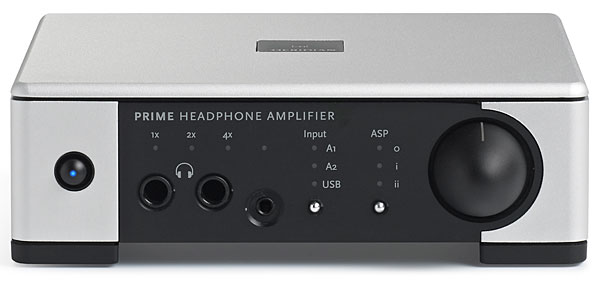
Meridian Audio Prime D/A headphone amplifier

A reader recently asked if I preferred listening to loudspeakers or to headphones. There is no easy answer: Although I do most of my music listening through speakers, about 10% of that listening, for various reasons, takes place in the privacy of my headphones. I have also found that, since I purchased the Audeze LCD-X headphones following my review of them last March, I now tend to watch movies on my MacBook Pro, with the soundtrack reproduced by these headphones plugged into an AudioQuest DragonFly or whatever D/A headphone amplifier has been passing through my test lab. So when Meridian's PR person, Sue Toscano, asked me last Christmas if I'd be interested in reviewing the English company's new Prime D/A headphone amplifier ($2000) with its optional Prime Power Supply ($1295), it took me less than a New York minute to say "Yes."

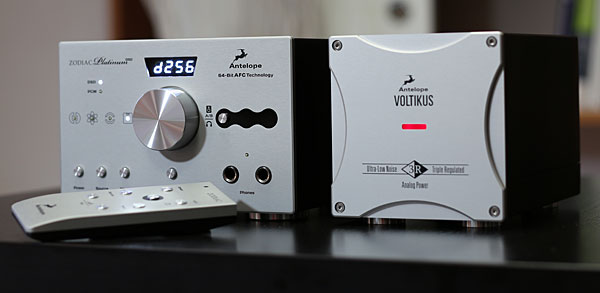
Antelope Audio Zodiac Platinum D/A processor–headphone amplifier & Voltikus power supply

Professional digital audio is like gravity to consumer audio's antigravity: pro gear draws music into digital files, and consumer audio releases those same notes back out again.


It's not surprising, then, that many audiophile digital-to-analog converters come to us from the pro-audio industry, which has a hierarchy similar to the consumer side: value-oriented products all the way up to ultimate-performance brands. Examples of pro-audio companies that also offer audiophile DACs for consumers abound: Benchmark, CEntrance, Grace Design, Korg, Mytek, and Nagra, to name a few.

PS Audio PerfectWave DirectStream D/A processor

It's like hearing the name of an old friend and then seeing him, in your mind's eye, as he was when you were both much younger: Whenever talk turns to Boulder, Colorado–based PS Audio, I can't help picturing that company's Model IV preamplifier, of the early 1980s—most likely because that was the preamp I longed to own at the time. (Tragically, I couldn't afford to buy it, so I struggled on with my NAD 1020.)

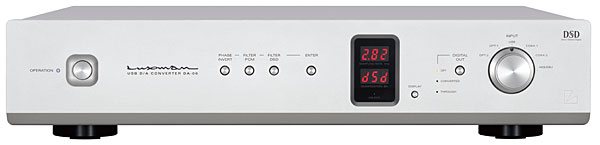
Luxman DA-06 D/A processor

In the summer of 1999, Sony held a press event in New York City to mark the introduction of the Super Audio Compact Disc, then the sole domestic embodiment of the Direct Stream Digital (DSD) technology, jointly developed by Sony and Philips. The new format was hailed, in prepared remarks, by an impressive list of audio and music dignitaries: Nobuyuki Idei, then president of Sony Corporation; Steven Epstein, senior executive producer for Sony Classical; Yo-Yo Ma, appearing in a video created for the event; and Wynton Marsalis, appearing in person. All of the speeches—every single one of them—flattered SACD by likening its sound to that of the analog LP.
Advertisement
Advertisement
Advertisement