Phono Cartridge Reviews

Sort By: Post DateTitle Publish Date

Ortofon MC-3000 MC phono cartridge
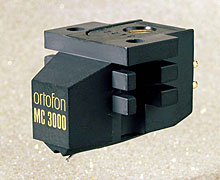
The Ortofon">http://www.stereophile.com/phonocartridges/ortofon_mc-2000_mc_phono_car… MC-2000 may just have been the most impractical cartridge to be unleashed upon the audio community for some years. With a high compliance (20cu) that made it ill-suited for most tonearms, it also had a preposterously low signal output of 50 microvolts, which gave new meaning to the terms hum and noise. Few MC preamps had enough gain to deliver adequate driving voltage to a system, and none of those that did had low enough noise to be usable with the 2000. If the problem wasn't hum, it was hiss; if hiss was acceptably low, there would be too much hum. At least Ortofon had the sense to be aware of the problem and to do something about it, in the form of their T-2000 step-up transformer, which is the only device I ever found that would allow the cartridge to be operated without a constant background of hum or hiss. Despite all this, I have used the MC-2000 as my reference cartridge for the last two years. Why? Because of all the cartridges I've tried, it is by far the most accurate.

Linn Troika MC phono cartridge

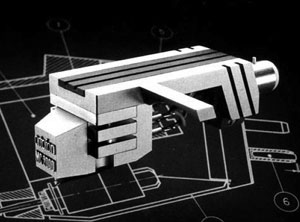
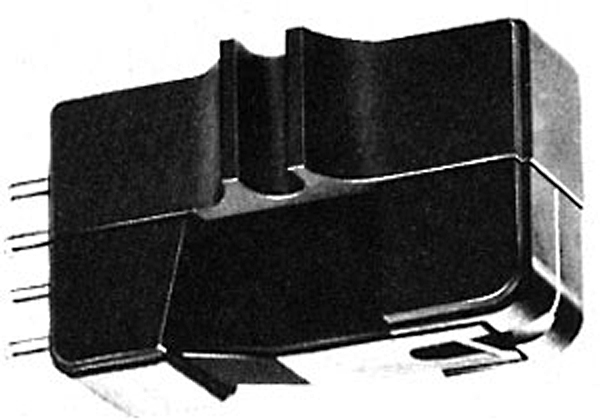
Some six or so years ago, the Linn Asak cartridge set new standards for imaging and soundstage reproduction. I can remember the first time I heard an Asak in a system using Quad">http://www.stereophile.com/floorloudspeakers/416">Quad ESL-63s—I had never experienced such depth of soundstage and solidity of imaging from any system, and that with Quad amplification! The Asak was relatively quickly overshadowed in this area, however, and in any case, soundstaging precision by itself didn't seem to be a high priority for the Linn design team, who were apparently more concerned with dynamics and a musical integration of the sound across the frequency range.


Ortofon MC-2000 MC phono cartridge

Although the idea of a $1000 moving-coil cartridge no longer shocks audiophiles, it is still not exactly what I'd call "Mainstream Hi-Fi." Audio magazine's 1984 Equipment Directory—the most complete such compendium published in the US—lists only 10 models in this price range, not counting the Kiseki Lapis Lazuli at a whopping three-and-a-half grand! I have not tested most of these, nor have I tried any of the current models from the Japanese Koetsu firm, which was first with the gall to put a $1000 price tag on a cartridge. But I have tested a couple of one-granders during the past few years, and was sufficiently unimpressed to be hesitant about testing any more samples of what were beginning to look like nothing more than monumental ripoffs. So when Ortofon sent us the MC-2000, I was naturally less than enthusiastic about trying it.


Shure V15 V-MR phono cartridge

I was all set to give up on moving magnets until the new Shure VI5-VMR (MR stands for Micro-Ridge stylus) arrived. In a word, it's terrific. I was slightly disappointed with the original V15-V: I just didn't think it was a significant improvement over the Type IV. What I missed was fine detail—especially in the high frequencies and during heavily modulated passages. The original V was not quite up to the sound of certain moving coils. Which is not to say the original V was a bad buy: moving coils cost twice the price and you need a stepup. I could recommend the original V without hesitation.

Fidelity Research FR-1 Mk.3F phono cartridge

A couple of issues back, we mentioned in passing that the Fidelity Research FR-1 Mk.3F was the only moving-coil cartridge we had heard (as of then) that we would give house room to. (The others had frequency-response problems which so colored the sound that their other strong points were not worth the tradeoff.) That first observation about the FR-1 was based on a couple of hours' listening. Now that we have had an opportunity to live with one of them for a while, we can essentially confirm that first reaction, but with a few added qualifications.

Shure V15-IV phono cartridge

The Shure Brothers have been making magnetic cartridges since the early 1950s (they had been exclusively microphone manufacturers prior to then), and their continuing R&D program has resulted in new, improved models every few years rather than every 6 months (as seems to be the rule these days). As a result, Shure has the appearance, to most audiophiles, of a stodgy, plodding, rather "establishment" manufacturer that can be trusted to make a solid, reliable product but nothing brilliantly innovative or—for that matter—nothing remarkably good either.

Denon DL-103 phono cartridge

This low-output moving-coil cartridge can be fitted with different styli. The basic DL-103 has a 0.5-mil spherical tip, the DL-103S a Shibata tip. As of the spring of 1975, the '103S is being imported by American Audioport, Inc., in Columbia, MO. the '103 is being brought in directly from Japan by a few dealers. Our '103 was loaned by Music & Sound of California, the '103S came from Audioport.


They are not too similar in sound. The DL-103S is incredibly clean-tracking, with a light, airy high end, a subtle zizz on string tone, and a very slightly withdrawn quality similar to the sound of the Supex 900E, but not as overly rich-sounding as the Supex.

Decca Mark V phono cartridge

The Decca Mark V is the latest version of that English firm's unique "tip-sensing" stereo-matrix-ing pickups. The "matrixing" apellation refers to the fact that the Decca pickups do not use 45°–45° sensing coils, but use instead a combination of vertical and lateral-sensing coils. There is a single coil for lateral sensing, with its pole pieces brought down next to the tip. This is the tip-sensing feature, whose major attribute is that the stylus motions don't have to be conveyed along the length of an armature before reaching the transducing pole pieces. Thus there is virtually no possibility of the stylus vibrations being modified through flexing of the armature prior to their transduction into audio signals.

Three Pickups: Which is the Best?

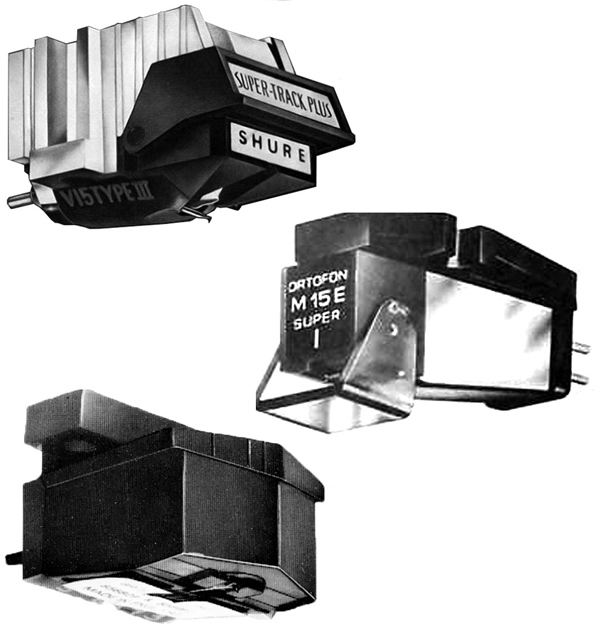
If you have read my reviews of the Ortofon M-15, the Shure V15-III, and the Decca Mark V, you have probably formed a pretty firm impression of which of the three contenders for the title "Best Pickup" is the winner. In case you haven't, though, here's a capsule wrap-up of our reactions to the three phono cartridges reviewed in May 1974.

Ortofon M15 Super phono cartridge

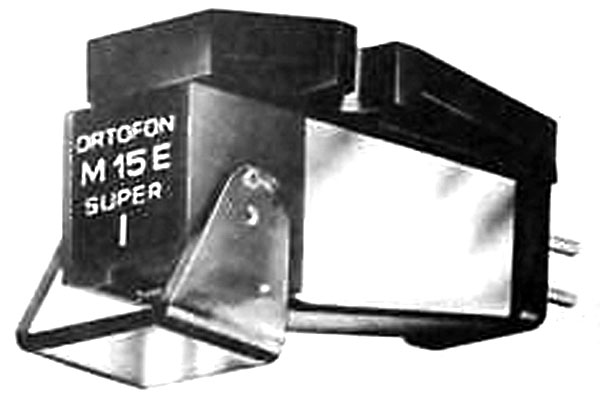
The M15 Super is the first high-output pickup to come from Ortofon. Previous ones required either step-up transformers or a booster preamp, and it is only fairly recently that either kind of step-up device was available with high-enough quality to avoid a noticeable degradation of the sound. Early step-up transformers muddied the bass, and previously-available booster preamps added noise or hardness or both to the sound. Now that there are excellent transformers available from Ortofon and other sources, and at least one extraordinarily good booster preamp (the Mark Levinson, at an extraordinarily high price—$170), Ortofon's latest and best pickup doesn't require the use of either.
Advertisement
Advertisement
Advertisement