Phono Cartridge Reviews

Sort By: Post DateTitle Publish Date

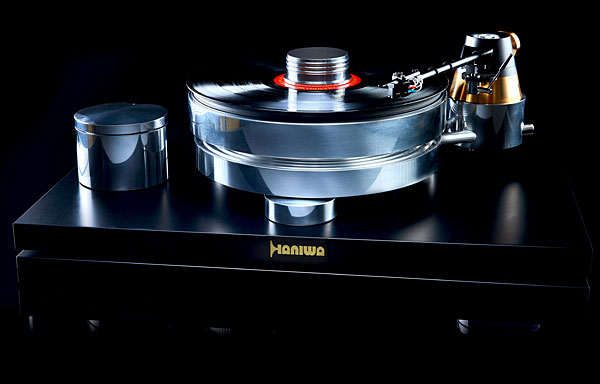
Analog Corner #290: The Haniwa LP Playback System

Haniwa's Dr. Tetsuo Kubo is an interesting fellow. If you go to shows, domestic or overseas, you've possibly encountered him in his room a space known for being strewn, shrine-like, with LPs that once belonged to The Absolute Sound's founder, the late Harry Pearson: Dr. Kubo was a fan.

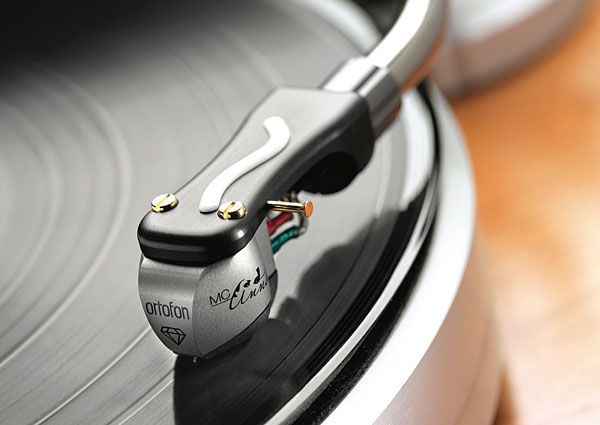
Analog Corner #289: Ortofon Anna Diamond MC phono cartridge

As I was doing a final edit on this column, I received very sad news from Leif Johannsen, the chief officer of acoustics and technology for cartridge manufacturer Ortofon A/S: Kim Petersen, described by Johannsen as his "right hand and new cartridge design and listening partner" and the company's "top cartridge expert," passed away suddenly at age 52.

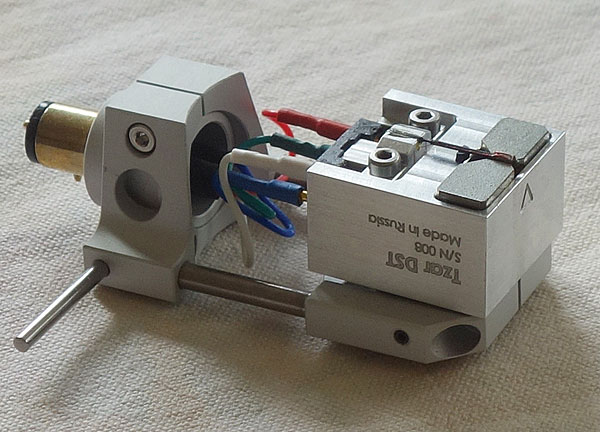
Listening #200: Tzar DST1 & Shindo Montille CV 391

Products come and go. Some impress more than others, and in our little world, the ones that impress the most wind up in Class A of our semiannual "Recommended Components" feature.


After a product makes it to that list, if Stereophile's reviewers go more than a few years without hearing it again—in a home system or a dealer's showroom or even at an audio show—that product falls off the list, usually quietly. Thus, if a reviewer is maximally knocked out by a piece of playback gear, yet the fates allow neither a purchase nor an extended loan, he or she or someone else on staff must endeavor to borrow it again so it can stay recommended.

Analog Corner #285: Top Wing Suzaku, HiFiction Thales, Analysis Plus

For a phono cartridge to generate current and voltage, something must move: a coil of wire (as in a moving-coil cartridge), or a magnet (as in a moving-magnet type), or a tiny piece of iron (a moving-iron type). In those rare cartridges that depart from the electricity-generating principle of the ones described above, it can be a displacement-measuring device in which a moving shutter modulates a light source to vary a supplied voltage (as in an optical cartridge), or one in which voltage is modulated when a tiny chip of silicon crystal is squeezed by a moving element, which varies the chip's electrical resistance (as in a strain-gauge cartridge). But regardless of what it is that moves in a cartridge, something has to.

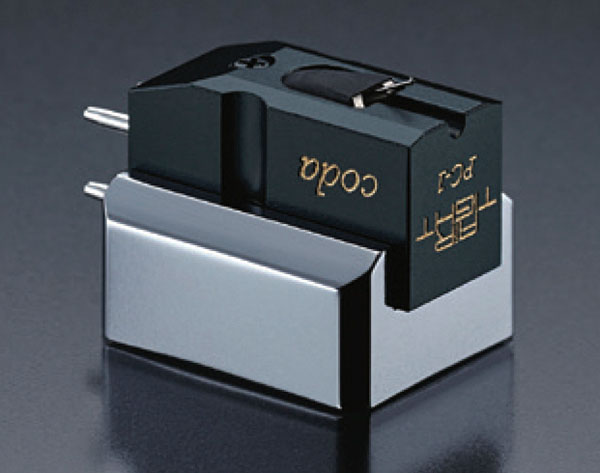
Analog Corner #284: Air Tight PC-1 coda phono cartridge, Zesto Andros Allasso step-up transformer

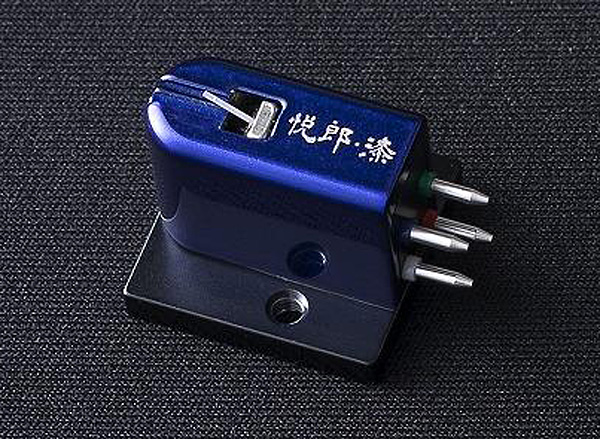
Something's definitely happening at the house of Yoshio Matsudaira. The legendary gentleman, whom I've never met or corresponded with, manufactures cartridges for his own brand, My Sonic Lab, as well as for others, including Air Tight. Over the past few weeks, more than a few readers have asked me to review or at least listen to the latest My Sonic Lab cartridge, the Platinum Signature.

Listening #195: Ortofon SPU Century & Grandinote Celio

Easy pickup: Art’s Dog, Chatter, cozies up to Leif Johannsen of Ortofon A/S and Dee Hustinova of Ortofon USA. (Photo: Art Dudley)


According to the 2018 edition of the UN's World Happiness Report, Denmark is the third-happiest nation on Earth, trailing only its neighbors Finland and Norway.


I heard that yesterday afternoon, on NPR. The reporter even spelled out the word used by Danes to describe their feelings of happiness: hygge. Apparently, at present, Denmark is positively rotten with hygge.

Analog Corner #281: Klaudio KD-ARM-AG12 tonearm and Ikeda & Tedeska phono cartridges

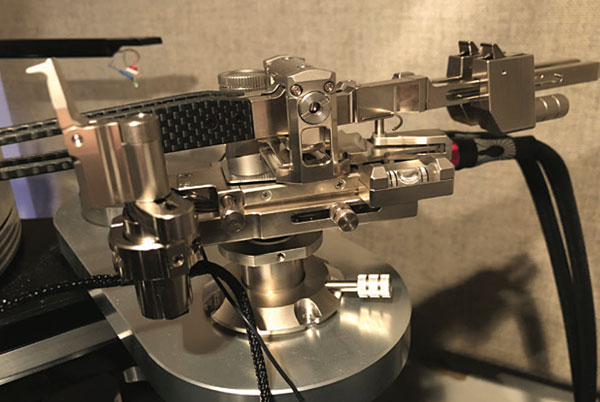
How do you like your tangential-tracking tonearm: with a captured air bearing? If so, a stationary bearing and moving rail—or a moving bearing and stationary rail? A hovercraft-style air bearing? Trolley-wheel or servo-mechanical bearing? Or pivoted, with some kind of offset at the pivot or the headshell—or both? In today's crowded market of analog playback, you can buy whatever type of tangential tracker you prefer, from Bergmann, Clearaudio, Kuzma, Reed, Schröder, Thales, and others.

Gramophone Dreams #25: Dr. Feickert, Jelco, Koetsu, My Sonic Lab

I needed one black tiddledywink (not provided) to use Dr. Feickert Analogue's three-speed, two-motor, two-armboard Blackbird turntable. The tiddledywink was for covering the Blackbird's painfully bright power-on LED so that it didn't blind me when I cued up a record. The first night, in my dark listening room, this tiny indicator sprayed the wall behind and the ceiling above with more light than a bright-emitting 845 vacuum tube.
Advertisement
Advertisement
Advertisement