Miscellaneous

Sort By: Post DateTitle Publish Date

Silent Angel Bonn NX network switch
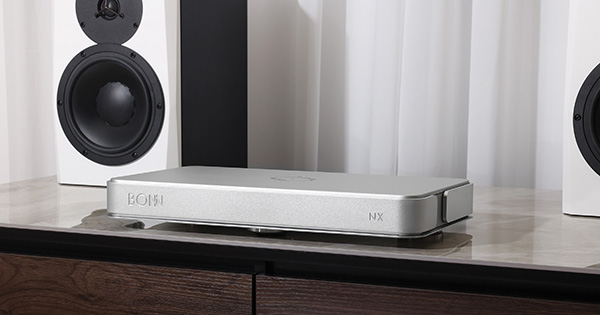
With every passing season, a new audiophile-grade network switch hits the market. These products, which can cost hundreds or thousands of dollars, do the same basic thing as network switches bought at Best Buy for $30 or so (except, in some cases, slower), but their manufacturers claim they are built to a higher standard to achieve better sound.


As with all signal-conditioning devices that operate completely in the digital realm—especially those that work at packet level (more correctly referred to as "frame-level" on the local side of the router, but that's a distinction that even few experts make)—the sonic efficacy of audiophile network switches is debated, the debate being, as usual, mainly between those who insist they hear a difference and those who insist, on theoretical grounds, that no difference is possible.
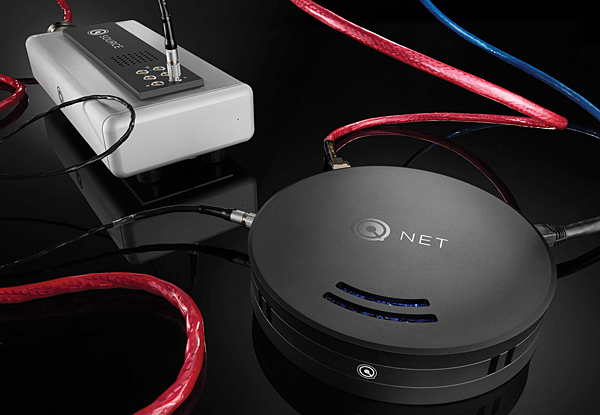
Nordost QNet network switch & QSource linear power supply

"A switch? Why do I need a switch?" That was my response to Meredith Gabor, head of marketing and PR for cable and accessories manufacturer Nordost, after she dropped the news. She had just arranged with Jim Austin for me to write a shorter, "ancillary" review of the new Nordost QNet Network Switch ($3199.99) with its optional QSource linear power supply ($2749.99) and premium QSource DC umbilical interface cables ($339.99 for 1m). Why did I need an expensive QNet switch when my router was functioning reliably? Good question.

Book Review: Chairman at the Board

Chairman at the Board: Recording the Soundtrack of a Generation, by Bill Schnee. Backbeat Books, 2021. 219pp. $24.49, hard cover; $21.49, Kindle e-book.


It was September 2012, and Sasha Matson and I were in Los Angeles to record the singers for his jazz opera, Cooperstown. We had already recorded the instrumental backing with engineer Mike Marciano at Brooklyn's Systems Two studio, and the venue for the vocal tracking sessions was Bill Schnee's studio in North Hollywood.

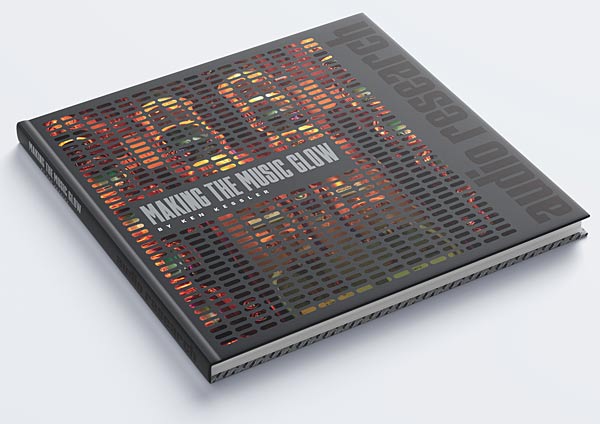
Book Review: Audio Research: Making the Music Glow

Book Review: Audio Research: Making the Music Glow

Written by Ken Kessler, designed by Henry Nolan. 220pp. $150. Available at Audio Research dealers and online at audioresearch.com.


I never met Audio Research Corporation founder William Zane Johnson, who died in 2011. But when he founded his now-legendary company in 1970, I and my ragged troupe of Dynaco modifiers were in the trenches, fighting the sand-warrior hordes during the first transistor onslaught.

FollowUp RoundUp

When Stereophile publishes followup reviews of various kinds in the print magazine, we add the followup as a "child page" to the full review. That means that they don't appear on the website's home page and might get missed. The October 2020 issue included three followups: of the Boulder 2108 phono preamplifier, the Weiss DAC502 D/A processor, and the IsoAcoustics Gaia loudspeaker isolation feet.

Book Review: Hi-Fi: The History of High-End Audio Design

Hi-Fi: The History of High-End Audio Design, by Gideon Schwartz, Phaidon Press, 2019. 272pp. $84.97, hard cover.


The ongoing evolution of hi-fi can be measured in any number of ways. Most obviously, we see that evolution in the technologies associated with our industry: in big breakthroughs—mono to stereo, tubes to transistors, analog to digital—as well as incremental improvements in materials and manufacturing techniques.

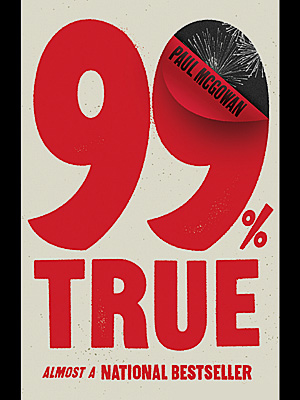
Book Review: 99% True: Almost a National Bestseller

1019psbbok.promo99% True: Almost a National Bestseller, by Paul McGowan. Lioncrest Publishing, 2019. 364pp. $25.00, hard cover; $15.99, paperback; $9.99, Kindle e-book.
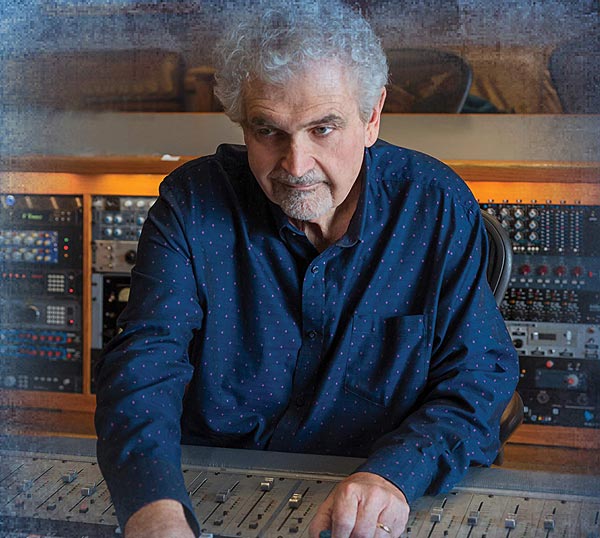
To many audiophiles, high-end audio manufacturers must seem like monolithic entities, enduring for what seems like forever, like cliffs beside a familiar path. But as Paul McGowan explains in this unputdownable autobiography (footnote 1), behind the facade of stability things can be in financial turmoil, with success equally as risky as failure.

Book Review: High Performance Loudspeakers, Seventh Edition

High Performance Loudspeakers: Optimising High Fidelity Loudspeaker Systems, Seventh Edition, by Martin Colloms. John Wiley & Sons, Inc., 2018. Paperback, 696 pp., $95. Available as an eBook, $79.99.


"Listen to that—that's what I mean by 'cone cry!'"


It was 1979. I'd been taking part in a blind listening test of loudspeakers organized by Martin Colloms (footnote 1) for the British magazine Hi-Fi Choice and, after the formal sessions had ended, had asked Martin to explain something I'd heard. A drive-unit's diaphragm produces cone cry when it resonates at a frequency unconnected with the musical signal it is being asked to produce; we had been using an anechoic recording of a xylophone, and one of the loudspeakers we'd been listening to was blurring the pitches of some of the instrument's notes.

LG V30 Hi-Res smartphone with MQA

"Phones are the gateway device," proclaimed Marc Finer, executive producer of the Hi-Res Pavilion, at the start of the 2018 Consumer Electronics Show. When he pointed to LG Electronics' V30 Hi-Res+MQA smartphone, which includes streaming apps for Qobuz, Tidal, and YouTube, I sensed the truth in his words. The latest stats from survey company MusicWatch confirm that at least 87% of smartphone owners use a music-streaming service, including the largest, YouTube. Twenty percent of owners said that they stream music/music-related content daily, and 39% stream five or more days per week.

IsoAcoustics Orea Audio Equipment Isolators

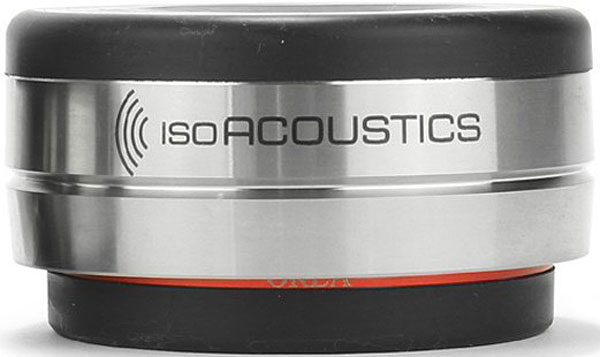
After I'd concluded my critical listening sessions with the PS Audio Stellar M700s that I review elsewhere in this issue, I got a call from Dave Morrison of IsoAcoustics, in Markham, Ontario, makers of the Gaia loudspeaker isolation feet. He told me that they had a new product, the Orea, that applies to audio electronics—preamps, power amps, DACs—the isolation technology used in the Gaia.
Advertisement
Advertisement
Advertisement