SSI 2009

Sort By: Post DateTitle Publish Date

The Stereophile Debate...

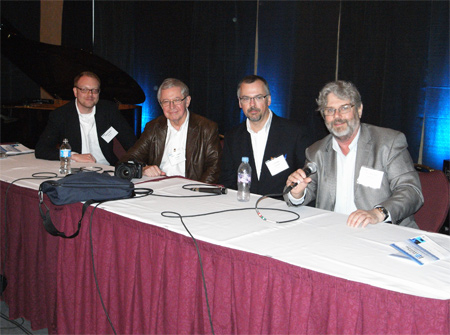
...was how SSI organizer Michel Plante had billed our "Ask the Editors" session, and (from left to right), Stephen Mejias, Robert Deutsch, and Art Dudley joined me in an animated discussion. Topics covered included the vinyl revivial, whether there is still a role for paper magazines in an Internet world, how does someone become a reviewer, and will Blu-ray be a viable medium for high-quality music.


Sennheiser 800

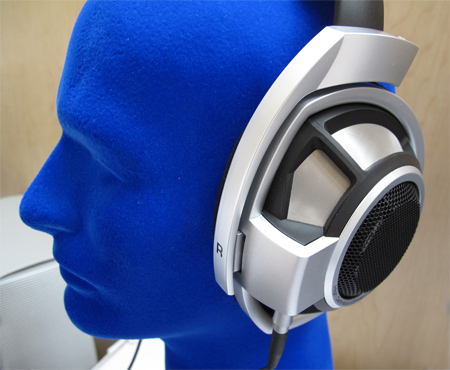
Like many Stereophile readers, I read with great interest, and a certain amount of incredulity, Jason Victor Serinus's rather gushing CES">http://blog.stereophile.com/ces2009/worlds_finest_headphones">CES report on the Sennheiser HD800 headphones. Now, I have a lot of respect for JVS's opinions—we share an appreciation of opera and other vocal music, and we're both great fans of Fritz Wunderlich—but, reading his report, part of me was intrigued and another part was thinking "Come on, Jason, these are just headphones, what's the big deal?"


That's the Champion Wood

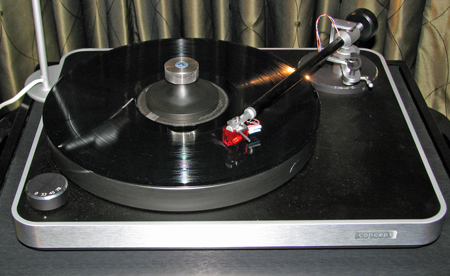
Stephen Mejias reported">http://blog.stereophile.com/ssi2009/best_music_of_show/">reported a couple of days ago on the excellent sound being made in the room featuring DeVore Fidelity's Gibbon Nine speakers, driven by a Leben integrated amplifier. I was equally impressed when I auditioned a Curtis Mayfield live album in this all-analog room, played on the Clearaudio Champion Wood turntable fitted with a Clearaudio Unify arm with a carbon-fiber armtube and an EMT JSD5 MC phono vcartidge.


The First Spike

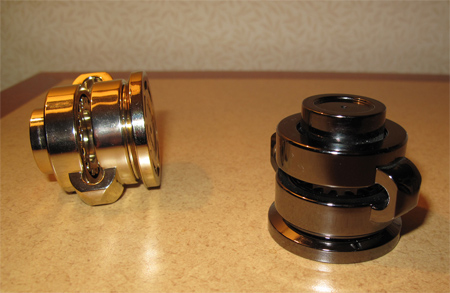
Component supports take a variety of forms: squishy, rubbery things; hard, pointed things; ball bearings (loose or constrained); air or liquid bladders, etc. The Spike component supports, imported by Divergent Technologies, were a new one for me: they use magnetic levitation. Now, I'm familiar with platforms using this principle, but these are individual component feet, each with opposed magnetic components. A box of these "Spikes" contains four such feet, and the price for the total is CN$200. I was surprised that magnets could be made strong enough in this small size to be able to support equipment of substantial weight—hich they apparently can.


How was the Show for you?

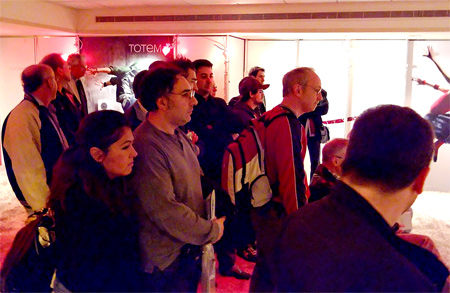
It did not require great perspicacity to predict that SSI2009 would not be as well attended as last year's show. Things are tough all over. In any case, as I write this, on Saturday evening on a train en route to Toronto—yes, I manage to catch the train this time!—the show still has another day to go, and, as Michel Plante, with Sarah Tremblay the SSI's organizers, admitted, what often makes or breaks a show like this is the Sunday attendance.


The Battery-Powered Veloces

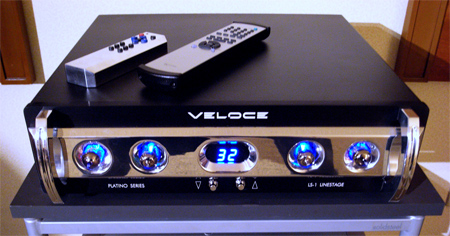
i saw a familiar face when I went into the Veloce room, as Mark Conti, who designed the unusual Impact speakers from a few years back, is now involved in this line of battery-powered amplification. My eyes were attracted by the Veloce Platino LFT-1 linestage in the photo ($12,500), which will run for 70 hours before needing recharging, but driving the Marten speakers in the room via Purist cables was a pair of battery-power monoblocks ($12,000/pair). Battery power? Yes, the input stage, based on a 6922 tube, is transformer-coupled to a high-efficiency class-D output stage based on the Hypex module designed by famed Dutch engineer Bruno Putzys. A charge will last 40–80 hours depending on the speaker's load impedance, Mark told me.

Advertisement
Advertisement
Advertisement