CES 2012

Sort By: Post DateTitle Publish Date

TEAC America’s Reference 01 Series

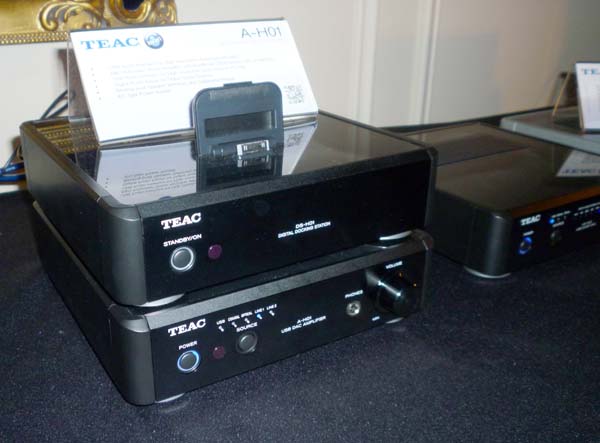
While we’re on the topic of small things, TEAC America introduced their Reference 01 Series of budget-priced, room-friendly components, including the UD-H01 DAC, A-H01 stereo amplifier, and DS-H01 iPod docking station. (I’m waiting to hear back on the prices, but I’m fairly sure these products retail for hundreds, rather than thousands, of dollars.)

DEQX HDP-4 processor

John Atkinson and Kal Rubinson became familiar with DEQX, an Australian company specializing in digital loudspeaker correction and room compensation, during their review of NHT’s Xd active loudspeaker system; I had the opportunity to become acquainted with DEQX at last year’s Rocky Mountain Audio Fest.


Then, the company gave an impressive demo of their HDP-3 standalone processor mated to a pair of Gallo Reference loudspeakers and Parasound amplification, showing room interaction and examining how the sound of the system could be optimized in the frequency, phase, and, most important to DEQX, time domains.


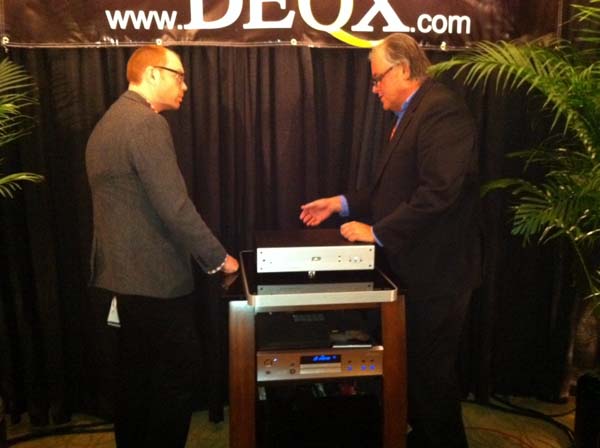
This year, the company gave a similarly impressive demonstration of their new HDP-4 processor ($4995), which should be available in about two months.

Soulution 590

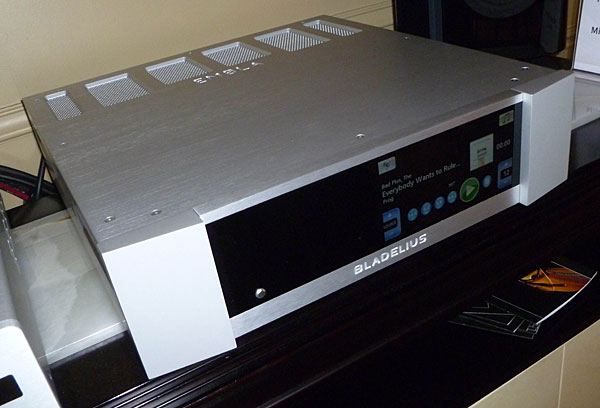
This very simple looking box is Swiss company Soulution's new USB to SPDIF/Toslink/AES converter that will set you back approximately $4k. It can handle streams up to 24/192 and can sync with the company's 745 and 540 players.

The Advanced Genesis Tweeter

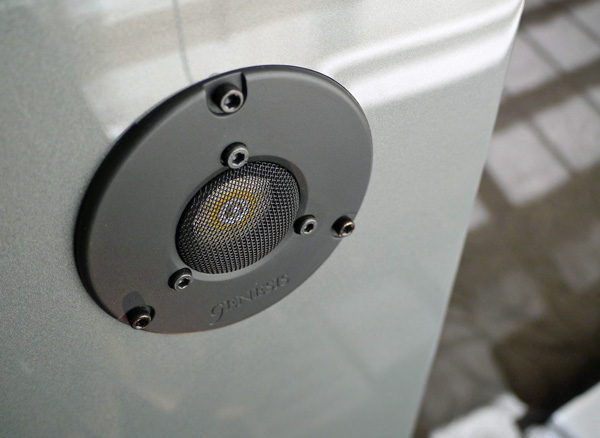
The Genesis Advanced Technologies 7.2f claims to be the "new affordable reference for bringing true-to-life music into your home." And they have a formidable amount to technology in the speaker to support this claim. At the top, there is the latest version of the circular flat-ribbon tweeter that apparently has been steadily improved since it was first introduced in 1992 (and which, for once, owes nothing to Dr. Oskar Heil). A solid titanium-cone mid/woofer claims to deliver exceptional clarity and low distortion within its range (and the "oil-can" resonance is far outside the range where the driver is utilized), and a servo-controlled powered bass from an 8" side-firing aluminum-cone driver, is claimed to extend the response down to 22Hz. There is also a rear-firing tweeter, which can be turned off if desired. There is control over tweeter as well as woofer level. The price of all this technology is a very reasonable $9000/pair.

Adam Speakers & the Heil Tweeter

The Adam is yet another loudspeaker manufacturer that uses drivers that are descendants of the Heil AMT tweeter. Adam's Classic Mk.3 uses what they call Accelerated Ribbon Technology (X-ART) for the midrange as well as the tweeter, and 2x7.5" HexaCone midwoofers. The Classic Mk.3 is available in passive ($7000)/pair or active ($10,000/pair) form, the latter for the studio professional market. A brief demo—with Cary Audio electronics—sounded convincingly full-range and dynamic. I understand that Kal Rubinson is getting a pair of these for review in Stereophile.

New for 2012 from MartinLogan

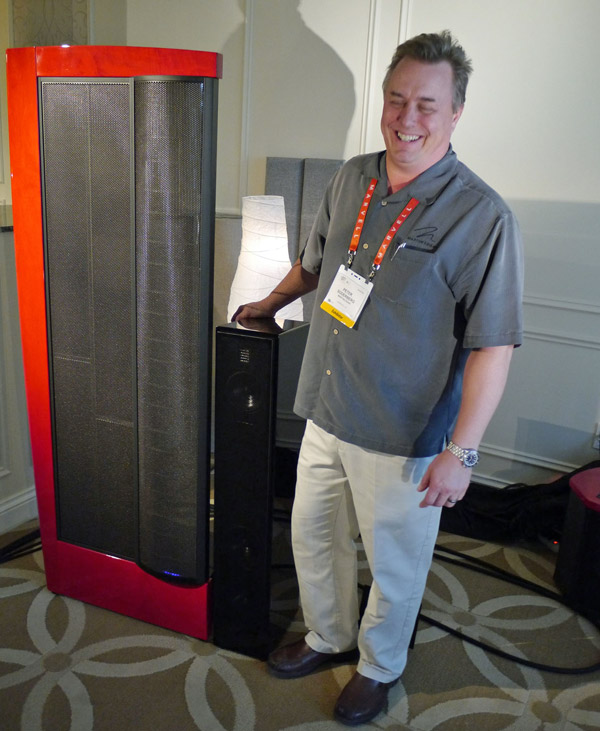
MartinLogan is famous for speakers that use electrostatic drivers—full-range or in combination with dynamic woofers—but they have more recently broadened their offerings to include non-electrostatic models. According to MartinLogan's Peter Soderberg, their aim is to produce speakers that approach the sound of their electrostatic models, but at a lower price and easier to drive. He says that this has become possible with their version of the Heil tweeter (the original Oskar Heil patent having expired). He did a comparison for me between their top-of-the-line electrostatic CLX ($25,000/pair), supplemented by the Depth 1 subwoofer ($2000), and the new Motion 40 ($1995), which uses the Folded Motion (aka Heil) tweeter, in both cases driven by Anthem's new class-D amplifier, top-of-the-line Conrad-Johnson preamp, with a laptop as source. With Patricia Barber singing "Norwegian Wood," the tonal balance of these physically very different speakers was surprisingly similar. Peter Soderberg is pictured here with the CLX and the Motion 40, after what must have been an exceptionally amusing quip on my part.

B&O Play’s Beolit 12

Bang & Olufsen's publicist sent me a "By Invitation Only & You Are Invited" email, promising to "unveil the newest innovations" and "the unveiling of a new, iconic product concept." (I pity the poor housekeeping staff at CES, having to clean up all the veils discarded by manufacturers.)


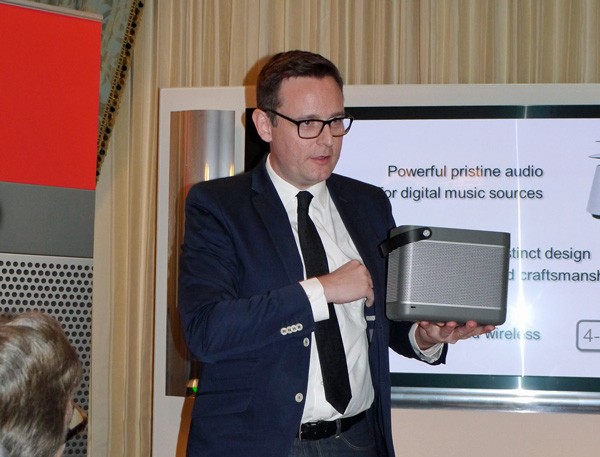
Reduced to its essentials, the "new, iconic product concept" is a division within B&O under a new brand, called "B&O Play." As I understand it, the products with the B&O Play brand will have all the traditional quality that B&O is known for, but they'll be less luxury-oriented, more "fun"—and perhaps less expensive. The first product under this brand is the Beolit 12, a portable (battery-powered), AirPlay-equipped sound system.

Advertisement
Advertisement
Advertisement