NY Audio & AV 2012

Sort By: Post DateTitle Publish Date

Audio Doctor presents Scaena speakers
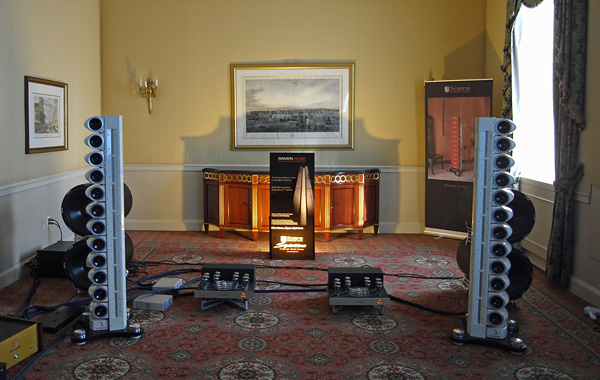
The Scaena Spiritus 3.4 loudspeaker system ($110,000), which uses separate tubular subwoofer modules to reinforce its line-source arrays of midrange units and Raven ribbon tweeters, sounded better than I had heard them at previous shows. As well as the C-J ART amplifiers mentioned by Art Dudley above, the system comprised a Kronos turntable with its contra-rotating platters, fitted with an SME V-12 tonearm and a Dynavector XV1S cartridge, an AMR tube phono preamp, and a fully loaded dCS Scarlatti digital front-end.
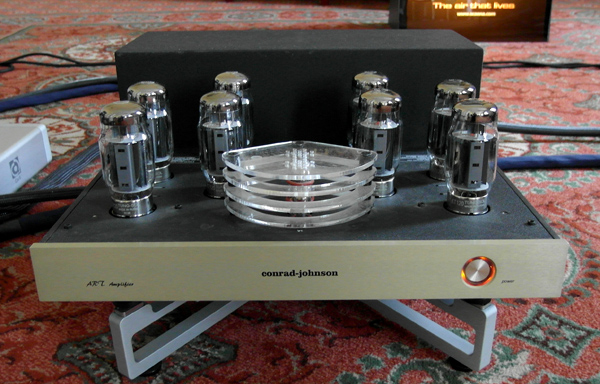
Beaux ARTs

Driving the distinctive Scaena "iso-linear array" loudspeakers in the Audio Doctor suite was a pair of Conrad-Johnson's limited-edition ART amplifiers ($37,000/pair): one of 125 pairs in existence. These ARTs used KT-120 output tubes (the amps are rated at 275Wpc when run with 6550 pentodes) and were operated without their strikingly pretty tube cages.

Compact Reference TAD

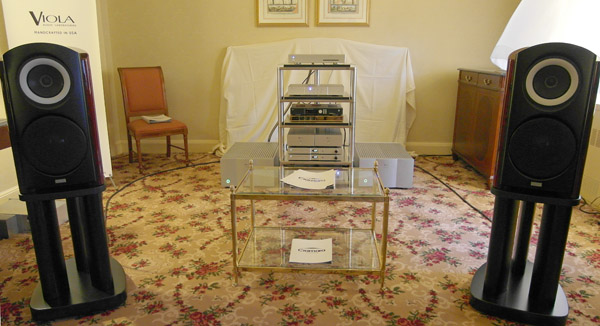
The TAD CR1 (for Compact Reference) loudspeaker ($37,000/pair) was demonstrated with Viola amplification and a digital front end comprising the Weiss Man301 server ($9000) and Weiss Medea+ D-to-A converter ($19,000). The CR1, which has been on the market for a little over three years, has a rated sensitivity of 86dB and uses the same type of CST coincident driver as featured in the company's flagship Reference One loudspeaker. The TAD had satisfying bass extension for such a relatively small enclosure, but the system was being played way too loud for my comfort, so I can't offer a more nuanced appraisal. JA, however, was very impressed when he reviewed the CR1 last January.

Voilà Viola

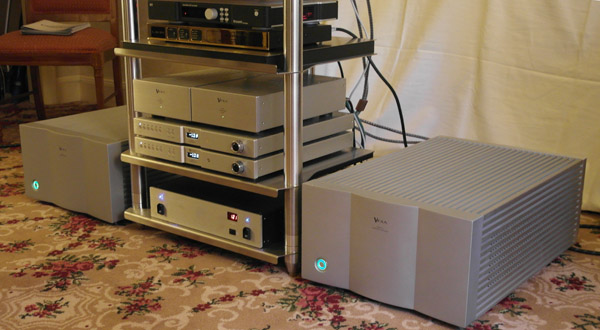
The Viola electronics on display included their four-chassis, dual-mono Solo preamplifier ($45,000) and Bravo II stereo amp ($59,000). The latter is supplied in two chassis, and provides 700Wpc channel into 4 ohms: the nominal impedance of the TAD CR1s. DAC was the highly regarded Bricasti M1.

Lighton up

Furniture designer Robert Lighton used the New York Audio and AV show to debut his first audio product, the RL10 loudspeaker ($20,000/pair), offering a solid wood enclosure (even the rear-firing reflex port is turned from solid wood), 1” fabric-dome tweeter, 10” paper-cone woofer, and a sensitivity rating of 95dB. Selections from Lighton’s impressive collection of jazz LPs—one Roland Kirk number in particular—sounded tactile and convincing through his speakers and an 8Wpc Audio Note Meishu Silver Signature integrated amp with phono section ($18,850), Audio Note AN S8 phono transformer ($10,800), and Audio Note TT3.5 Reference three-motor turntable ($39,600), the latter using a Sogon-wired Audio Note tonearm ($13,156) and Yamamoto Y-03s cartridge ($1200).

M•A Recordings in NY

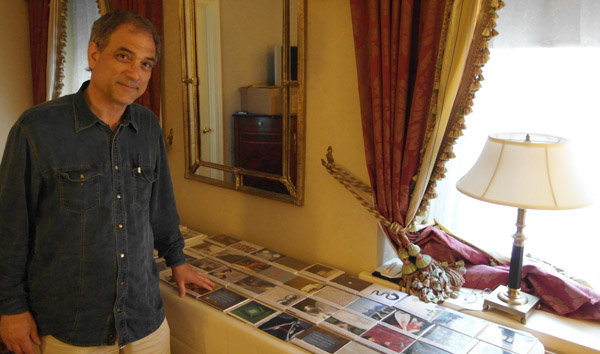
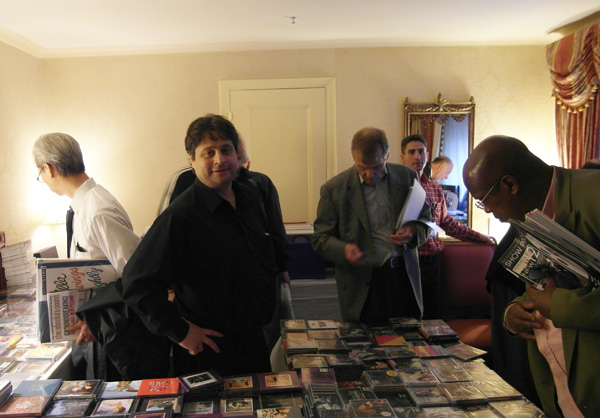
Waiting for an opportunity to photograph recordist Todd Garfinkle, of M•A Recordings, was no small task: Just one hour into the New York show on Friday, his exhibit was jammed with eager music buyers, and I had to wait several (enjoyable) minutes before the crowd thinned enough that he could take a break.

Liberty Trading

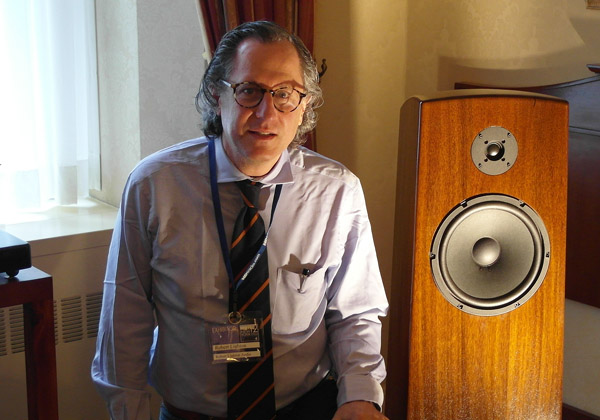
My first attempt to enter the room at the NY Audio & AV Show where Liberty Trading was selling vinyl and CDs proved fruitless: There were simply too many people lined up to buy records (which included a number of recent Mobile Fidelity LP titles). Nabil Akhrass, seen here behind the counter, would surely question my use of the words too many.

Sweet merciful Quad

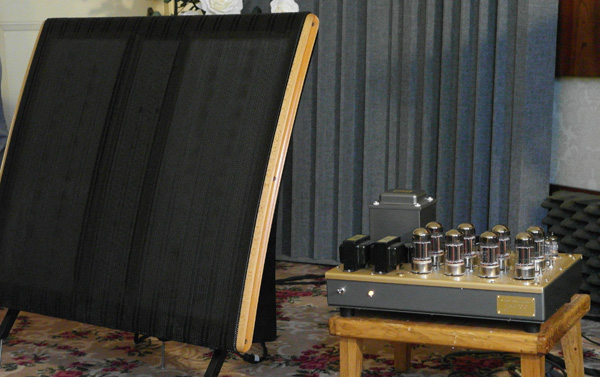
Robin Wyatt of Robyatt Audio did something that hadn't been done at a major audio show in decades: He demonstrated with a pair of Quad ESL loudspeakers—creating, in the process, the sort of sound that led my weak and easily led brain to conclude that I was hearing the best sound of the show within my first hour of attendance. The ESLs, which had been restored by Quad expert Wayne Picquet (also in "Listening" columns passim), were driven by a pair of Miyajima OTL 2010 amplifiers ($10,000 each), which provide 22Wpc when used as monoblocks with their defeatable feedback circuits enabled. Wiring was by Tel Wire. The preamp was a one-off custom unit by fellow upstate New Yorker Charles King, and the sound, apart from the fact that the Quads made a little too much bass (!) for the squarish room, was glorious.
Advertisement
Advertisement
Advertisement