RMAF 2012

Sort By: Post DateTitle Publish Date

Spot the working microphone in this picture
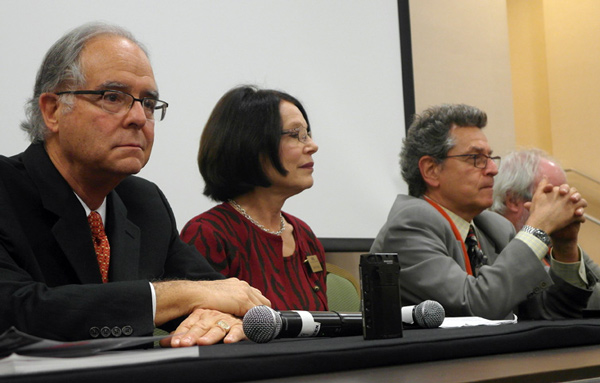
At the end of the first day of RMAF, veteran audio journalist Ken Kessler moderated a seminar titled "High-End Audio: Regaining the High Ground." Some such events—I would go so far as to say most such events—make me feel more like a reporter for Whine Spectator than Stereophile, but this one wasn't bad, and some of the observations expressed on the relationship between education (as in: music appreciation) and industry (as in: us) could actually prove useful. Ken Kessler stimulated the conversation with his own passionately held opinions, and many in the audience responded in kind (if with a little too much wind, in one case). Seen above are panelists Peter McGrath (Wilson Audio), Kathy Gornik (Thiel), Michael Fremer (Stereophile and AnalogPlanet.com), and Roy Hall (Music Hall).
Different Strokes for Different Folks?

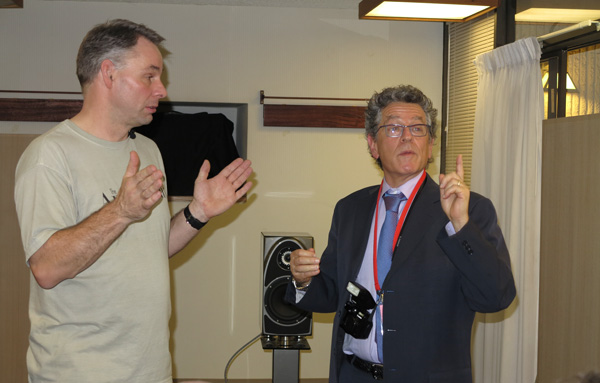
As I entered the second floor seminar room, where I awaited the third of four installments of Stereophile editor John Atkinson’s “Just How ‘Absolute’ Is Recorded Sound?”, I happened upon an energetic exchange between Michael Fremer of Stereophile and AnalogPlanet.com (right) and Roy Gregory, UK Editor of TheAudioBeat.com (left). Mikey was keeping it light, but the issue was real: how do you describe the sound of a component or system without telling listeners and readers what kind of sound they should prefer?

The Wonderful World of M•A Recordings

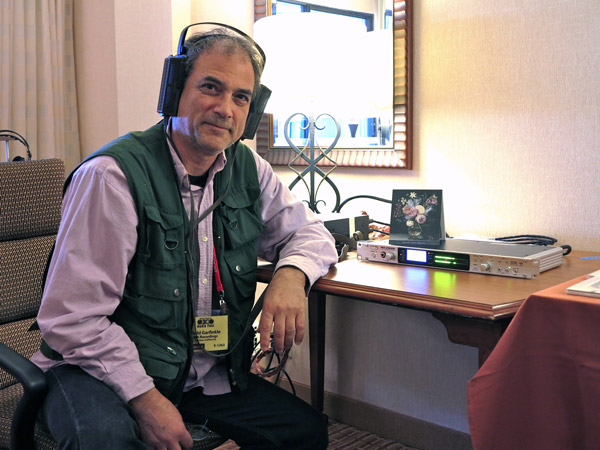
Todd Garfinkle of M•A Recordings was so busy cueing up music for visitors on the three headphone amps in his room that he barely had time to talk. I’m a huge M•A Recordings fan, finding their choice of music from all genres—there’s even a recording of music composed and performed by Stereophile Contributing Editor/Web Monkey Jon Iverson. Alternesia—and their sound quality on both CD and high-resolution discs unique and compelling. In the photo, Todd is listening to his latest CD, Résonance, on which Nina Ben David plays music from baroque to contemporary on viola da gamba.

German Physiks

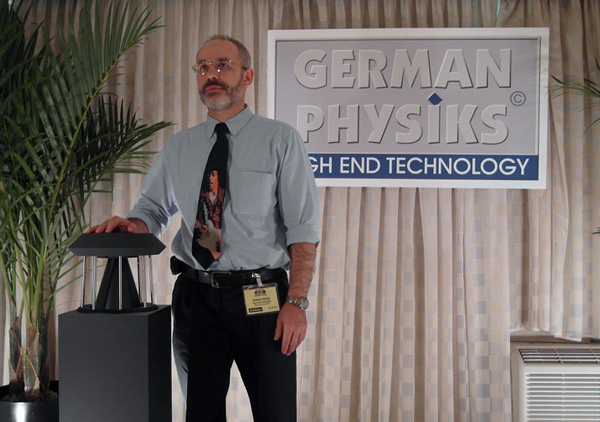
Robert Kelly of German Physiks strikes a pose worthy of a Kraftwerk album cover while showing off the company's newest loudspeaker, the Unlimited Mk.II ($13,500/pair). With the company's omnidirectional DDD driver handling everything above 200Hz, the Unlimited Mk.II had an unsurprisingly open and spacious sound, with the same sort of near holographic imaging I heard in the Nola room: very impressive.

JA on Relativity vs Absolutism

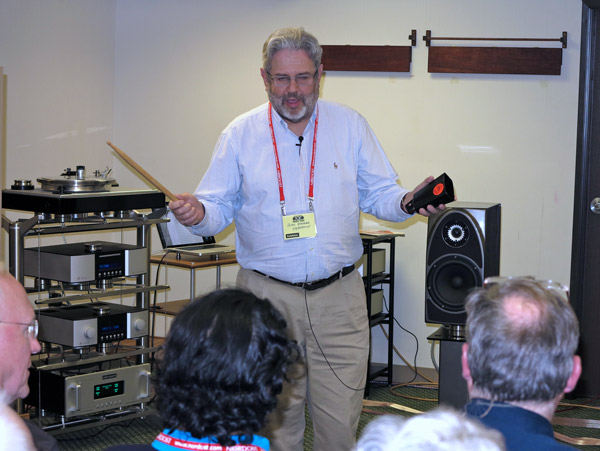
Without, of course, wishing in any way, shape, or form for the title of his four seminars, “Just How ‘Absolute’ Is Recorded Sound?,” to be misconstrued as referring to a certain publication based on what I personally consider a dubious concept, Stereophile editor John Atkinson used everything from a drumstick to a cowbell, both sounded “live” and played back on the seminar room’s stereo system, to convey the message: “Nothing is real. How the recording art affects what you think you hear!” As John proceeded to point out that the brain combines information from separate left and right loudspeakers into a single stereo image, my own brain began to repeat the refrain, “30 or so more rooms in the hall, 30 or so more rooms, If one of those rooms should end up uncovered, your ass will be plastered far into the wall.” Hence I vamoosed, and now leave it to John to say more about the content of his seminar.

Robyatt Audio’s Analog Haven

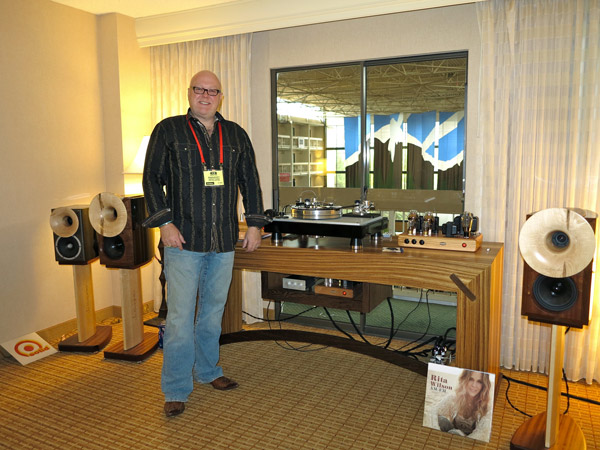
When I walked into the Robyatt Audio room, I discovered that Robin Wyatt had come all the way from New York City to show people what a lovely, airy sound he could get from Jacintha’s “Here’s to Life” and other LP selections. “The man who recorded that LP used the same stereo Miyajima Kinsui cartridge that I’m using for playback,” he explained.

PTE’s Blind Tests

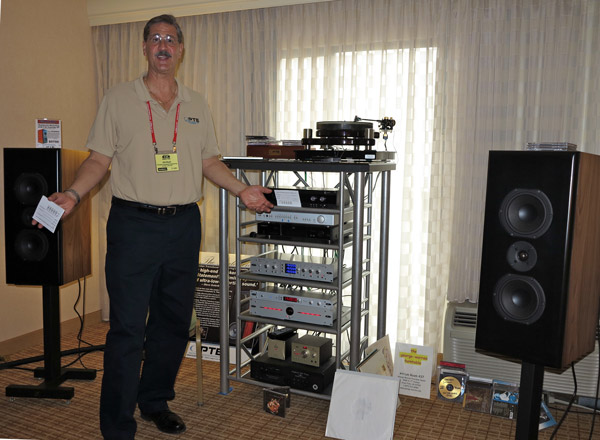
Jim Rush of PTE (Precision Transducer Engineering) of Orange, CA explained that he was using the system in his room, headlined by PTE’s The Phoenix self-powered, bi-amplified loudspeaker ($5700/pair), to conduct 10 different blind tests with five sequences. The results of his experiments, which he said demonstrated that most people couldn’t discern differences with a high degree of accuracy, are slated to be posted to PTE’s website.

Fort Collins Audio

One of many Colorado retailers that displayed at RMAF this year, Fort Collins Audio hosted the debut of the TSG planar ribbon tower line array loudspeaker ($29,000/pair). Unfortunately, the speaker sat unplayed in the corner of the room when I entered, replaced by the excellent Totem Earth ($8995/pair). Connected to a Hegel H20 amplifier ($5740), Hegel HD20 DAC ($1995), and Quicksilver Audio preamp ($3900) via Kimber Kable Bifocal XL speaker cable and Kimber Select 1126 interconnects, the system was producing fine, solid sound with nice color.

Whistle Me Up, Livingston

If there’s anything that will grab this whistler’s attention, it’s the sound of another whistler who knows what she or he is doing. Given that the first thing I heard when I set foot in the room from Pro Audio Ltd. of Tower Lakes, IL was the delightful sound of whistling on Livingston Taylor’s “Isn’t She Lovely,” I was primed for a good experience. And so it was, with the system’s genuinely lovely if somewhat light-bodied sound distinguished by a captivating sense of air that is the mark of good analog.

Rockport's Avior: 220 pounds of joy

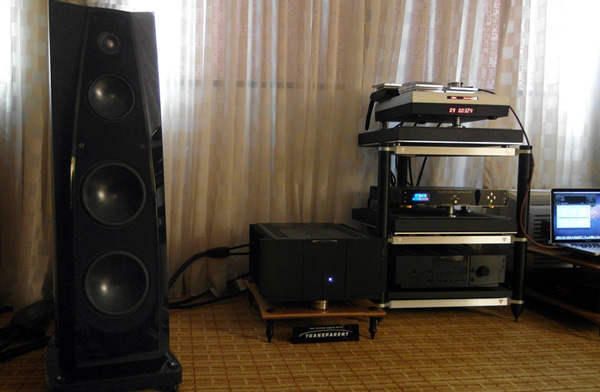
The three-way, 220 lb Avior loudspeaker from Rockport Technologies ($29,500/pair) uses the same beryllium tweeter as the company's $225,000 Arrakis, complemented with all-new midrange and bass drivers that are built around Rockport's proprietary carbon-fiber sandwich/composite cones. The Avior sounded truly impressive with a Playback Designs MPS-5 CD/SACD player/DAC ($17,000), Electrocompaniet EC4.8 preamplifier ($5129), BAT VK-655SE amplifier ($14,000), and cabling from Transparent Audio. A representative from the Omaha, Nebraska dealer The Sound Environment demonstrated the system with humor, charm, candor—and good music.
Advertisement
Advertisement
Advertisement